The nomadic way of life has been known since ancient civilizations.
The society of digital nomads, who are advocates of changing countries for work and pleasure, has emerged in the recent past. Due to the pandemic, the global labor market has undergone significant changes. According to the World Trend Index 2021, almost half of the respondents stated their readiness to move to another country. The number of digital nomads is steadily growing. Meanwhile, freelance work, when the right country is chosen, becomes a successful and promising business.
Factors influencing the decision to relocate include:
- Availability of high-speed internet and stable mobile communication.
- Cost of living (pragmatic individuals choose a country based on their income and financial condition).
- Degree of safety in the region (especially for foreigners).
- Ease of obtaining a visa that allows long-term stay in the country, including a Digital Nomad Visa.
- Tax rates for individuals.
- Healthcare system (an optimal medical insurance plan can be chosen).
- Level of proficiency in the English language by the local population.
Below are the most popular and promising directions for digital nomads, each with its own advantages and disadvantages.

Cyprus
Considering the criteria for choosing a country for remote work, it is fair to note that Cyprus is an optimal option. The government provides maximum preferences for high-tech businesses. An association of IT companies has been created in the country to help the state in the development and implementation of innovative technologies. An intellectual community of representatives from different countries and fields of activity has formed on the island. Cyprus' migration department plans to issue 500 Digital Nomad visas annually for a period of one year, with the possibility of extension for another two. Initiative IT specialists can easily find work here, and there are many cafes with high-speed internet in the cities. Cyprus offers a high quality of life, picturesque nature, and unique historical monuments. Most locals speak English and are friendly towards foreigners.
Advantages of moving to Cyprus:
- low crime rate,
- beautiful beaches with "blue flags" for cleanliness and safety,
- a relaxed lifestyle,
- good conditions for doing business,
- favorable climate and environmental conditions,
- a developed network of roads,
- delicious and healthy Mediterranean cuisine.
Disadvantages:
Lengthy administrative procedures.
Deficit of public transport.
Unregulated working hours of government institutions and shops.
The cultural life on the island is not rich enough.

USA
The United States of America has the largest consumer market in the world. Many startups are registered in the country and cutting-edge technologies are being tested here, with the majority of global trends being born in the US. Despite economic crises, the US economy shows significant resilience. America is number one in technological development and the number of labor migrants. The number of people who want to live and work in the country is constantly growing, as is the fierce competition in the job market.
There is no Digital Nomad visa in the US, but other forms of permission are available for long-term stays and legal work. Being in America, digital nomads have the opportunity to catch the attention of headhunters and clients from around the world and participate in innovative projects of various directions. Freelancers usually prefer to move to large cities where there are many public libraries and coworking spaces with excellent internet. There is no language barrier when communicating with locals.
Benefits of moving to the US include
- a highly developed IT industry, media, and information space
- a multitude of programs to support creative professionals
- professional law enforcement, respect for the law
- a large number of attractions
- a wide network of domestic tourism destinations
- modern transportation and communication infrastructure
- a huge selection of entertainment and cultural programs.
The drawbacks include
- a low level of safety in large cities
- expensive healthcare and apartment rentals
- and a majority of products in supermarkets being of low quality.
- The country also has environmental problems.

Estonia
Estonia was the first country to issue visas to digital nomads (DNV). Attracting qualified professionals, particularly in the IT sector, is seen as an effective stimulus for the local economy. The country has electronic residency, and innovative technologies are actively being integrated into daily life. The government is making maximum efforts to attract investments and promising projects. Some of the former Soviet-era industrial spaces have been transformed into coworking spaces and spaces for collaborative work.
In the absence of corruption, the country has a transparent and comfortable tax policy for its population. Compared to Western European countries, the cost of living in Estonia is low. The local population has a high level of culture and knowledge of the English language. Estonia is a digital country, and paper-based information carriers are a thing of the past.
Pros of moving to Estonia include
- a highly developed infrastructure
- low unemployment rates
- a decent standard of living
- low crime rates
- increased attention to ecology
- quality food products
- and a rich cultural life.
Cons include
- fickle Baltic weather, especially in the shoulder seasons
- the Estonian language being difficult for foreigners
- rising rental prices in Tallinn
- and limited opportunities for tourism within the country.

Thailand
Thailand can confidently be called the Mecca of freelancers. They are attracted primarily by the warm climate, exotic nature, and low cost of living. The city of Chiang Mai, located in the north away from tourist hustle and bustle, is very popular with expats. It is an educational center of the country with numerous Buddhist temples, picturesque gardens, and coworking spaces with high-speed internet. The capital of the country, Bangkok, also provides excellent conditions for digital nomads, whose influx contributes to the prosperity of tourism. The Thai Digital Nomad visa allows you to stay in the country for four years. In Thailand, there are affordable medical services and highly qualified doctors, and local guides offer a variety of domestic tours. The population is friendly to foreigners, but many do not speak English.
Pros of moving to Thailand:
- International community with similar interests
- Large selection of housing, low prices for products
- Disciplined local population
- Developed transportation infrastructure
- Beautiful nature, rich history, and culture
- Wide selection of entertainment for every taste
- High level of service by Asian standards
Cons:
- Rising housing prices due to a large influx of freelancers
- Low level of security in some areas
- Some people may find the local cuisine too exotic
- Dirt and smells, especially on the outskirts of cities.

Croatia
The Government program "Croatia - your new office!" started last year, aimed at attracting specialists in the field of internet technology and presenting the country as comfortable for living and remote work. The first result was the opening of a settlement for digital nomads, where all necessary services are provided. Croatia issues Digital Nomad visas for a period of one year with the possibility of extension. For their own benefit, a freelancer must have their own portfolio of offers before coming to the country. It is practically impossible for a foreigner to find a job without connections. Croatia has a high quality of life, and for the convenience of consumers, service sector facilities and supermarkets are open on weekends. The local population is friendly to foreigners, and a large percentage speaks English. The cost of renting property can be divided into "off-season" and "high season," when prices increase significantly, especially on the coast.
Pros of moving:
- beautiful nature, picturesque architecture,
- favorable maritime climate, beautiful beaches,
- low crime rate,
- qualified medical services,
- developed transport network,
- delicious and healthy Mediterranean cuisine,
- a lot of attention is paid to ecology.
Cons:
- Bureaucracy when dealing with government agencies.
- Local residents are not always punctual in keeping their appointments.
- The country's cultural life is not particularly diverse.

Indonesia (the island of Bali)
The high-tech sector in Indonesia is developing rapidly, and the government is extremely interested in attracting qualified IT specialists. The development of a program to issue visas to digital nomads is in its final stages. The island of Bali, where thousands of expats from all over the world have settled, is one of the centers of the global freelance movement. The infrastructure here allows foreigners to work and relax comfortably.
You can get acquainted with the unique history and culture of Indonesia, choose entertainment to your liking and enjoy the natural beauty. There is no public transport on Bali, so people have to move around on scooters, bikes, or cars. Local people still live in communities.
Pros of moving:
- picturesque nature, warm tropical climate,
- various tourist attractions,
- low cost of renting housing,
- a large selection of fruits, vegetables, and seafood,
- cheap rental of transport, inexpensive gasoline,
- many sights,
- friendly attitude of local residents towards foreigners.
Cons:
- Traffic jams occur everywhere on narrow roads, and there are no sidewalks.
- Some types of local fauna are dangerous.
- High humidity, poor quality of public utilities.

Portugal
In 2021, the world's first "digital nomad village for travelers" called "Digital Nomads Madeira" began to be populated in Portugal. Free coworking spaces are provided for the convenience of guests and comfortable living conditions are created here. The country has been attracting freelancers for several years, and digital nomad visas are issued for one year with the possibility of renewal. Having such a visa allows for travel throughout the Schengen area. Lisbon and other major Portuguese cities have a network of modern coworking spaces with high-speed internet. The westernmost country on the continent is interesting for its historical landmarks and diverse nature. Portugal has a well-developed entertainment industry, a variety of cultural events, and places great emphasis on ecology. There are beautiful beaches and delicious and healthy local cuisine.
The benefits of moving to Portugal include
- a high standard of living, friendly local people
- comfortable climate conditions
- developed infrastructure
- high-speed internet
- qualified medical services
- a place in the top five safest countries
- and a favorable tax system for foreigners.
The downsides include
- the lack of equipped beaches for leisure and swimming in Lisbon
- specific driving habits of local drivers
- slow administrative processes
- and high rental costs in cities.

Malaysia
Malaysia is one of the most technologically advanced countries in Southeast Asia, with a high level of income for its population. In terms of the development of the electronics industry and internet technologies, Malaysia competes on an equal footing with the United States and Japan. This fact attracts carriers of innovative ideas to the country, who have the opportunity to obtain Digital Nomad visas for one year with the possibility of further extension. Both Kuala Lumpur, the capital, and the quieter Penang have created all the necessary conditions for digital nomads to work and enjoy their stay. Malaysia is a country divided by the South China Sea, with various cultures and religions coexisting. The local population is friendly towards foreigners and demonstrates good knowledge of the English language. Local stores offer attractive prices for computer and other electronic equipment.
Pros of moving to Malaysia include
- developed infrastructure
- convenient location for regional tours
- low crime rate
- optimal cost of living
- organized traffic
- a wide selection of entertainment
- and many sights to see, as well as picturesque beaches.
Cons include
- unsatisfactory sanitary conditions in some area
- the fact that not everyone may be comfortable with the local cuisine and climatic conditions
- and the country's lack of attention to ecology and nature preservation.

Georgia
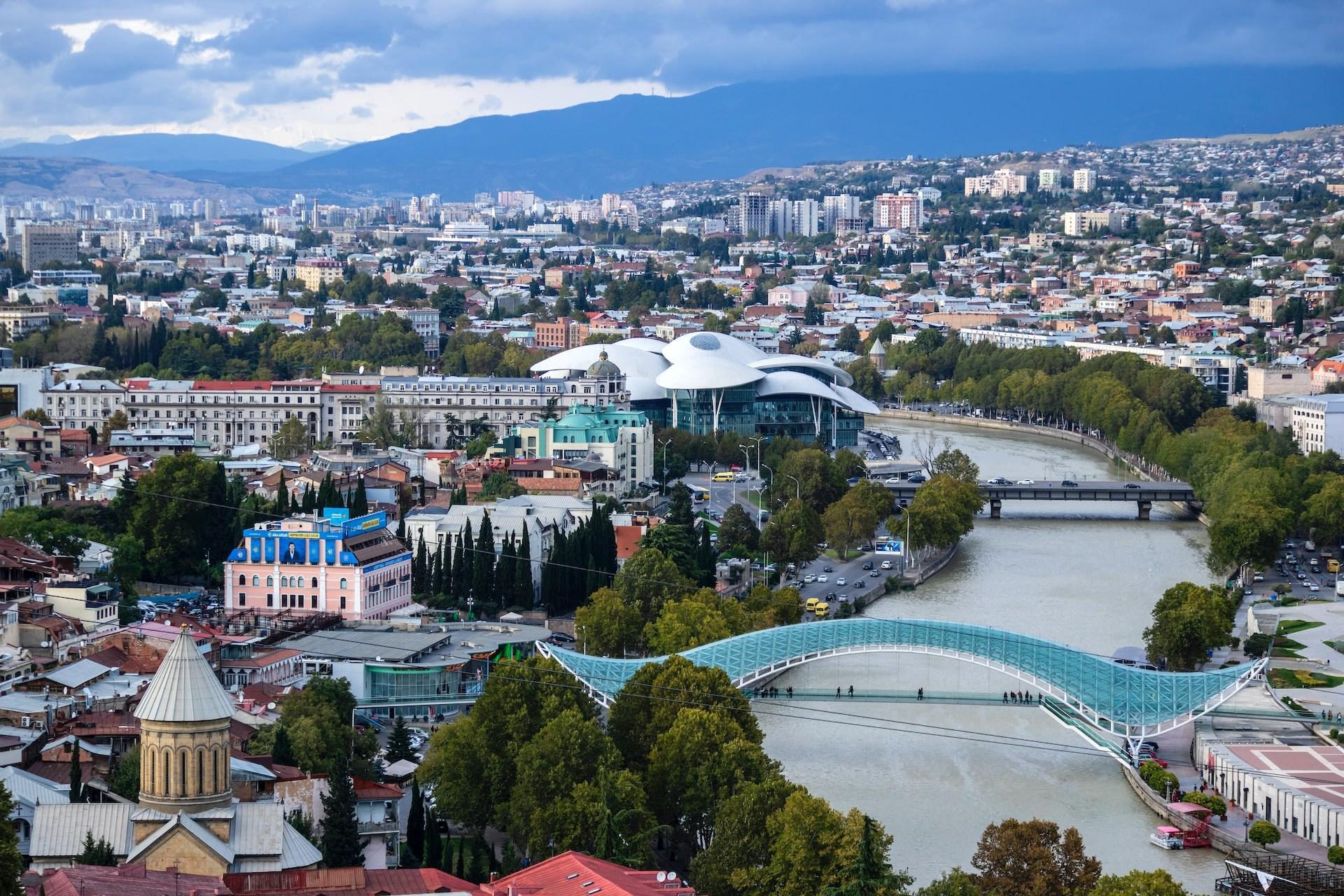
In the early 2010s, a free virtual zone was created in Georgia, and a corresponding law was adopted, guaranteeing high-tech companies tax and regulatory benefits. The program has attracted interest from both international IT corporations looking to establish a digital business in the country, and freelancers with relevant profiles. Georgia issues visas to digital nomads for one year with the possibility of extension. There are plenty of comfortable co-working spaces in Tbilisi, including in scenic park areas. A multinational creative community has formed on the compact territory of the country. Georgia is a great place for nature lovers and short trips. Gastronomic enthusiasts will enjoy the abundant national cuisine and local winemakers' products.
Pros of relocation:
- developed infrastructure, high-speed internet,
- low cost of living,
- convenient banking system,
- scenic nature, comfortable climate,
- warm sea and developed entertainment industry in Batumi,
- socially oriented police work,
- most of the local population is friendly and sociable.
Cons:
- Limited choice of modern cities for remote work (Batumi, Tbilisi).
- Difficulties in communication in some regions due to the locals' lack of knowledge of English.
- Chaotic traffic on some roads.
Argentina
Argentina is a new destination for digital nomads from different parts of the world. The procedure for issuing Digital Nomad visas is expected to start at the beginning of next year. The homeland of the famous football player Lionel Messi holds a leading position in the Mercosur South American political-economic union. Scientific and technological clusters are successfully developing in Buenos Aires, and the global co-working provider We Work has opened its office here.
The country's territory is diverse in landscape and climate zones, making internal travel colorful and memorable. Even in the densely populated capital, the pace of life is measured, and locals are very sociable, friendly, and compassionate. Argentina is a country of immigrants where many cultures and traditions coexist peacefully. The most massive "religion" among the local population is football.
Pros of moving to Argentina include
- a visa-free regime with many countries
- developed infrastructure
- convenient co-working spaces and cafes for work
- high-quality state medical services
- fundamental free state education
- low cost of living
- affordable housing rentals
- and tasty natural food products.
Cons include
- street crime that exists, but its level is decreasing year by year
- domestic services are not always of high quality
- and not knowing Spanish can create communication difficulties.
Currently, freelancing is rapidly developing, while office employment has ceased to be the exclusive form of work organization. Yesterday's employees, who used to attend a series of corporate events shoulder to shoulder, scatter to different countries. The service hierarchy of boss-subordinate in areas suitable for remote work is losing its former relevance. Another form of collaboration is emerging, where the project initiator attracts the necessary specialists from around the world, which is becoming increasingly digital every day.

Interested in property in Cyprus? Check out DOM! The agency's website features the largest database of real estate in the country - more than 30,000 residential and commercial properties throughout the island! Here you will find information on the latest developer projects. Choose and contact professional brokers who will help you make...
Also read: