
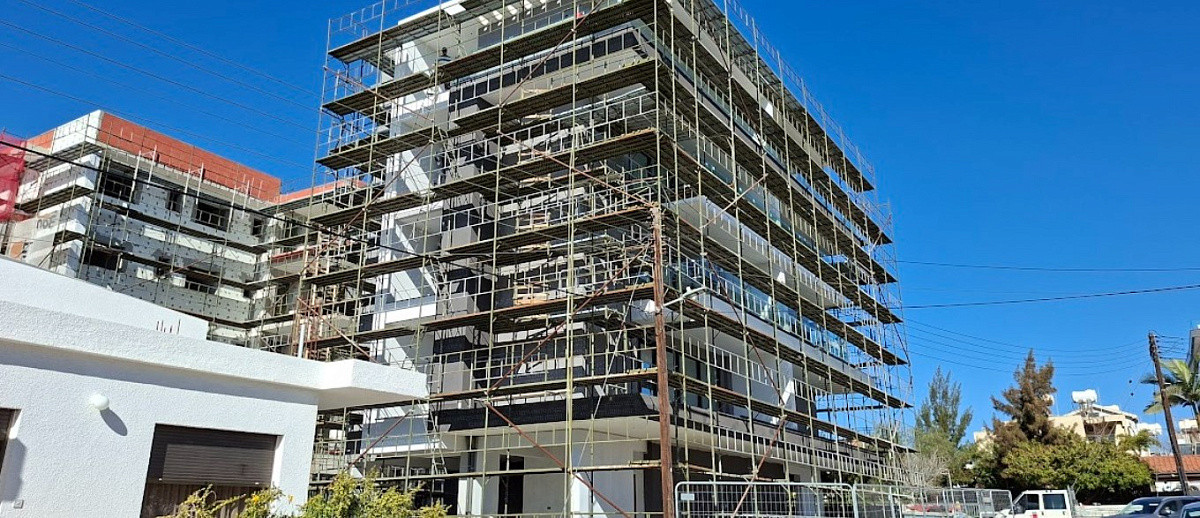
Cyprus’s construction sector continues to demonstrate strong growth. According to new data released by the Statistical Service, the number of building permits issued in January and February reached 1,500, representing a 48.8% increase compared to the same period last year. Experts attribute this growth to sustained demand for housing, continued investor activity, and the expansion of major development projects across the island.
At the same time, both the total value of construction projects and the overall floor area of future developments increased significantly, indicating growing construction activity in all key regions of the country.
The Property Market Continues to Expand
The total value of building permits issued during the first two months of the year rose by 56.5%, while the total area of approved projects increased by 54.9%. Particularly notable was the rise in the number of new residential units. Whereas significantly fewer housing units were planned under permits issued during the same period last year, in 2026 this figure reached 3,463 residential units, an increase of 79.2% year-on-year.
These figures confirm that the Cypriot property market continues to maintain strong investment appeal for both local buyers and foreign investors.
February Was One of the Most Active Months
In February 2026 alone, authorities issued 711 building permits. The total value of approved projects amounted to approximately €379.9 million, while the combined area of future developments reached nearly 315,000 m².
According to calculations by the Statistical Service, the permits issued in February provide for the construction of 1,708 new residential units. These include both apartment complexes and individual homes that will be built across various regions of the island.
Economists point to several factors driving the growth of Cyprus’s construction sector. First and foremost is the continuing demand for property from foreign buyers relocating to the island for permanent residence, employment, or business activities.
Additional momentum comes from population growth, the expansion of tourism infrastructure, and the ongoing interest of international companies opening offices in Nicosia, Limassol, and Larnaca. Demand remains particularly strong for modern residential developments featuring energy-efficient technologies, as well as for properties located near the coastline and major business hubs.
Which Regions Remain the Leaders?
The highest level of construction activity continues to be recorded in Limassol, which remains Cyprus’s primary center for international investment and business activity. At the same time, a significant increase in development projects has been observed in Larnaca, where large-scale urban regeneration and waterfront development initiatives are ongoing.
Nicosia continues to lead in the number of residential projects designed for permanent living, while Paphos and the free areas of Famagusta attract buyers seeking holiday homes and investors focused on the tourism market.
Experts believe that the construction sector will remain one of the key drivers of the Cypriot economy throughout 2026. Despite rising construction material costs and continued pressure on the housing market, demand remains strong enough to support the launch of new projects.
The increase in building permits indicates that developers expect the market to continue growing and are prepared to invest in new residential and commercial developments. For Cyprus’s economy, this means additional jobs, higher tax revenues, and further infrastructure development.