
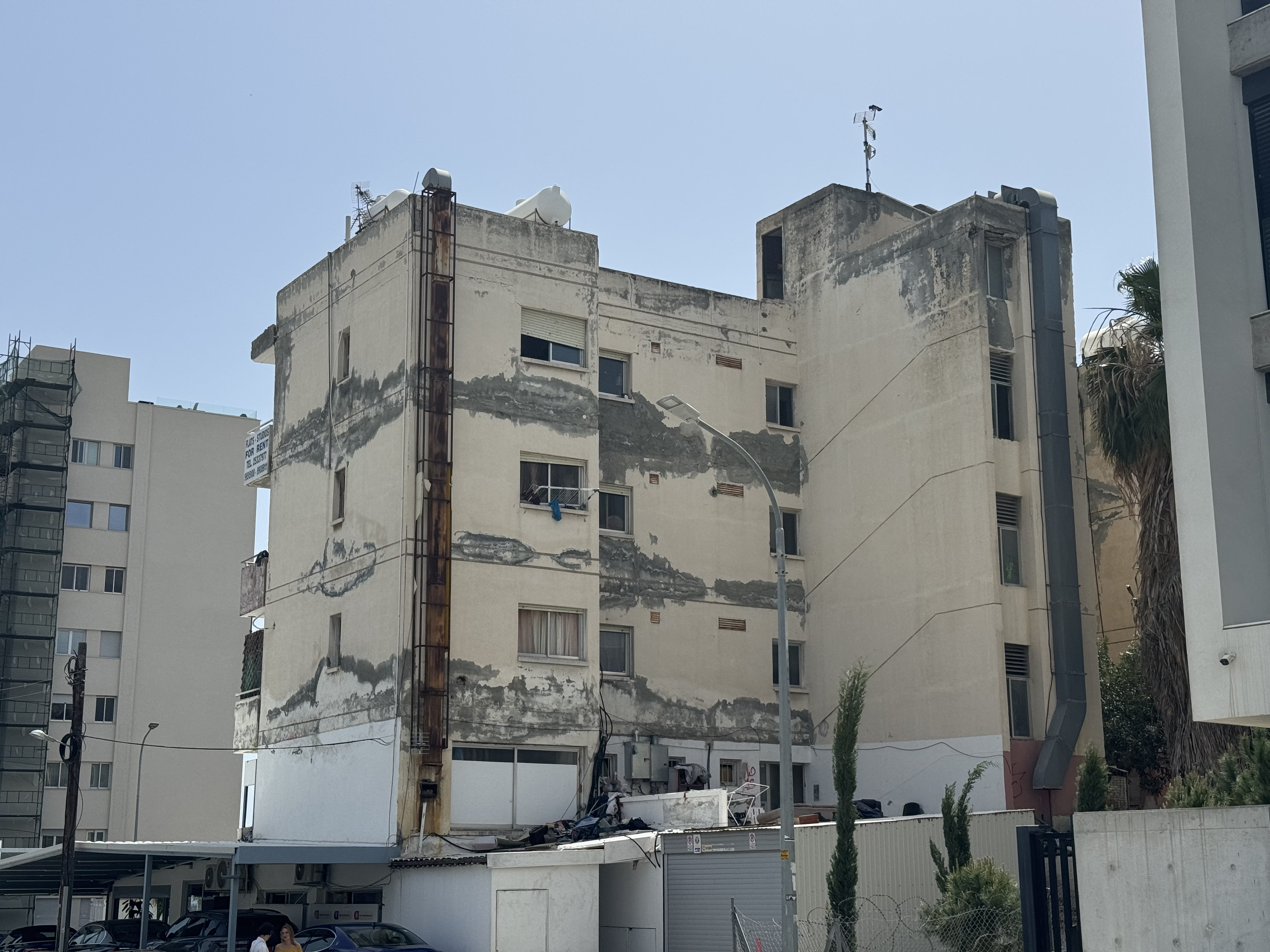
The Limassol District Local Government Organization (EOA) has announced its intention to apply to court to seek the forced eviction of residents from the Sea Gate apartment complex, located on Vasileos Georgiou A Avenue in the Germasogeia area. This will be the first case of its kind for the authority and could set a new precedent for the regulation of unsafe properties across Cyprus.
The case concerns a 12-apartment building that authorities have officially declared unfit for habitation. The voluntary evacuation deadline expired on April 20, but residents refused to leave. The matter will now be decided by the District Court.
Why Authorities Are Taking Drastic Action
According to Limassol EOA chairman Yiannis Tsouloftas, preparing the legal case took nearly a month because officials first had to identify all apartment owners and formally confirm that notices had been properly served. The building is home to a large number of tenants, most of whom are foreign nationals.
Apartment rents in the complex range from €550 to €700 per month, making the building popular among workers and newcomers. In addition to residential units, the property also contains shops and offices, which will also need to be vacated. Authorities stress that this is not a bureaucratic formality, but a matter of public safety.
The Tragedy That Changed Everything
Sea Gate came under close scrutiny after the collapse of another two-storey building in the same area on April 11, 2026. Two people were killed in the incident: a 27-year-old woman from Colombia and a 27-year-old man from Nigeria.
It later emerged that the building had undergone a technical inspection on February 19 and was officially declared dangerous on March 10. Registered letters were sent to the owners instructing them to carry out urgent repairs and evacuate residents immediately. However, no work was undertaken.
Following the tragedy, authorities in Limassol launched extensive inspections of residential buildings. Warning signs have already been placed on 36 unsafe properties. In total, around 780 dangerous buildings have been identified in Limassol, of which approximately 80 are considered to be in critical condition and at risk of collapsing at any moment.
The Investigation Enters a New Phase
Limassol’s Technical Advisory Committee has nearly completed its investigation into the causes of the collapse. Witness interviews and evidence collection have been finalized, and experts are now awaiting the results of scientific and engineering assessments.
Once the investigation is complete, the findings will be submitted to the Attorney General of Cyprus. Criminal proceedings may be initiated against both the property owners and public officials who may have acted negligently.
Amid growing public concern, the Cyprus Parliament has accelerated discussion of new legislation concerning dangerous properties. The proposed law would expand the powers of district authorities. If adopted, officials would be able to disconnect electricity and water in unsafe buildings without a court order, prohibit the rental of such properties, and recover from owners the costs of emergency repairs and safety measures.
The bill was originally introduced in 2025, but following the tragedy in Germasogeia, pressure on lawmakers has intensified significantly. Experts believe the new measures could substantially reshape the market for older properties in Cyprus, particularly in densely populated areas of Limassol.