
Cyprus' hotel market is experiencing one of its most active periods of development in recent years. New five-star and boutique hotels are opening across the island, well-known properties are undergoing major renovations, and international hotel brands continue to expand their presence.
New projects are emerging not only in the island's popular resort destinations but also in the capital. This growth is being driven by rising tourist arrivals, the expansion of business tourism and increasing foreign investment. At the same time, the authorities are continuing efforts to resolve long-standing hotel licensing issues, without which some properties risk losing the legal right to operate.
Nicosia Is Becoming a New Hotel Market Hub
The capital has become one of the island's most dynamic regions for hotel development. Leonardo Hotels, part of Israel's Fattal Group, will open two new properties in Nicosia this September. The first, Leonardo Boutique Hotel Venetian Nicosia, will be located on Arnaldas Street opposite the city's famous Venetian Walls. The second, NYX Hotel Nicosia, is a modern 14-storey boutique hotel with 198 rooms on Makarios Avenue. It will become part of the Leonardo Hotels & Resorts Mediterranean portfolio.
Meanwhile, the former Holiday Inn on Rigenis Street, now managed by MHV, is undergoing a major renovation and is expected to reopen before the end of the year. Another milestone was the opening of the five-star The Landmark Nicosia, Autograph Collection, in December last year, which is regarded as one of the capital's most prestigious hotel developments in recent years.
New Five-Star Hotels Continue to Open in Resort Areas
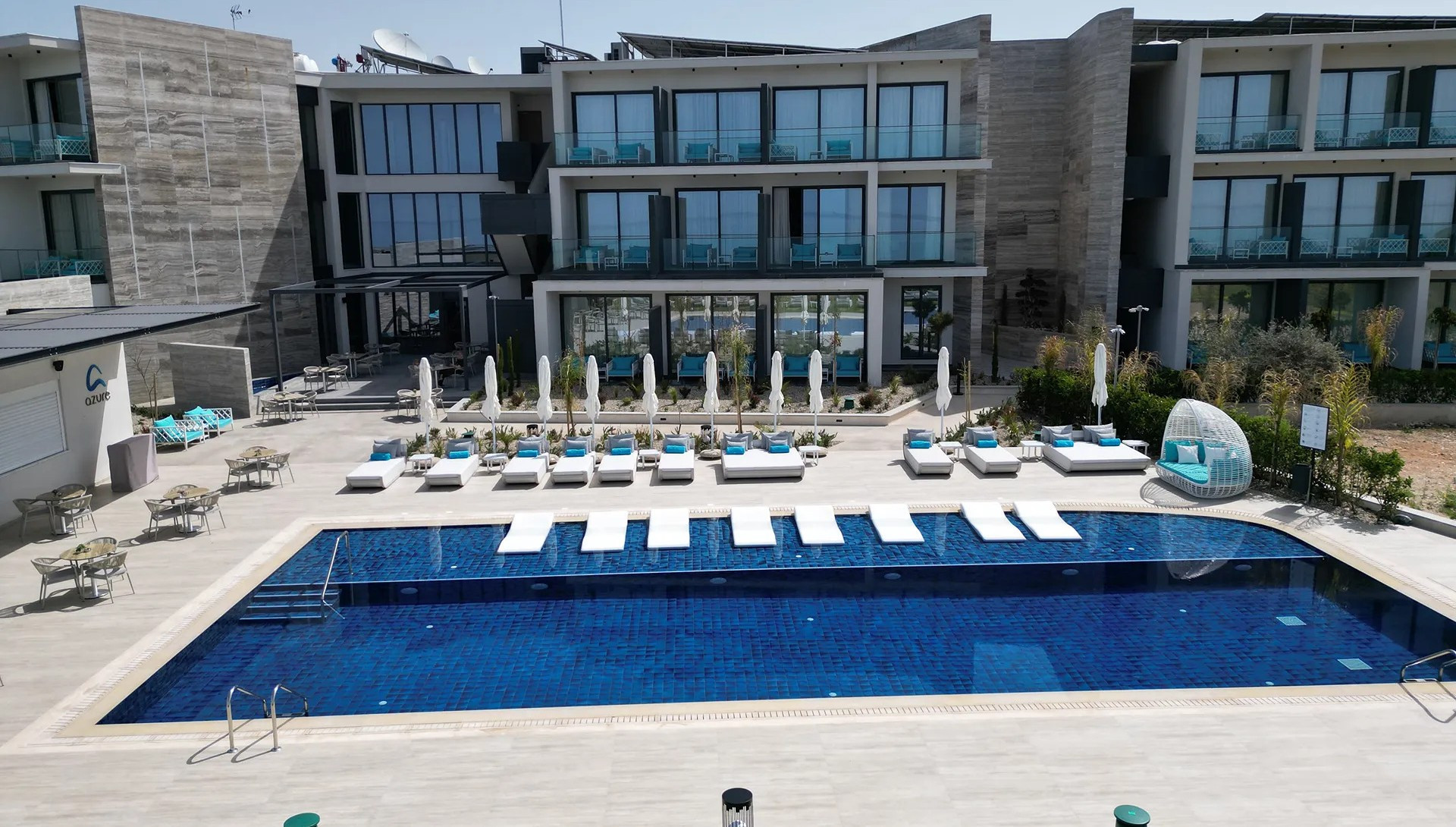
Rapid development is also continuing in Cyprus' tourist destinations. The five-star Nalu Hotel recently opened in the Latchi area. The new family resort offers 240 suites, a children's club, several themed restaurants and modern leisure facilities.
In Kissonerga, near Paphos, the Serbellas Boutique Hotel has been welcoming guests since February. The hotel is located just 600 metres from Potima Beach, close to the site where the new Paphos marina is planned. New hotel developments have also appeared in the free areas of the Famagusta district. In June 2026, Sunrise Emerald (Emerald Suites) opened in Pernera, Protaras, becoming the sixth hotel in the Sunrise Hotels group.
In Ayia Napa, the five-star The Nines opened in May on Nissi Avenue, close to Vathia Gonia Beach. The hotel features 106 rooms and suites, as well as a large central pool complex. The project was developed by the Cypriot company Marystone Co Ltd, founded in 2019.
Meanwhile, the famous Palm Beach Resort in Larnaca continues to undergo extensive renovation. Following the redevelopment, the five-star resort is expected to reopen in November, marking one of the region's largest investments in hotel infrastructure.
Despite Strong Investment, the Sector Still Faces Licensing Challenges
Against the backdrop of the construction boom, the authorities are trying to resolve one of the hotel industry's longest-standing issues — licensing and regulatory compliance. Under the current legislation, amended in April, hotels are allowed to continue operating until the end of the year.
To retain the right to operate until 31 December 2028 without receiving a final licence from the Ministry of Tourism, hotel owners must submit a complete package of health and safety documentation by the end of this year (excluding a building permit). Failure to do so will render the hotel's operation illegal, allowing the Ministry of Tourism to formally order its closure.
The most complicated cases involve serious planning violations, including the construction of additional floors, exceeding permitted building density or expanding hotels into designated green areas. Many owners have already applied to the Council of Exceptions, which is responsible for reviewing such cases.
Three-Quarters of Hotels Still Lack Full Licences
According to the Ministry of Tourism, only one in four hotels in Cyprus currently holds a full operating licence. The most challenging situation is in the free part of the Famagusta district, where around half of all hotels continue to operate without full licences. The ministry explains that after the 2013 economic crisis, hotel owners were granted additional planning concessions. However, some used these opportunities not to legalise existing buildings but to construct additional rooms and further expand their hotels without obtaining the necessary permits.
Despite these challenges, the hotel sector remains one of the key drivers of the Cypriot economy. New international brands, the renovation of established resorts and growing investor interest continue to strengthen the island's position as one of the Mediterranean's most attractive tourist destinations. The authorities expect that infrastructure upgrades and improved licensing compliance will enhance the quality of tourism services and support the industry's sustainable growth in the years ahead.