
Cyprus continues to invest heavily in upgrading its urban infrastructure. Alongside multi-million-euro investments in public healthcare, road construction, and the development of public spaces, the government is also implementing major urban regeneration projects across the country's largest cities.
One of these projects will see the complete transformation of Aktaea Street in Limassol—a neglected industrial area located behind the city's commercial port. The municipality plans to redevelop it into a modern waterfront promenade that will connect the port with Limassol's historic centre while opening up public access to the sea. According to Mayor Yiannis Armeftis, this is one of the city's most important urban development projects in recent years.
A new waterfront linking the port with central Limassol
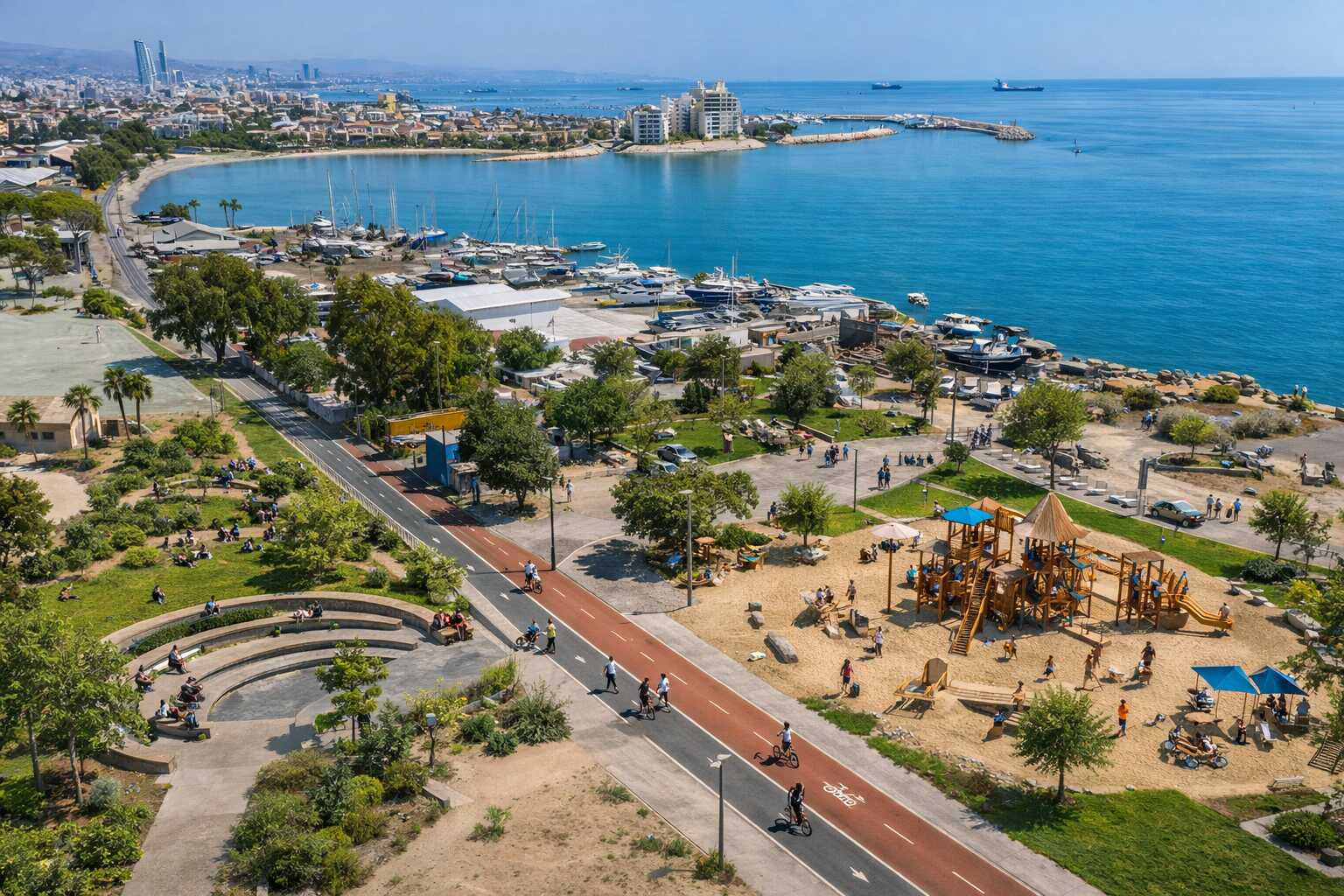
For many years, the area along Aktaea Street remained an almost inaccessible industrial zone, occupied by old warehouses, factories, industrial buildings, and the traditional Karnagio shipyard. The area was poorly maintained and rarely used by the public. Following the redevelopment, it will feature a modern waterfront with wide pedestrian promenades, cycling paths, landscaped green spaces, recreational areas, new public squares, and direct access to the sea.
The project has also been designed to accommodate a future tram line should such a transport system prove economically viable. The new waterfront will form part of Limassol's sustainable development strategy by linking existing cycling routes, pedestrian areas, and green corridors throughout the city.
What has already been completed
Although the main phase of the redevelopment is still ahead, the first works have already been completed. Over the past months, the municipality has:
- cleared the coastal area;
- demolished unsafe buildings;
- planted more than 500 trees;
- constructed a 1-kilometre pedestrian and cycling path equipped with solar-powered street lighting;
- built a new bridge;
- removed approximately 3,000 tonnes of construction debris and waste.
The next phase will involve constructing the final 400-metre section linking the Garillis River to the roundabout near the port's passenger terminal. Once completed, it will create, for the first time, a continuous waterfront promenade between the port and the new seafront. It is worth noting that the first phase of the project—a pedestrian and cycling route from Limassol Marina to Alexandria Street—opened in the summer of 2025. The works cost €397,000 excluding VAT.
An international competition and the future of the old shipyard
The next major milestone will be the launch of an international architectural competition, which is scheduled for 2027. Experts from the University of Cyprus and Frederick University are already working on the concept for the future waterfront, helping to prepare the area's master plan and the competition's technical specifications.
The municipality is also in discussions with port operators DP World and Eurogate, as well as government departments responsible for urban planning, transport, and environmental protection. Later this year, residents will be invited to participate in public consultations and submit their ideas for the project. Particular attention is also being given to the future of the traditional Karnagio shipyard. According to the mayor, the existing businesses will not be closed but instead relocated to a new modern site to be designated by the central government.
Historic buildings will be preserved as the area becomes a new development hub
The municipality expects the redevelopment to attract significant private investment. Former industrial buildings are expected to be converted into:
- cultural centres;
- exhibition venues;
- event spaces;
- cafés and restaurants;
- commercial premises.
At the same time, the authorities intend to preserve the most valuable elements of Limassol's industrial heritage, ensuring that the area's historic character is retained as redevelopment progresses. Meanwhile, the western part of the city is expected to continue expanding rapidly. Current planning regulations allow buildings of up to 30 storeys and 120 metres in height. Construction of the first tower is already underway, with several major investment projects expected to follow in the coming years. According to city officials, the regeneration of the district will become one of the defining stages in Limassol's transformation, establishing the western part of the city as a new public, cultural, and tourism hub.