
The cost of building new homes in Cyprus continues to rise faster than the European Union average. Although inflation in the construction sector has gradually eased, the cost of developing residential property remains high, directly affecting apartment and house prices for buyers.
According to the latest Eurostat data, construction costs for new residential buildings in Cyprus increased by 2% in 2025 compared with the previous year. This exceeds the EU average of 1.3%.
Why Housing Construction Costs Continue to Rise in Cyprus
The index published by Eurostat measures construction costs from the contractors' perspective. It reflects the amounts paid by developers to construction companies for building new residential properties. As a result, the index provides a clear picture of changes in construction costs and shows how much developers' expenses have increased.
Although the pace of price growth has slowed compared with several years ago, Cyprus' construction industry continues to face pressure from several factors. These include high building material costs, rising labour expenses, a shortage of skilled workers and sustained demand for new housing. Additional pressure comes from the ongoing development of large residential projects in Limassol, Larnaca, Paphos and Nicosia. These major developments require significant quantities of construction materials and resources, helping to keep prices elevated.
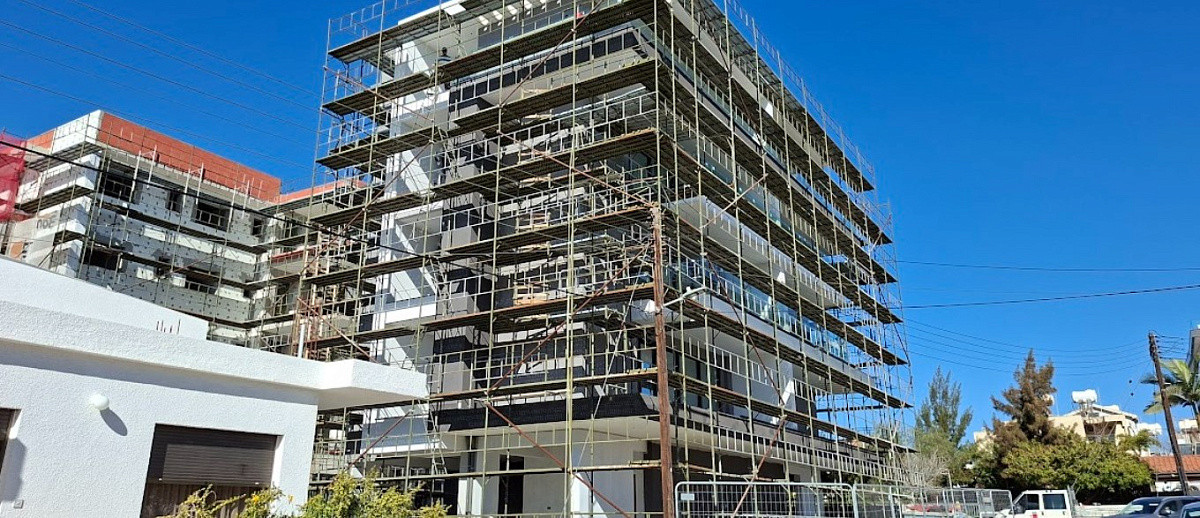
Construction Cost Inflation Is Slowing Across Europe, but Costs Remain High
According to Eurostat, the cost of constructing new residential buildings across the European Union increased by a total of 48.2% between 2015 and 2025. The sharpest increases occurred after the COVID-19 pandemic, when the construction industry faced supply chain disruptions, soaring raw material prices and the energy crisis.
Construction costs rose by 5.8% in 2021 and reached a peak annual increase of 12.2% in 2022, the highest level recorded during the past decade. Prices increased by a further 6.9% in 2023 before slowing to 2.3% in 2024 and 1.3% in 2025. Experts attribute the slowdown primarily to the stabilisation of global building material markets and lower energy prices. However, a return to the cost levels seen in the middle of the previous decade is considered unlikely.
Which Countries Recorded the Largest Increases?
Over the past ten years, the most significant increases in residential construction costs have been recorded in Eastern Europe. Bulgaria leads the ranking with an increase of 166.1%, followed by Hungary at 155.4% and Romania at 130.7%.
At the opposite end of the scale are Italy, where construction costs increased by just 17%, Greece at 17.3% and Finland at 22.1%. Against this backdrop, Cyprus appears relatively stable, although construction costs remain among the highest relative to the size of its property market and the purchasing power of its population.
How Rising Construction Costs Affect the Cyprus Property Market
Higher construction costs are directly reflected in the prices of newly built apartments and houses. Developers pass much of the increased expense on to buyers, supporting continued growth in property prices. Strong demand also remains a key factor. Both local residents and foreign investors continue to purchase residential property, particularly in Limassol, Paphos and Larnaca. At the same time, the supply of new housing remains constrained, as many developments continue to face lengthy planning and building permit approval procedures.
Banks are also reporting a gradual recovery in mortgage lending following recent interest rate reductions across the eurozone. More affordable borrowing encourages additional buyers to enter the market, further supporting activity within the construction sector.
What Lies Ahead for Cyprus' Construction Industry?
Analysts expect construction costs in Cyprus to continue rising over the coming years, although at a much more moderate pace. The main risks remain geopolitical uncertainty, possible fluctuations in global commodity prices and the ongoing shortage of skilled construction workers.
At the same time, the Cypriot government continues to promote reforms aimed at accelerating planning approvals and increasing residential construction. If these measures are fully implemented, housing supply should gradually expand, helping to reduce upward pressure on prices.
Despite current challenges, construction remains one of the key drivers of the Cypriot economy. Continued investment in residential property, ongoing urban infrastructure development and strong international demand are expected to support market stability in the years ahead, although price growth is likely to become considerably more balanced than during the immediate post-pandemic period.