
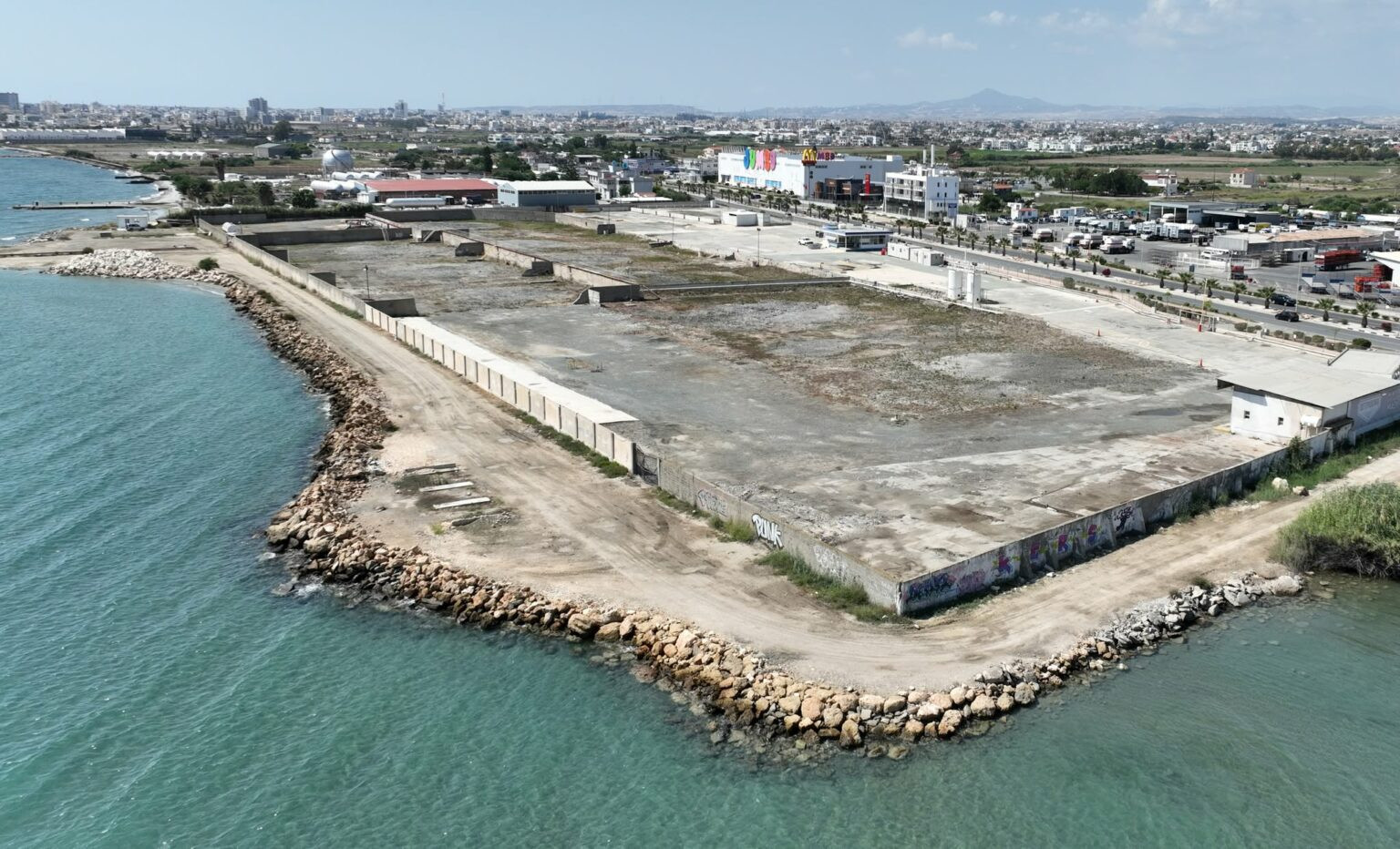
One of the largest development projects in recent years is preparing to move forward in Larnaca. EKO Cyprus has unveiled a large-scale master plan for the redevelopment of the former oil refinery site. The project has already been submitted to Cyprus’s Department of Environment as part of the environmental impact assessment process.
The proposal envisions the complete transformation of the former industrial coastal zone of Larnaca into a modern urban district featuring residential complexes, hotels, offices, commercial properties, and public spaces. Authorities and investors expect the project to become a new growth driver for the city and to permanently reshape Larnaca’s seafront.
What Will Be Built on the Former Oil Facility Site
The project includes the creation of five main zones: a hotel complex, a conference center, residential developments, retail areas, and office buildings. Part of the site will also be allocated to public green spaces and infrastructure for residents.
One of the central features will be a 150-room hotel. The building, approximately 24 meters high, will consist of seven levels and occupy more than 10,000 m2. The project includes a restaurant, swimming pool, underground parking, and leisure areas.
A modern conference center with a total area of 1,200 m2 will be built nearby. Authorities hope it will help Larnaca further develop business tourism and attract international events, exhibitions, and business forums.
The largest component of the development will be a residential complex comprising 313 luxury apartments. The residential tower will reach a height of 60 meters, with a total area exceeding 31,000 m2. According to preliminary estimates, the complex will accommodate around 550 residents.
The new district will also feature retail space with shops, restaurants, and cafés totaling 9,500 m2. An office center covering 10,300 m2 will be designed for international companies and business organizations.
More Than 2,500 Jobs and Nearly 900 Parking Spaces
According to the developers, once completed the new district will create more than 2,500 jobs. These will include permanent positions in hotels, retail outlets, and offices, as well as roles in services, management, and security.
The project includes 891 parking spaces, along with 63 designated spaces for people with disabilities. Part of the parking will be underground. Construction will be carried out in phases, as each component of the project must obtain separate planning and building permits. No specific completion dates have been announced yet, but experts expect the full development to take several years.
Larnaca Continues Its Large-Scale Coastal Transformation
In recent years, Larnaca has undergone the most significant transformation in its modern history. Following the relocation of oil terminals and fuel storage facilities, authorities began actively promoting redevelopment projects along the waterfront.
The new development will form part of a broader plan to regenerate the former industrial zone between Larnaca and Livadia. The area is already seeing the construction of residential towers, hotels, promenades, and tourism infrastructure. Real estate experts note that Larnaca is gradually becoming one of the fastest-growing markets in Cyprus. With property prices in Limassol remaining high, more investors and buyers are turning to Larnaca, attracted by more affordable housing and major infrastructure projects.
Special Focus on Environmental Restoration
One of the key elements of the project will be the environmental rehabilitation of the site. The former oil facility area was long considered environmentally problematic due to fuel storage and industrial operations.
The investor has committed to extensive soil and groundwater remediation. Plans also include strengthening the coastline affected by erosion and creating new public green spaces.
According to the project documentation, at least 25% of the new district’s electricity needs will be covered by renewable energy sources. In addition, the area will incorporate modern systems for sustainable resource management and climate adaptation.
Cyprus authorities view the project as an important step in Larnaca’s continued development and in transforming the former industrial zone into a modern urban district of European standards.