
A troubling situation has emerged in Cyprus’s capital regarding the safety of residential buildings. The District Self-Government Organization of Nicosia has officially declared 268 buildings unfit and dangerous for habitation. In four cases, the threat is critical — residents must be evacuated immediately. But what is even more alarming is that most of these hazardous properties remain occupied. People continue to live in buildings that engineers have deemed unsafe, risking their health and lives. At the same time, the problem is not limited to Nicosia alone. In Paphos, according to local authorities, there are 226 buildings requiring attention. And in Limassol, where a tragedy occurred on April 11, 2026, the number of dangerous structures is approaching 500.
The Limassol tragedy: a building collapsed with people inside
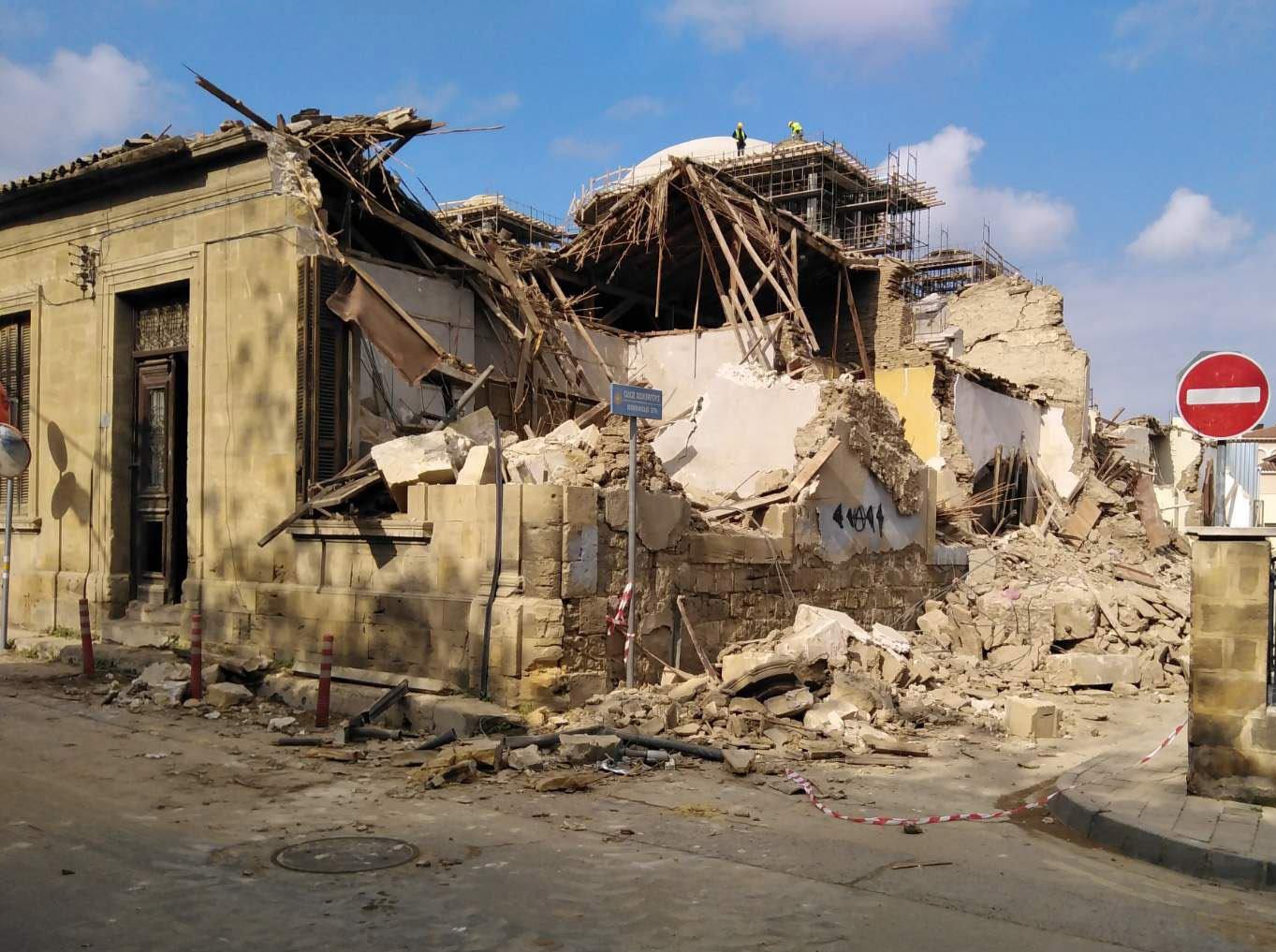
On April 11, 2026, a two-story residential building partially collapsed in the Germasogeia area. Two people died under the rubble, and three were injured. One of the victims was a 27-year-old Nigerian named Dex. He had moved to Cyprus to earn a living honestly and support his family back home. Friends describe him as someone who always smiled and treated everyone with respect. Now his friends from the Sea Legs Run and Team Runnins clubs are organizing a memorial run and raising funds to support his family in Nigeria. The most disturbing part is that no one warned the residents about the deadly danger. Tenants claim they received no information about the need to evacuate. They lost all their belongings, money, and personal documents, which remained under the concrete debris. Some renters were paying up to €1,300 per month for housing that could collapse at any moment.
Why don’t people leave unsafe homes?
In Nicosia, an eviction order has already been issued for one building in the city center — it is expected to come into force in the coming days. Three more dangerous buildings are located in residential areas. Two of them are involved in court proceedings that lasted from 2023 to 2026, while the third has no registered ownership — formally, it belongs to the state. But these are isolated cases. The remaining 264 potentially life-threatening buildings are still occupied. The reason is both simple and tragic: people simply have nowhere else to go.
According to engineers’ estimates, addressing the risks in 268 buildings in the capital alone will require around €2.3 million. And this does not include operating and maintenance costs. Meanwhile, the government has allocated €2 million for these needs to District Self-Government Organizations across the country for two years. This amount is barely enough to cover Nicosia’s needs, let alone Limassol, Paphos, and other cities. Limassol Mayor Yiannis Armeftis stated that his city alone requires about €8 million to resolve the issue. Interestingly, the municipality has already spent €1.6 million over the past 10 years, but this is only a drop in the ocean.
What makes the situation even more dangerous?
Authorities are formally using all available tools: engineers conduct inspections, owners receive notices requiring them to address violations, and deadlines are set. Protective measures are applied — from fencing off dangerous areas to reinforcing or demolishing hazardous elements. However, these measures are critically insufficient. Legislation does not require mandatory regular building inspections. Evacuation procedures can drag on for years. And local authorities lack both the powers and the funding for decisive action.
Konstantinos Konstantis, President of the Cyprus Scientific and Technical Chamber, stated that unsafe buildings remain a serious threat to public safety across Cyprus. According to him, the current legal framework and funding are insufficient to resolve the issue promptly. The expert calls for urgent introduction of mandatory regular inspections, simplification of evacuation procedures, and a ban on the use of buildings declared unsafe. Authorities in Limassol add that not only inspections are needed, but real enforcement mechanisms against negligent owners — including the ability to quickly evict residents, seal, and demolish unsafe buildings, with costs recovered through court.
The tragedy in Limassol has forced authorities to act. Amendments to legislation are being discussed in Parliament to simplify procedures and grant more powers to local authorities. However, these proposals are still at the discussion stage. Meanwhile, 268 buildings in Nicosia continue to pose a risk. And no one can guarantee that tomorrow one of them will not repeat the fate of the building on Aeschylus Street 7 in Limassol, where people died under the rubble on April 11, 2026. The situation requires immediate and coordinated action from all branches of government.