
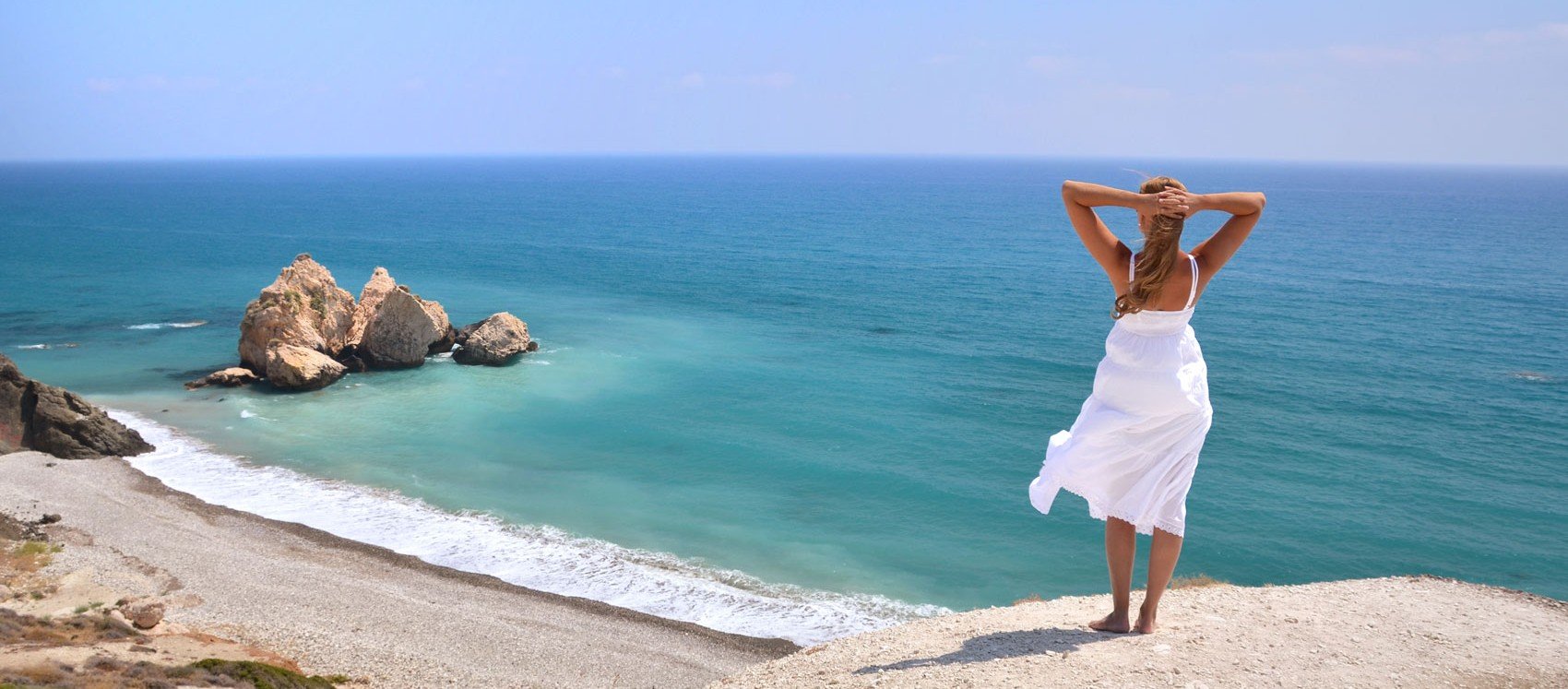
You have surely heard that Cyprus is the island of Aphrodite. But why did this particular place become associated with the ancient Greek goddess of love and beauty? In fact, there is nothing surprising about it. Cyprus amazes with its natural beauty and makes you fall in love at first sight. Even after visiting the island just once, you want to come back again and again. For centuries, Cyprus attracted conquerors. Like a beautiful woman, the island leaves no one indifferent. And even today, many romantics, inspired by the legends of Aphrodite, dream of visiting the island of love. Let’s dive into history and find out why Cyprus became inseparably linked with this mythical goddess.
Why Cyprus is commonly called the island of Aphrodite
Birth from sea foam — Hesiod’s legend (The myth of Cronus, Uranus, and the appearance of Aphrodite)
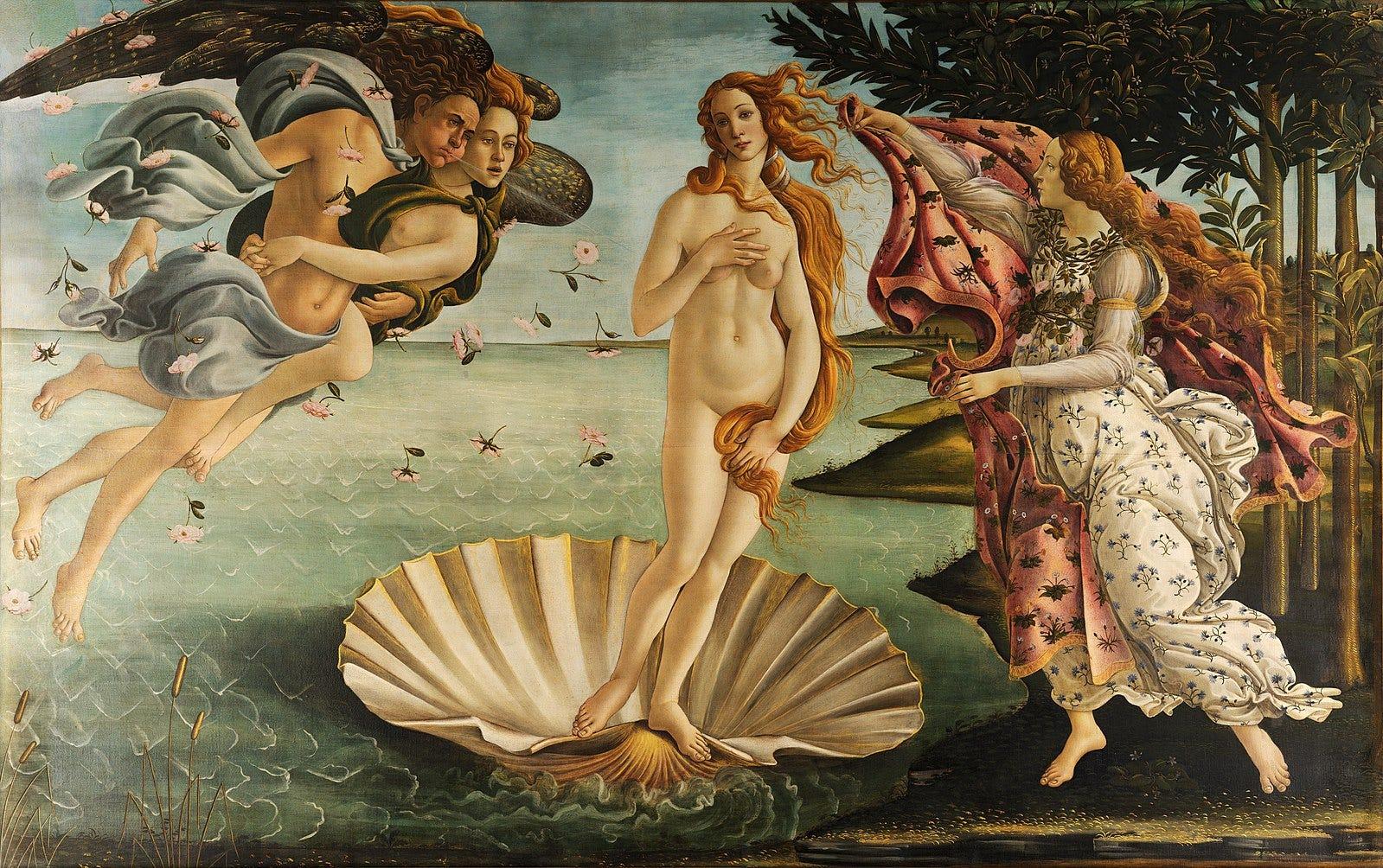
According to Hesiod, it all began with the union of the god of the sky — Uranus — and the goddess of the earth — Gaia. They lived in harmony for a long time and had many children. But one day Gaia became angry with Uranus and, having made a sharp sickle, persuaded her son Cronus to take revenge on him. Cronus confronted his father, snatched the sickle, and castrated Uranus, then threw his genitals into the sea. From the foam that formed around them, Aphrodite was born. The Greeks described her as the most beautiful maiden with golden hair, radiant skin, and bright “violet” (ioeis) eyes. The very name Aphrodite comes from the Greek word “aphros,” meaning foam.
The goddess’s journey by sea to the shores of Cyprus
In Hesiod’s version, Aphrodite was born near the island of Cythera. However, then a gentle west wind — Zephyrus — blew and carefully carried her over the waves to the shores of Cyprus. Upon reaching the island, the beautiful goddess stepped onto the shore, where she was immediately met by the goddesses of the seasons — the Horae. They dressed Aphrodite in shining garments and delicate jewelry, and placed a golden diadem upon her head.
Petra tou Romiou: the place where Aphrodite came ashore
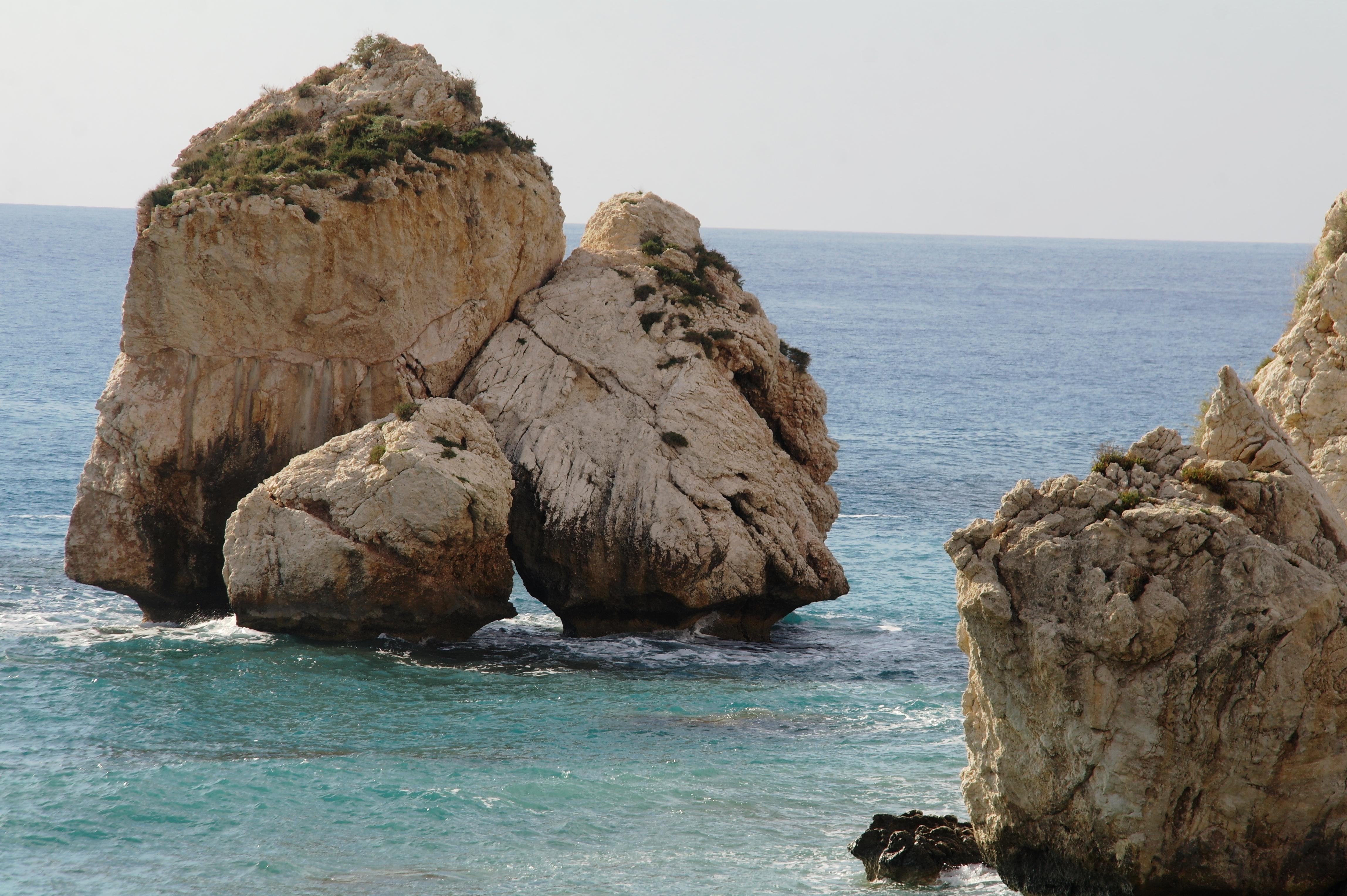
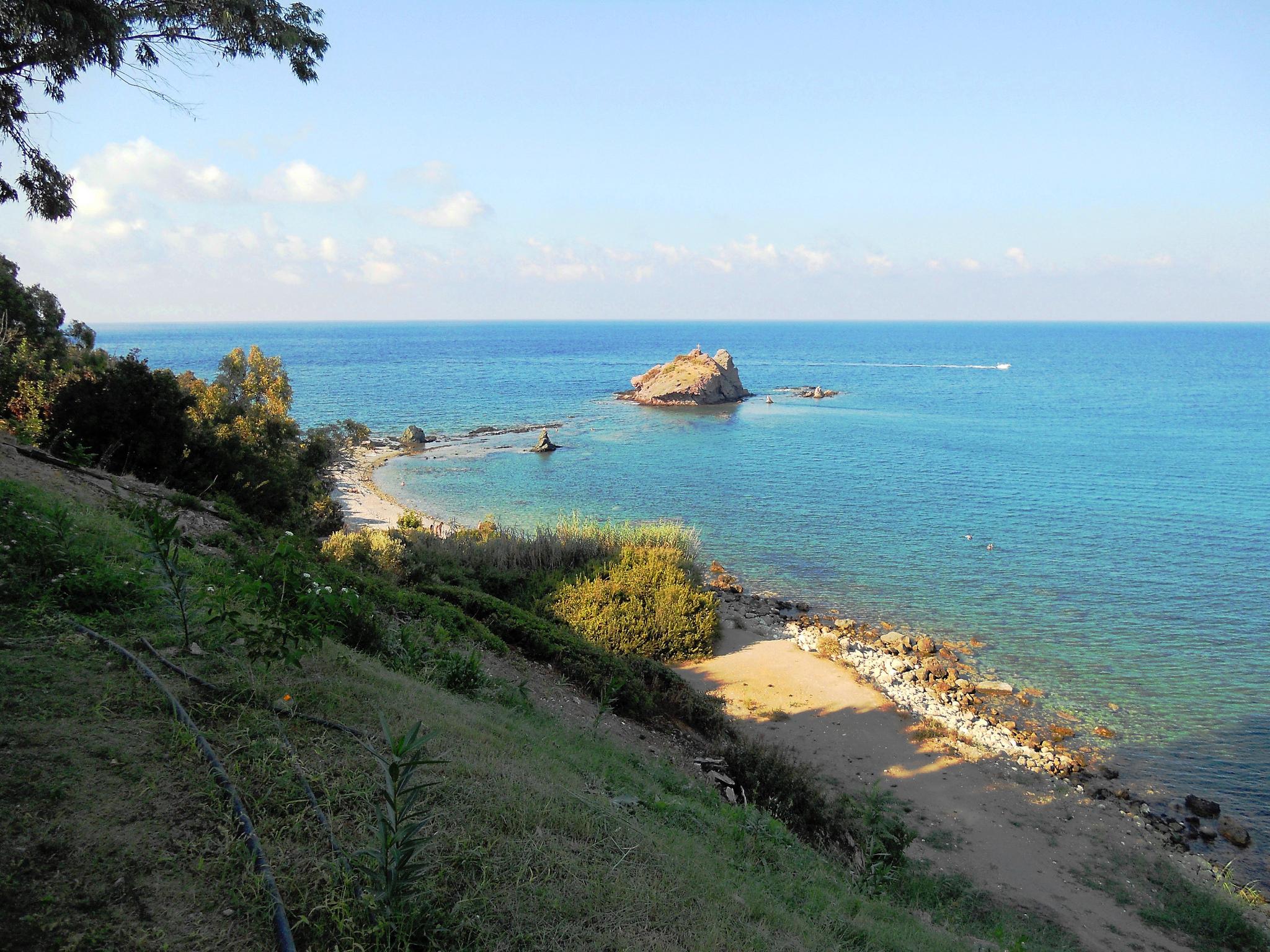
Petra tou Romiou beach is one of the most beautiful places in Cyprus; according to legend, it was here that Aphrodite came ashore from the foam. And indeed, the waves in this location crash forcefully against nearby rocks and pebbles, creating thick white sea foam, while the elegant outline of the sea rock creates a truly magical atmosphere.
Legends and beliefs associated with the rock
To this day, Cyprus has many beliefs connected with Petra tou Romiou. Most of them have a romantic undertone. For example, many couples come here hoping to preserve their feelings for a long time. Single people who wish to find their other half also visit this beach and make a wish. However, there are a couple of local customs and omens that are directly linked to the cult of Aphrodite in the past:
For youth and beauty. According to local beliefs, if you circle the rock 3 or even 9 times at sunrise, especially during the full moon, it will grant you beauty and eternal youth. You must do this counterclockwise in order to “turn time back.”
To find love. Another belief directly connected with the cult of Aphrodite is the custom of swimming around the rock at night. It is believed this will help women find their love and improve fertility.
Other versions of the birth myth
In fact, Aphrodite’s origin is shrouded in a cloud of mysteries and legends. There are many different versions of the origin of this enigmatic goddess. Thus, in Homer’s “Iliad,” Aphrodite appears as the daughter of Zeus and Dione. Meanwhile, Plato had two versions at once: the first — “Aphrodite Urania,” or “Heavenly Aphrodite,” and the second — “Aphrodite Pandemos,” or the common, earthly Aphrodite. Heavenly Aphrodite embodied an ideal of higher love. Her origin story largely echoed Hesiod’s legend. Meanwhile, Plato’s second version was a symbol of ordinary, human love. In the Orphic version, Aphrodite was born from the “world egg” and was a kind of “progenitor goddess.”
Phoenician and Eastern origins
In addition, it is said that Aphrodite’s origin has roots in ancient Near Eastern beliefs and the veneration of fertility goddesses such as the Phoenician Astarte, the Sumerian Inanna, and the Akkadian Ishtar. In the Near East, the cult of the “Great Goddess” was very strong; she was responsible not only for fertility, but was also a patroness of war. It was believed that ancient Phoenician traders, upon arriving in Cyprus, brought with them the cult of Astarte. Perhaps this is where Hesiod’s version of how the waves carried Aphrodite to the shores of Cyprus has its roots.
But since a local cult of a female deity already existed on the island at that time, all these beliefs merged, and the Cypriot goddess began to be called Aphrodite in Greek; and it was in this form that she later became known in Greece.
Historical confirmation: Cyprus as the main center of the cult of Aphrodite
Ancient Paphos and the sanctuary in Kouklia: the heart of worship
According to legend, Ancient Paphos (Palaepaphos) was founded by a hero of the Trojan War — Agapenor. Later, it was ruled by a dynasty of priests who were also supreme rulers. Over time, Paphos became an important center of copper trade and gained the status of the richest city in Cyprus, while the settlement of Kouklia became its religious heart. This place is located near Petra tou Romiou. It is also the most unique place in Cyprus, because it was in Kouklia that the largest center of worship of Aphrodite in ancient times and a temple in her honor were located.
The earliest known worship of the goddess dates to the Late Bronze Age (12th century BCE) and continued until the Roman period. Therefore, this cult is considered not only one of the oldest, but also the longest-lasting in history, counting more than 1.5 thousand years of uninterrupted worship of the same goddess. However, it is possible that the mother-goddess was worshiped in Cyprus even earlier.
Archaeological finds confirming the status of the center
During excavations not far from the city, archaeologists found the ruins of an Aphrodite sanctuary complex dating to the end of the Bronze Age. A stone altar decorated with horns was also found, which was characteristic of cult architecture of that time. Another important discovery was a manuscript of King Nicocles — the last king of Paphos from the priestly dynasty. It dates to the 4th century BCE. In it, archaeologists discovered a lot of valuable information: from a ritual calendar to treasury records.
Notably, at first this cult was “aniconic,” meaning an image of the goddess was not used as the object of worship. Instead, at the sanctuary site in Kouklia there is a smooth black stone in the shape of a cone. Presumably, it has extraterrestrial origin and is part of a meteorite. The ancient historian Tacitus described it as a smooth stone shaped like a pyramid. He also mentioned that priestesses anointed it with oils and worshiped it as the image of the goddess. It is believed that this was an ancient Cypriot fertility goddess who embodied the forces of nature and fertility. Perhaps the Phoenician cult of Astarte later influenced the development of this cult as well. And with the arrival of the Hellenes, the veneration of the ancient mother-goddess turned into the cult of Aphrodite. Many other artifacts were also found at the excavation site:
- Terracotta figurines depicting people, doves (a symbol of Aphrodite), and small copies of the “sacred stone.”
- Small portable limestone altars with ornamentation.
- Jewelry and valuable goods of the time that could have been part of gifts and offerings.
All these finds confirm the status of Paphos as the ancient capital of Aphrodite worship not only in Cyprus, but across the entire Near Eastern region.
Description of the sanctuary and its significance in the ancient world
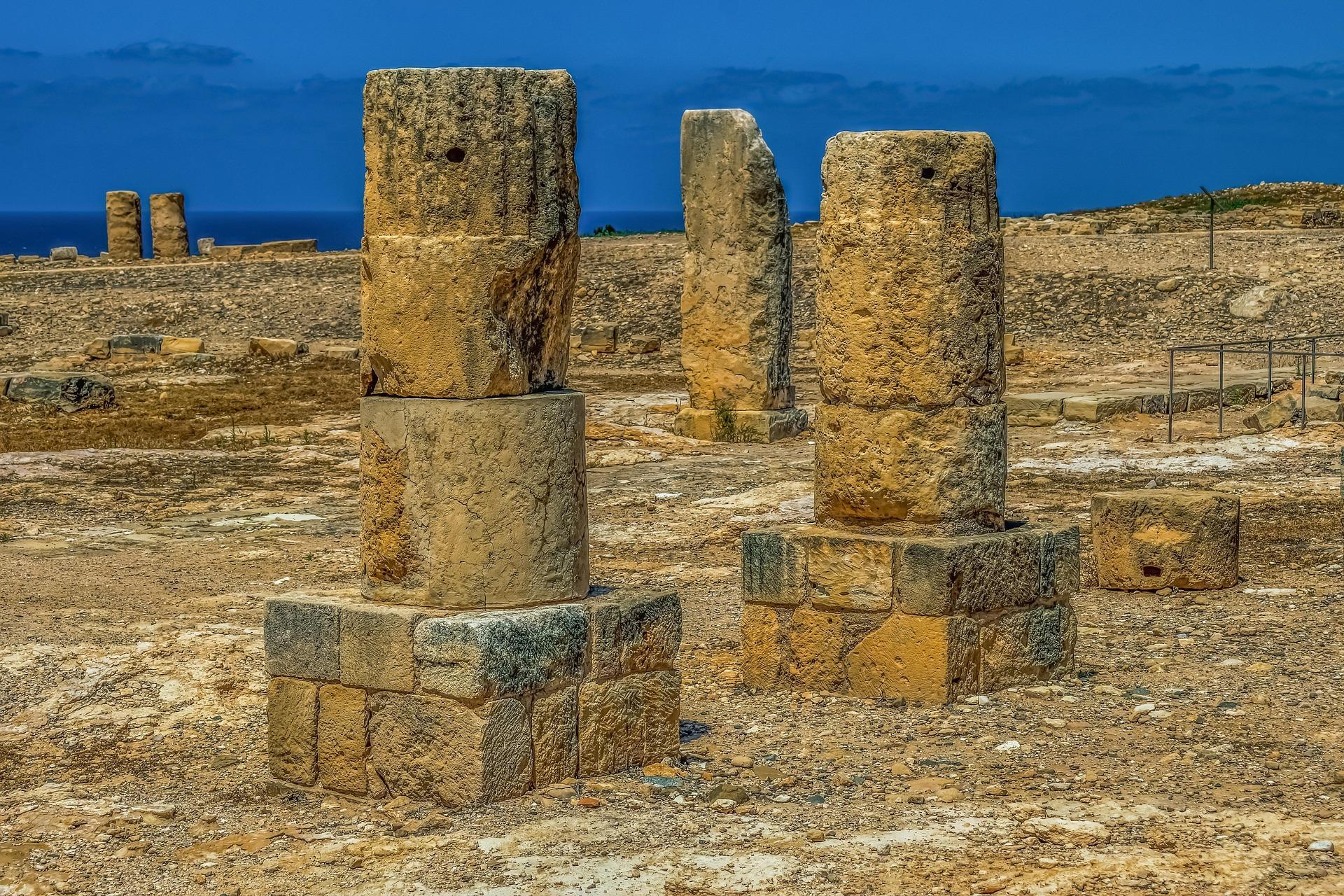
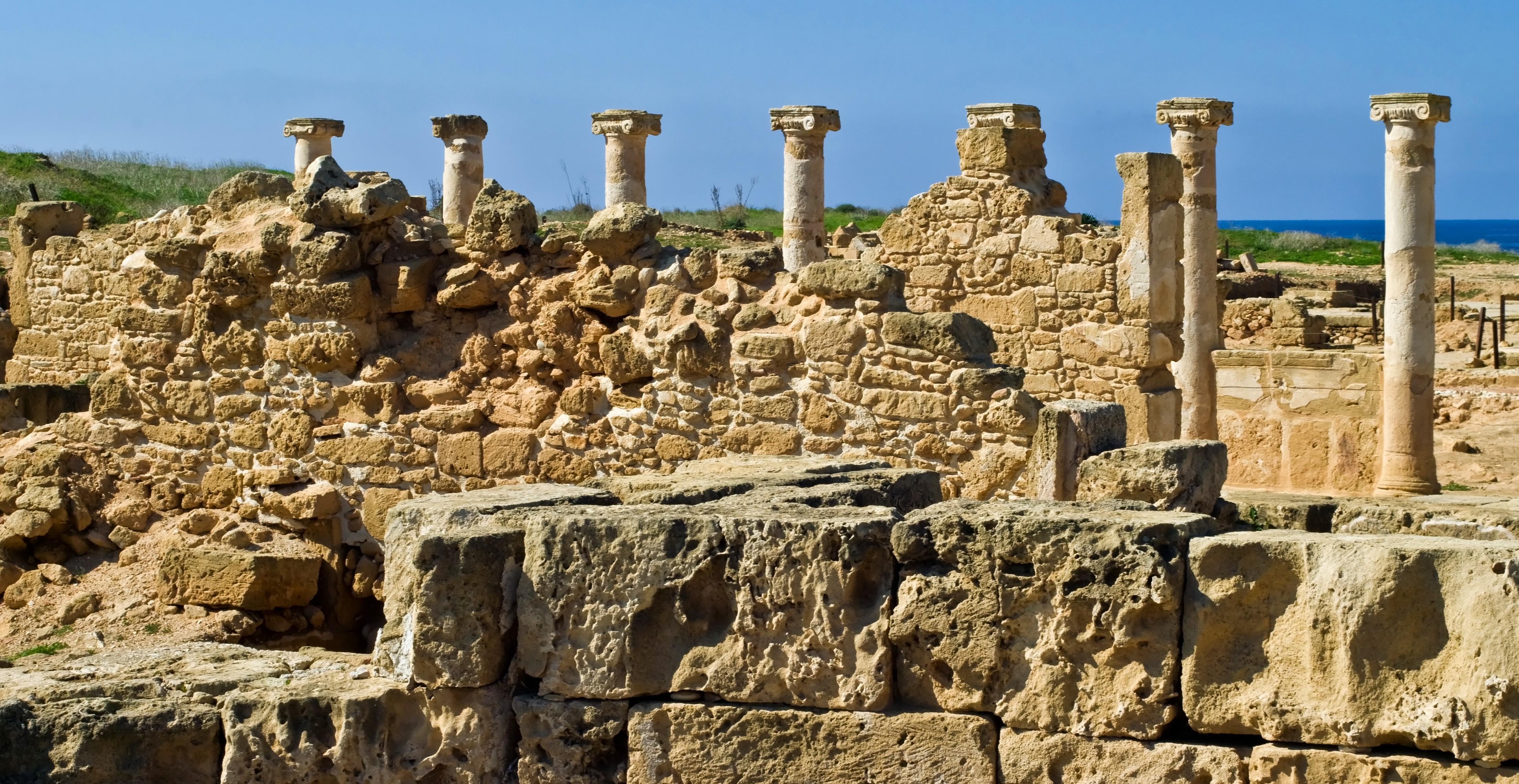
During excavations, the ruins of Ancient Paphos were found, with a total area of about 50 hectares. This territory included not only the temple complex, but also royal palaces, as well as residential and working quarters. The temple complex itself (Temenos) had a rectangular shape and was enclosed by Cyclopean walls. It reached 79 m in length and about 67 m in width. In the center was an enclosed inner courtyard where the “stone of the goddess” stood. Around it stretched the facade of a large colonnaded temple complex, which more closely resembled Phoenician or Syrian temples of that time. The complex also included banquet halls for ritual feasts and living quarters for pilgrims and temple attendants.
In ancient times, this place was of paramount importance not only for the island but for the entire ancient world. Thousands of pilgrims regularly flocked to Ancient Paphos, since it was considered the place where Aphrodite appeared. They were drawn not only by the legend of the goddess’s origin, but also by the mysterious ritual stone and the temple oracle, which gave advice on a wide variety of topics.
The temple complex often appeared on local coins and was praised by famous poets of that era. The goddess herself was also often called “Paphia,” so the fame of Ancient Paphos as a major ritual, political, and economic center spread far beyond Cyprus.
Rituals, artifacts, and worship of the goddess on the island
How Aphrodite was worshiped: festivals and rites
According to historians, the cult of Aphrodite included animal and bird sacrifices. For these purposes, a special altar decorated with horns was used. Ritual offerings in the form of female figurines, as well as doves and replicas of the “cone stone,” were also found at the excavation site. Many women brought their jewelry and mirrors, and men brought weapons and armor. Daily rituals included offerings of wine, honey, and oil, as well as incense. The veneration of Aphrodite was also accompanied by the following holidays and festivals:
- “Aphrodisia” — the birth of the goddess, celebrated in spring and including ritual washings of the “sacred stone” and goddess figurines in the sea, symbolizing her birth. The festival was accompanied by ritual processions, sacrifices, and feasts.
- “Katagogia/Anagogia” — a festival in honor of the union between Aphrodite and Adonis. At this time, the “sacred stone” was carried from the temple to the seashore, and after the rites were performed, the stone was returned to its place in the temple. This was a powerful ritual for obtaining a good harvest.
- “Adonia” — a day of mourning for the death of Adonis, whom, according to legend, was killed by the god Ares in the form of a boar. During this period, women scattered fennel or lettuce seeds on rooftops, creating the so-called “gardens of Adonis.” These plants sprouted quickly but also died quickly, just as Adonis died in the prime of life. This festival was accompanied by laments, sad songs, and rituals.
Images of the goddess: from idols to Hellenistic statues
The oldest image of the Cypriot goddess is a pyrolite figurine dating to the Chalcolithic period (3,900 — 2,500 BCE). It represents an abstract female figure with minimal details. This is one of the oldest Cypriot images of a fertility goddess, also known as the “mother-goddess.” She embodied the power of creation, fertility, and continuation of the family line.
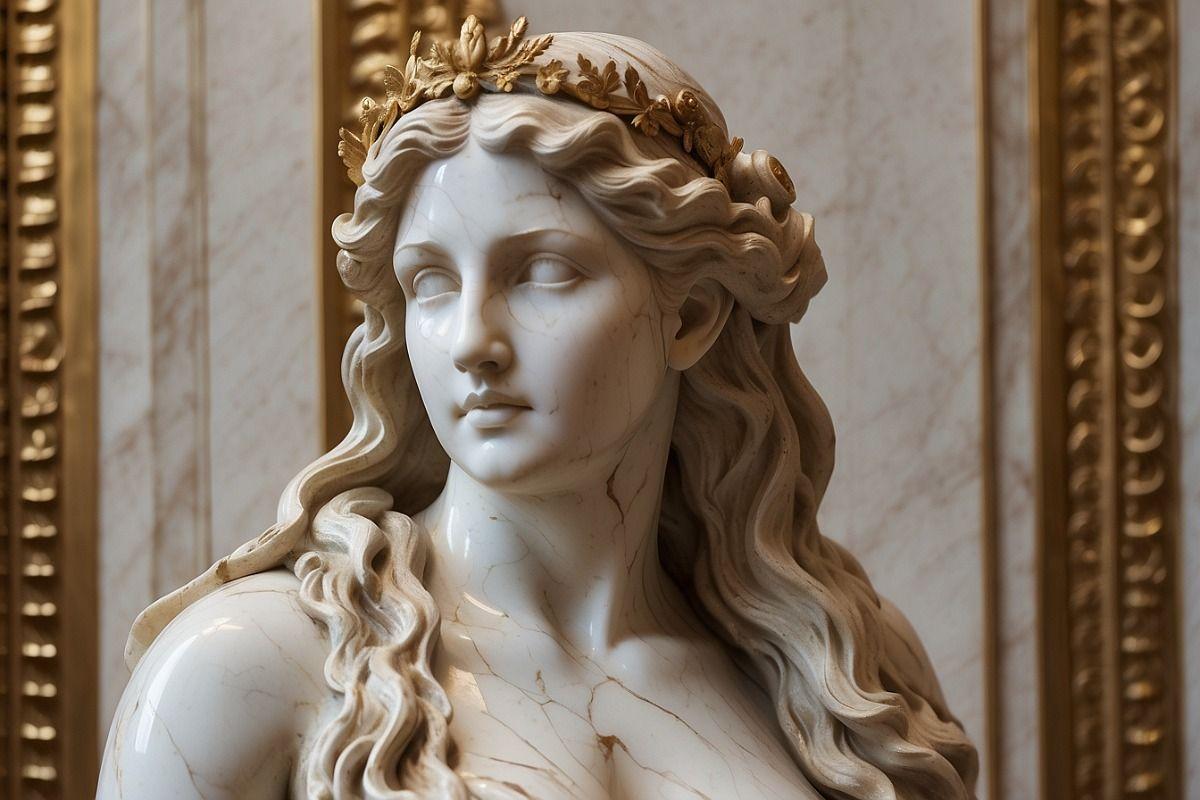
Cyprus also has other archaic examples: images similar to the goddess Astarte, as well as the “bird-faced goddess” with a dove’s head and raised hands. These ancient, abstract images were replaced by more naturalistic ones. With the arrival of the Classical and Hellenistic eras (5th — 1st century BCE), Aphrodite, like other ancient Greek gods, acquired anthropomorphic features. She was increasingly depicted in an elegant pose in a draped chiton. Characteristic examples of statues include: “Aphrodite of Polos” (Aphrodite of Polos), “Aphrodite of Soli” (Aphrodite of Soli). Later, under Hellenistic and Roman influence, statues of the nude “Aphrodite Anadyomene” — “rising from the sea” — appeared.

Geography of the Myth: a guide to Aphrodite’s places on the map of Cyprus
Aphrodite’s Rock at Petra tou Romiou today: what to see and do
Petra tou Romiou rock is located on the pebble beach of the same name, just a half-hour drive from Paphos or Limassol. According to legend, it was on this picturesque shore that Aphrodite first set foot. Therefore, it is one of the most legendary places on the island associated with the goddess. There is always a strong surf here, and sea waves, crashing against the rock and the shore, create thick white foam — just like the foam from which, according to legend, Aphrodite herself was born. The beach looks spectacular at any time of year, especially at sunrise and sunset, when the sun’s rays cast glints on the shiny pebbles and the silhouette of the rocks. In winter, this beach is less crowded and it is a great time to stroll along the shore and take striking photos. This season is perfect for coming here with your significant other. For a complete experience, it is worth visiting the ruins of Palaepaphos in the village of Kouklia, which is only 5 minutes’ drive from Petra tou Romiou. And if the weather allows, you can walk there on foot. You will find yourself on a plateau with a sea view, surrounded by the ruins of an ancient city and on the site of Aphrodite’s ancient sanctuary.
Aphrodite’s Baths and the Aphrodite Trail on the Akamas Peninsula
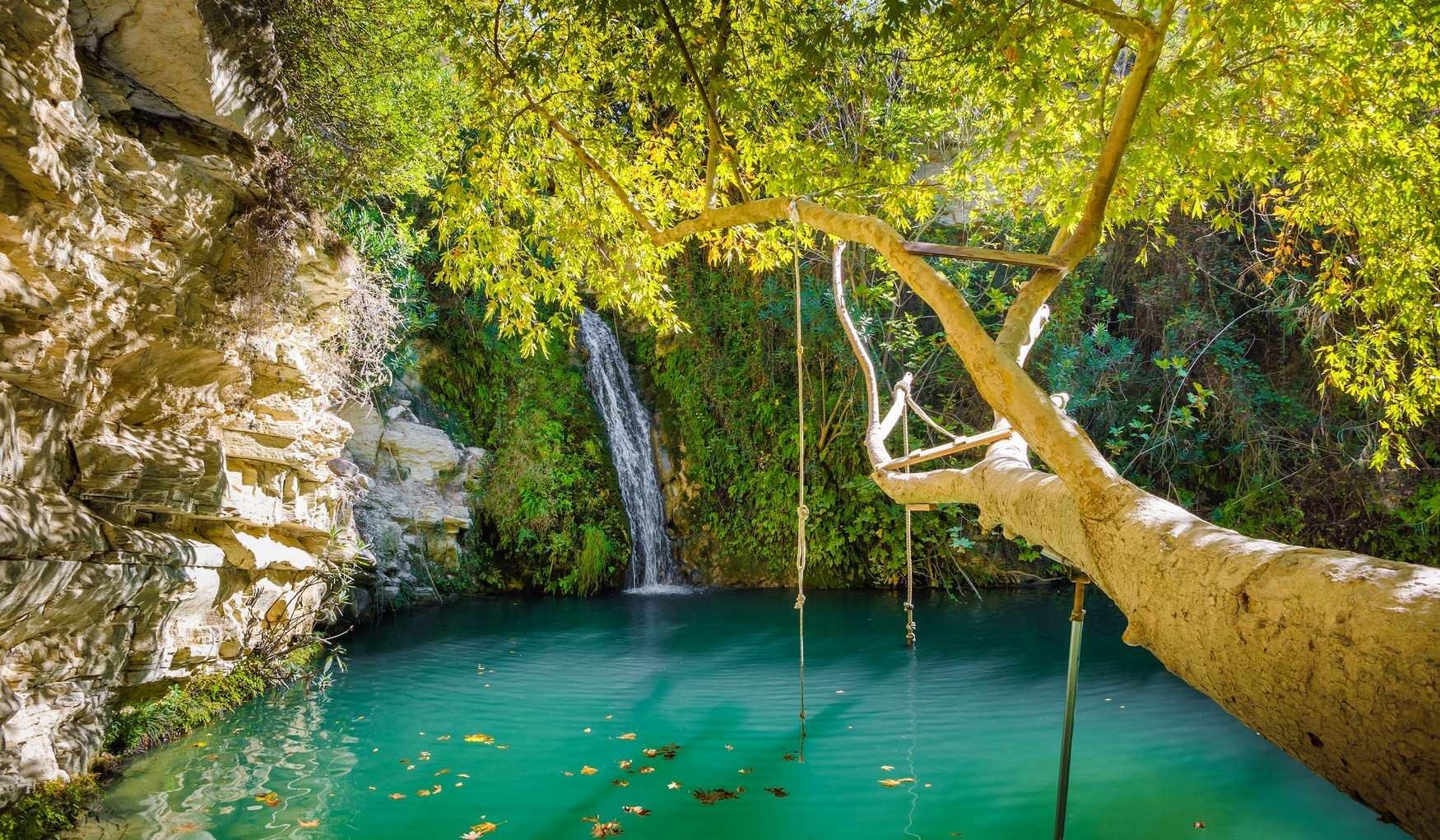
According to legend, the Akamas Peninsula, famed for the beauty of its untouched nature, became the meeting place of Aphrodite and Adonis. The lovers spent most of their time here. Aphrodite’s Baths are located in a botanical garden on elevated ground, and the easiest way to get here is by 4x4. This is a very picturesque place surrounded by lush vegetation. The baths themselves are a rocky grotto with a waterfall. If you have time and desire, you can set out from here on a hike along the Aphrodite Trail, which stretches for 7.5 km. You can admire breathtaking views of Chrysochous Bay and Akamas, and also get acquainted with the local flora and fauna. This is a great opportunity to immerse yourself in the atmosphere of ancient myths and legends.
Kato Paphos Archaeological Park: mosaics and villas with mythic scenes
To learn more about the veneration of Aphrodite in historical context, it is worth visiting the Kato Paphos Archaeological Park, located near the harbor of Paphos and the Medieval fortress. Here you will find the ruins of an ancient city: the public space — the “Agora” with an amphitheater and columns — as well as villas of influential nobles and aristocracy of that time. The well-preserved mosaics are a vivid example of the characteristic style of the Roman era and also confirm the continued influence of the cult of Aphrodite in the first centuries CE. Be sure to see the Villa of Theseus with a 2nd-century CE mosaic depicting Aphrodite emerging from the water surrounded by sea creatures. Also the House of Aion with a 4th-century CE mosaic depicting the beauty contest scene between Aphrodite, Hera, and Athena.
Other significant places: Kourion and Amathus
Amathus is only a 10-minute drive from the center of Limassol, near the popular Amathus Beach Hotel. Here, on hilly terrain right by the sea, you will find the ruins of an ancient city that was a major trading center. If you climb the steps to the top, you will see the remains of an ancient Phoenician temple of Aphrodite/Astarte, from which panoramic views of the sea and Limassol open up. Amathus was a major cult center during Phoenician rule, when the fertility and war goddess Astarte was venerated. After the island passed to the Greeks, the ancient goddess began to be worshiped as Aphrodite Amathusia.
Located 30 minutes’ drive west of Limassol, the ancient city of Kourion stands on an elevated plateau offering breathtaking panoramic sea views. Here you will find a Greco-Roman amphitheater and the majestic columns of the ancient Temple of Apollo. Although Apollo was considered the city’s patron deity at that time, few people know that Aphrodite was also honored alongside him in this temple. Interestingly, it was in Kourion that a little-known aspect of the goddess was revered — her connection with the underworld. Here she was even called by another name — “Aphrodite Arginis”.
The island of Aphrodite in the 21st century: from ancient myth to a tourism brand
How the legend shapes Cyprus’s image and attracts tourists
Millennia ago, Cyprus attracted countless pilgrims as the center of Aphrodite’s cult. Today, millions of tourists come to the island to get acquainted with the mythical homeland of the goddess of love and beauty. Cyprus’s natural beauty, picturesque beaches, and historic monuments create a truly magical atmosphere where history and legends blend into a single whole.
If you look closely, Aphrodite’s symbolism is everywhere here. For example, ancient figurines of the goddess can be seen on local coins; her name is used in hotel names and on shop and tavern signs. Images of Aphrodite appear on postcards, bags, T-shirts, and other goods. And artists and sculptors draw inspiration from her beauty to create their works.
Festivals, romantic traditions, and modern symbolism
Although the worship of Aphrodite in its original form has long since disappeared, the island still hosts many colorful festivals, some of which are direct references to ancient rites:
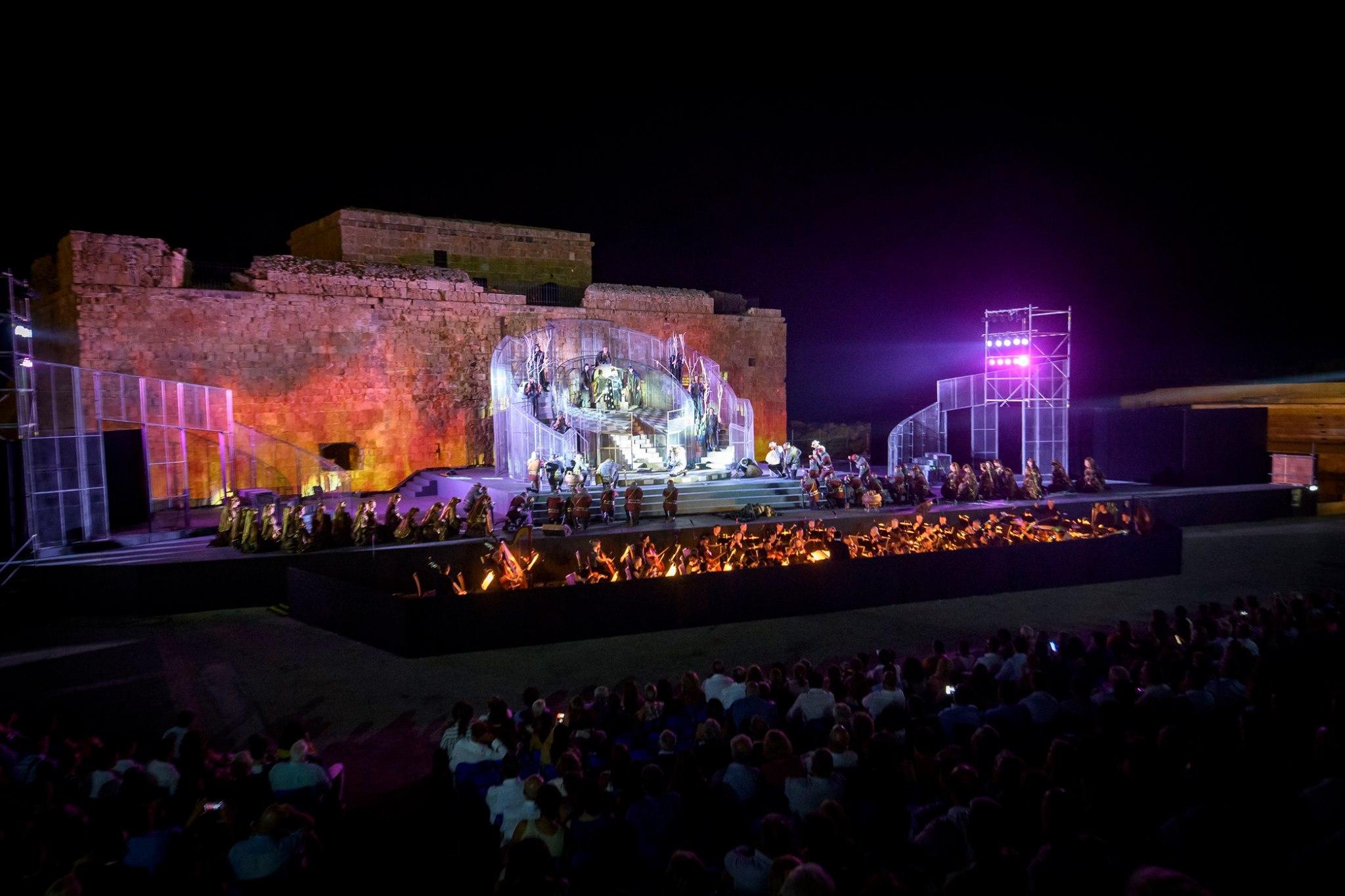
- The Aphrodite Festival in Paphos. This annual festival takes place every September on the waterfront of Paphos harbor. International opera companies gather here and perform works dedicated to Aphrodite right by the water.
- “Anthestiria” (Anthestiria). This flower festival takes place in May and is an ancient Greek celebration of flowers devoted to fertility and renewal. It directly echoes an ancient Cypriot festival in honor of Aphrodite.
- Full Moon & Myth Nights at Petra tou Romiou (Full Moon & Myth Nights at Petra tou Romiou). These atmospheric evenings are most often held in summer on Petra tou Romiou beach and are accompanied by music, storytelling, and performances dedicated to Aphrodite.
- “Kataklysmos”. Although this festival is now closely associated with the Christian feast of Pentecost, many see in it a connection to ancient water rituals linked to Aphrodite.
To this day, seashells are very popular on the island as a romantic symbol of love and a reference to the myths of Aphrodite. Lovers often gift them to their significant others. Silver jewelry in the form of shells and doves is also very popular. Some people also leave small notes or hearts at the site of Aphrodite’s sanctuary in Kouklia with requests for help in finding love or reconciliation after an argument. Rose and myrtle are also associated with Aphrodite. Therefore, many local florists create special romantic bouquets using myrtle and roses. They are especially popular on Valentine’s Day, as well as during weddings and engagements.
Expert opinion: a historian’s view on the phenomenon of the island of Aphrodite
Comparing the Cypriot cult of Aphrodite with the cults of Ishtar and Astarte
From ancient times, Cyprus had a clearly expressed cult of worship of a female deity — the “Great Goddess” or “Mother Goddess.” Archaeological finds from the Chalcolithic period (3,500 — 2,500 BCE) and the Early Bronze Age attest to this. Unlike anthropomorphic depictions of Near Eastern goddesses, the Cypriot fertility goddess was depicted quite abstractly — from the cone stone in the sanctuary at Kouklia to a primitive stone figurine in the form of an abstract female figure. Such as the well-known “Lady of Lemba.”
Her companions were a copper ingot and a pickaxe, which allude to Cypriot land, agriculture, and copper mining. Thus, the Cypriot goddess was a symbol of fertility in its broader meaning; her nature was more chthonic than warlike. She acted as a mother — a patroness and provider. Overall, the Cypriot goddess embodied the island itself and its nature. Meanwhile, the Near Eastern goddesses — Ishtar and Astarte — embodied passion, fertility, and war. Their essence was more aggressive and even martial. And although during Phoenician rule in Cyprus, some parts of the Astarte/Ishtar cult migrated to the island and left their mark on the cult of the local goddess, they did not change it completely, but only complemented it.
Influence of the myth on the formation of Cypriot national identity
The cult of Aphrodite remains in the past, but her influence stretches through millennia like an invisible thread. It is safe to say that Aphrodite has become an integral part of Cypriot national identity, emphasizing the beauty, uniqueness, ancient history, and rich culture of the island, as well as its connection not only with Hellenistic culture, but also with other ancient civilizations.
This goddess expresses the very essence and diversity of the island: from the chthonic “mother-goddess” to the bold and warlike, yet irresistibly beautiful Aphrodite. Perhaps that is why, even today, many Cypriot women proudly bear her name.
Frequently asked questions
Where exactly in Cyprus was Aphrodite born?
Some legends claim that Aphrodite was born from the foam near Cyprus, but only later arrived on the island on the waves. However, according to most beliefs, Aphrodite appeared right off the coast of Cyprus, in a place called Petra tou Romiou. All myths agree that the goddess first set foot on land precisely in Cyprus.
Can you swim by Aphrodite’s Rock, and is it true that it brings eternal youth?
The belief in eternal youth after swimming by Aphrodite’s Rock is, of course, a legend, since nothing is eternal. However, there is a grain of truth in it — swimming in invigorating cool water helps with strengthening health. But you need to be careful, because the beach has fairly strong waves and currents, and the seabed is rocky. On especially windy days, it is better not to tempt fate.
What evidence of Cyprus’s connection with Aphrodite exists besides myths?
Cyprus was an ancient cult center for the worship of Aphrodite. On the island you can find many ruins of ancient temples and sanctuaries in her honor. Of special interest is the Temple of Aphrodite in Kouklia, which was the island’s main ritual center.
What other Greek myths are connected with Cyprus?
Notably, many events from ancient Greek mythology and tales took place in Cyprus. Here are just a few of them:
- In the epic tale of the Argonauts, they stopped in Cyprus on their return journey from Colchis in the area of Cape Greco.
- According to some sources, one of the entrances to the underworld was located in the area of Cape Akamas.
- According to one legend, Agapenor — a hero of the Trojan War — became the founder of Ancient Paphos.
A practical guide for the traveler
1–3 day itinerary: how to visit all the key places
Day 1: Paphos and surroundings
On the first day, you can start by diving into history by visiting the Kato Paphos Archaeological Park with its beautiful ancient mosaics depicting Aphrodite. Then it is worth stopping by the Paphos Archaeological Museum in the city center, where you can see many older artifacts and figurines associated with the goddess’s cult.
After that, take a break for lunch in one of the local taverns. In the second half of the day, go to the Temple of Aphrodite in Kouklia, about a half-hour drive from the city. A panoramic view opens from the top of the plateau, and you can take stunning photos. Here you can also see the famous cone stone — an ancient symbol of the goddess. Closer to sunset, head to Petra tou Romiou beach, which is located not far from Kouklia. Here you can fully enjoy a beautiful sunset by the famous Rock of Aphrodite.
Day 2: The Akamas Peninsula
To enjoy the natural beauty of Akamas, you will need the whole day and a 4x4. It is better to set out early in the morning, since Akamas is about an hour’s drive from the city. First, visit Aphrodite’s Baths. After admiring the grotto and the botanical park, you can go for a hike along the Trail in Aphrodite’s footsteps. The trail is 7.5 km long; it will take about 3 hours there and back. Then you can visit the picturesque coastal village of Latchi and have lunch in one of the local taverns. A trip to Akamas would be incomplete without visiting the Blue Lagoon and the famous sea caves. Also do not miss the chance to see the protected Lara Bay (Lara Bay) beach — a haven for sea turtles. You can end the day again near Aphrodite’s Baths and enjoy the sunset by the local cliffs, which offer a breathtaking view of the entire peninsula.
Coordinates, opening hours, and ticket prices
Paphos Archaeological Museum (Paphos Archeological Museum)
Opening hours: Tue—Fri from 8.30 to 16.00, Saturday from 9.00 to 16.00, Sunday from 10.00 to 13.00
Admission: 2.5 euros
Kato Paphos Archaeological Park (Archeological Park of Kato Paphos)
Opening hours:
Summer (April to September): 8.30 to 19.30, daily
Winter (September to April): 8.30 to 17.00, daily
Admission: 4.5 euros (together with a visit to the Tombs of the Kings — 8.5 euros)
Aphrodite's Baths
Opening hours: 24/7
Admission: free
Ancient Temple of Aphrodite in Kouklia
Opening hours: Mon—Sat from 9.00 to 17.00
Admission: 4.5 euros
Petra tou Romiou
Opening hours: 24/7
Admission: free
The story of Aphrodite is not only an old myth; it is also an integral part of the island’s history and culture. If you visit its legendary places, you can feel that Cyprus is an island where myths and reality intertwine in an astonishing way, and Aphrodite is not just the embodiment of beauty and romance, but also a symbol of the island’s remarkable past and former grandeur.
Read also:
- Cyprus wedding traditions — rites, symbols, and features of local celebrations
- Traditional Cypriot jewelry: history, Lefkara silver, and filigree technique
- TOP 10 new buildings in Limassol that will be delivered in 2026
- Kindergartens in Cyprus: how they work, how much they cost, and what parents should know
- How to enroll in a Greek school in Cyprus and provide a child with a comfortable education