"Sweet as honey" (γλυκό σαν μέλι) is a phrase commonly used in Cyprus to describe fruit with exceptional sweetness. And it's no exaggeration. If you've ever tasted local peaches, figs or melons, you've probably felt as though they had absorbed all the Cypriot sunshine and turned it into sweet nectar. So, if you're planning to visit the island this summer, don't miss the opportunity to try Cyprus' delicious seasonal fruits.
In this article, we'll explore which fruits to try in Cyprus during the summer, discover the island's seasonal varieties, reveal where to find the freshest produce and share a few tips on bargaining with local farmers. We'll also explain how to choose the best fruit and how to store it properly.
Which Fruits Are in Season in Cyprus in July
Late July and early August mark one of the best fruit seasons in Cyprus, when an incredible variety of local produce reaches its peak. Fragrant melons, sugar-sweet watermelons, juicy peaches and nectarines, and delicate, flavourful figs make it almost impossible to resist the island's abundance. Let's take a look at the varieties you can find in Cyprus during this season.
Watermelons and Melons
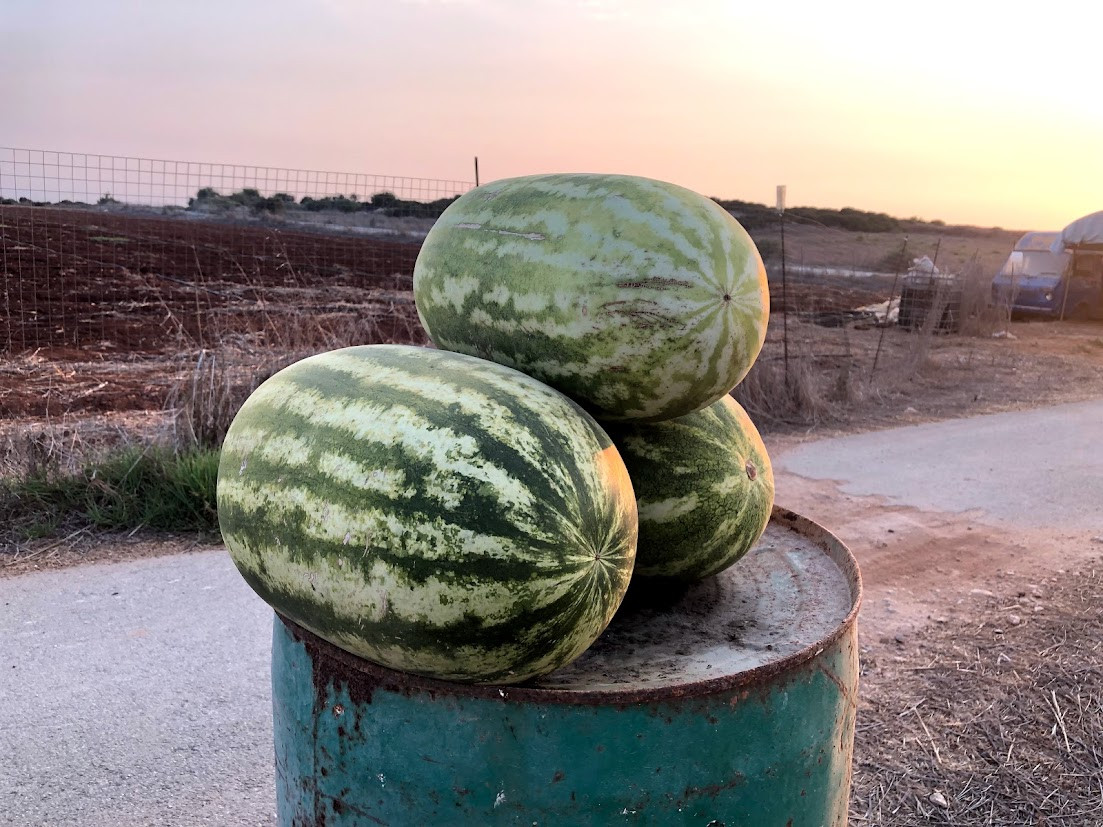
July is the height of the watermelon and melon season. Ripening quickly under the scorching summer sun, they become exceptionally sweet. Local watermelons are usually recognised by their elongated shape and striped rind, although some varieties have a dark green skin. Inside, they are bright red and incredibly sweet. It's no surprise that no Cypriot summer gathering is complete without watermelon, which is served both as a dessert and as the perfect accompaniment to halloumi cheese.
They are also known for their impressive size. An average watermelon weighs around 5 kg, while true giants can reach up to 12 kg. July is the peak of the season, and you'll find them in supermarkets, farmers' markets, roadside stalls and even sold directly from farmers' trucks.
Melons are just as popular, delighting visitors with their delicate aroma and sweet flavour. In Cyprus, you'll mainly come across two varieties: muskmelon (cantaloupe), which is round with golden skin and orange flesh, and honeydew melon, which has an elongated shape, pale green flesh, a delicate aroma and an unforgettable flavour that truly lives up to its honey-inspired name.
Peaches, Nectarines, Apricots and Plums
July is an excellent month for stone fruit. It's the perfect time to enjoy Cyprus' exceptionally sweet local peaches and nectarines. The apricot season is usually drawing to a close, but if you're lucky, you can still find them in the mountain villages of the Troodos region. Local plums are a story of their own. Their season generally runs from mid-July to early August, and it sometimes feels as though every part of Cyprus has its own unique varieties—and that's not far from the truth. Large and small, dark blue and yellow, the island offers plums in every colour and size. The most popular are blue plums with burgundy or yellowish flesh and a pleasant hint of tartness.
Many villages still grow their own traditional plum varieties. They are much smaller than the ones sold in supermarkets and often resemble wild plums in appearance, but their flavour and aroma are far more intense. At farmers' markets or in the villages themselves, you may also come across tiny yellow plums resembling cherry plums, with amber-coloured flesh and a sweet, almost honey-like flavour.
Grapes, Figs and Fruits at the Turn of the Season
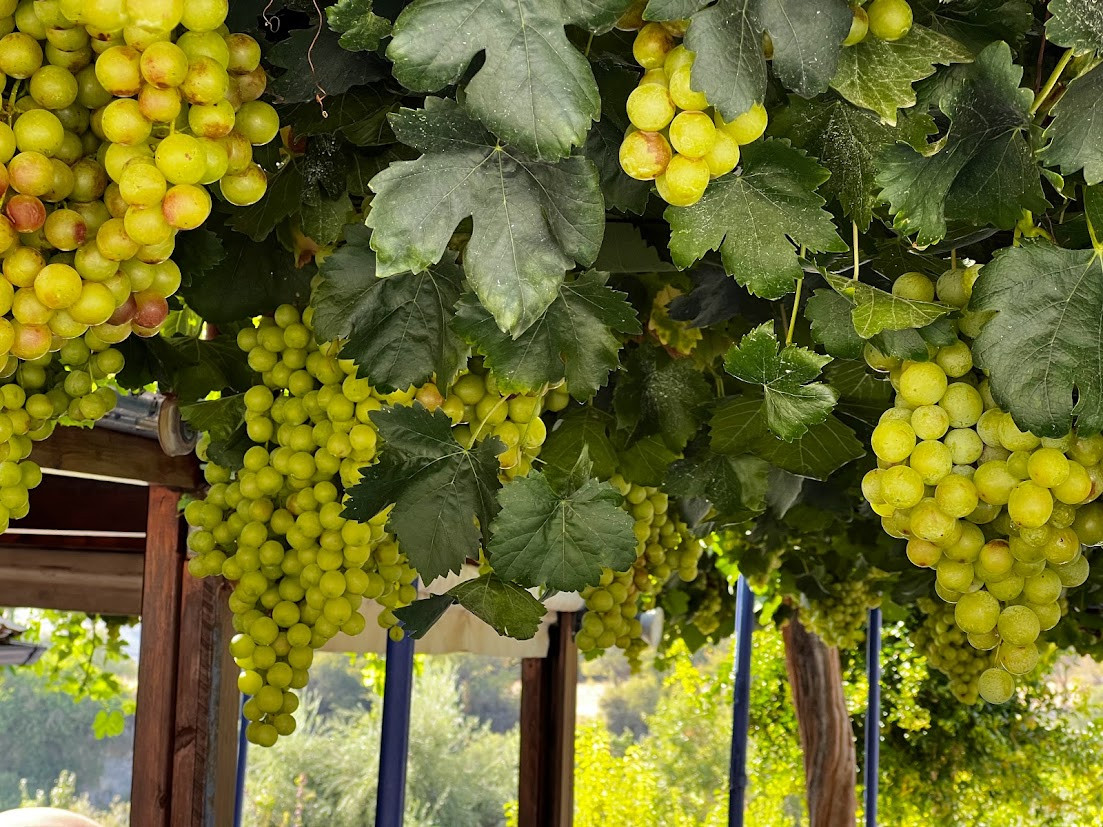
Grapes begin to ripen in the second half of July. By the end of the month, you can already enjoy local seedless table grape varieties, both white and red, including Superior Seedless, Sultana Seedless, Flame Seedless and Black Magic. Cyprus is home to more than ten fig varieties, and although the peak season falls in August, the earliest figs begin to ripen by late July. At this time, you'll most commonly find green varieties with pink flesh, such as Vartikon, Tillirissima and several wild varieties.
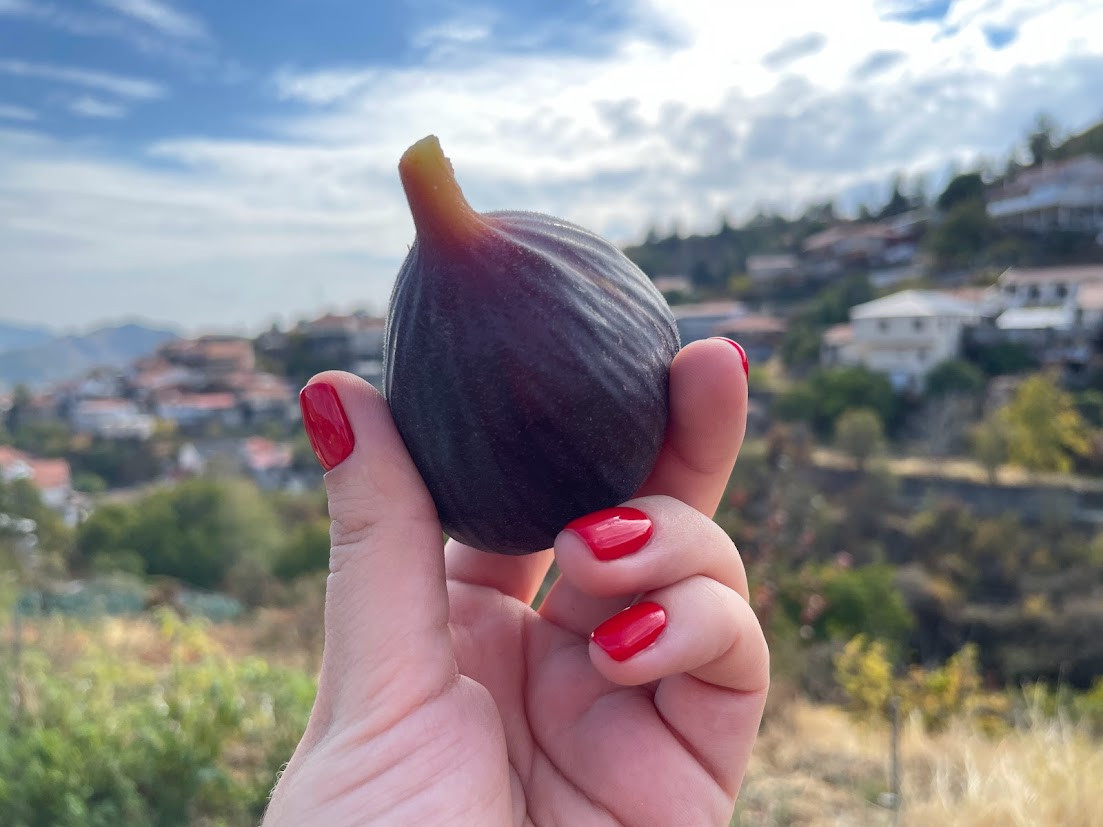
From late July into early August, the purple Vasanata fig also comes into season. Its name derives from the Cypriot Greek word βασάνα, meaning "eggplant." It is considered one of the island's finest fig varieties, producing large eggplant-coloured fruits with bright red flesh and an exceptionally rich, sweet flavour. The best places to find it are farmers' markets and mountain villages.
Prickly pears also begin ripening in some parts of the island during July, although their main season runs from August to September. Their flesh is juicy, sweet and highly nutritious. However, reaching it requires a little care, as the skin is covered with tiny spines that should never be touched with bare hands.
Fortunately, prickly pears are usually sold already peeled and packed in plastic containers.
How to Tell Local Fruit from Imported Produce
It's no secret that Cyprus' seasonal fruit outperforms imported produce in almost every way. Local fruit is fresher, since it doesn't spend weeks in transit or storage, and local varieties offer a much wider range of flavours. So how can you tell local fruit from imported produce? The first thing to check is whether the fruit has a label. Imported fruit is usually marked with a sticker indicating its country of origin. In contrast, fruit sold in Cyprus—especially at farmers' markets and village shops—is often completely unlabelled. Another useful clue is the season. If a particular fruit is not yet in season in Cyprus, or its season has already ended, it is most likely imported. And, of course, it's always worth taking a closer look at the fruit itself.
Locally grown fruit rarely looks perfect. It often varies in size and shape, whereas imported fruit tends to appear almost identical, with smooth, glossy, waxed skins. The biggest giveaway, however, is the aroma. Even with your eyes closed, the rich fragrance of fresh Cypriot fruit is enough to distinguish it from imported produce.
Where to Buy Fruit in Cyprus
Finding fresh seasonal fruit in Cyprus during the summer is easy. The island is home to major supermarket chains that work with local suppliers. Cities also host morning farmers' markets, full of local character and offering the freshest seasonal fruit at very reasonable prices. Even while driving along the roads, you'll often spot roadside stalls or small stands where locals sell their own harvest. Let's take a closer look at how these options differ.
Fruit Shops and Farmers' Markets
Almost every town in Cyprus has its own farmers' market (Laiki Agora), where growers from nearby villages bring their freshest produce. These markets offer the widest selection of fruit on the island. They usually operate only on specific days and in the morning, typically from 6:00 a.m. until 1:00–3:00 p.m., although it's always worth checking the schedule in advance. Since the fruit and vegetables often arrive straight from the fields, they are noticeably fresher and more flavourful than supermarket produce. Towards the end of the day, farmers frequently sell off the remaining stock at heavily discounted prices, which is why many shoppers deliberately come just before closing. Of course, it's a bit of a gamble—there's no guarantee that anything will still be available by then.
Another advantage of farmers' markets is their relaxed atmosphere, where bargaining is sometimes possible. This is especially appropriate if you're buying large quantities of fruit or shopping close to closing time. The key is to be friendly and learn a few words of Greek. Regular customers are often rewarded with a small discount or even a complimentary treat. It's important to stay polite and avoid bargaining too aggressively. Unlike many Middle Eastern countries, haggling is not a deeply rooted market tradition in Cyprus. Even if you don't receive a discount, don't hesitate to chat with the vendors—they're often happy to share interesting facts about Cyprus' produce and may even offer you a taste.
Roadside Stalls and Village Shops
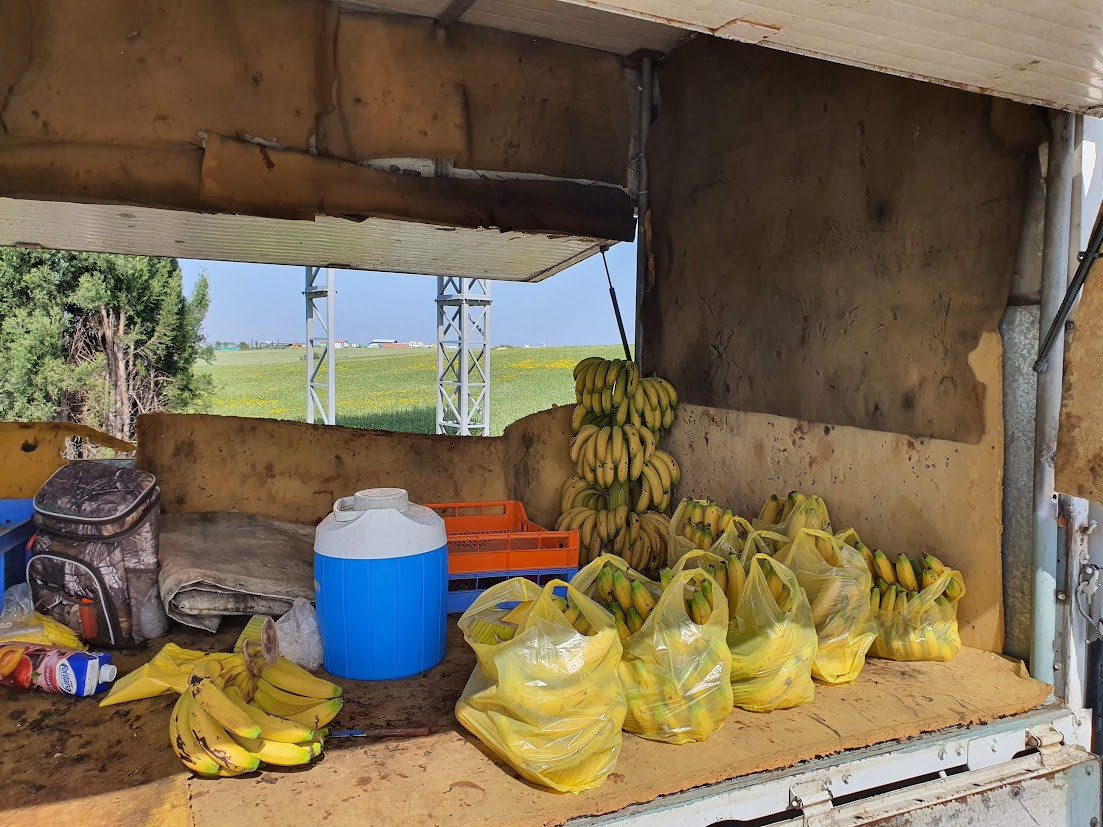
When travelling along the roads towards the Troodos Mountains, you'll often notice small stalls or homemade stands set up by the roadside. This is where local residents sell their own harvest. From the outside, these stalls may look quite modest, but step inside and you'll discover an impressive selection of fresh local fruits and vegetables. The biggest advantage is that the produce is often picked just a few hours before being sold, guaranteeing exceptional freshness. You'll also find rare local varieties that simply aren't available in supermarkets. Prices are usually lower as well, and the sellers are often so welcoming that they'll offer you a sample before you buy, just so you can experience the flavour for yourself. It's no surprise that locals frequently stop at these stalls on their way home, so they're almost always busy. This is undoubtedly one of the best ways to buy fresh seasonal fruit in Cyprus. Many roadside stalls also sell homemade halloumi and anari cheese, olives and freshly baked bread. Even if you're unfamiliar with Cyprus' local products, the vendors will gladly tell you about them and may even invite you to try them.
Cypriot villages also have their own small fruit and vegetable shops. However, in smaller and more remote villages, they often follow the same schedule as farmers' markets, operating only on certain days and mainly in the mornings. So, if you're planning a special trip to buy fruit, it's best to check their opening times in advance rather than relying on luck.
Supermarkets and Price Comparison
Cyprus has several major supermarket chains, and nearly all of them offer a good selection of fruit. You'll find both locally grown and exotic produce. If you're looking specifically for fresh seasonal fruit from Cyprus, consider shopping at Alphamega or Papantoniou, both of which work closely with local farmers. If saving money is your priority, Sklavenitis and Lidl are usually the better options.
Useful tip: To keep track of average prices for locally grown fruit and vegetables, visit the government's e-kofini portal, where the Cyprus Ministry of Agriculture regularly publishes up-to-date average prices from both producers and retailers.
You've probably noticed the small convenience stores scattered throughout the island's tourist areas. They're usually located near beaches and hotels, along the main resort streets or close to short-term holiday accommodation. Prices there can be quite high, while the selection of fresh fruit and vegetables is often much smaller than in large supermarkets. That's hardly surprising, as these shops primarily cater to tourists and expats who value convenience over saving money. Locals, on the other hand, usually shop at the larger supermarket chains, where there's a wider choice of locally grown produce and much better prices. These supermarkets are typically located in residential neighbourhoods, close to schools, housing estates and sometimes inside large shopping centres.
How to Choose Ripe Fruit
Whether you decide to buy fruit at a supermarket or a farmers' market, knowing how to choose ripe produce is essential. Appearance is only part of the story—firmness and aroma are just as important. Here are a few tips to help you pick the tastiest fruit every time.
Colour, Aroma and Firmness
Ripe fruit usually has a rich, natural colour characteristic of its variety, so it's worth familiarising yourself with the appearance of local cultivars in advance. For example, local yellow plums are often mistaken for unripe fruit, even though they are perfectly ripe. Ripe fruit should also have a strong, pleasant aroma, especially melons, peaches, nectarines and apricots, whose fragrance can often be noticed from several metres away.
Firmness is another important indicator. Peaches, nectarines and apricots should yield slightly when gently pressed, plums should feel firm but not rock hard, and figs should be soft without being squashed. Watermelons and melons should not be squeezed; instead, judge them by their appearance. A ripe melon will also have a strong aroma even before it is cut. As for watermelons, there's another useful clue: if the stem is dry, the fruit is most likely ripe, whereas a green stem may indicate that it was picked too early.
How to Spot Unripe and Spoiled Fruit
Fruit should never feel rock hard. While some varieties of plums and nectarines remain fairly firm even when ripe, fruit that is excessively hard is usually unripe. Another sign of underripeness is the absence of a rich fruity aroma. Colour is also a good indicator of ripeness. If you notice large green patches, the fruit has most likely not ripened yet.
In general, if the skin looks overly smooth and "perfect" but has little or no aroma, it's a good sign that the fruit was picked too early. On the other hand, fruit that is overly soft, bruised, has wet spots, cracks or darkened flesh beneath the skin should be avoided. Another warning sign is a strong sour smell resembling fermentation—if you notice it, it's best to leave the fruit where it is.
Minor imperfections, however, are completely normal, especially when buying directly from local farmers. A scratch or an irregular shape doesn't mean poor quality. Quite the opposite—it often indicates that the fruit is fresh, seasonal and grown with minimal or no pesticides.
How to Store and Transport Fruit in Hot Weather
The Cypriot summer heat is challenging not only for people but for fruit as well. That's why it's important to know how to store it properly after purchase so it stays fresh for as long as possible.
What Can Be Kept at Room Temperature and What Should Go Straight into the Fridge
Melons and watermelons can be safely kept at room temperature until they are cut. Peaches, apricots and nectarines can also be stored outside the refrigerator, provided they are not overly soft. Grapes, however, should be refrigerated immediately—in the Cypriot heat, they can turn into raisins faster than you can finish eating them.
Overripe nectarines, peaches and apricots should also be placed in the refrigerator, along with cut melons and watermelons. Ripe figs are particularly delicate and do not tolerate high temperatures well. And if you're lucky enough to find peeled prickly pears, they should definitely be stored in the fridge too.
How to Transport Fruit in Summer
If you're planning a trip around the island, transport your fruit in a cloth bag or basket rather than a plastic bag. For longer journeys, it's best to use an insulated cooler bag. Never leave fruit inside a closed car, even for just 20–30 minutes. During the Cypriot summer, fruit can literally "cook" under the blazing sun, losing both its shape and its flavour.
Useful tip: never wash fruit before storing it, as moisture shortens its shelf life. It's best to wash it immediately before eating.
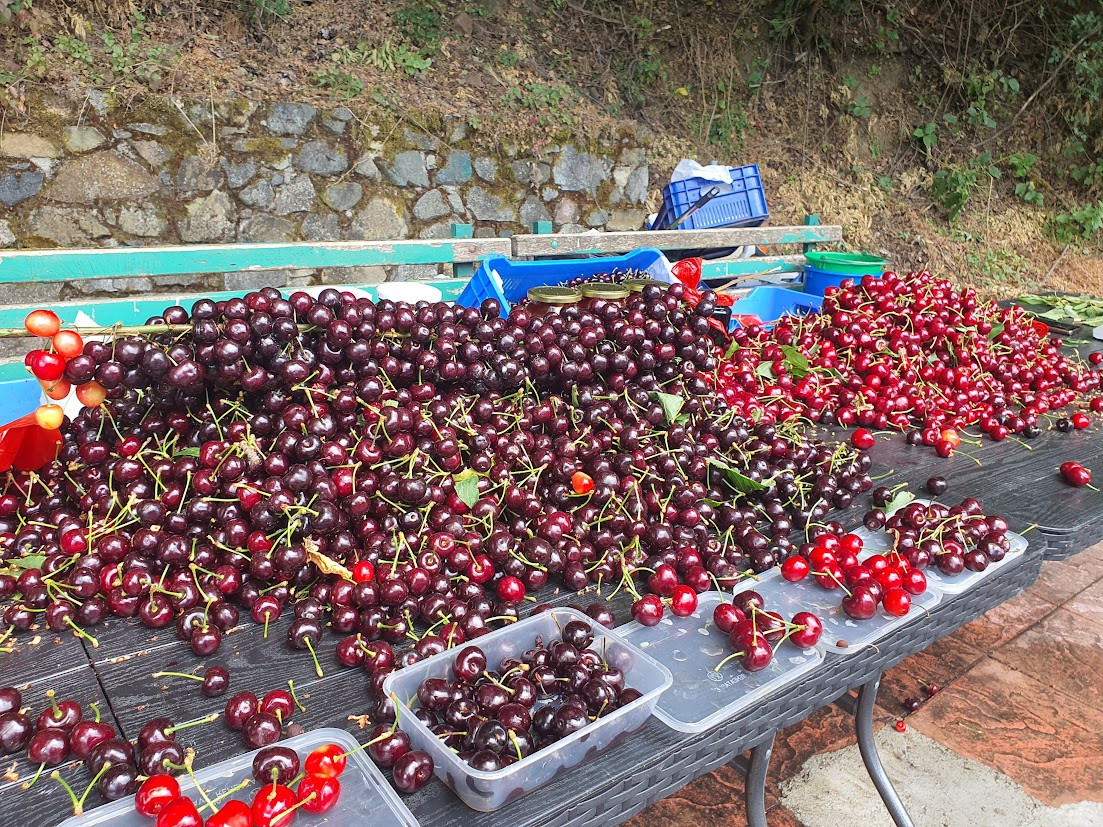
Nature has generously blessed this sunny island with an abundance of delicious fruit. Cyprus' fruits are renowned not only for their rich flavour and aroma but also for their remarkable variety. Even after living on the island for years, you may still discover new local varieties and unexpected flavours. Right now is the perfect time to enjoy these wonderful gifts of nature. After all, what could be better on a hot summer day than a slice of juicy melon or sweet watermelon served with salty halloumi?
And if you'd like to make moments like these part of your everyday life and enjoy delicious Cypriot fruit all year round, take a look at apartments for sale in Limassol—one of the island's most popular cities for both living and investment.
Read also:
- The Cost of Living in Cyprus in 2026
- The Papadopoulos Family Mansion in Limassol: An Architectural Gem on the Seafront
- Enduro and Motocross in Cyprus: A Guide to the Best Mountain Trails in 2026
- Where to Watch English-Language Films in Cyprus: The Best Cinemas in 2026
- How to Make Money from Real Estate in Cyprus: A Flipping Guide for 2026