Halloumi is not just a cheese — it is the calling card of Cyprus and a true national pride. Its main feature, which has made it beloved around the world, is its unique texture. When fried or grilled, halloumi does not melt into a shapeless mass like ordinary cheeses. Instead, it develops an appetising golden crust while remaining tender and slightly squeaky inside.
Few people realise that the cheese sold in supermarkets only vaguely resembles authentic village halloumi prepared according to traditional recipes.
Recently, I visited the picturesque village of :contentReference[oaicite:0]{index=0} in the :contentReference[oaicite:1]{index=1} region, where cheesemaking traditions have been passed down from generation to generation. I was fortunate enough to witness the entire halloumi-making process with my own eyes and even taste it warm, fresh from the press. Here are the secrets shared by the local housewives.
Essential tools and ingredients: simple and ingenious
Making authentic halloumi does not require complicated equipment. In Cypriot villages, everything is done with simple, practical tools. To recreate the process at home, you will need a large cauldron or a very spacious pot, a portable gas burner or stove, a wide wooden board (which serves as both a support and a working surface), and special cheese moulds.
You will also need large stainless steel sheets or simply a clean table, slotted spoons or colanders, and, of course, plenty of running water. As for the ingredients, the most important one is fresh goat’s or sheep’s milk. It is the fresh milk that gives halloumi its unmistakable flavour. You will also need a small amount of rennet and coarse salt. For the final touch, fresh mint leaves are essential.
You will need:
- 5 liters of unpasteurized goat's milk (sheep's milk can be substituted, but it must be unpasteurized);
- 0.5 teaspoon of powdered rennet (available in supermarkets in Cyprus);
- 1 cup of coarse salt;
- fresh mint.
The step-by-step secret to perfect halloumi: a grandmother’s recipe
The entire process took about two hours, but watching the women’s hands at work felt like witnessing magic. Here is how it unfolded. First, goat’s milk was poured into a large pot. One of the local women dissolved a small amount of rennet in half a glass of milk and added it back into the main batch. The burner was set to the lowest heat. The milk and rennet were then left for a little over an hour until the milk began to curdle. An experienced helper periodically checked the curd. She dipped her hands into the lukewarm milk and gently stirred from the bottom upward, lifting to the surface the pieces that had already started to set. An important detail: Cypriot women do not use acid to separate the whey, relying only on gentle handling.
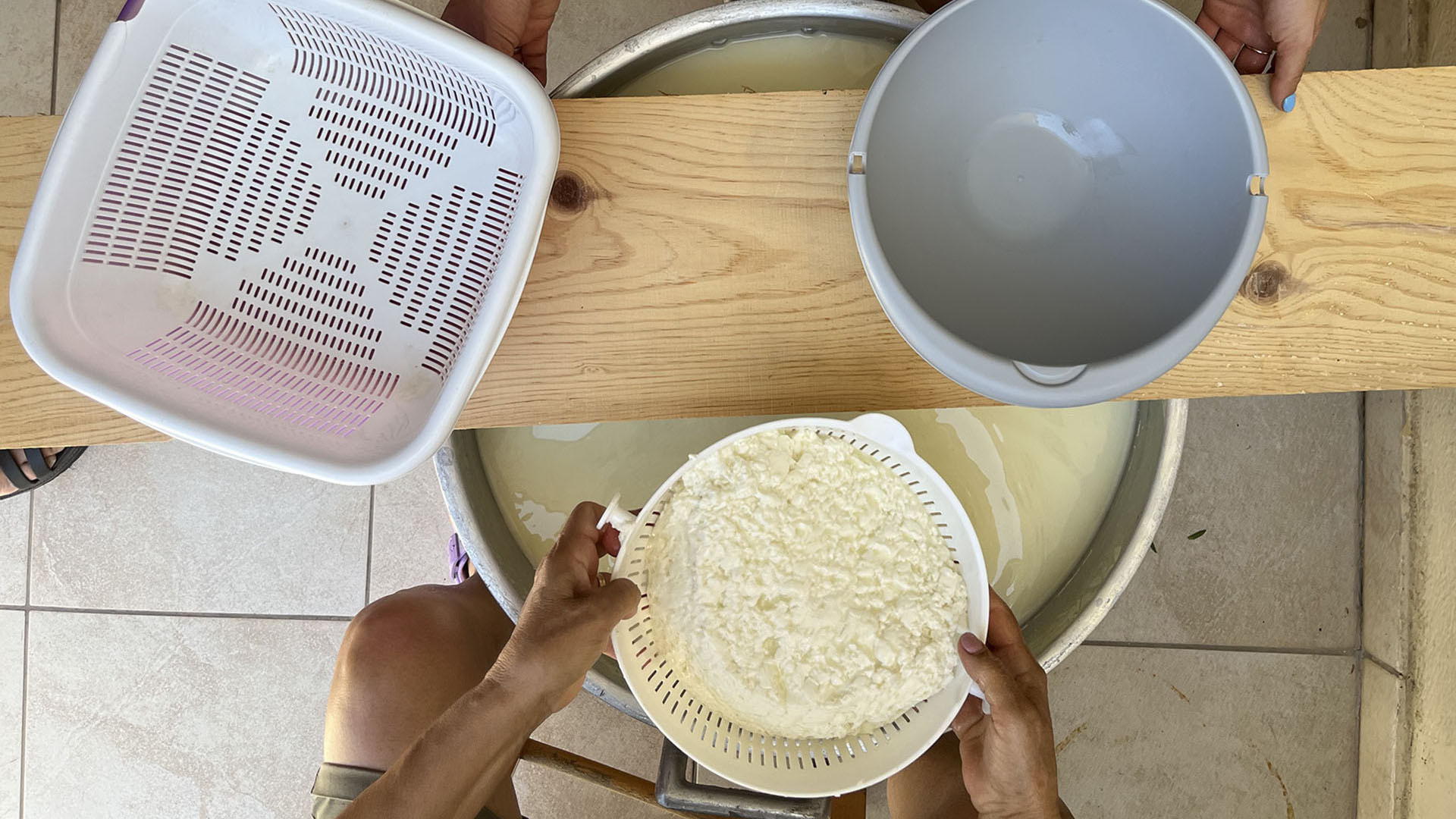
Next, a wooden board was placed across the edge of the pot, creating a practical support. Using two or three slotted spoons, the women collected the curd. They allowed the whey, known in the local dialect as “norros,” to drain back into the pot. The curd was left in the spoon for a moment and gently shaken to remove as much liquid as possible. This whey would later be used both to cook the halloumi itself and to make anari, a soft Cypriot whey cheese.
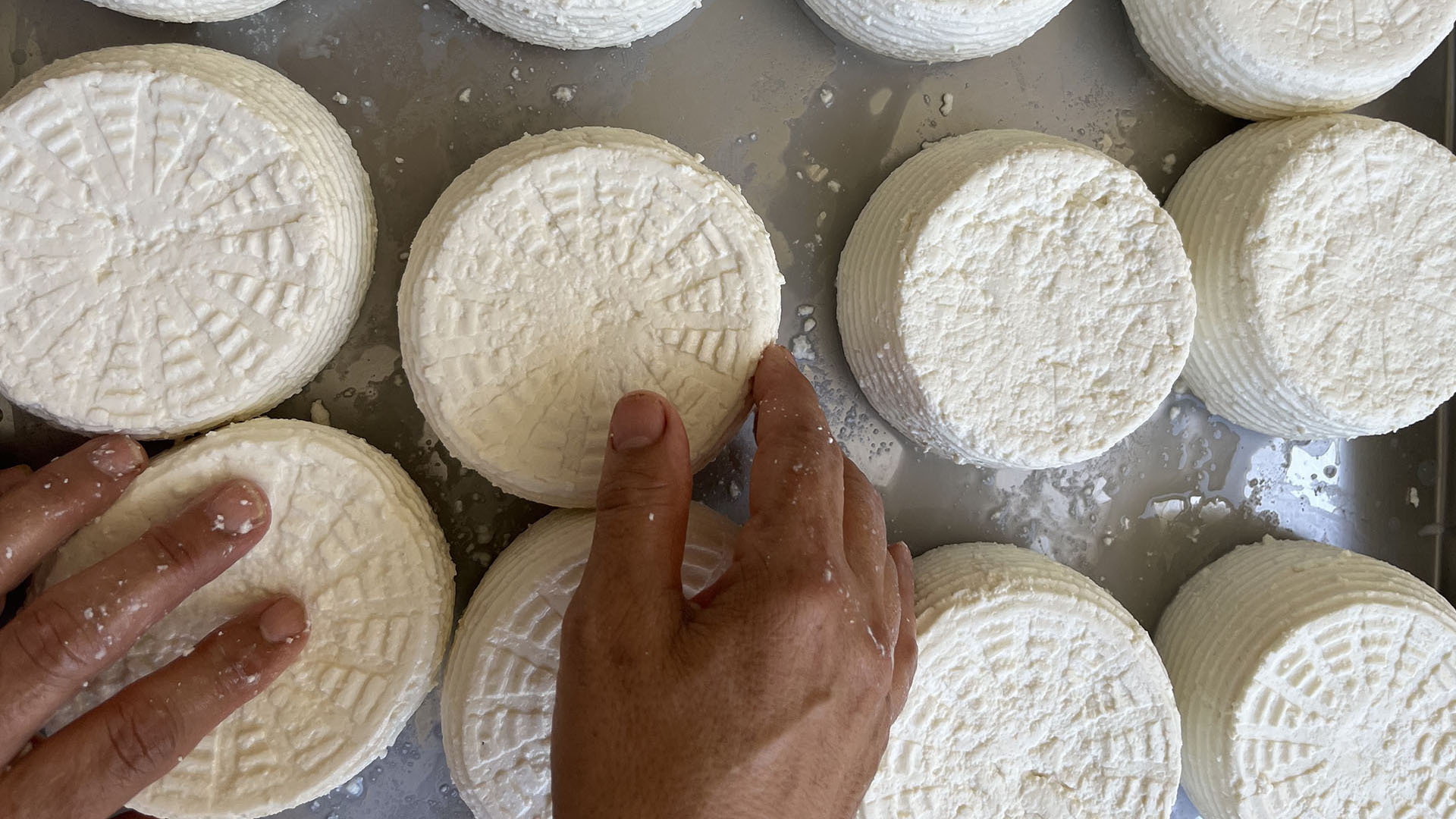
The slightly dried halloumi was placed into moulds. The women gently pressed it with their fingers to release excess moisture, but not too firmly. The secret to juicy, non-dry halloumi is preserving some moisture inside. The moulds were turned over, pressed from the other side, and left on a large tray to drain and dry slightly. Once all portions were prepared, the cheese was removed from the moulds and left on the tray for further draining.
While the halloumi was drying, the pot with the remaining whey was returned to the heat, a little fresh milk was added, and the mixture was gently warmed. After some time, a new curd formed on the surface — this was anari. It is eaten warm, sometimes sprinkled with cinnamon. An incredibly delicate and low-fat product that is, unfortunately, almost impossible to find outside Cyprus.
The secret bag method and mint inside
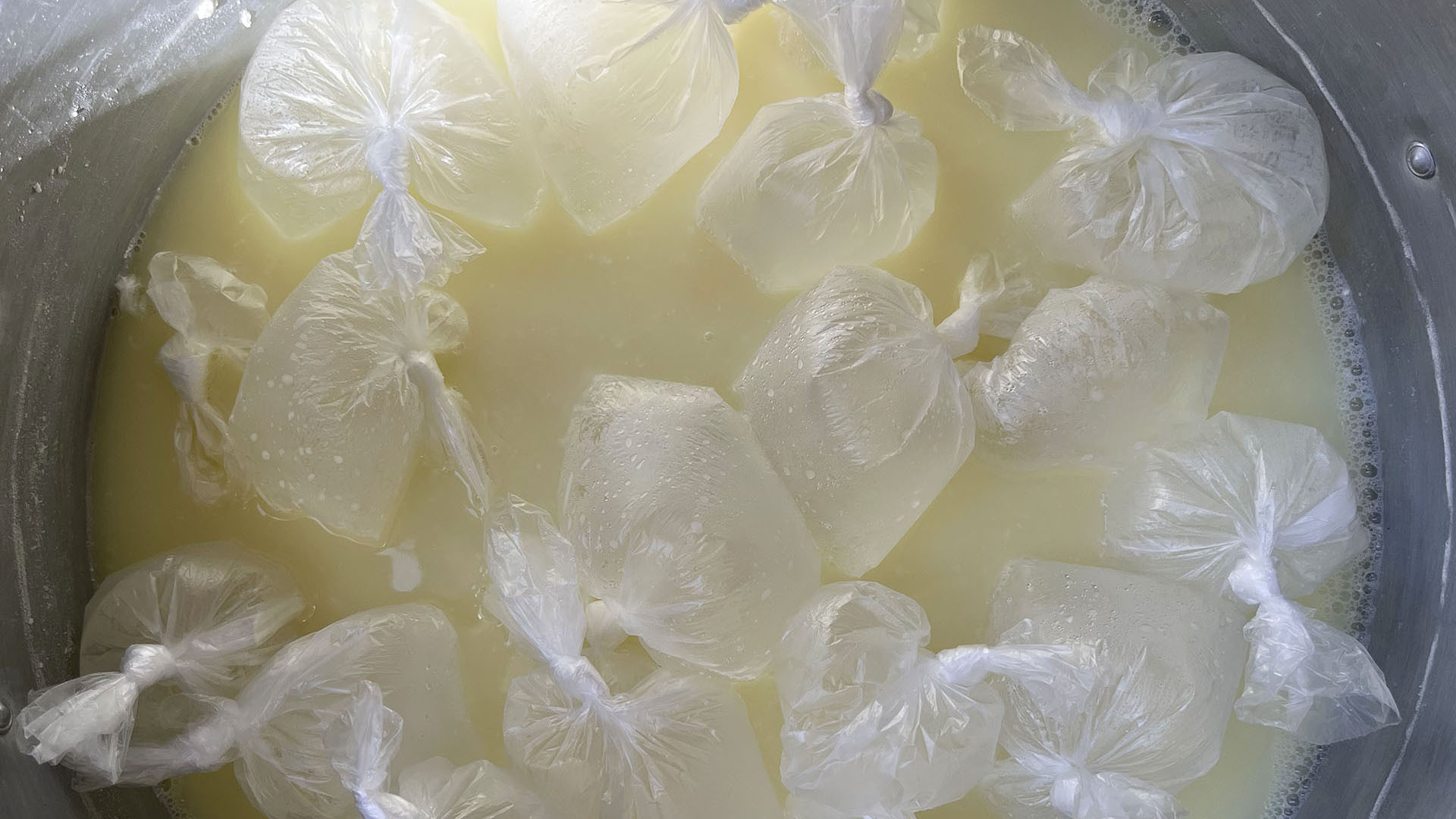
The most fascinating part was still ahead — the second cooking of the halloumi. This is what gives the cheese its famous elasticity and its ability not to melt in the frying pan. The women used a clever and simple method. Each moulded piece of cheese was placed in an ordinary plastic bag and tied shut. One corner of the bag was then snipped with scissors so that liquid could enter. In this form, the cheese was submerged in the pot of whey and boiled for about 50 minutes. During this time, the halloumi became dense and wonderfully stretchy.
When the time was up, the bags were carefully removed with a slotted spoon — they were scalding hot. The bags were cut open, revealing steamed, soft, slightly flattened rounds of cheese resembling large dumplings. Then came the most delicate step. The women rinsed each round under a strong stream of cold water. They handled the cheese with remarkable tenderness, as if bathing a baby, carefully washing away any small curd particles that may have stuck during the making of the anari.
After this water treatment, the warm, moist pieces of halloumi were placed on a large dish covered with a thick layer of coarse salt. Each piece was generously rubbed with salt on both sides. Then came the finishing touch. Two fresh mint leaves were placed in the centre of each cheese disc, which was then folded in half like a book. At this stage, the halloumi was dazzlingly white and glossy. I tasted it immediately — warm, delicate, with a crisp salty crust and a cool minty centre. It was one of the most memorable gastronomic experiences of my life. Comparing this product to supermarket halloumi is like comparing a living flower to an artificial one.
How to store halloumi and what to cook with it: Cypriot tips
Many people buy halloumi in vacuum packaging without realising that this cheese continues to evolve over time. Traditionally, halloumi is stored in brine for anywhere from 40 days to six months, allowing it to mature. As it ages, it becomes saltier and more flavourful. If you buy fresh halloumi and do not plan to eat it right away, it can be frozen. Simply place the cheese in a container and put it in the freezer. Once thawed, it retains almost all of its qualities.
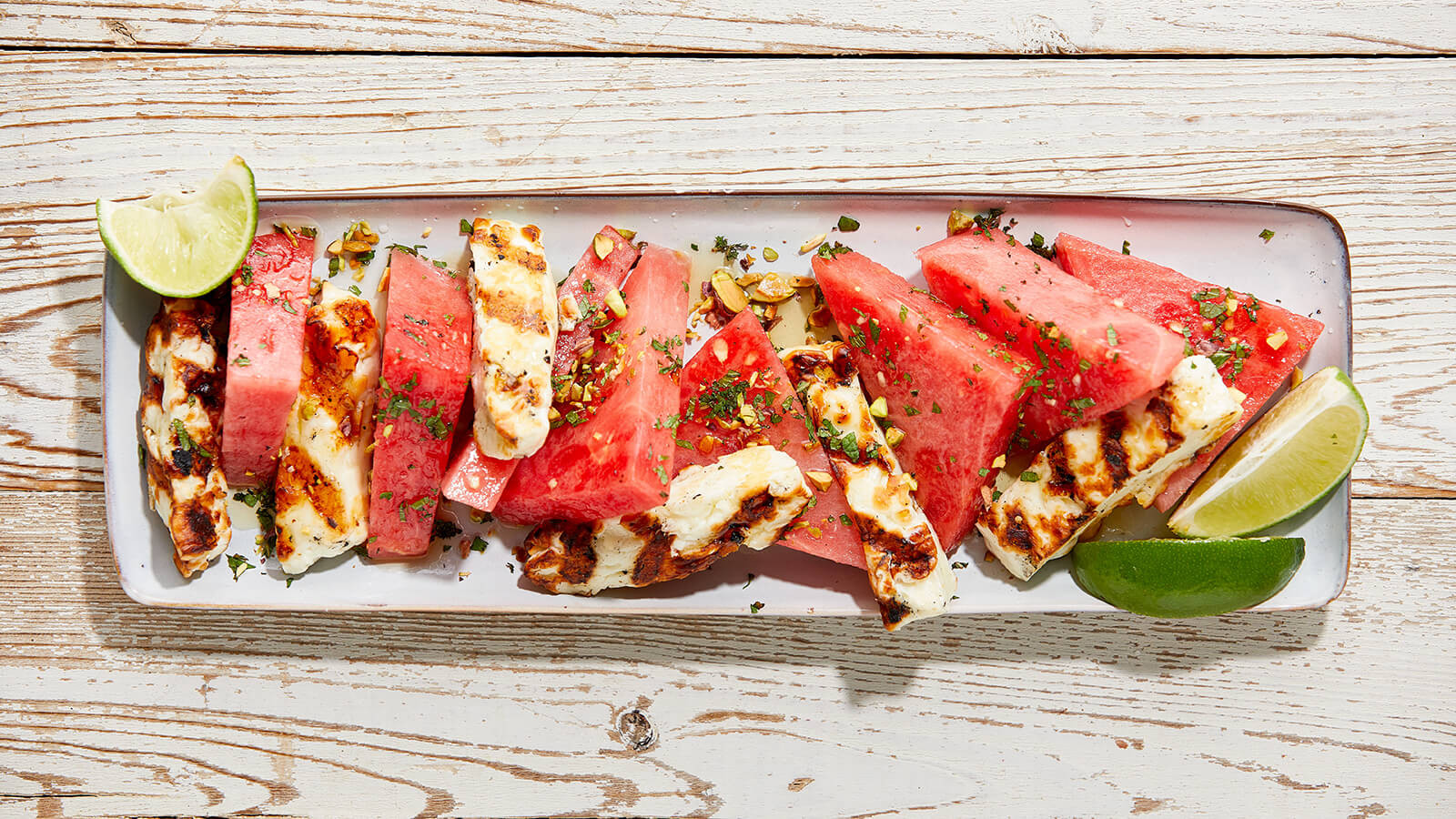
But the true value of halloumi lies in its versatility. Cypriots enjoy it in many ways. Freshly sliced as a snack with tomatoes and bread. In summer, the classic combination is halloumi with watermelon — a sweet-and-salty symphony on the plate. But the most beloved preparation is fried or grilled halloumi. It develops a golden crust while remaining tender inside and pleasantly squeaky between the teeth. It is added to scrambled eggs, placed in sandwiches, used as a filling for ravioli, and even added to trahanas soup. Speaking of trahanas, authentic Cypriot trahanas is made in August from high-quality milk that is allowed to ferment naturally. In winter, grated halloumi is added to the soup, creating a thick, hearty, and wonderfully aromatic meal.
So, if you would like to enjoy local delicacies, be sure to buy good-quality halloumi and watermelon, fry the cheese in a pan or on the grill, and open a bottle of white wine. It will be delicious — and unmistakably Cypriot.
Read also:
- The Cost of Living in Cyprus in 2026
- Cyprus: The Island That Gave the World Copper
- Kyperounta Sanatorium: A Forgotten Gem of Cyprus Colonial Architecture
- Giving Birth in Cyprus: Costs and Citizenship Procedures in 2026
- A Cyprus Summer Without Surprises: How to Rent the Perfect Home and Avoid Ruining Your Holiday