May is rightly considered one of the most comfortable and beautiful months in Cyprus. Daytime temperatures already exceed +25°C, yet the intense summer heat is still some weeks away. At this time of year, the island’s mountain and coastal regions are at their most picturesque, bursting with bright wildflowers set against lush green vegetation. Cyprus is home to around 2,000 species of flowering plants, approximately 150 of which are endemic. To fully appreciate this remarkable diversity, it is worth heading out on the island’s mountain trails and into its nature reserves. In this article, we embark on a botanical journey across Cyprus in search of rare flowers and unforgettable spring landscapes. :contentReference[oaicite:0]{index=0}
Cyprus Wildflowers in May
Poppies and Anemones
In May, many of Cyprus’s plains and forest clearings are painted vivid scarlet by blooming poppies and anemones. These resilient yet striking spring flowers are especially common in the foothills of the Troodos Mountains and in villages near Paphos and Larnaca, often growing beside abandoned houses and in open fields. Although poppies usually bloom earlier at lower elevations, they can still be found in cooler mountain areas throughout May.
Orchids
Cyprus is home to around 45 species of orchids, many of which continue flowering into May. Among the most fascinating are:
- Bee Orchid (Ophrys apifera) — named for its remarkable resemblance to female wild bees of the genus Andrena. Its appearance and scent attract male bees, which pollinate the flowers.
- Holy Orchid (Orchis sancta) — also known as the Sacred Orchid, distinguished by tall stems and delicate white-green flowers. It is widespread throughout the Mediterranean, including Cyprus, Greece, and the Levant.
- Monkey Orchid (Orchis simia) — bears clusters of white and purple flowers whose shape resembles tiny monkeys. Growing to 20–40 cm, it is considered one of the island’s rarer species.
- Pyramidal Orchid (Anacamptis pyramidalis) — easily recognized by its dense cone-shaped inflorescence of small pink or lilac flowers. Its nectar primarily attracts butterflies and moths.
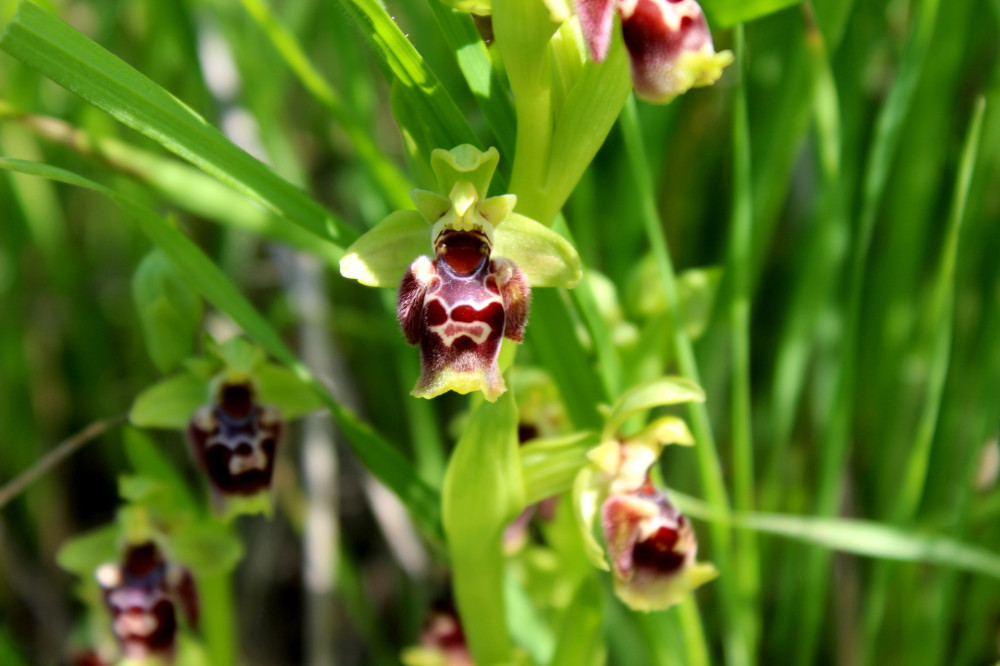
- Kotschy’s Bee Orchid (Ophrys kotschyi) — an endemic species found only in Cyprus. Standing just 10–30 cm tall, it features intricate flowers that resemble bees or wasps, with dark purple markings. Classified as endangered and strictly protected, it is regarded as one of the botanical symbols of Cyprus.
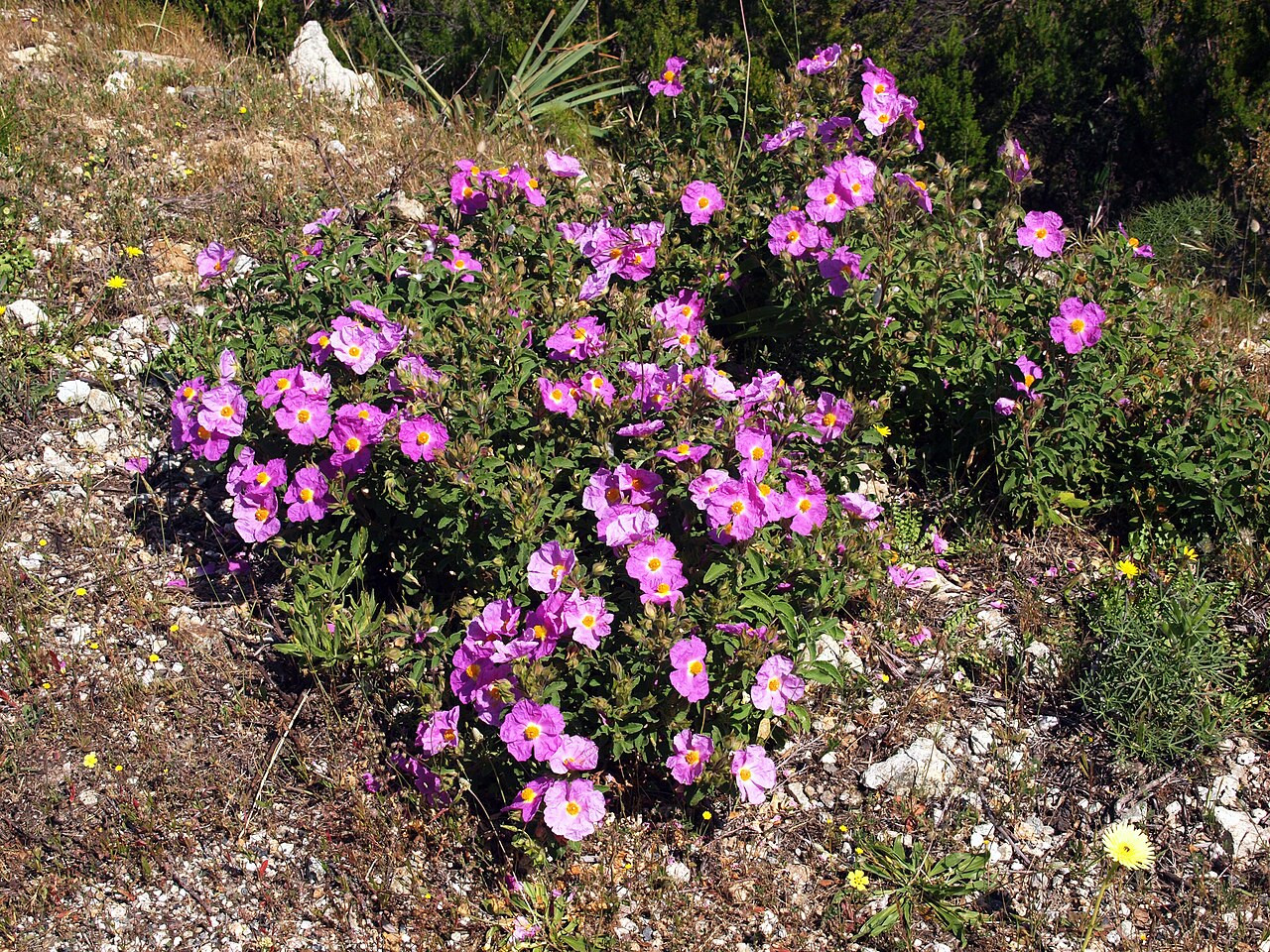
Pink Rock Rose (Cistus creticus)
This small shrub is commonly found in the Troodos Mountains, particularly near pine forests, as well as on rocky limestone slopes across the Akamas Peninsula. Its leaves are sticky to the touch because they are coated with aromatic resin known as labdanum, which was highly valued in antiquity for use in medicine and perfumery. This fragrant resin also makes the plant a favorite of Cyprus mouflon and mountain goats. In spring, especially in May, the rock rose blooms abundantly, covering hillsides in every shade of pink.
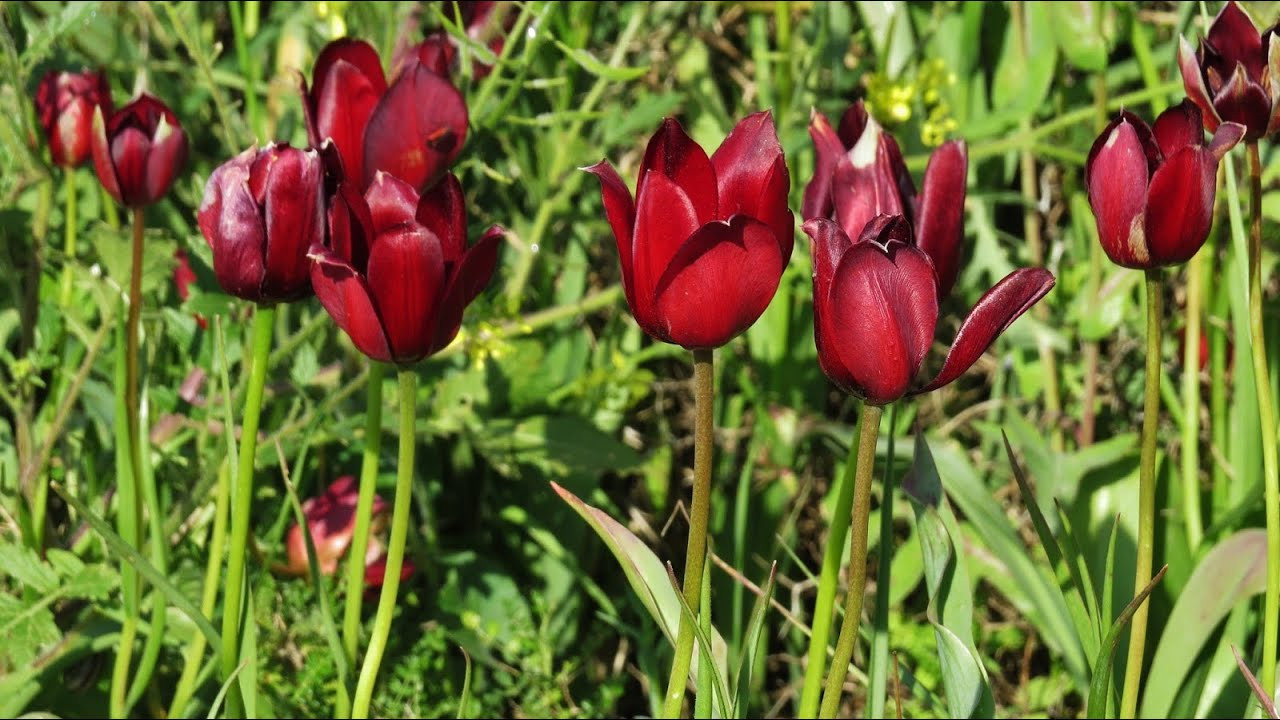
Cyprus Tulip (Tulipa cypria)
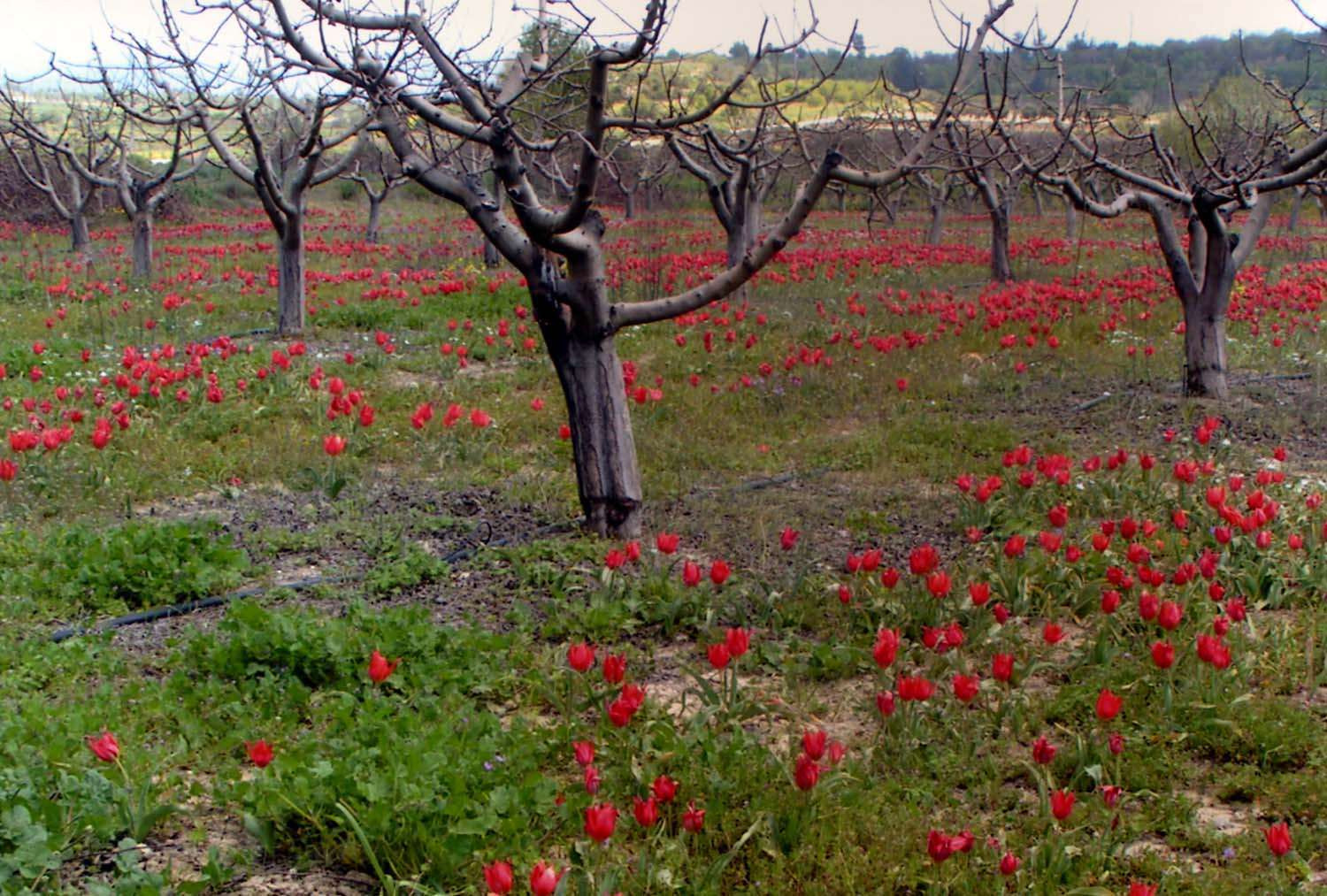
Another rare endemic species, the Cyprus Tulip produces brilliant scarlet flowers that open into elegant cup shapes. Their centers are usually black or deep purple. This wild tulip prefers rocky soils and sunny slopes and is most often found on the Akamas Peninsula and other protected areas in western Cyprus. Although it typically flowers from March to April, specimens can sometimes still be seen in higher elevations during early May. As a protected species, it must not be picked.
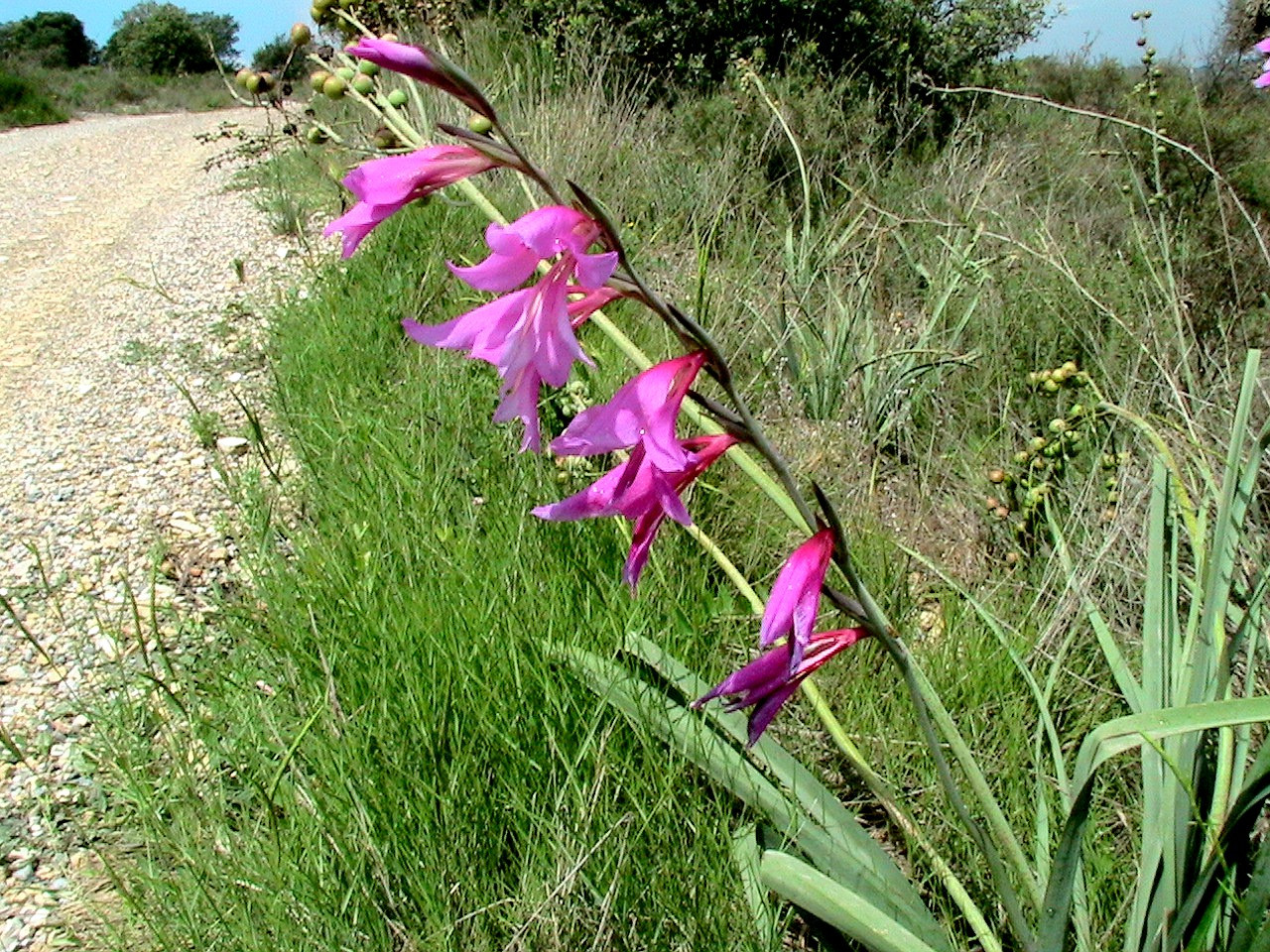
Italian Gladiolus (Gladiolus italicus)
Italian Gladiolus is one of the most widespread wildflowers in Cyprus. Its delicate spikes of lilac and bright pink flowers can be found in rural areas, olive groves, roadside verges, and wheat fields. For most of the year, the plant blends inconspicuously into the landscape, but from March to May it suddenly erupts into bloom, adding vivid accents to the countryside.
Popular Flower Routes in May
Akamas Peninsula
The Akamas Peninsula is one of Cyprus’s most beautiful protected regions, with more than 700 plant species, dozens of which are endemic. Against a backdrop of spectacular landscapes, visitors may encounter rare Cyprus tulips, orchids, juniper groves, and aromatic Mediterranean herbs. In May, rock roses, bee and pyramidal orchids, wild gladioli, thyme, and oregano are still in bloom.
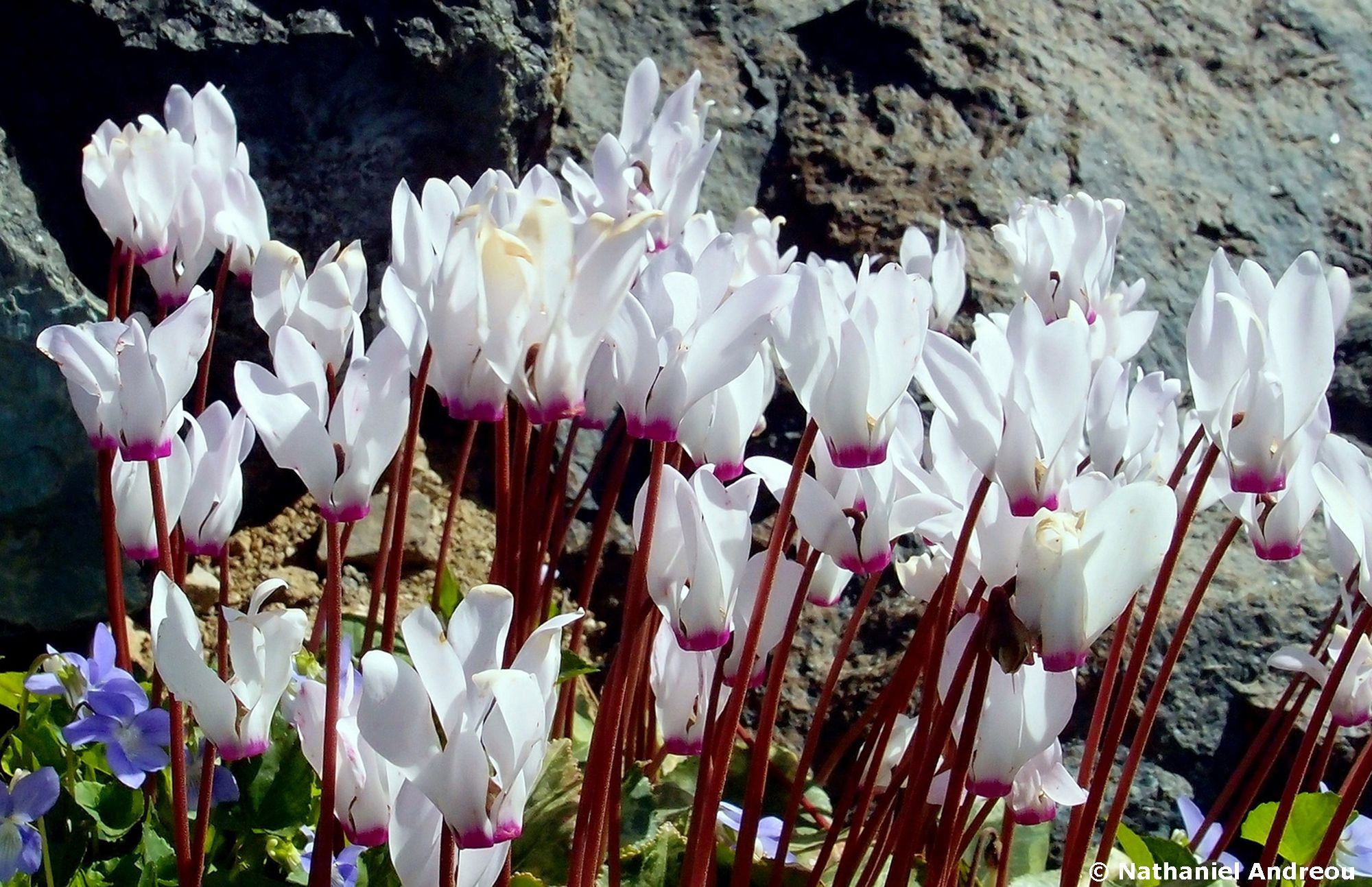
The Lara coastline is especially rewarding in the early morning. From there, explore the inland valleys, where the endemic Kotschy’s Bee Orchid may be found. At midday, the Avakas Gorge offers a cool and humid microclimate ideal for ferns, lichens, and cyclamen. In the evening, the surroundings of the village of Drouseia are perfect for enjoying a rich diversity of flowers and herbs.
Polemi
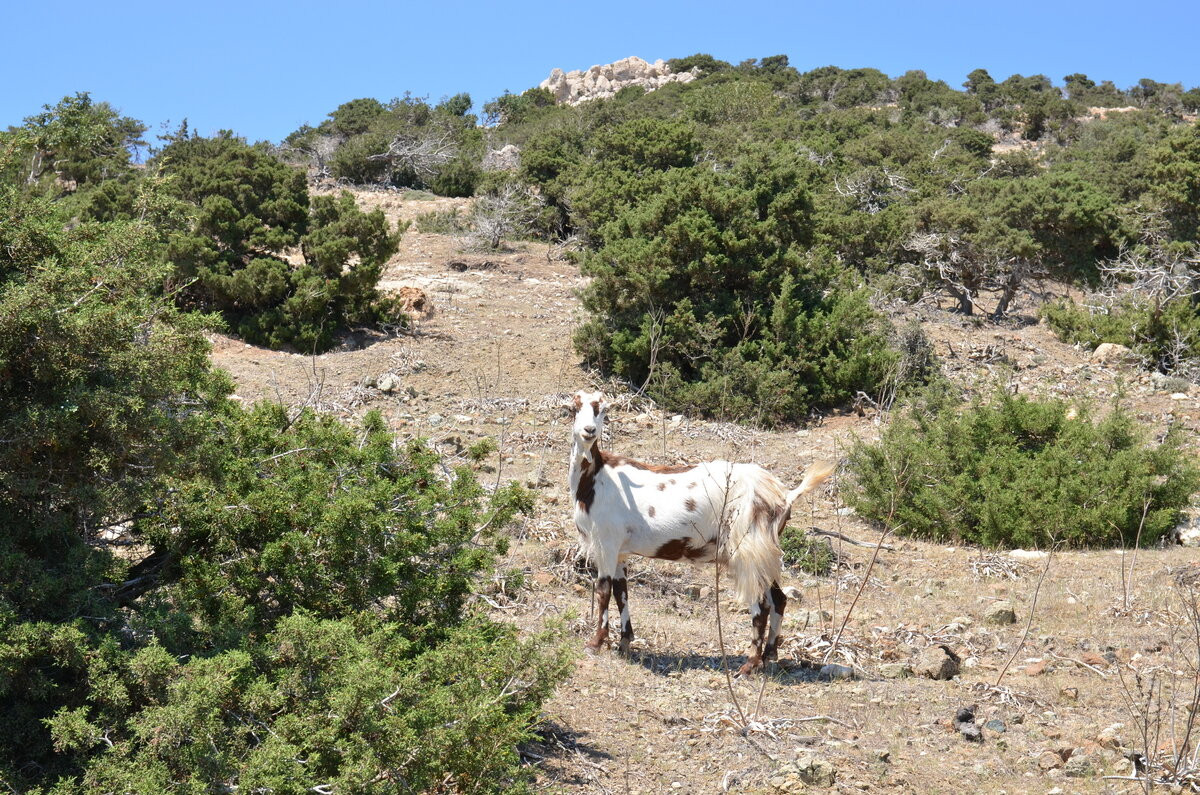
Nestled in a scenic valley near Paphos, Polemi is renowned for its vineyards and spring flowers. Here, visitors can see large numbers of Cyprus tulips, wild orchids, poppies, gladioli, and fragrant native herbs that continue flowering well into May.
Troodos Mountains
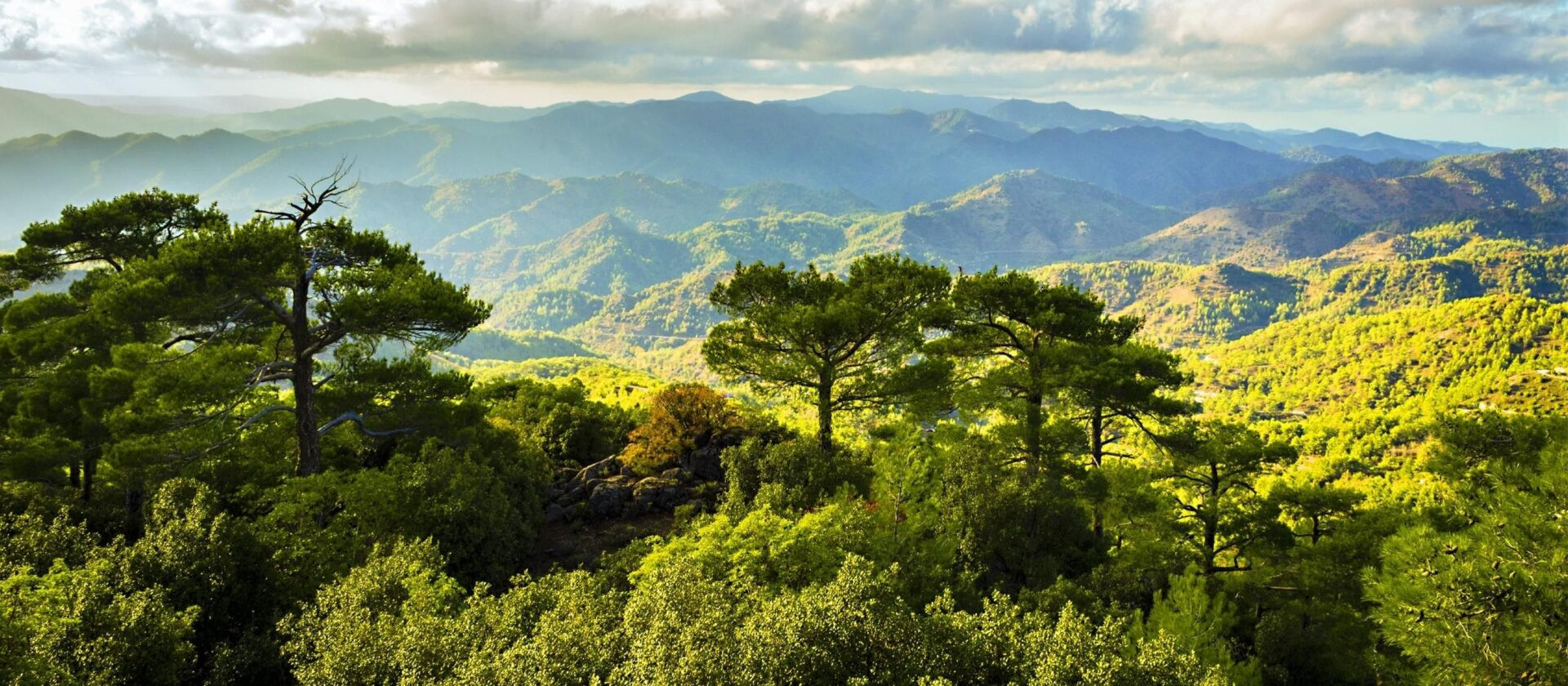
Covering more than 1,000 km², the Troodos Mountains form the island’s largest protected area and contain the richest flora in Cyprus, with nearly 2,000 plant species, including around 150 endemics.
Because of the cooler climate at higher altitudes, many wildflowers that have already faded in coastal regions can still be found here in May. It is an ideal destination for discovering cedar forests, fragrant rock roses, mountain herbs, and rare orchids.
Popular routes include the Artemis Trail, which begins at Troodos Square and offers panoramic views alongside sightings of orchids, mountain sage, chamomile, and native shrubs.
The Atalanti Trail circles Mount Olympus at an altitude of approximately 1,700 meters and is celebrated for its natural diversity and spectacular scenery.
Cedar Valley is another beautiful reserve and home to the endemic Cyprus cedar, together with wild orchids and numerous flowering shrubs.
The Madari ridge, rising above 1,500 meters, is known for its mountain trails and displays of pyramidal orchids, gladioli, mountain daisies, and aromatic herbs.
Papoutsa Forest, in the eastern Troodos near Agros and Polystypos, also deserves special mention. Its name derives from the Greek word for “shoe,” as the mountain ridge is said to resemble a boot from afar. Within its quiet pine forests, visitors may discover orchids, rock roses, and strawberry trees.
Useful Tips
Most native orchids and many other wildflowers in Cyprus are protected species, and picking them is strictly prohibited. Photography is the best way to preserve their beauty.
Early morning and evening are the best times to observe wildflowers, as many species close their petals during the heat of the day. If you plan to hike mountain trails, wear sturdy footwear, since slopes can be rocky and scrubland may conceal thorns and snakes.
Bring plenty of water and sun protection. A field guide or plant identification app can help you recognize species more easily. Above all, take your time and be patient—many endemic flowers are hidden among grasses and rocky crevices.
Cyprus’s wildflowers are like hidden treasures waiting to be discovered. Finding them is a genuine adventure. May is the perfect month to set out on a botanical hike through the island’s mountain and coastal trails. The natural beauty of Cyprus is waiting—do not miss the chance to admire the final blossoms of spring.
Read also:
- Cost of Living in Cyprus in 2026
- Cyprus — The Island That Gave the World Copper
- Halloumi in Cyprus: An Authentic Recipe from Village Housewives and the Secrets of Cheesemaking
- Giving Birth in Cyprus: Costs and Citizenship Procedures in 2026
- Cyprus Summer Without Surprises: How to Rent the Perfect Home and Enjoy a Stress-Free Holiday