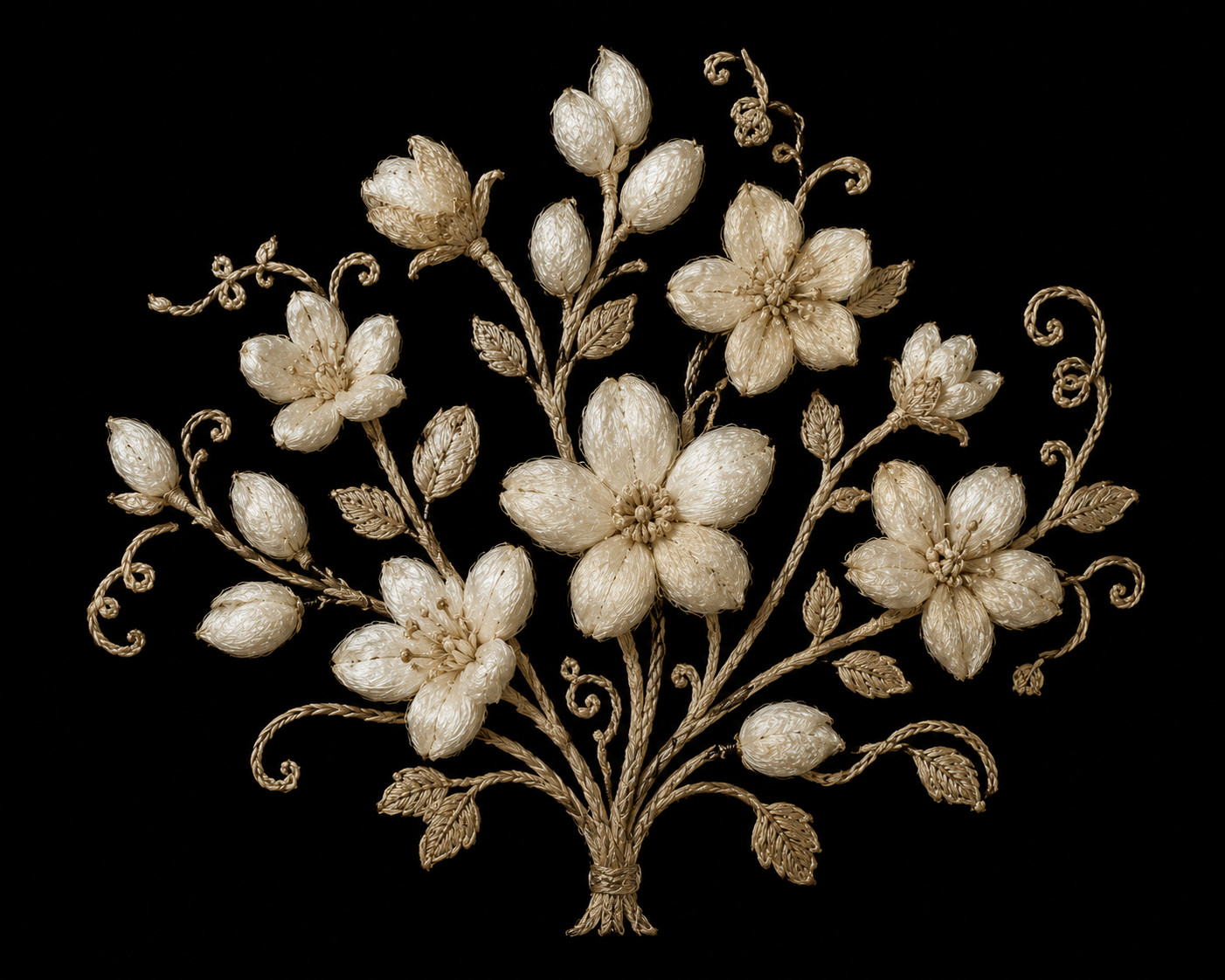
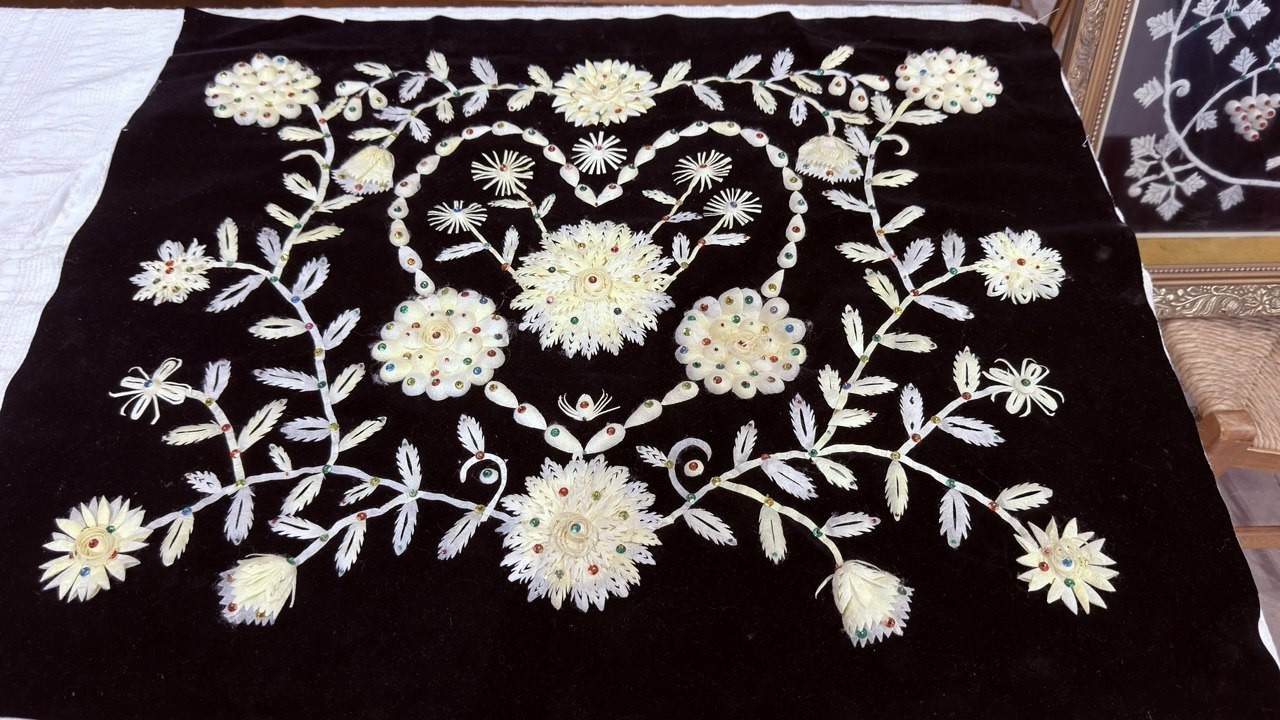
If you have ever visited traditional Cypriot homes or explored local museums of folk art, you have probably noticed elegant decorative panels made from silkworm cocoons. These artworks often feature delicate floral motifs that stand out beautifully against dark backgrounds. They are more than examples of traditional craftsmanship — they are living reminders of a time when silk production and silk weaving were an integral part of life on Cyprus.
The history of silk production on the island stretches across centuries, from the Byzantine era to the beginning of the 20th century. Let us travel back in time and discover the tradition of sericulture that was once woven into the daily life of Cypriot villages.
How Silk Arrived in Cyprus
Situated at the crossroads of ancient trade routes, Cyprus served as a bridge between the Levant, Anatolia, Egypt, and Venice, connecting Europe and Asia. Although silk originated in China several thousand years BC, sericulture gradually spread throughout Persia and the Mediterranean. Cyprus was no exception and adopted silk-making skills from its neighboring regions in the Middle East.
It is believed that knowledge of silk production reached the island during Byzantine rule. According to legend, Byzantine monks smuggled silkworm eggs and mulberry seeds from China to Constantinople by hiding them inside hollow bamboo canes. For centuries, silk fabrics in Byzantium were reserved for the elite and were also used to decorate churches and clerical garments.
As Cyprus remained under Byzantine influence from 395 to 1191 AD, the art of sericulture naturally spread to the island. Mulberry trees adapted perfectly to Cyprus’ warm Mediterranean climate and became a familiar feature of the landscape. While silk remained a luxury reserved for the aristocracy during the Byzantine era, the arrival of the Venetians (1489–1571) made it more accessible to ordinary people. Silk production expanded and became a source of income for many Cypriot families.
During the Ottoman period (1571–1878), silk continued to play a significant role in the economic and cultural life of Cyprus. Silk fabrics were used for everyday clothing, wedding garments, embroidery, appliqué work, and as an important component of a bride’s dowry. Throughout the centuries, Cypriot women played a central role in silk production, as they were responsible for creating textiles for the household.
Mulberry Trees and the Life Cycle of the Silkworm
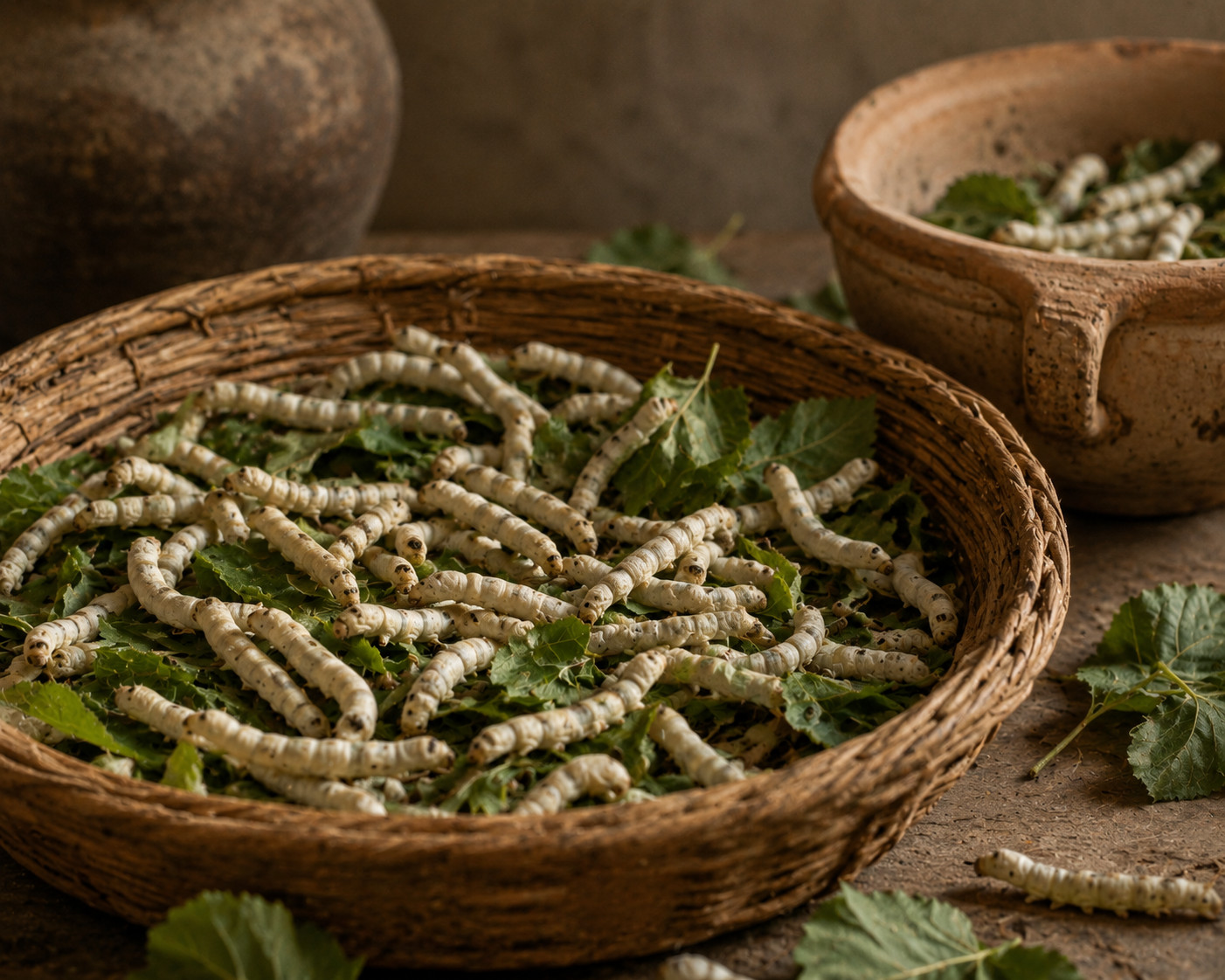
Unlike most Middle Eastern countries, silk production in Cyprus remained largely a family-based craft. In Cypriot villages, mulberry trees grew in almost every garden. Their broad leaves served as food for silkworms, while their shade provided welcome protection from the Mediterranean sun. The sweet berries were also a favorite treat for local families. The most common silkworm species raised on the island was Bombyx mori. During the winter dormancy period, women carefully stored silkworm eggs by wrapping them in cloth and placing them in clay jars or wooden containers.
With the arrival of spring and the hatching of caterpillars, the silkworms were usually kept indoors, protected from cold, humidity, smoke, and dust. They were raised on wooden boards, handmade shelves lined with cloth, or woven reed mats. The hungry caterpillars required a constant supply of fresh mulberry leaves, making feeding them a family effort in which even children participated.
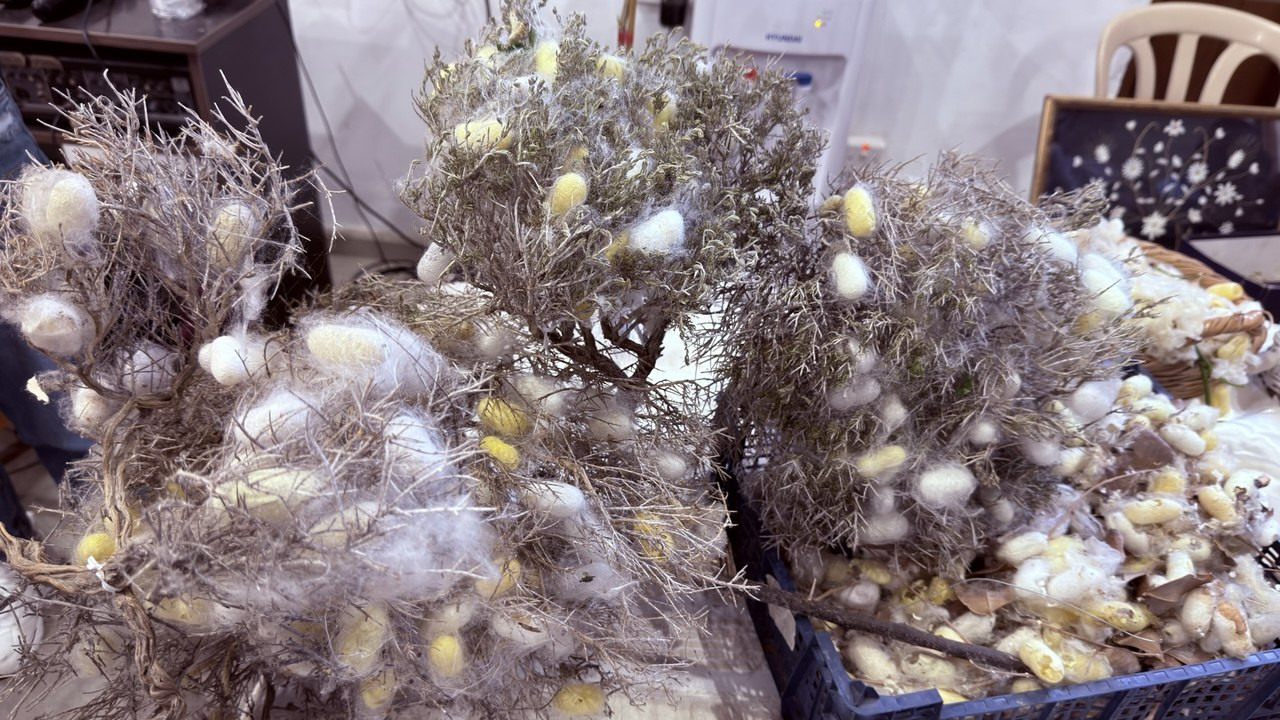
Once the caterpillars stopped eating, it signaled that they were ready for the next stage of their life cycle. Special structures made from branches and straw were prepared for them to spin their cocoons. Some cocoons were preserved for the following season, while the rest were used for silk production. The cocoons were softened in hot water before the silk filament was extracted. Each cocoon consisted of a single continuous thread. Several threads were then twisted together to create a stronger strand, which was later dyed using natural plant-based pigments.
The Craftsmanship of Cypriot Weaving
Unlike Turkish and Syrian silk, which was produced on a large scale in specialized workshops, Cypriot silk remained a domestic craft. Compared with the elaborate Middle Eastern patterns and sophisticated dyeing techniques, Cypriot silk was simple, practical, and designed for everyday life. Silk thread was often blended with cotton, linen, or wool. Geometric and floral patterns created using traditional village techniques were the most common decorative motifs.
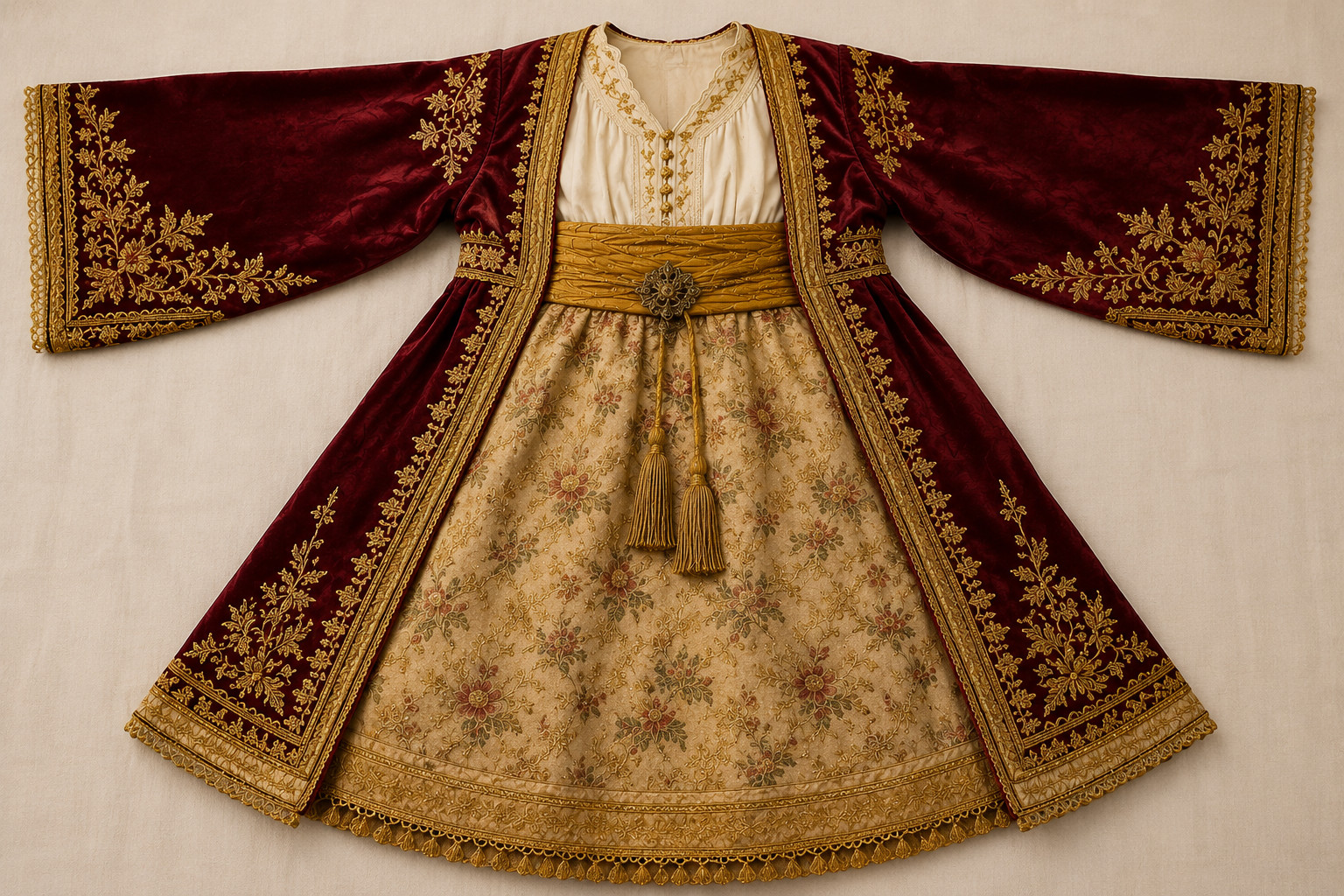
On Cyprus, silk remained closely connected to ordinary people rather than serving as a luxury reserved for elites. It was used for household textiles, wedding dowries, and traditional clothing. Silk was commonly used to make women’s headscarves known as mantili, as well as the richly decorated traditional dress called the saya. It was also occasionally used for decorative belts known as zostra and for festive men’s shirts.
Decorative Art Made from Silk Cocoons
As silk production spread throughout the island, a unique form of decorative art emerged, known as koza (κόζα). These three-dimensional decorative panels were made from silkworm cocoons. Since many cocoons remained unused during silk production, village women began experimenting by cutting and arranging them into simple decorative patterns. Eventually, this evolved into a distinct form of folk art that flourished in the late 19th and early 20th centuries. Even today, such decorative panels can still be found in many Cypriot homes, particularly in rural areas.
The most popular motifs were floral designs featuring roses, lilies, and daisies, often arranged into intricate compositions. Artisans frequently enhanced their creations with lace, beads, or embroidery.
Interestingly, cocoons were also used in religious and ceremonial decorations, as well as in small gifts and souvenirs for baptisms, weddings, and Easter celebrations. In Cypriot tradition, white cocoons symbolize purity, innocence, and renewal.
The Silk Villages of Cyprus
Even today, there are many villages in Cyprus where sericulture remains more than just a historical memory. The village of Kalavasos has long been regarded as one of the island’s centers of silk production. Its climate is ideal for growing mulberry trees, while local women became renowned for their weaving skills and their mastery of koza art.
Fyti has historically been one of Cyprus’ most important weaving centers and is famous for developing its own unique technique known as fythkiotika. Local artisans were known to incorporate silk threads into their textiles. Meanwhile, the lace makers of Lefkara, famous for their distinctive lefkaritika lace, often used silk fabrics as the foundation for their finest creations.
The villages of the Troodos region, including Galata, have long been associated with textile production and embroidery. The cool mountain climate provided ideal conditions for mulberry trees, while local women produced beautiful fabrics from linen, cotton, wool, and, of course, silk.
Modern Times and Preserving Tradition
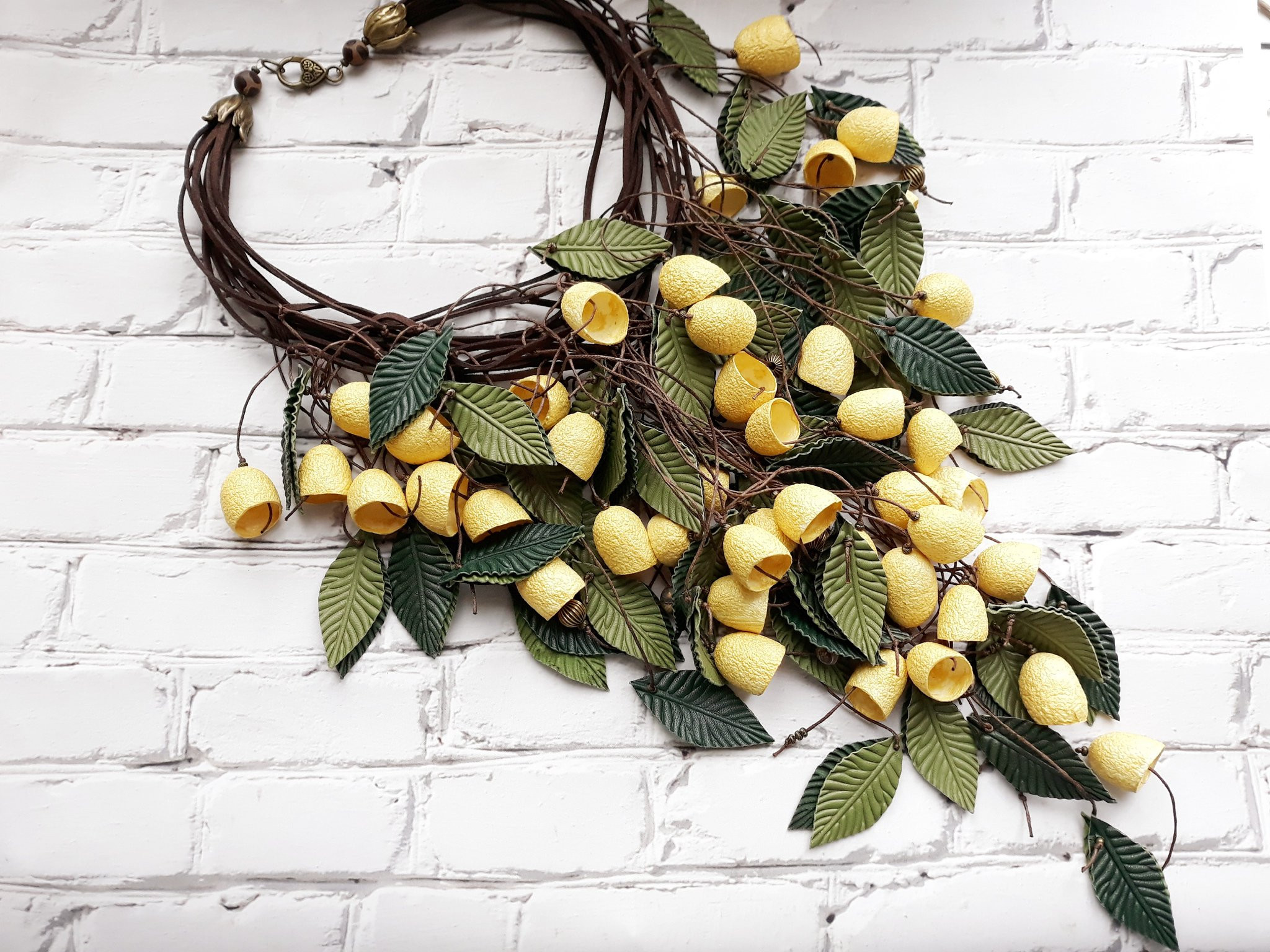
Unfortunately, with the arrival of industrialization and automated textile production, the ancient tradition of home-based silk making gradually disappeared. Nevertheless, dedicated enthusiasts continue to preserve this heritage through workshops and craft studios. Many contemporary Cypriot artists and designers also incorporate cocoons and silk-inspired motifs into their work, creating modern jewelry and decorative objects from silkworm cocoons.
Across Cyprus, women’s craft cooperatives continue to pass on traditional textile-making and decorative panel techniques to younger generations. The Cypriot government also supports the preservation of sericulture traditions by organizing cultural events and festivals, particularly in villages such as Kato Drys and Kalavasos. Numerous museums across the island are dedicated to weaving and traditional handicrafts.
If you are interested in the history of silk in Cyprus, a visit to the Bee & Embroidery Museum in Kato Drys is highly recommended. There, visitors can learn more about the life cycle of the silkworm, see the tools used by past generations of artisans, and admire their remarkable creations.
The story of silk in Cyprus mirrors the life of the silkworm itself. It never disappeared completely. Like a cocoon hidden from view, the tradition retreated into the shadows for a time before re-emerging in a new form. Today, the island’s silk heritage continues to live on — in traditional crafts, family memories, mountain villages, and the work of modern artisans who reinterpret ancient techniques and weave them into contemporary culture.