
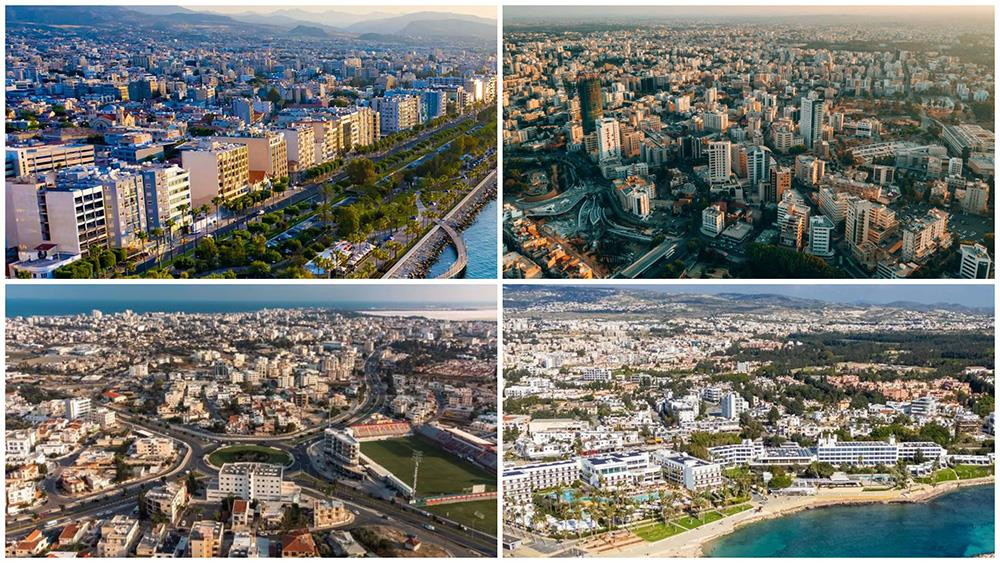
Cyprus has launched one of the most significant stages of urban planning reform in recent decades—the revision of four key Local Development Plans covering the country's largest urban areas: Nicosia, Limassol, Larnaca, and Paphos. The reform represents a comprehensive update of the planning tools that will determine how these cities and their surrounding suburbs develop over the coming years.
The initiative forms part of a broader government strategy for sustainable development and the modernisation of spatial planning in Cyprus, with particular emphasis on balancing economic growth, environmental protection, and the quality of the urban environment.
Modernising Planning Regulations and Embracing Sustainable Development
The revision of the Local Development Plans is a response to the rapid changes of recent years, including urban population growth, increasing investment activity, expanding tourism, and mounting climate and infrastructure challenges. Cyprus' cities now require a more flexible and precise approach to regulating development, managing transport flows, and planning land use. As a result, the new planning concept focuses not only on urban expansion but also on improving the quality of existing neighbourhoods and public spaces.
An important trend is the integration of sustainable development principles, including energy efficiency, reducing carbon emissions, and adapting to climate change, which is becoming increasingly evident across the Mediterranean region through issues such as water shortages and extreme heat.
How the Approach to Urban Planning Is Changing
The revision of the Local Development Plans involves a comprehensive reassessment of how residential, commercial, and public areas are organised. The primary objective is to create a more balanced urban structure in which housing, employment, and infrastructure are closely connected and easily accessible.
Particular attention is being given to housing affordability, as property prices have risen significantly in Cyprus in recent years, especially in coastal areas. This makes it increasingly important to expand the housing supply and use land resources more efficiently. At the same time, transport strategies are being reviewed to reduce dependence on private cars while encouraging public transport, pedestrian infrastructure, and more sustainable forms of mobility.
The Economic Impact of the Reform and Its Effect on Investment
The updated planning framework is expected to create a more predictable environment for investors and property developers. This is particularly important for the real estate, construction, and tourism infrastructure sectors, which play a vital role in the Cypriot economy.
Modern planning regulations are intended to improve transparency, reduce administrative barriers, and accelerate the implementation of investment projects. This will enable more efficient use of land resources while supporting the development of new economic zones. For businesses, regulatory stability is a key factor in making the market more attractive for long-term investment.
One of the reform's principal objectives is to improve residents' quality of life. The revised Local Development Plans aim to create a more liveable urban environment that takes into account the needs of different social groups. The new development model places particular emphasis on public spaces, green areas, and access to essential services. These improvements are expected to enhance comfort, encourage social interaction, and improve public health. Another important priority is improving transport accessibility and increasing urban safety, particularly in rapidly growing districts.
Implementation Timeline and Current Status
The process of revising the Local Development Plans began in 2025 and is now well underway. During 2026, key administrative milestones were reached, including the publication of official reports and the launch of statutory planning procedures under Cyprus' planning legislation.
Once the current stage is completed, the process will move on to public consultations involving local authorities, government agencies, and professional organisations. The entire reform is expected to be completed by the end of 2027, after which the updated urban planning system will be fully implemented.
In the long term, the reform is expected to promote more sustainable urban development, reduce pressure on infrastructure, and create a modern urban environment that meets European standards.
With growing interest in real estate and investment across the Mediterranean region, these changes are expected to become a key factor in strengthening the competitiveness of Cyprus' cities and enhancing their appeal as places to live, do business, and visit.