
The number of dangerous structures in the city and district of Larnaca exceeds 500. This was stated by Angelos Hadjicharalambous, Chairman of the Local Self-Government Organization (EOA). Some of these buildings are protected heritage properties and fall not under the EOA’s jurisdiction but under the control of the Ministry of Interior and the Department of Lands. Among the hazardous structures are both abandoned residential houses and commercial buildings that have stood without renovation for decades, posing a real threat to passersby and nearby residents.
EOAs received responsibilities without resources
Hadjicharalambous added that under the legislation, the organizations took over responsibility for dangerous properties on April 1, 2025. However, they still lack both the necessary structure and funding to address the issue. In practice, they are using existing financial and human resources to fulfill new responsibilities. The organization has already begun initial coordination with the municipalities of Larnaca and the district administration, which were previously responsible for these buildings. A preliminary inventory has been conducted, and procedures for managing the situation are currently being developed. At the same time, not a single additional employee or euro has been allocated from the state budget for these purposes.
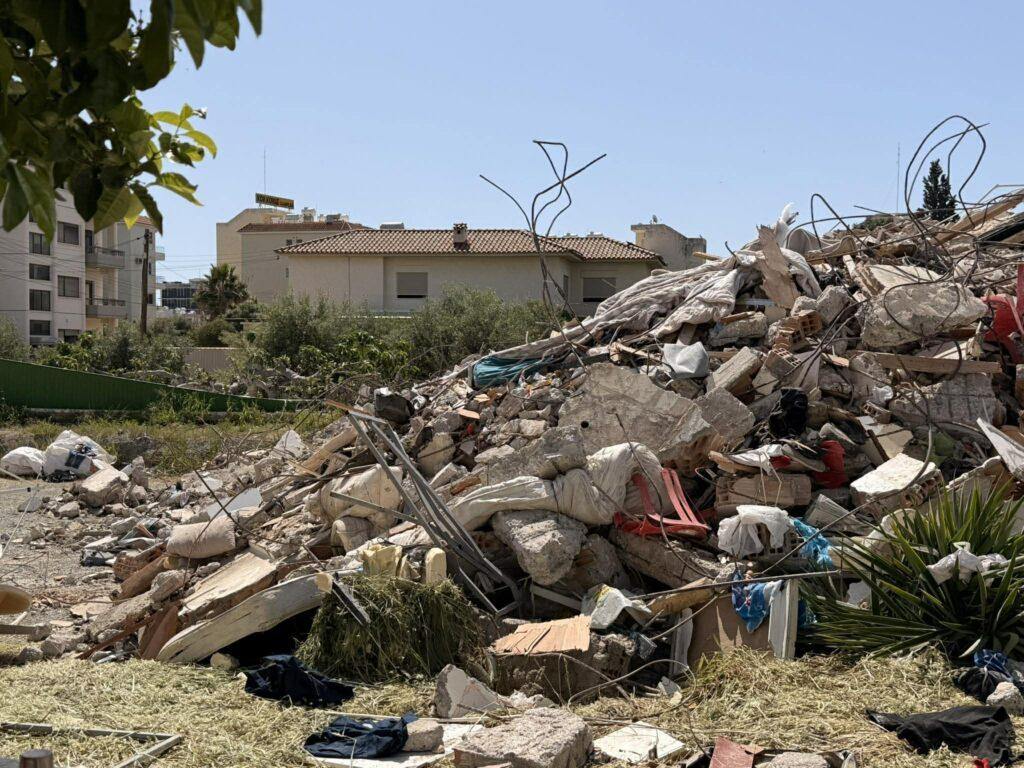
Priority: the most dangerous structures
The EOA chairman explained that their current task is to prioritize among all these buildings, identifying those that are most dangerous and require immediate demolition. Owners of the remaining structures will receive notices requiring them to take appropriate action themselves. He stressed that the existing institutional framework is inflexible, and managing these buildings is extremely time-consuming. All these structures have been dangerous for many years — the problem did not arise recently. Previous authorities simply failed to act for years, resulting in a massive accumulation of unsafe buildings. The organization now faces the challenge of resolving this issue, which requires significant financial resources, and must determine where the funding will come from.
Efforts to speed up the process
Efforts are currently underway to amend legislation in order to accelerate the handling of dangerous buildings. The EOA itself has requested these changes to finally achieve tangible results. The current procedure is too slow, and in many cases, necessary actions were simply not taken. Hadjicharalambous also addressed the issue of buildings classified as protected heritage sites. The owner of such a property is obliged to take all necessary measures to ensure it does not become dangerous. However, there are cases where buildings were designated as protected but then abandoned for years and are now considered hazardous. Action must be taken on all such properties to prevent tragedies similar to the recent one in Limassol. Unfortunately, the recent collapse is yet another example of authorities reacting to events instead of taking preventive measures.
Appeals to the ministry remain unanswered
The Chairman of the Larnaca EOA stated that the organization has repeatedly appealed to the Ministry of Interior. At every meeting, they raised the question of how district self-government organizations could take over this function and what would be required. Unfortunately, despite all these efforts, no action has been taken by the ministry. He expressed hope that results will be achieved in the near future. Following the tragedy in Limassol, where a building collapse claimed two lives, the issue of unsafe structures has become particularly urgent. Experts are calling for a full inventory of all dangerous buildings across Cyprus and the creation of a state fund for their demolition or renovation before another disaster occurs. According to preliminary estimates, the total number of unsafe structures in Cyprus may reach 1,300, with Larnaca, having more than 500 such properties, ranking among the highest.