
In Larnaca, one of the most ambitious infrastructure projects of recent decades has finally begun. The buildings of the former city hospital, constructed back in 1934 and recognized as a historical heritage site, are set to be restored. After all approvals and the resolution of bureaucratic obstacles, it has been confirmed that the complex will house the Larnaca City Hall. The project, discussed for years, has now entered its practical phase despite a three-year delay from the original schedule. The renovated municipal complex is expected to open its doors to residents and visitors by 2030 — the same year Larnaca will hold the prestigious title of European Capital of Culture.
First step: electrical inspections and contractor agreement
Larnaca Mayor Andreas Vyras stated that electrical system inspections are currently underway at the site to ensure that when the property is handed over to the contractor, the operation of outpatient departments of the State Health Services Organization (OKYpY), which will remain on the premises for now, will not be disrupted. Once this issue is resolved, the contract with the selected contractor is expected to be officially signed in the first half of May 2026. The agreement will have a duration of two years.
Respect for history: restoration and new architecture
According to the project, the old hospital buildings will be fully restored. Later extensions located to the north of the historic structure will be demolished. In their place, new buildings will be constructed using materials that harmonize with the architecture of the protected structures. A public square with a garden, green areas, water features, and modern urban infrastructure will be created outside.
After completion, all municipal services of Larnaca will move into the new building. For many years, they have been housed in an apartment building in the Finikoudes area. These include the mayor, deputy mayor, municipal council members, meeting hall staff, technical services, accounting and tax departments, sanitation and cleaning services, cultural services, and municipal police.
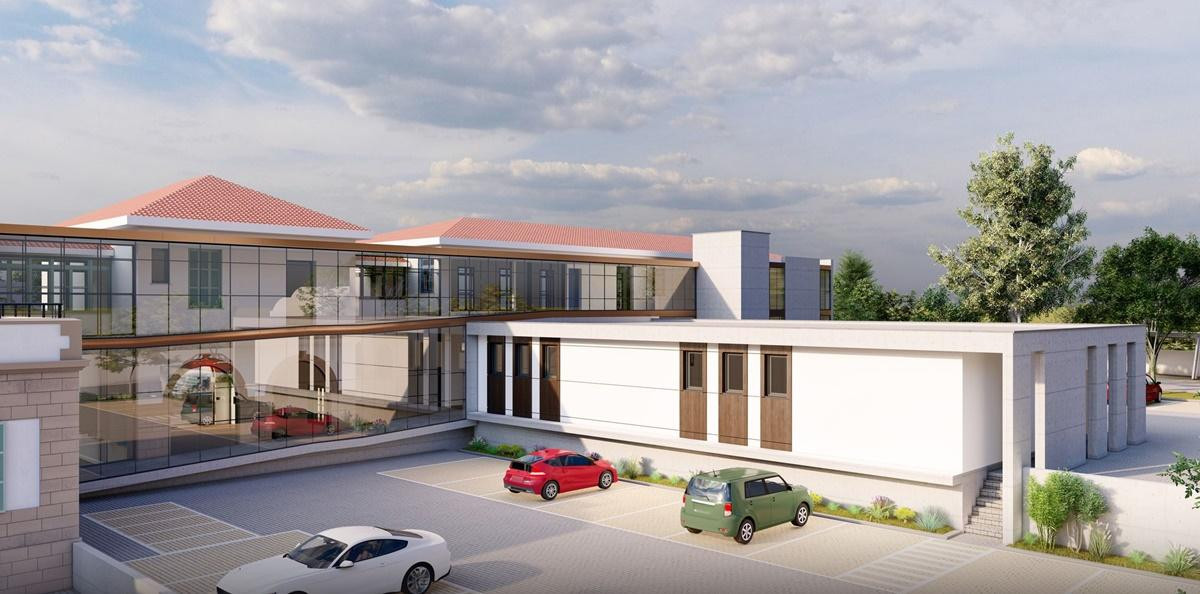
Rising costs: project approved despite concerns
Due to significant delays in launching construction, the project cost has risen to over €9 million. Over the past year, this caused concern within the municipal council, with several members, mainly from the DISY party, questioning the project's financial sustainability and its impact on the municipal budget. Ultimately, the council approved the project with 16 votes in favor and 14 against, based on a feasibility study conducted by international auditing firm Grant Thornton. The report was submitted to the Larnaca municipality in February 2026.
The estimated project cost is €8.789 million plus VAT. An additional 15% (€1.35 million) has been allocated for unforeseen works that may arise during implementation. Thus, the total cost including VAT is estimated at approximately €12 million.
Financing: EIB loan, land sales, and parking fund
The project will be financed through a municipal loan of €8,282,515, agreed between the government and the European Investment Bank. Additionally, €468,000 will be allocated from the Parking Space Redemption Fund, along with €3.3 million expected from the sale of two municipal plots. These plots, located on Ermou Street with a total area of 1,315 m², were recently returned from a private company that had planned to build a parking facility, which was never realized.
The loan will be issued at an annual interest rate of 3.6% over 10 years. During the first three years, the municipality will pay only interest. According to Larnaca authorities, the annual debt servicing payment will amount to €370,827 during the grace period and €1,428,678 during the following seven years.
The mayor emphasized that “the city must have a municipal building worthy of its history.” He noted that this has been a long-standing vision shared by all previous mayors. According to him, given the current decisions, this is the only viable way for the municipality to implement the project. The benefits will be multiple: the project will be realized within a historic building and will transform the surrounding area. A city with such culture and history must have a municipal hall that reflects its identity. The goal is to complete the project by 2030, when Larnaca becomes the European Capital of Culture.