
On Tuesday, 13 May, the long-awaited demolition of the 14-storey building on Omonias Avenue. It is one of the most famous abandoned structures in Cyprus. The tower had stood unfinished for nearly half a century and had long been considered a danger to the surrounding area. Work began just one month after the tragic collapse of a residential building in Germasogeia, where two people lost their lives. Following that incident, the Cypriot authorities significantly intensified inspections of unsafe properties and launched an emergency inventory of hazardous buildings across the island.
Why the demolition of Pieris Estate is an important event for Limassol
The area around the tower has been fenced off, and heavy machinery specially transported from abroad is now operating on site. According to local authorities, no equipment in Cyprus had sufficient capacity to safely dismantle such a large reinforced concrete structure.
The building’s location makes the situation even more complex. Pieris Estate stands close to residential buildings and one of Limassol’s busiest roads, meaning the demolition requires enhanced safety measures and additional engineering approvals. The main objective is to avoid any damage to neighbouring buildings and transport infrastructure.
According to experts, the demolition may take several months. Once the work is completed, the site will most likely be redeveloped, as the Omonias area is now considered one of the most promising districts for residential and commercial projects.
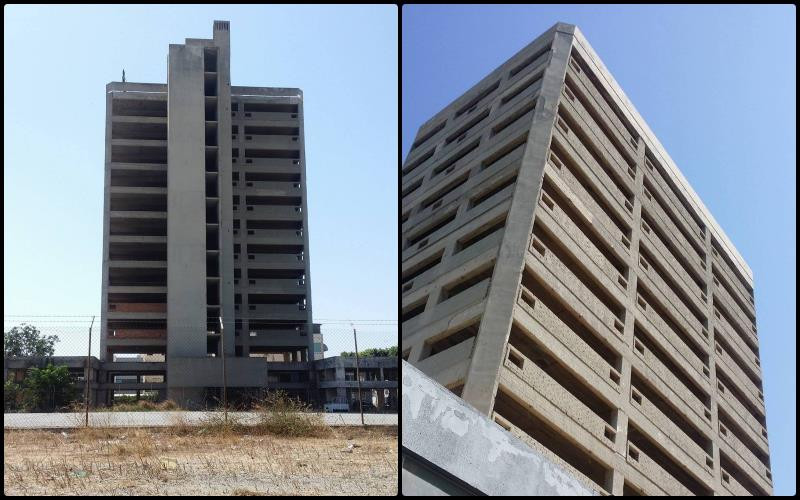
Why the tower stood empty for nearly 50 years
Construction of Pieris Estate was halted back in 1977. The project was frozen following the events of 1974, the subsequent economic crisis, and the developer’s financial difficulties. Since then, the concrete frame has remained unfinished. Over the decades, the building became one of Limassol’s most recognisable long-abandoned structures. Local residents repeatedly complained about its condition. In recent years, homeless people had been living inside, while the structure itself continued to deteriorate under the effects of time and weather.
As early as 2023, the Limassol municipality planned to allocate around €500,000 for the demolition of the building. However, the process was delayed by legal disputes, funding issues, and disagreements over responsibility between government bodies. Since April 2025, oversight of unsafe buildings has officially been transferred to the District Local Government Organisations (EOA), which helped accelerate decision-making regarding hazardous properties.
Against the backdrop of the construction boom in Limassol, the authorities are also increasing pressure on owners of abandoned properties that have remained neglected for years. The demolition of Pieris Estate is already being described as a symbol of a new phase in Limassol’s urban policy — one marked by a stricter approach to unsafe buildings and greater attention to public safety.