
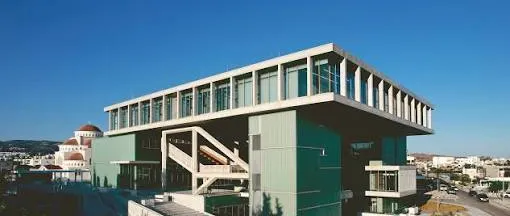
The Cyprus University of Technology (TEPAK) has approved its budget for 2027. Next year, the university plans to continue developing its infrastructure and carry out a number of major construction projects. These include its own student dormitories, a building for the Department of Civil Engineering and Geoinformatics, the expansion of the Rehabilitation Clinic, and a new building for the School of Marine Sciences, Technology, and Sustainable Development in Larnaca.
In preparing the budget, the university sought to limit expenditures in line with the general policy of austerity in the public sector. At the same time, it allocated the funds necessary for the university’s operations and the implementation of planned projects.
Where will TEPAK get nearly 138 million euros?
Government support remains the primary source of funding. A significant portion of the funds will also come from research programs, tuition fees, and other sources.
Specifically, in 2027, the university expects to receive:
62.7 million euros in government funding for ongoing operations;
30.3 million euros — government funds for projects financed by loans from the European Investment Bank (EIB) and the Council of Europe Development Bank;
9 million euros — tuition fees for bachelor’s degree programs;
1.6 million euros — various fees, tuition, and other payments;
730,000 euros — revenue from the use of university property;
23 million euros — funding for external research and other programs;
2.5 million euros — contributions, donations, grants, and bequests.
Additional revenue includes:
250,000 euros — funding for government scholarships;
500,000 euros — funds for structural programs and plans;
182,956 euros — severance payments and lump-sum benefits from the government and the broader public sector;
2 million euros — administrative fees;
550,000 euros — reimbursement of labor costs for seconded staff;
4.6 million euros — use of the reserve from state funding through the European Commission’s PSLF mechanism.
The university’s expenditures are divided into five main categories:
€46.7 million — operating expenses;
9.8 million euros — operating expenses;
10.5 million euros — administrative expenses;
42.4 million euros — capital expenditures;
28.4 million euros — externally funded research programs.
Current expenses include €15.7 million for base salaries of academic and specialized teaching staff. An additional €2.4 million has been allocated for cost-of-living adjustments.
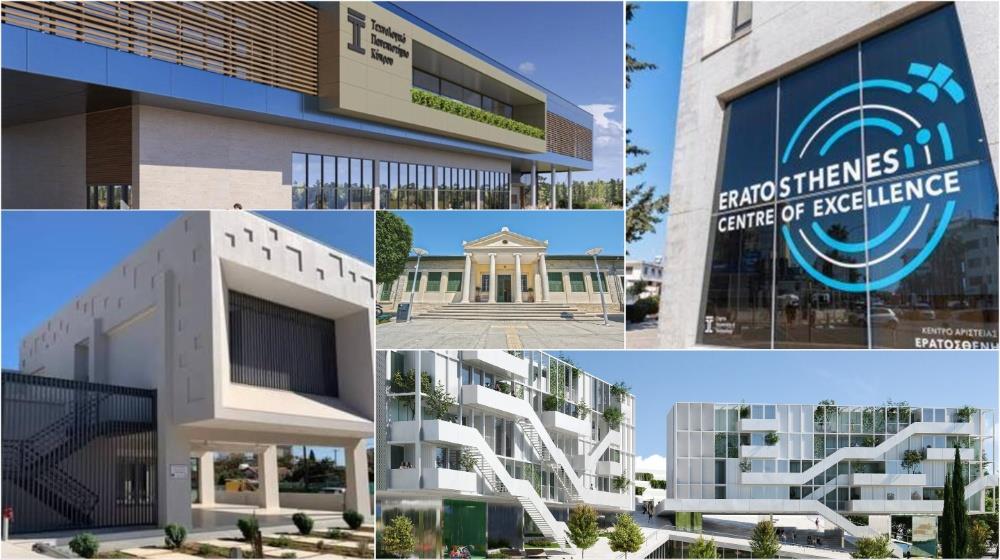
13 infrastructure projects: dormitories and a new faculty building in Larnaca
The budget allocates 30.9 million euros for construction and renovation work. These funds are intended for the implementation of 13 university development projects. Their financing will be provided primarily through government support and funds related to loans from the European Investment Bank.
Main areas of expenditure:
€17.2 million—construction of the university’s own student dormitories;
€3.4 million — the Civil Engineering and Geoinformatics Faculty building and the “Eratosthenes” Center of Excellence;
3.7 million euros — the School of Marine Sciences, Technology, and Sustainable Development building in Larnaca.
Expenditures are also allocated for the expansion of the Rehabilitation Clinic and other university building development projects.
The new TEPAK building in Larnaca is particularly noteworthy. The contract for the construction of the School of Marine Sciences, Technology, and Sustainable Development, valued at 10,934,000 euros excluding VAT, was signed on September 24, 2026. Construction is expected to take 22 months, and the project is scheduled for completion by August 2028.
The two-story building, with an area of approximately 4,960 m², will be located in the Mackenzie district. It will feature lecture halls, classrooms, conference rooms, offices, specialized laboratories, and modern infrastructure for distance learning.
The first students may begin their studies in the sustainable development program as early as September 2027—initially, classes are planned to be held in temporary facilities. The marine sciences program is scheduled to begin in the new building in 2028. Once fully operational, the faculty will be able to accommodate approximately 500 undergraduate and graduate students.
Development of the university campus in the Verengaria district of Kato Polemidia is also continuing. TEPAK’s own dormitories are designed to accommodate 500 rooms. The first 150 rooms were scheduled to open in September 2026, with the remaining 350 to follow by September 2027. The campus will also feature a café-restaurant, a mini-market, a gym, outdoor spaces, and green areas.
More than 1 million euros will be allocated for furniture and equipment
A separate budget line item is dedicated to the purchase of furniture, office equipment, and other supplies necessary for the university’s operations. A total of 1,002,960 euros has been allocated for these purposes.
The funds will be used to furnish new buildings and renovated spaces, including student dormitories. There are also plans to replace outdated equipment and purchase furniture for various departments. Of the total amount:
412,930 euros — “Eratosthenes” Center of Excellence;
333,200 euros — student dormitories, Phase B;
37,464 euros — furniture and specialized equipment for open workspaces and collaborative areas;
36,026 euros — purchase of equipment;
105,000 euros — furniture for the floors of the Rehabilitation Clinic.
Thus, in 2027, TEPAK will continue a large-scale renovation of its infrastructure. The new dormitories and academic buildings are expected to expand the university’s capabilities, and the opening of the Larnaca campus will mark an important milestone in the development of higher education in the city.