
A concerning situation has developed in the Germasogeia area around a residential building that has been declared unsafe. Despite a deadline set for April 20, 2026, residents have not yet vacated the property.
The issue concerns the Sea Gate complex, which has officially been deemed dangerous for habitation. However, people continue to live in the apartments, while shops and offices on the ground floors remain in operation. The situation is complicated by bureaucratic procedures. Even after official notification, eviction cannot be carried out without a court decision, significantly delaying the process.
Tragedy in the Same Area Raises Alarm
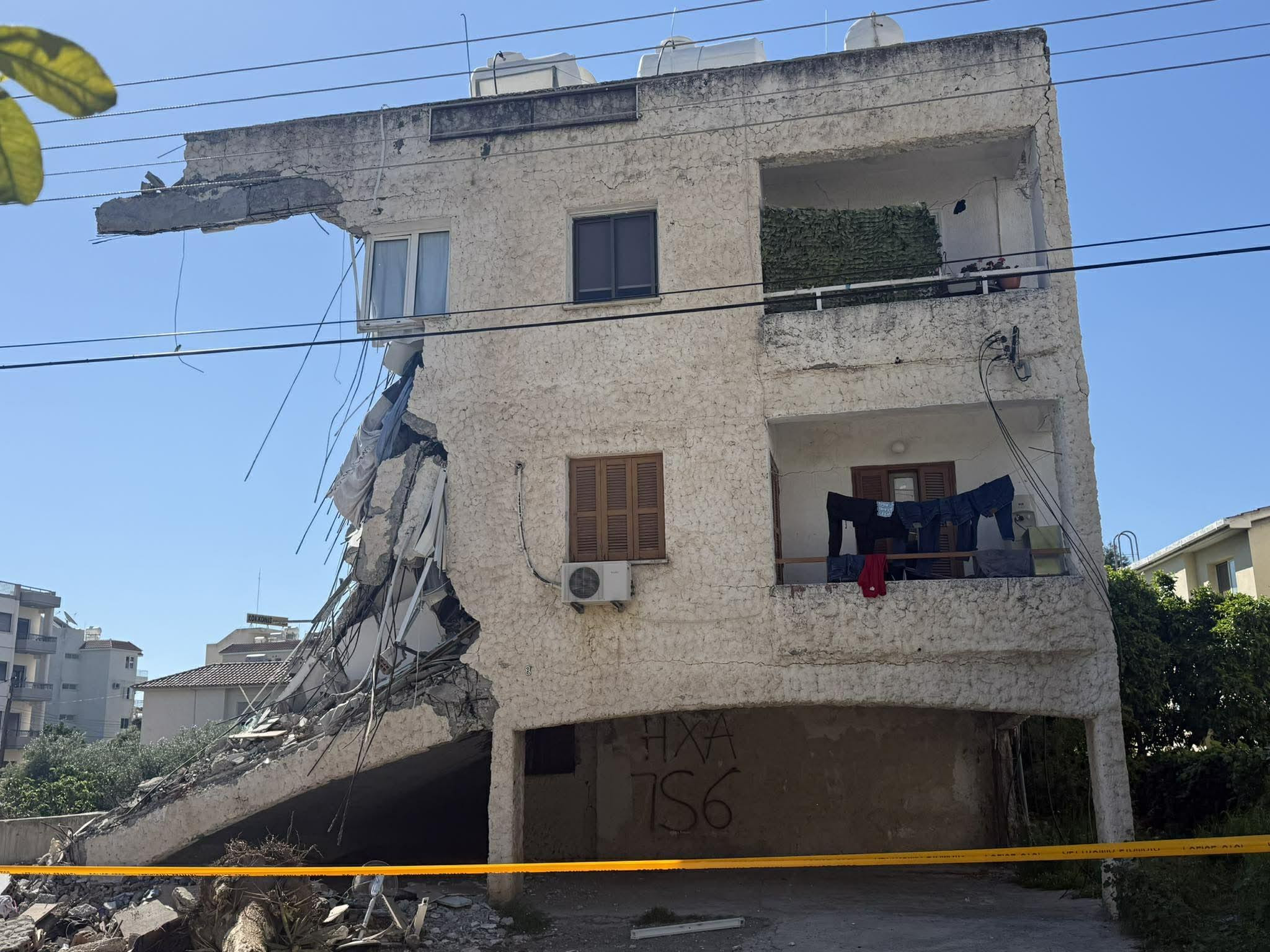
Concerns intensified following a tragic incident on April 11, 2026, when another building partially collapsed in the Germasogeia area. Two people were killed.
It was later revealed that the building had been identified as problematic as early as 2017, when owners were advised to carry out repairs. In March 2026, it was officially classified as dangerous, but this did not prevent the tragedy. The incident caused widespread public concern in Cyprus and increased pressure on authorities to speed up the relocation of residents from unsafe buildings.
Why Residents Cannot Be Evicted Immediately
Municipal authorities in Limassol sent residents an official letter on April 17, requiring them to vacate the building by midnight on April 20. However, after the deadline was not met, the case was referred to lawyers.
A legal firm is currently reviewing technical reports and expert assessments. Only after this process will authorities be able to apply to the court for forced eviction. As noted by the head of the local administration, Yiannis Tsoloftas, evacuation is only possible under the law after obtaining a court order. This means that even in the presence of a collapse risk, the process may take weeks.
Scale of the Problem: Hundreds of Dangerous Buildings
The situation with the Sea Gate complex is only part of a broader issue. In Limassol, there are approximately 780 buildings classified as unsafe, around 80 of which are on the verge of collapse. The problem also affects other regions of the country. In Nicosia, 268 unsafe buildings have been identified, four of which require immediate evacuation. In Paphos, there are 226 such properties. Experts link this to an aging housing stock, insufficient monitoring of building conditions, and lengthy legal procedures.
The issue of unsafe buildings in Cyprus is increasingly becoming a topic of public discussion. Following the recent tragedy, authorities are facing growing pressure to accelerate the assessment, repair, or demolition of hazardous structures.
However, existing legislation requires strict adherence to legal procedures, which slows decision-making. Changes to the regulatory framework may be introduced in the near future to simplify emergency eviction mechanisms and improve public safety. For now, residents of unsafe buildings, such as those in Germasogeia, remain at risk while awaiting court decisions that will determine their safety.