
In April 2026, a noticeable decline in public trust in banks was recorded in Cyprus. After an improvement in December 2025, the banking sector has once again faced a deterioration in public perception.
The average trust score across all banks fell to 4.46 out of 10. For comparison, it stood at 4.97 in December. Experts link this trend to active public discussion of legislative changes concerning debt recovery procedures and the sale of collateral, which in recent months have become the subject of political and social debate.
Overall Trend: Growing Customer Caution
The study highlights an important point: trust levels declined across all banks without exception, although the degree of decline varies. At the same time, a stable pattern remains — customers rate banks higher for reliability than for their willingness to recommend them to others.
This suggests that even with partial trust, consumers are hesitant to recommend banks to acquaintances. Such caution is often linked to economic uncertainty, changes in lending policies, and discussions around new debt recovery rules.
This is particularly relevant for Cyprus, as the country’s banking system remains under constant scrutiny from both local regulators and European institutions, including the European Central Bank, which is strengthening oversight of financial practices in the eurozone.
Market Leader: Bank of Cyprus Retains First Place
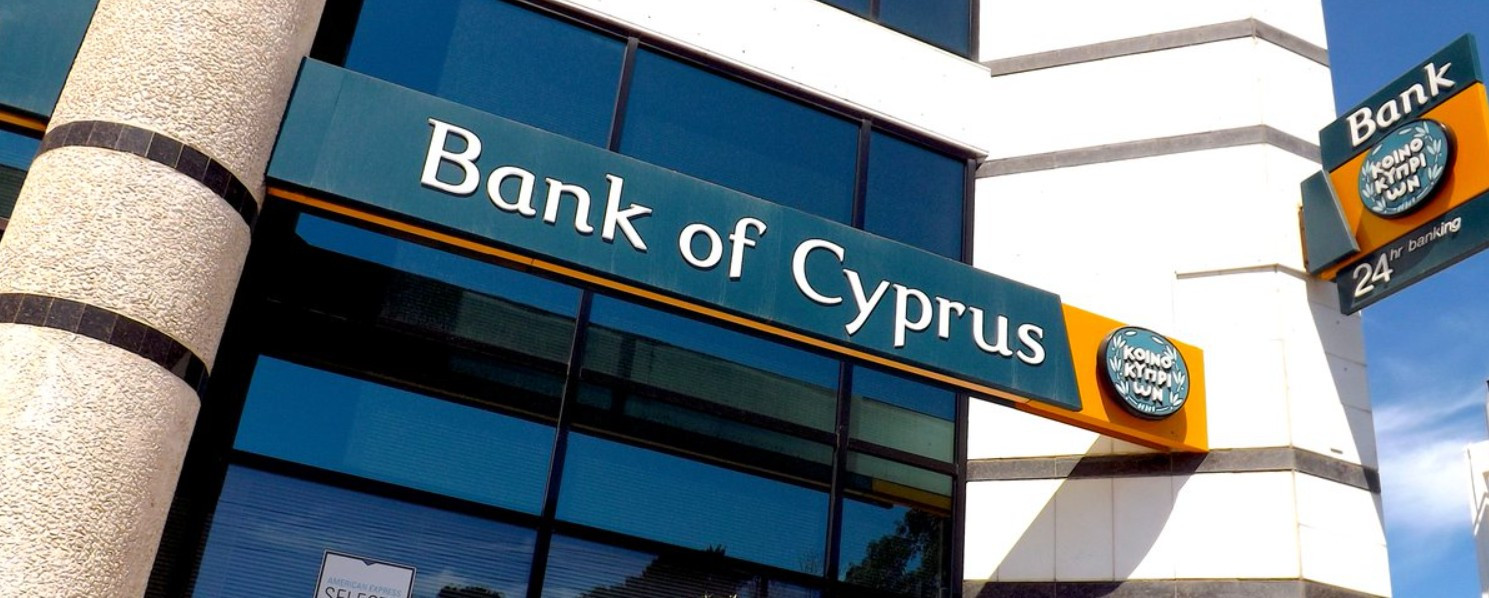
Despite the overall decline, Bank of Cyprus continues to hold the top position in the trust ranking. Its average score was 5.95 compared to 6.05 in December, marking a decrease of 0.10 points. According to consumers, the bank’s trust level reached 6.4, while willingness to recommend stood at 5.5. Thus, Bank of Cyprus remains the most resilient player in the market, maintaining a clear lead over competitors even amid a general decline in trust.
Eurobank, which is presented in the study as a combined entity with Hellenic Bank, also showed a slight decline. Its average score stood at 5.65, down 0.05 from December. The trust score reached 6.2, while willingness to recommend was 5.1. This indicates that the merger has not yet caused sharp changes in customer perception, and the market is gradually adapting to the new structure.
Ancoria Bank showed one of the most significant declines. Its average score dropped to 4.05 from 4.80, a decrease of 0.75 points. At the same time, trust is rated at 5, while willingness to recommend is only 3.1, indicating a noticeable deterioration in perception over a short period.
Alpha Bank’s rating also declined to 4.65 from 4.95. Interestingly, its trust score increased to 5.3, but the overall rating fell due to weak willingness to recommend, which stood at 4. AstroBank showed more stable dynamics, with only a 0.05-point decrease to 4.5. Both key indicators remain at an average level.
Lower Segment: CDB and National Bank of Greece (Cyprus)
At the lower end of the ranking are National Bank of Greece (Cyprus) and CDB Bank. The rating of National Bank of Greece in Cyprus fell to 3.8 from 4.2. Trust stood at 4.6, while willingness to recommend was 3.8. CDB Bank remained in last place with a score of 3.4 compared to 3.75 previously. Its trust score was 4.3, while willingness to recommend was just 2.5, reflecting the weakest position among all participants in the study.
What Affects Trust in Banks in Cyprus
Experts note that several factors are influencing the current trend. These include discussions around reforms to debt recovery legislation, overall economic uncertainty in Europe, and rising customer expectations for transparency in banking services. Additionally, Cyprus’s banking sector continues to adapt to new European Union rules on consumer protection and financial risk management. This is gradually changing how banks interact with clients, although the effects are not immediate.
The April study shows that Cyprus’s banking sector is in a phase of trust reassessment. Despite some stable positions, the overall trend remains negative. If current legislative and economic developments continue, banks will need to work more actively on rebuilding their reputation, improving transparency, and enhancing communication with customers.