
The Cypriot authorities are considering relocating the residents of Pissouri from temporary shelters as a last resort if the landslides in this Limassol district cannot be stopped or the costs of dealing with the aftermath become prohibitive.
This was stated by the head of the local council on Monday 9 September.
On the other hand, experts studying the geological data of the region said that even if it is possible to avoid the resettlement of the affected owners, it is impossible to carry out any further construction projects. Otherwise, there will be a catastrophe.
The final decision is expected to depend on the results of the ongoing comprehensive investigation, which was launched after the Cyprus Technical Chamber (ETEK) recommended the suspension of the construction of the €35 million retaining wall. As a reminder, the first phase of the €8.5 million project has already been completed. The latest results show that the depth of the landslide surface is approximately 40 metres. This is well above the initial estimate of 7 metres.
Christodoulos Hadjigeorgiou, director of the Geological Survey, said his department was doing all it could to determine the cause of the landslides. A 3D modelling study, the first of its kind in Cyprus, is currently underway with the participation of the geological services of the UK, Austria, Greece and Spain. Hadjigeorgiou added that the ministry is considering extending the research beyond Pissouri to see if similar problems exist in a wider area. He also expressed concern about the potential impact of strong earthquakes on the complex geology of the region.
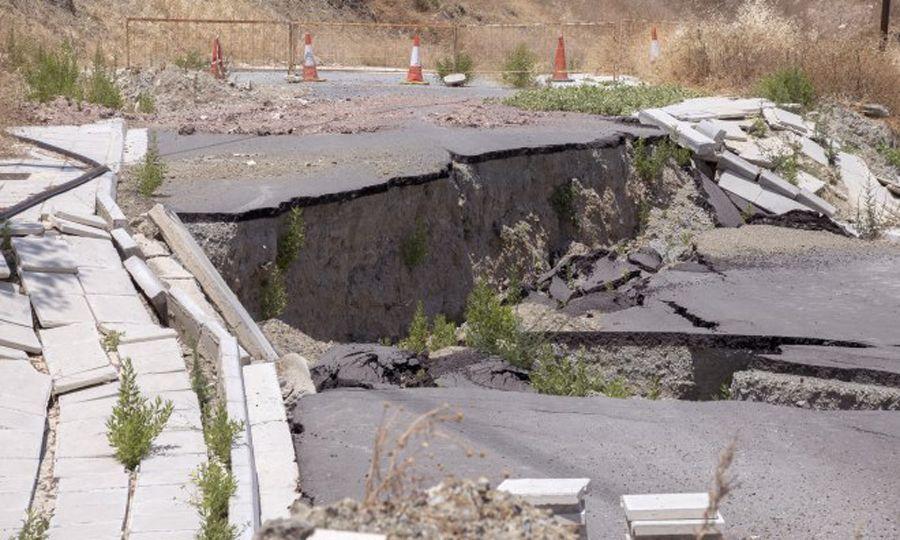
The beautiful village of Pissouri is situated on the west coast of Cyprus, halfway between Limassol and Paphos.
Many years ago several hundred English families bought apartments and villas in the village. Many of them, especially pensioners, had invested all their savings in Cypriot property after selling their properties in England. And they would have been living here happily ever after, had it not been for a massive landslide in 2012 - the land literally 'sagged' in the area where dozens of houses stood (Limnes, which means 'lakes').
The houses cracked, the walls collapsed, the roofs collapsed, the communications (electricity, water, sewerage) stopped working. Life for the owners of the beautiful houses by the sea turned into hell and endless 'battles' with the authorities. They had to look for alternative accommodation as it was dangerous to stay in the houses.
