
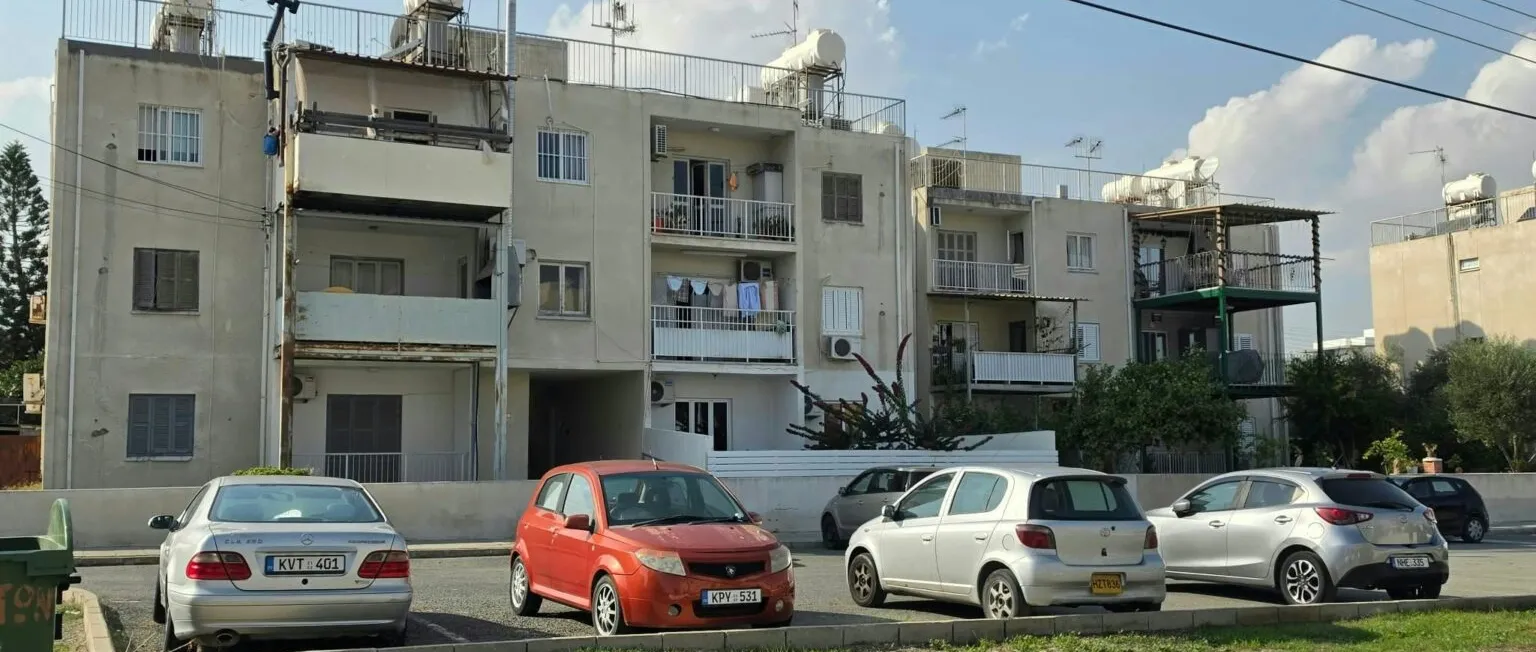
In refugee residential settlements in Cyprus, authorities have begun demolishing makeshift carports and illegal structures. Work is already underway in the Palouriotissa and Aglantzia areas. The reason is an acute shortage of parking spaces and the uneven distribution of existing parking spots: some residents occupy two or three spaces, while others have nowhere to park their cars.
This issue was discussed on Wednesday, November 18, at a meeting of the Parliamentary Committee on Refugee Affairs. Lawmakers noted that many of the 69 state-run housing complexes for displaced persons lack sufficient parking spaces. Authorities are currently preparing plans to reorganize them.
Homemade sheds and smoking areas are being removed
Andri Hadjiandreou, Deputy Mayor of Aglandzia, explained that some residents have occupied not only parking spaces but also public green spaces. In some areas, makeshift structures—including chicken coops—have appeared. Work has already begun to dismantle them. Part of the vacated land is planned to be converted into parking spaces.
Carports on Kontea, Milia, and Voni Streets have already been demolished, and the area has been cleared. Green spaces there are currently being restored. Some of them may become parking lots, as there are large areas in the neighborhood occupied by parks.
The Nicosia Municipality reported that at two residential complexes, the parking structures have already been dismantled, new pavement has been laid, and sidewalks have been constructed. Road markings will also be painted on the grounds so that every resident knows where they are permitted to park their car.
The improvement project will cost approximately 10 million euros
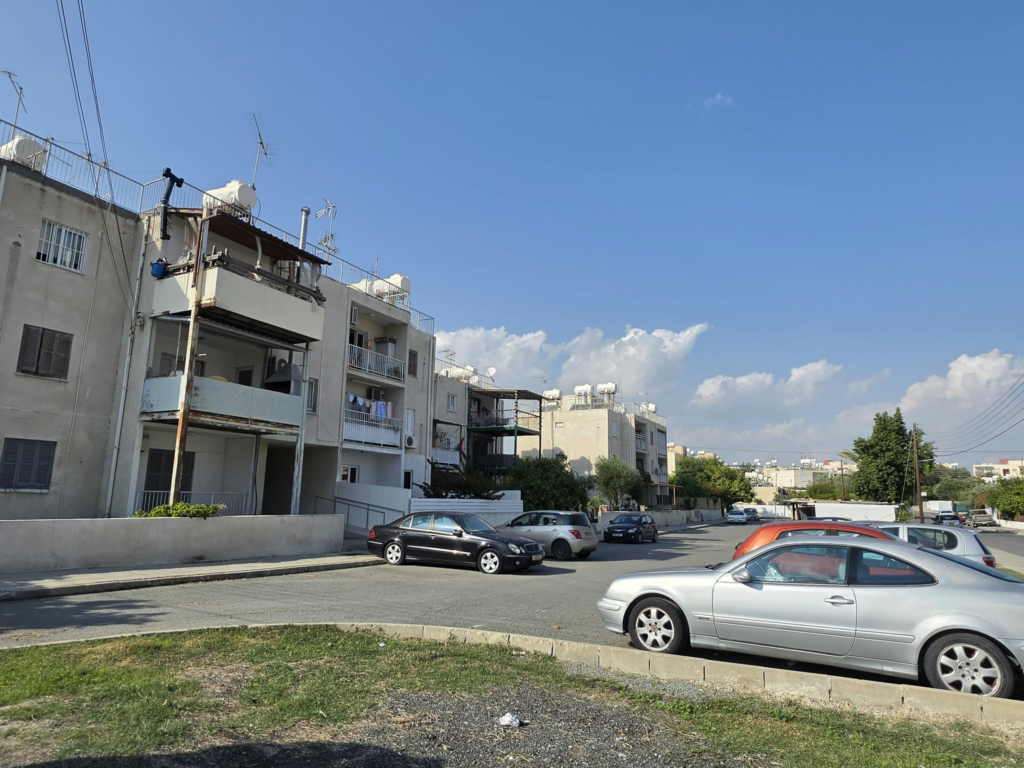
According to estimates by the Nicosia Municipality, the construction of parking lots, sidewalks, and other necessary work will cost approximately 10 million euros. Basic improvements to the Atalassa residential complex in Aglandzia alone could cost more than 1 million euros.
One of the main reasons for the current problem is the nature of how these settlements were built. They were originally constructed to provide temporary housing for people who had left their homes, so the plans did not include designated parking areas. Instead, open spaces were used for parking. In the early years, this did not cause any serious difficulties, as residents owned far fewer cars.
Now the authorities intend to improve the appearance of the residential complexes, enhance living conditions, repair roads, and develop public spaces. However, funding remains limited for now. Therefore, the municipality plans to develop a unified improvement project, and residents who wish to build parking lots will be able to carry out the work on their own—provided they comply with the approved requirements.
A representative of the Land Department explained that the authorities are trying to resolve a problem that has been building up for years. In complexes where there are only sidewalks and no vehicle access, they plan to create organized parking zones with numbered spaces.
The projects will be developed in collaboration with local authorities. The work may be carried out by private contractors or municipalities, and the relevant department will cover the costs. Using green spaces for parking will require a change in their designated purpose. Planning is already well underway, and the ultimate goal is to cover all residential complexes.
How many residential complexes for refugees are there in Cyprus?
Members of the parliamentary committee emphasized that organized parking facilities must be created in all state-run settlements for displaced persons, even if resolving this issue has been delayed for many years.
According to the data presented, the distribution of housing complexes and apartments by district is as follows:
Nicosia, including Strovolos: 22 housing complexes and 6,952 apartments.
Limassol: 14 complexes and 2,947 apartments.
Larnaca: 13 complexes and 3,320 apartments.
Paphos: 10 complexes and 284 apartments.
The free areas of Famagusta: 7 complexes and 132 apartments.
In total, there are 69 residential complexes. Their redevelopment should not only solve the parking problem but also improve the condition of roads, sidewalks, and public areas.