
According to the results of a large-scale survey carried out by the Larnaca District Local Government Organisation (EOA), more than 1,000 potentially dangerous buildings have been identified across the city, many of which are in critical condition and may pose a serious risk to public safety.
The findings have sparked widespread public concern, as the list includes not only abandoned structures but also occupied apartment buildings where hundreds of tenants continue to live.
The Scale of the Problem
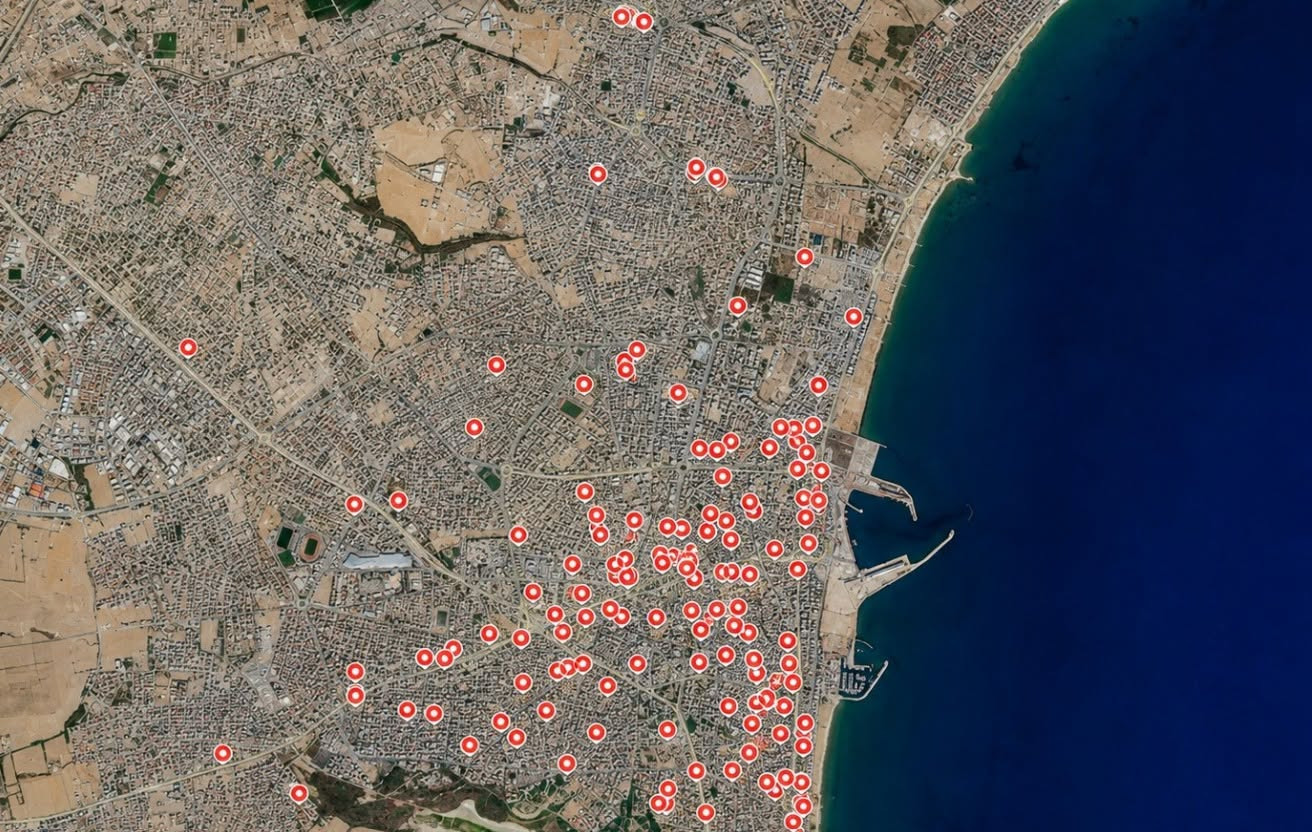
According to official figures, around 1,050 buildings across the region have been classified as posing varying levels of risk. By comparison, local authorities were previously monitoring far fewer properties, highlighting the significant expansion of the issue following the transfer of responsibilities to the new local government authority in 2025. Most of the buildings are located across the municipalities of the region, including the city of Larnaca itself, Lefkara, Dromolaxia-Meneou, Aradippou, and surrounding areas. Particularly alarming is the high concentration of unsafe buildings within the urban area, where population density is greatest.
The authorities are especially concerned that a significant proportion of the buildings fall into the highest-risk category, including multi-storey residential apartment blocks housing hundreds of residents. Initial inspections revealed that dozens of buildings face a genuine risk of collapse unless urgent action is taken. Many of these are residential complexes located in central districts of the city, including Sotiros and Chrysopolitissa. The situation is further complicated by the fact that any large-scale evacuation would trigger a serious social crisis, as Larnaca's rental market is already under severe pressure, with very limited housing available and rental prices continuing to rise.
Risk Categories
During the technical inspections, buildings were classified according to their level of risk. The most critical category includes properties facing an immediate risk of collapse due to severe structural damage. This group includes dozens of residential buildings, including apartment complexes. Inspectors also identified buildings with significant structural defects, as well as properties requiring repairs and structural reinforcement. A small number of buildings were declared safe following previous renovation work.
One of the biggest challenges remains the housing situation. In the event of large-scale evacuations, the authorities would face a severe shortage of alternative accommodation for displaced residents. Larnaca's property market is already experiencing a shortage of affordable housing, a situation further exacerbated by growing demand from foreign workers and investors. As a result, even the temporary relocation of hundreds of families could place additional pressure on the city's rental market and social infrastructure.
Following the completion of the inspections, local authorities began implementing an emergency response plan. Measures already taken include evacuating certain buildings, closing unsafe commercial premises, and securing dangerous structures. In several cases, preparations have begun for the demolition of the most hazardous buildings, while property owners have been formally instructed to carry out urgent repairs. Some buildings have already been placed under restricted access.
Legislative Constraints and Administrative Challenges
One of the main obstacles remains the current legal framework, which experts believe slows down emergency action. Stronger enforcement measures—including fines or mandatory evacuations—require court approval, significantly delaying the process. The authorities are also facing shortages of both financial and human resources. Carrying out technical assessments and visual inspections requires substantial funding, while current budgets are insufficient to cover all the programme's needs.
In light of these findings, Cyprus is now considering reforms to its building safety and inspection system. The authorities are exploring ways to speed up responses to dangerous buildings and introduce stricter accountability for property owners. Experts believe that the situation in Larnaca could become a model case for addressing similar problems in other cities across the island.