
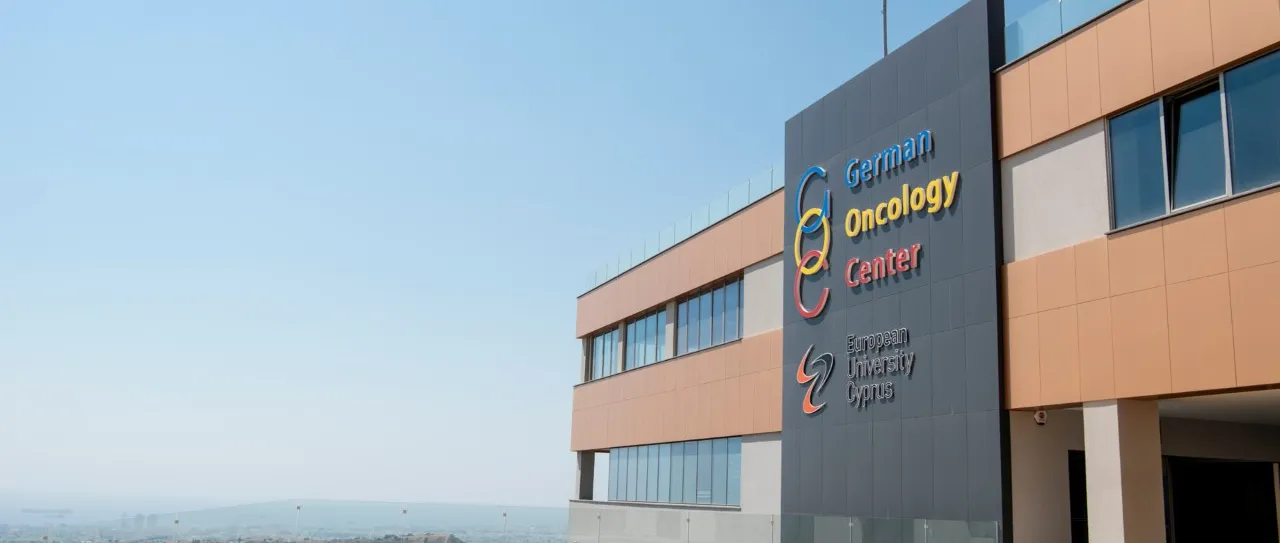
The German Oncology Center in Limassol has received preliminary approval for an expansion from the Department of Environment. The authority determined that a full environmental impact assessment would not be required, provided that all stipulated conditions are met. The medical facility must still obtain the necessary building approvals. No construction start date has been announced yet.
What will be built on the oncology center site?
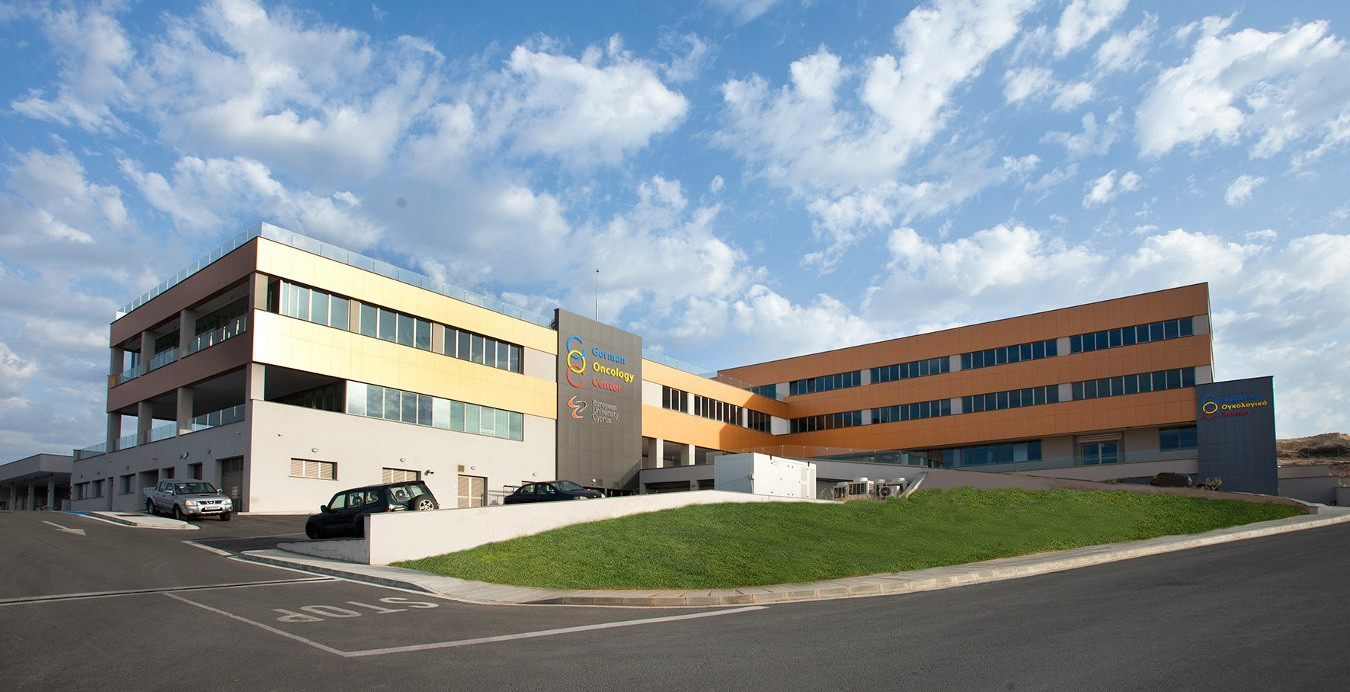
The expansion is planned within the existing medical complex in the municipality of Agios Athanasios. The new buildings will be constructed on current parking areas without affecting additional land. The total floor area of the new premises will be approximately 2,560 m2, with another 850 m2 on the underground level. The project also provides for around 1,280 m2 of roads and parking areas. For comparison, the center currently has 4,700 m2 of usable indoor space and 17,600 m2 of roads and parking areas. The project includes several main components:
- apartments for visiting specialists and patients’ relatives;
- a daycare center;
- additional space for medical staff;
- new areas for medical equipment and support services;
- additional parking spaces.
The underground level will include a kitchen and storage areas, offices for the dermatology department and MRI facilities. The expansion does not involve the introduction of new types of treatment. Therefore, according to the submitted documents, no increase in chemical or radioactive waste is expected.
Seven apartments and a daycare center for 56 children
The first floor of the new building will include six 1-bedroom apartments and one 2-bedroom apartment. The housing is intended primarily for medical specialists coming to Cyprus from abroad. If needed, the apartments may also be used temporarily by relatives of patients receiving treatment at the center. Another important part of the project is a daycare center for 56 children. It will include places for 24 infants and 32 older children.
The facility is intended primarily for the children of employees working at the medical complex. If necessary, families of patients may also be able to use its services. The expansion is therefore aimed not only at increasing the hospital’s operational space, but also at improving conditions for employees and for people who need to travel to Limassol while their relatives undergo treatment.
Wastewater treatment facilities
The environmental decision concerns not only the new buildings, but also the existing wastewater treatment plant on the medical complex site. The plant has been operating since 2018, but no preliminary environmental assessment was carried out before it began operating. The Department of Environment has now reviewed its operation under a separate procedure. The timeline for the review was as follows:
- January 2025 — the center submitted its initial environmental report.
- October 2025 — the authority requested a revised document that also addressed the operation of the treatment plant.
- March 2026 — the updated report was submitted.
- May 2026 — the center provided additional clarifications.
- October 8, 2026 — a conditional environmental decision was issued for both the expansion project and the existing treatment plant.
The authority explained that the special review procedure was justified by the public importance of the facility: the wastewater treatment system collects, processes and disposes of wastewater generated by the medical complex. The plant is designed to treat 40 m3 of wastewater per day. After the expansion, wastewater volumes are expected to increase from approximately 25 to 29 m3 per day. Treatment combines biological processing with membrane filtration. Liquids containing radioactive substances are held in separate tanks before being sent to the treatment plant. The treated water is used to irrigate gardens on the center’s grounds.
According to the Limassol District Local Government Organization, the medical complex is not connected to the municipal sewer network because it is located outside the service area. The organization has agreed to the continued use of the center’s own wastewater treatment plant.
What environmental requirements must the center meet?
Despite the conditional approval, the medical complex must comply with a number of mandatory requirements related to wastewater treatment, soil protection and stormwater management. In particular, the Cyprus Department of Environment imposed the following conditions:
- A ban on discharging water into absorption wells. Although the description of the existing system referred to this method of disposing of excess treated water, the new conditions expressly prohibit its use.
- Obtaining the required wastewater discharge permit.
- Construction of an emergency tank with capacity equal to one day’s wastewater volume.
- Installation of a sealed tank for use during periods of rainfall.
- Ensuring that trained personnel are available to carry out the necessary testing.
- Conducting geological studies for the construction of the new buildings.
- Managing additional surface runoff within the site so that the project does not increase pressure on local waterways.
The Department reserved the right to impose additional requirements if new environmental issues arise in the future. Overall, the expansion of the German Oncology Center in Limassol will include not only new apartments, a daycare center and additional medical facilities, but also stricter environmental safeguards for the site. The construction timeline remains unknown, as the project must first complete the remaining approval procedures.