
Authorities in Larnaca continue their efforts to eliminate unsafe and dangerous buildings. In recent days, demolition work began on two additional residential properties deemed unfit for habitation, while inspections and safety measures may soon affect dozens of other structures throughout the region.
The issue of aging housing stock is becoming increasingly significant in Cyprus. Many buildings were constructed several decades ago and now require major renovation or complete reconstruction. In some cases, their structural condition poses a direct threat to residents and passersby.
New Demolitions of Unsafe Buildings in Larnaca
According to regional authorities, demolition work on two hazardous residential buildings is currently underway on Stavrodromiou Street.
Earlier, at the end of May, a residential building in the Sotiros area was demolished after being declared unsafe. Three women had been living in the property. In addition, authorities recently completed the demolition of another building whose roof partially collapsed in mid-May.
Experts note that such incidents are becoming a worrying signal for municipalities, as many older structures across the island are gradually reaching a critical level of deterioration.
Authorities are currently considering the demolition of a total of 35 properties that may pose risks to residents and the public. These include both apartment buildings and private homes located not only in Larnaca but also in the Municipality of Dromolaxia-Meneou and several other communities in the region.
Property owners will soon receive official notices requiring them to address identified safety issues and bring their buildings into compliance. If the necessary work is not completed within the specified timeframe, authorities may initiate compulsory evacuation procedures and seal the affected properties.
Particular attention in recent weeks has focused on an apartment building in the Faneromeni area that was declared structurally unsafe and completely evacuated.
The case attracted significant public attention because the evacuation affected 40 residents living in 24 apartments.
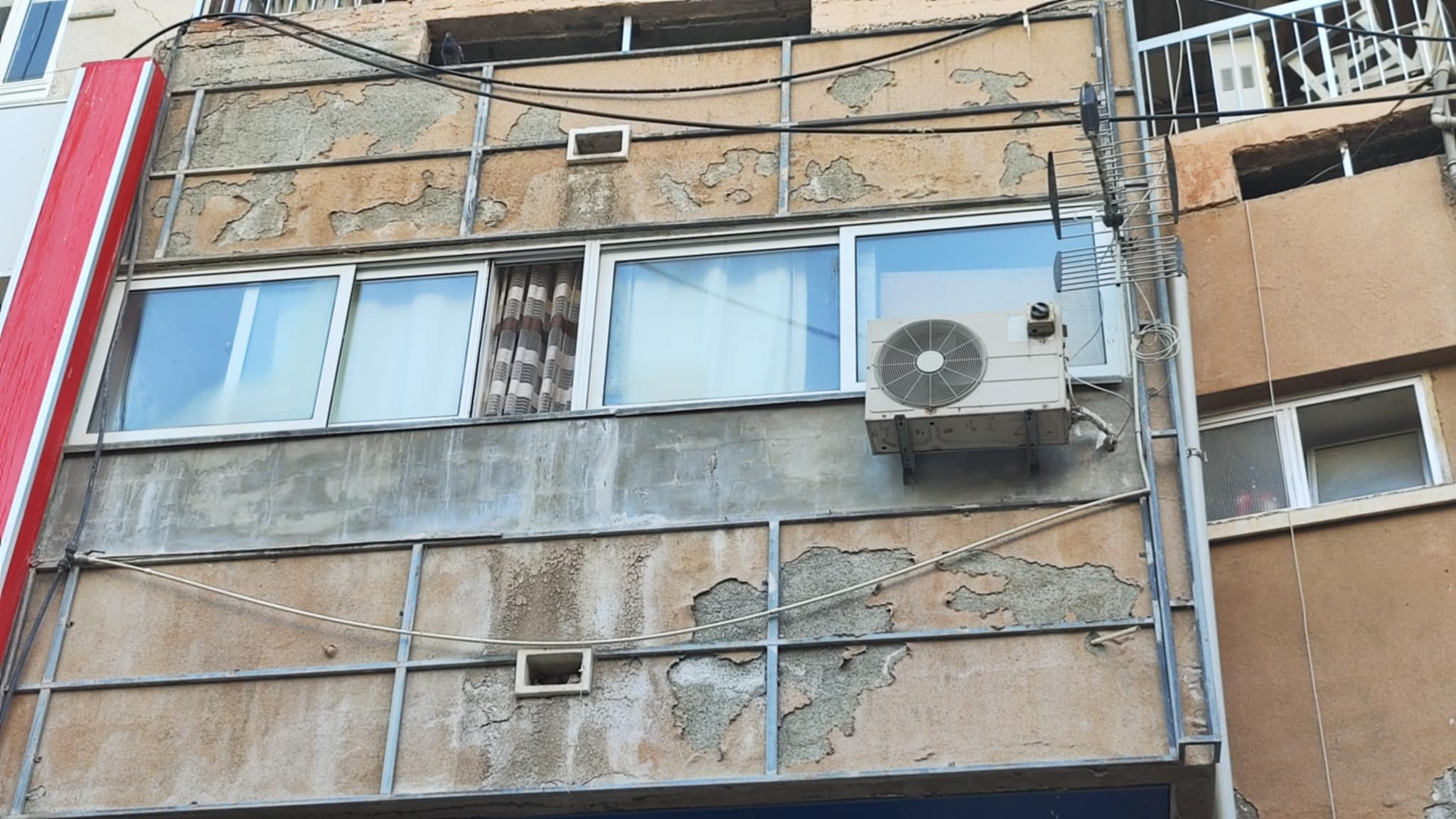
Social Challenges Come to the Forefront
Beyond the technical issues, authorities are facing serious social consequences resulting from the evacuations.
After the building was declared unsafe, dozens of people were forced to find alternative accommodation within a very short period. Additional difficulties arose regarding the storage of furniture, household appliances, and residents’ personal belongings.
To address these challenges, the Ministry of Interior, Civil Defence, and the Municipality of Larnaca became involved.
However, local officials believe that the existing support system requires substantial improvement. In their view, state authorities should play a more active role in providing temporary accommodation for individuals who lose their homes due to dangerous building conditions.
Against the backdrop of rising rental prices across Cyprus, finding alternative housing is becoming increasingly difficult, particularly for low-income families and pensioners.
One of the main challenges remains the lengthy bureaucratic process. At present, officially declaring a building unsafe requires multiple administrative and legal procedures, significantly delaying action.
Regional authorities are hoping for legislative changes that would allow faster responses and more efficient intervention in cases involving dangerous structures.
Experts emphasize that the issue of aging housing stock is not limited to Larnaca. Many apartment buildings constructed during the 1960s, 1970s, and 1980s across Cyprus require comprehensive structural assessments and modernization.
Safety Becomes a Top Priority
Following recent incidents involving collapses and the discovery of dangerous structures, authorities are strengthening oversight of older buildings.
The primary objective is to prevent potential tragedies and ensure public safety.
Inspections of unsafe properties are expected to continue in the coming months, while the modernization of Cyprus’s aging housing stock is likely to become one of the key priorities for local authorities and government agencies.
The situation in Larnaca demonstrates that building safety and social support for affected residents increasingly require a comprehensive approach that combines technical, legal, and humanitarian solutions.