
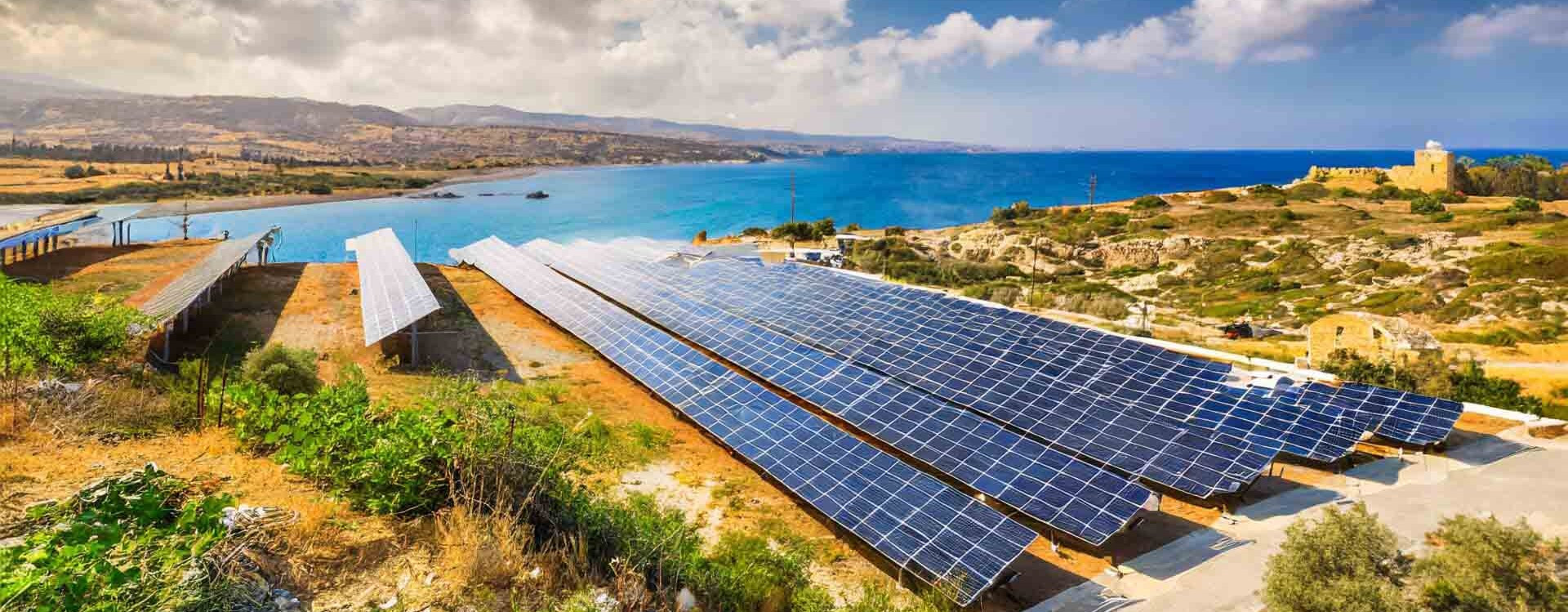
Cyprus continues to increase its production of energy from renewable sources, but the pace of its transition to green energy remains among the slowest in the European Union. According to new Eurostat data, renewable sources accounted for 27.5% of the island's electricity production in 2025.
This is one of the lowest rates in the EU. Lower figures were recorded only in Malta (11.2%), Czechia (19.2%), Luxembourg (23.3%), and Slovakia (24.1%).
When electricity, heating, cooling, and transport are considered together, the overall share of renewable energy in Cyprus' final energy consumption reached 21.5%.
Why Cyprus Is Lagging Behind Most European Countries
Despite enjoying a high number of sunny days each year, Cyprus' energy system has several characteristics that are slowing the development of renewable energy. The main reasons include:
- the island is not connected to the wider European electricity grid and operates as an isolated system;
- electricity storage capacity remained limited for many years;
- a significant share of electricity is still generated by power stations using imported fuel;
- the rapid growth of solar power generation has led to periodic curtailments, with part of the electricity produced having to be disconnected because of grid congestion.
In recent years, the Cypriot authorities have been actively investing in the modernization of the country's energy infrastructure. Large-scale electricity storage projects are being developed across the island, the network of solar power plants is expanding, and smart meters continue to be introduced. These measures are expected to help Cyprus use green electricity more efficiently and reduce its dependence on conventional fuels.
How Cyprus Compares with Other EU Countries
Across the European Union, renewable sources accounted for an average of 49.9% of total electricity consumption in 2025. This was 2.4 percentage points higher than in 2024. By comparison, in 2004, when Eurostat began compiling these statistics, the figure stood at just 15.9%. The leading countries in Europe were:
- Austria — 90.8%;
- Sweden — 89.2%;
- Denmark — 77.7%;
- Portugal — 65.6%;
- Greece — 60.9%;
- Spain — 60.7%.
Greece is a particularly notable example. Thanks to large-scale investment in solar and wind power, the country has significantly increased its renewable electricity production. For Cyprus, Greece's experience is regarded as one of the most relevant and promising models to follow. The overall share of renewable energy in the EU's final energy consumption reached 26.2%, compared with 25.2% a year earlier. However, the European Union is still not on track to meet its binding target of 42.5% by 2030. To achieve this, EU countries will need to increase the share by approximately 3.3 percentage points per year between 2026 and 2030.
What Lies Ahead for Cyprus' Energy Sector
Experts believe that the coming years will be crucial for the country's energy sector. In addition to constructing new solar parks, Cyprus is focusing on developing energy storage systems, modernizing its electricity grid, and implementing international projects to connect the island's energy system with neighboring countries.
At the same time, the use of renewable energy for heating and cooling is also increasing. Across the EU, this figure reached an average of 27.4% in 2025, the highest level recorded since data collection began in 2004, when it stood at 11.7%.
Although Cyprus remains near the bottom of the European ranking, current investments in the energy system and the development of solar power could significantly improve the country's position in the coming years. Given its strong potential for solar generation and support from the European Union, the island is regarded as one of the markets with the greatest potential for further growth in the share of renewable energy.