
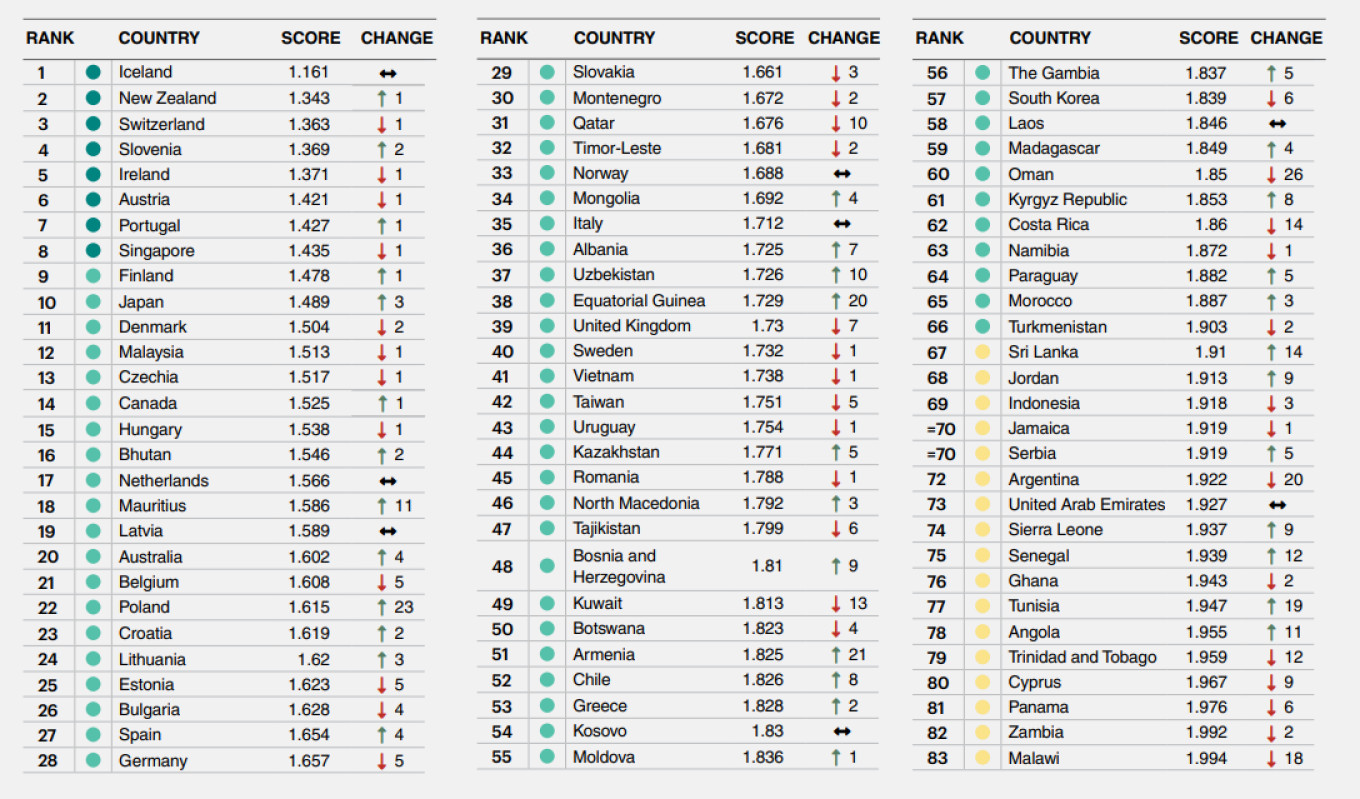
Cyprus is among the countries that recorded a decline in the latest Global Peace Index (GPI) 2026, an annual report that assesses the levels of safety, stability, and peacefulness of nations around the world. Against the backdrop of a deteriorating global environment, the island dropped nine places and now ranks 80th out of 163 countries.
The new ranking confirms a troubling trend: the world has become less peaceful for the twelfth consecutive year. Experts point to rising geopolitical tensions, an increase in armed conflicts, and growing economic instability, all of which are affecting even countries located far from active war zones.
Cyprus Loses Ground in the Rankings
According to the report, Cyprus ranked 80th with a score of 1.967 points. This represents one of the most significant declines among European countries over the past year.
Although street crime on the island remains relatively low compared to many countries worldwide, the final score is influenced by a broader range of factors, including national security concerns, military presence, regional instability, and the country’s geopolitical position.
Experts note that Cyprus’s location in the Eastern Mediterranean makes it particularly sensitive to crises in the Middle East and shifts in the international security landscape. In addition, the island’s continued division and the presence of military forces along the buffer zone continue to affect its ranking.
At the same time, Cyprus remains one of Europe’s most popular destinations for tourism, investment, and relocation thanks to its high quality of life, favorable climate, and relatively peaceful domestic environment.
The World Is Becoming Less Stable
The report’s authors emphasize that the global situation continues to deteriorate. Over the past year, peace scores worsened in 99 countries.
The factors with the greatest impact on the ranking include armed conflicts, military expenditure, crime levels, homicide rates, political stability, and citizens’ sense of security.
According to analysts, the world is experiencing one of its most tense periods in recent decades. Ongoing conflicts in the Middle East and Ukraine, growing competition among major powers, and instability in energy markets are shaping a new reality for most nations.
Which Countries Are Considered the Safest?
Iceland remains the undisputed leader of the ranking for the nineteenth consecutive year. The country has held first place since 2008 and continues to achieve some of the world’s strongest scores in public safety, social stability, and trust among citizens.
Experts attribute Iceland’s performance to the effectiveness of its public institutions, low crime rates, strong social support systems, and the near absence of internal conflict.
New Zealand ranked second and remains the safest country in the Asia-Pacific region. Its strengths include high levels of public trust, political stability, and geographical distance from major geopolitical conflicts.
Switzerland secured third place after climbing several positions in the ranking. The country is traditionally associated with neutrality, a strong culture of legal compliance, and one of the world’s most effective systems of governance.
European Countries Strengthen Their Positions
Slovenia and Ireland also entered the top five safest countries in the world.
Slovenia reached the global top tier for the first time thanks to low levels of violence, high social standards, and an excellent urban environment. The country has invested heavily in environmental initiatives and the development of high-quality public infrastructure.
Ireland continues to achieve strong results due to its stable political system, low crime rates, and long-standing policy of neutrality. Experts describe it as one of the most comfortable places in Europe for both living and doing business.
Despite its decline in the rankings, Cyprus remains considerably safer than many countries around the world and retains its reputation as one of the most peaceful places in the Mediterranean.
However, the report’s findings serve as a signal to policymakers that greater attention should be paid to public safety, crisis management, and resilience to external threats.
Against a backdrop of growing international instability, security is becoming an increasingly important factor for investors, tourists, and foreign professionals choosing a country in which to live and work.
For this reason, positions in international rankings such as the Global Peace Index now carry not only reputational significance but also considerable economic importance.