
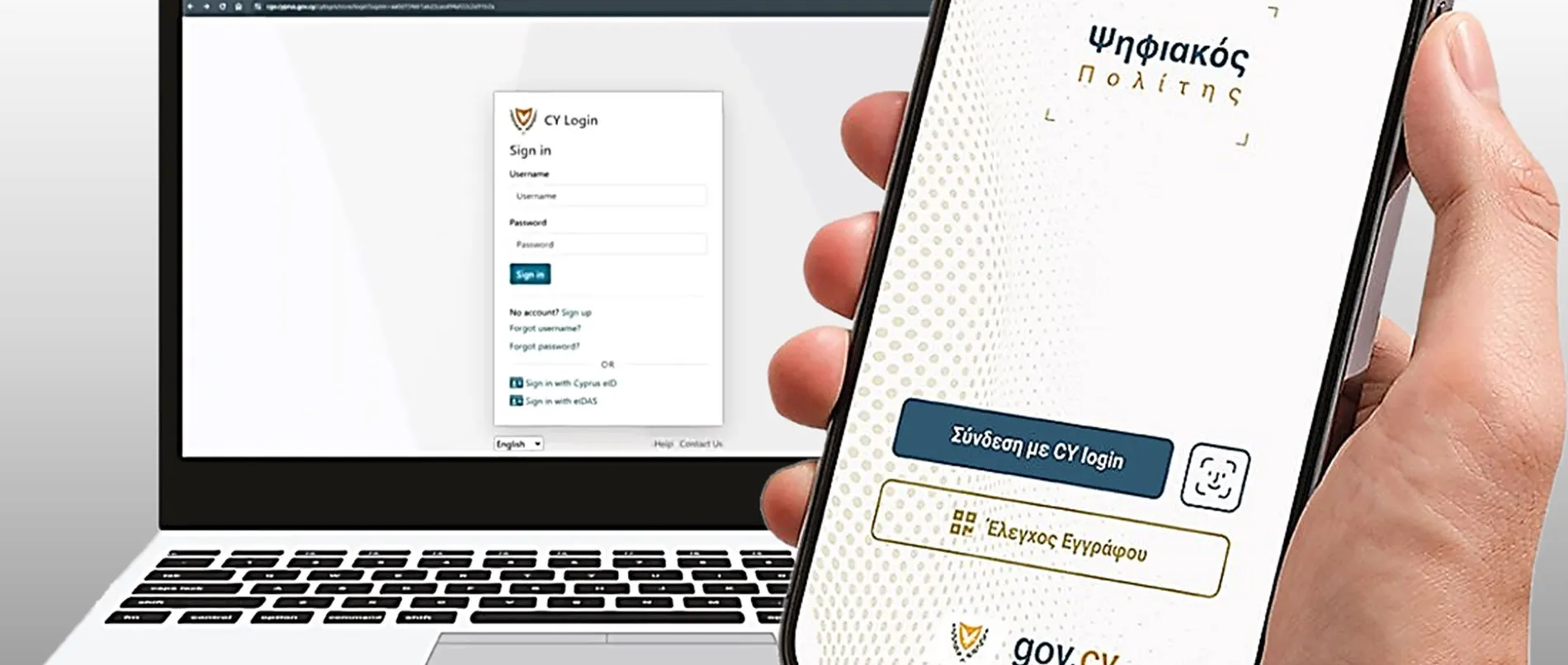
Cyprus continues to expand the capabilities of the “Digital Citizen” app. New services will be added to it soon.
This was announced on Monday, November 9, by Nikodimos Damianou, head of Cyprus’s Sub-Ministry of Research, Innovation, and Digital Policy, during the presentation of the ministry’s 2027 budget.
What New Features Will Be Added to “Digital Citizen”
To date, more than 170,000 people are already using the app. It allows users to store their children’s digital IDs and documents confirming foreigners’ right to reside in the country.
Another new feature is automatic reminders about document expiration dates. The app alerts users when a document needs to be renewed.
Additional features will be added to the app in the future. Specifically, there are plans to link it to the European Digital Identity Wallet. This will allow users to use digital documents and verify their identity not only in Cyprus but also in other EU countries through available services.
Users will also be able to verify their age online. This feature is intended to help protect children and teenagers from age-restricted content and websites.
Another new feature is electronic tickets for soccer matches. Damian announced that they would be added to the app in November 2026.

212.2 million euros will be allocated for Cyprus’s digital transformation
The total budget for the digitalization program in 2027 will be 212.2 million euros. Of this amount, 150.2 million euros will go directly to Cyprus’s Sub-Ministry of Research, Innovation, and Digital Policy, while another 62 million euros is allocated in the budgets of other ministries and government agencies.
According to Damianou, more than 200 new digital government services have been launched in Cyprus over the past two years. Authorities describe this program as the largest public sector digitalization project in the country’s history. Among the systems already in operation are:
eDEA—a school information system that has processed more than 136,000 student registrations.
Drop and Send — a postal system that has processed more than 300,000 packages.
DigiPol—a police platform that has issued 21,000 certificates of no criminal record in just a few months.
Digitization has also accelerated the work of government agencies. In the social insurance system, the time required to process applications has been reduced by 30–70%, depending on the type of benefit. Similar improvements have been noted in the Department of Civil Registry and Migration, social welfare services, and the Ministry of Defense.
What Digital Services Will Be Introduced in 2027–2028
In 2027, authorities plan to launch new information systems for the Department of Road Transport and the Registrar of Companies. The latter project is intended to simplify business interactions with government agencies and help attract investment. Several major projects are also planned for 2027–2028:
NG 112—a new emergency communications system for rescue services.
Police Command Center—a command center for coordinating the work of law enforcement agencies.
Turkish Cypriot Real Estate Management System—digitization of the recording and management of relevant properties.
Unified Electronic Medical Records System—the development of digital healthcare services and the expansion of the capabilities of the national GESI healthcare system.
Cybersecurity will remain a separate priority area. The government has been allocating special funding for it for the third consecutive year. In 2026, a unified cybersecurity policy for the civil service was introduced for the first time. It provides for general rules, standards, and employee training.
Another priority is the development of artificial intelligence. According to Damianou, the Cabinet of Ministers is expected to review and approve the new National AI Development Strategy through 2032 this week. Cyprus is also developing its own computing infrastructure and participating in the European AI Factories network through the Pharos-CY project.
Thus, the authorities plan to gradually transition not only documents and everyday government services to a digital format, but also residents’ interactions with health, transportation, and other agencies.