

According to the Cyprus Statistical Service (Cystat), the Cyprus real estate market is undergoing a major transformation. Developers are investing more actively in residential projects, apartment buildings, and the preparation of new land for construction. At the same time, the total area of non-residential projects receiving permits is declining.
Construction in Cyprus accelerates: June and first-half results
In June 2026, 751 building permits were issued in Cyprus — 18.3% more than in June of the previous year. The main figures for the month were:
- 751 building permits;
- €469.5 million — total project value;
- 394,700 m2 — total project area;
- 2,122 residential units included in approved projects.
The first-half figures also showed significant growth. The number of permits increased from 3,399 in January–June 2025 to 4,401 during the same period of 2026, representing growth of 29.5%.
At the same time, the total value of approved projects rose by 48.2%, from €1.734 billion to €2.569 billion. Their combined area increased by 47.1%, from 1,426,297 to 2,097,440 m2. The strongest growth was recorded in residential construction: the number of housing units included in approved projects increased from 6,616 to 11,100, or by 67.8%.
This means growth is not limited to the number of permits: both the value and total area of projects are increasing as well. The residential segment is expanding particularly quickly. It is important to note that receiving a building permit does not mean a project has already been built or will necessarily be completed in the near future. The statistics reflect projects that have received the necessary approvals.
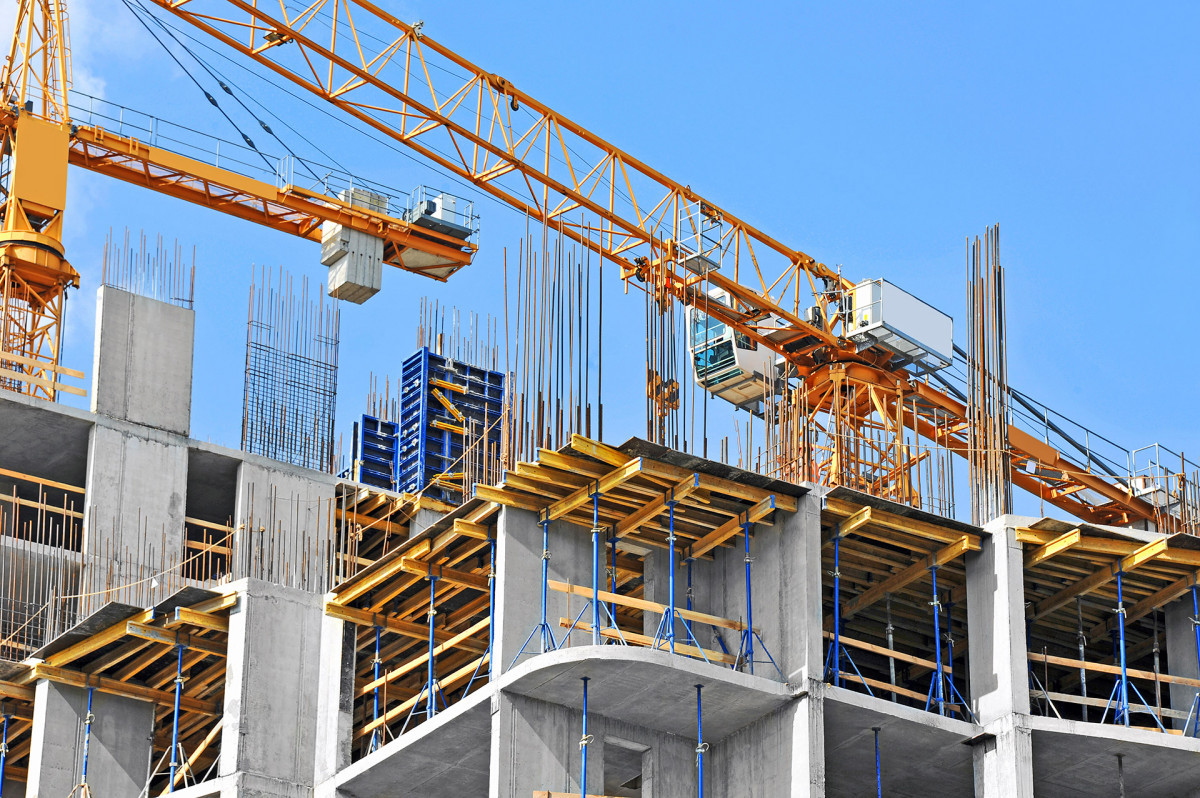
Apartments are outpacing private homes: what is being built in Cyprus
Cystat data show that most of the new residential supply is concentrated in apartment buildings. High land and construction costs, combined with the desire to use plots more efficiently, make this type of development attractive to builders. From January through June 2026, permits were issued for the following types of housing:
- Detached homes: 1,760 residential units, up 4.2% from 1,689 during the same period of 2025.
- Two-family homes: 671 units compared with 536 a year earlier, an increase of 25.2%.
- Apartments in residential apartment buildings: 7,832 units compared with 4,227 in the first half of 2025, an increase of 85.3%.
- Apartments in mixed-use buildings: 837 units compared with 164 a year earlier, an increase of 410.4%. These buildings typically have stores or other commercial premises on the lower floors and apartments above.
In total, building permits were issued for 11,100 residential units during the first six months of 2026. Of these, 7,832 were in standard residential apartment buildings and another 837 were in mixed-use buildings. As a result, around 78% of the planned housing units are apartments in multi-unit residential and mixed-use developments.
For developers, this format allows more units to be built on a single plot and spreads the cost of the land across a larger number of apartments. For buyers and tenants, apartments are often more affordable than private homes in terms of total purchase price, although the final cost depends on the area, size, condition, and other characteristics of the property.
It is worth noting that private homes are not disappearing from the market: permits were issued for 1,760 detached residential units in the first half of 2026. However, this segment is growing much more slowly than apartment construction.
Residential projects expand while commercial building area declines
One of the most notable trends in the first half of 2026 was the increase in residential building area alongside a decline in non-residential project area. From January through June, the total area of residential projects receiving permits reached 1,903,180 m2. During the same period of 2025, the figure was 1,148,186 m2. This represents growth of 65.8%. In June alone, approved residential projects accounted for 360,978 m2.
Non-residential properties include offices, stores, hotels, and other buildings not primarily intended for housing. In the first half of 2026, the number of permits in this category increased by 11.2% to 406. However, the total project area fell by 35.2%, from 271,621 m2 to 175,897 m2. This means that although more permits were issued, the new non-residential projects collectively cover significantly less space. These figures alone, however, do not prove that demand for offices or commercial space has already peaked. Such a conclusion would require additional data on vacancies, rents, and transactions.
At the same time, infrastructure needed for future development is expanding rapidly. From January through June 2026:
- 250 permits were issued for civil engineering projects compared with 196 a year earlier — an increase of 27.6%.
- The area of civil engineering projects increased by 182.9%, from 6,490 m2 to 18,363 m2.
- The number of permits for land subdivision increased from 248 to 423, up 70.6%.
- The number of road construction permits increased from 47 to 95, up 102.1%.
The value of these projects also increased. In the first half of 2026, land subdivision projects were valued at €28.829 million compared with €14.259 million a year earlier, an increase of 102.2%. Road construction projects were valued at €8.334 million compared with €3.352 million, representing growth of 148.6%. These figures point to active land preparation and infrastructure development for future projects.
Mortgages, prices, and rent: what lies ahead for the Cyprus real estate market
Mortgage costs remain one of the factors affecting the real estate market. The analysis cites a housing loan interest rate of 3.24% in Cyprus compared with an average of 3.54% across the eurozone. These figures should be considered in the context of the date and methodology of the statistics: interest rates change over time, while bank offers depend on the type of loan, term, down payment, and the borrower’s financial situation.
With land and construction costs remaining high, the overall price of a private home may be unaffordable for some families. An apartment usually requires less upfront capital and may also appeal to investors because of its rental potential. However, returns depend on the purchase price, location, maintenance costs, and actual demand.
Several trends are developing simultaneously in the market:
- Developers are increasing the supply of apartments. Multi-unit projects allow land to be used more efficiently.
- Private homes are growing more slowly. The number of planned detached homes increased by only 4.2%, while the number of apartments in residential apartment buildings rose by 85.3%.
- Preparation of new development areas is accelerating. The number of land subdivision permits increased by 70.6%, while road construction permits more than doubled.
- The area of non-residential projects is shrinking. Despite an increase in the number of permits, the total area of non-residential buildings declined by 35.2%.