
The Cyprus Department of Environment has rejected an application by Intentions Green Ltd to build a 5 MW photovoltaic park in the municipality of Aradippou. The reason was the potential for serious and irreversible environmental impacts, including effects on the specially protected area of “Koshi — Pallourokampos”.
The project envisaged the installation of around 12,880 photovoltaic panels, each with a capacity of 380 W. The panels were to be mounted on special structures and arranged in rows. The total surface area covered by the solar park was expected to be around 60,000 m2, corresponding to approximately 70% of the total area of the land plots designated for the project.
Why the project was considered harmful to nature
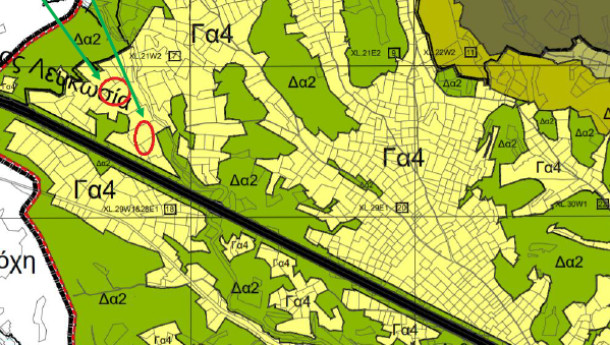
According to the environmental authority’s assessment, it would not be possible in this case to develop effective mitigation measures capable of minimising or fully eliminating the negative effects of the project’s construction and operation. The main concern is the project’s location near the protected area of “Koshi — Pallourokampos”, for which specific conservation objectives have been established for natural habitats and species.
The assessment showed that the construction and subsequent operation of the solar power plant could have a significant, negative and irreversible impact on the protected area. The main concerns relate to disturbance of habitats used by species of particular importance to the area, as well as species for which specific conservation objectives have been established.
Habitat loss and disruption to bird populations
According to specialists, implementation of the project could lead to the permanent loss and fragmentation of areas used by animals for breeding, feeding and resting. In addition to the direct loss of habitats, construction and operation of the facility could disturb wildlife and cause animals to be displaced from the area.
The environmental assessment also specifically notes the potential deterioration of favourable breeding conditions for birds and the possible loss of a nesting site used by Buteo rufinus, the long-legged buzzard.
The project’s impact could therefore affect not only existing natural areas, but also the ability of individual species to use them for breeding and maintaining stable populations.
Cumulative impact was an additional factor
The Cyprus Department of Environment took into account not only the effects of this particular project, but also its possible cumulative impact together with other projects already operating or planned in the area. According to the assessment, the combination of several projects could increase pressure on the protected area and create additional risks to achieving its established conservation objectives.
The decision shows that the development of solar energy in Cyprus must take into account not only the need to increase renewable energy production, but also the environmental value of specific land areas.
In this case, the authorities concluded that the potential environmental damage could not be compensated for or sufficiently reduced through standard mitigation measures, and the application to build the 5 MW solar park was therefore rejected.