
The Cyprus Department of Environment has approved the construction of a new residential complex within the administrative boundaries of the Municipality of Akamas. The project provides for the construction of 26 two-storey houses. The total investment is estimated at €10 million. Construction is expected to take 18 months, provided all necessary permits and documentation are obtained on time.
Architecture and Space: The Numbers That Matter
The total usable built area will amount to almost 3,000 m². At the same time, the building footprint (the area directly occupied by the structures) will cover 1,750.6 m². This means that a significant portion of the site will remain open and free from excessive development. In addition to the 26 two-storey houses, the project includes shared infrastructure for all residents. Each home will have its own parking space, while five additional communal parking spaces will be available for guests and visitors. The development will also feature a private internal road network, landscaped green areas, and private gardens for each residence.
Swimming Pool, Security, and the Key Environmental Innovation
For the convenience of residents, the project will include a communal swimming pool. The entire complex will be enclosed, ensuring privacy and security. However, its most important technical feature will be an on-site biological wastewater treatment plant with tertiary-level treatment. This is far more than a regulatory requirement—it is a complete engineering solution that converts household wastewater into reclaimed water suitable for irrigation. Responsibility for the continuous operation of the facility will rest with the management committee, which will oversee both the shared areas and all matters related to the use of communal infrastructure.
What Is Currently on the Site?
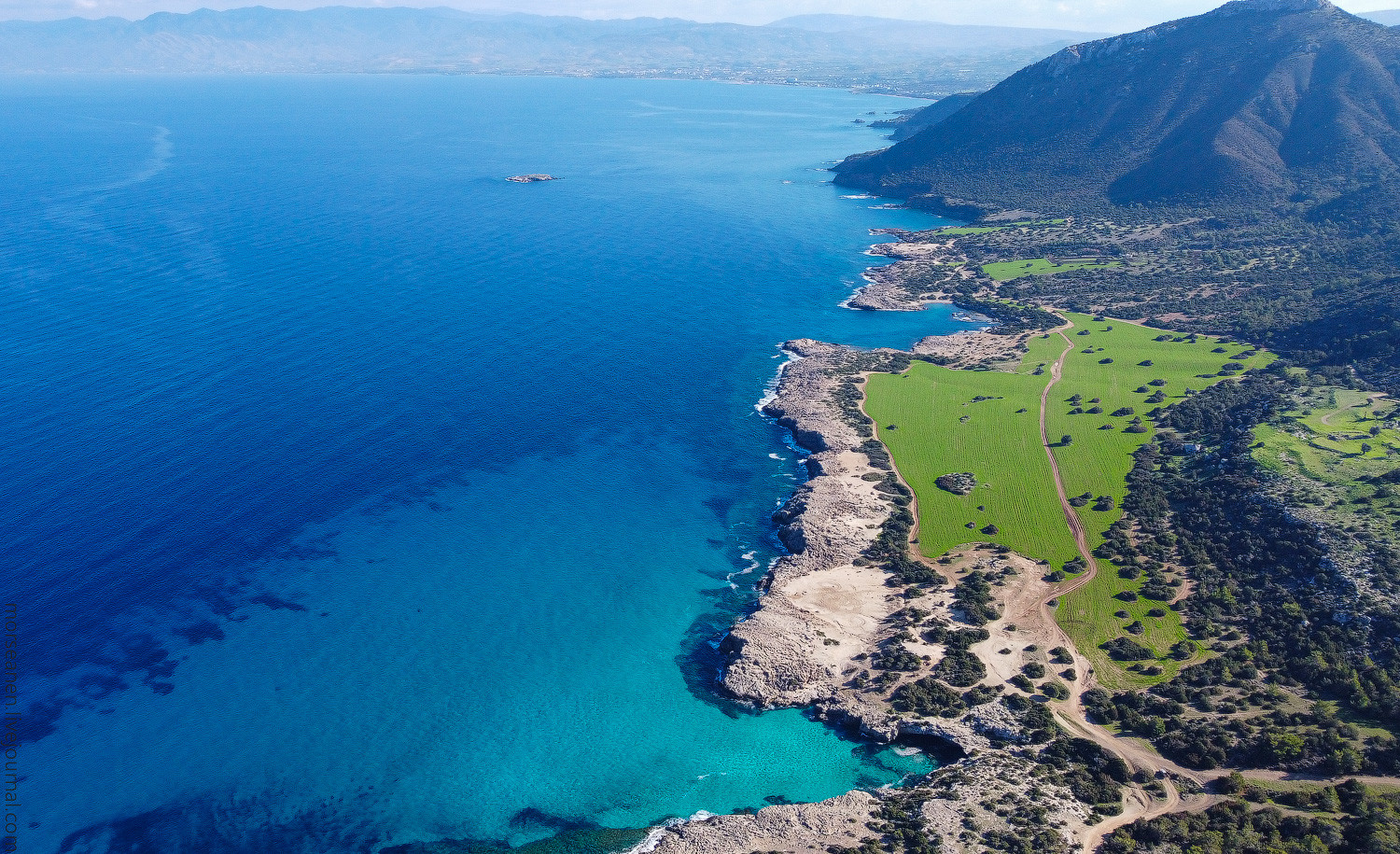
At first glance, the development site may appear to be vacant land. Today, it consists mainly of uncultivated terrain with sparse low shrubs and wild herbaceous vegetation. However, there is one important detail that changes the perception of the project. In the central part of the site stand 13 mature olive trees. These are not simply old trees—they are part of Cyprus’s landscape and cultural identity. The developers have been instructed not to remove them but to preserve them.
How will this be achieved? The plan is to carefully transplant the olive trees into the landscaped green areas within the residential complex itself. In this way, the century-old trees will become an integral part of the development’s new ecosystem.
The environmental approval granted by the Department of Environment marks an important milestone in the implementation of the project. It demonstrates that even in an environmentally sensitive area such as Akamas, modern development is possible when strict environmental standards are respected.