
On Monday, April 20, the Limassol District Local Government Organization (EOA) officially classified 36 buildings as “dangerous.” This decision followed mass inspections of structures across various parts of the city. EOA Limassol Chairman Yiannis Tsouloftas stated that officials have already placed warning notices in both Greek and English on the affected buildings to alert residents and passersby of potential risks.
Situation in Germasogeia: evacuations and legal action
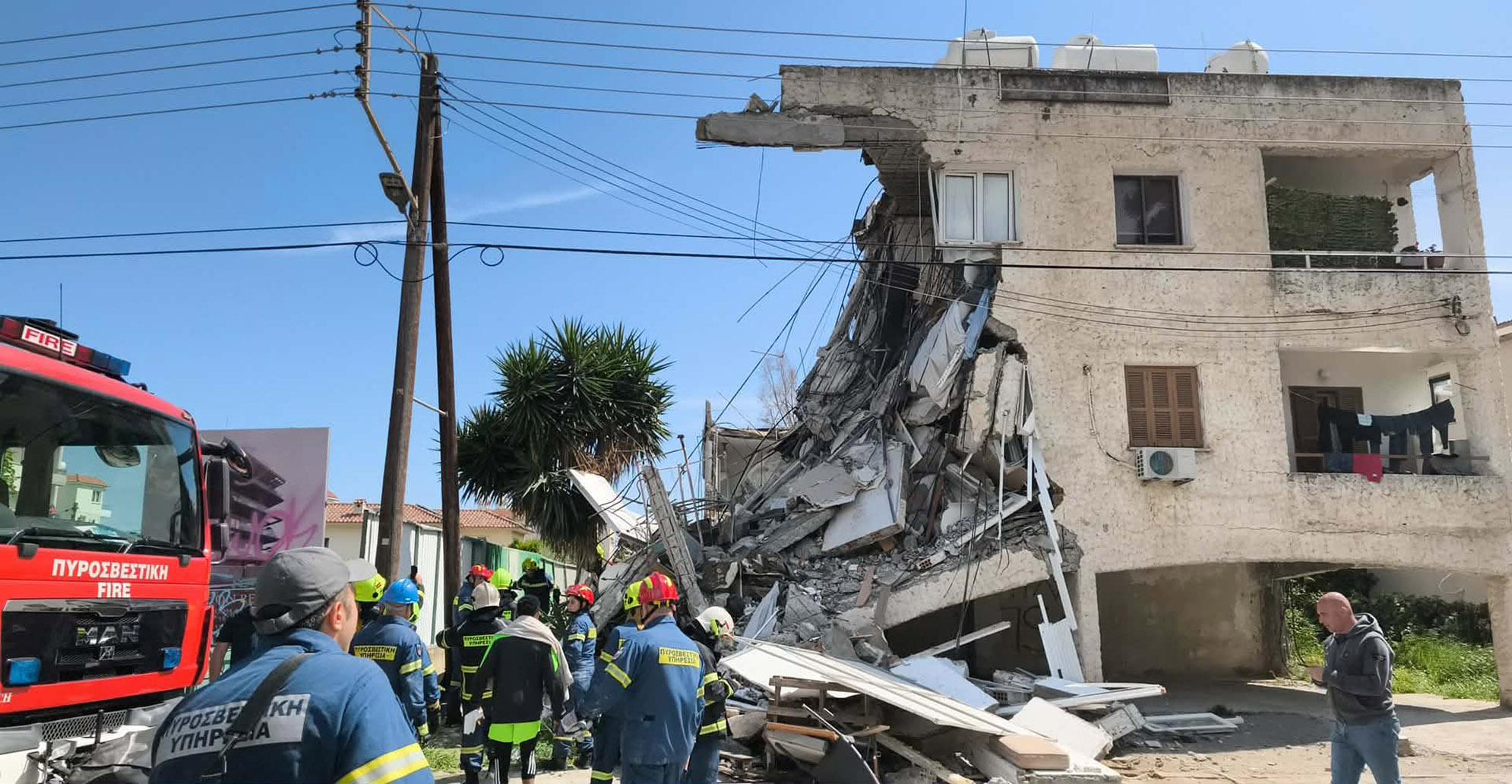
Particular attention is being given to a residential complex in the Germasogeia area, where residents were sent notices to vacate their apartments last week. The deadline for voluntary evacuation expires today. As Tsouloftas emphasized, if tenants fail to leave, the organization will immediately initiate legal procedures to obtain a court order for forced evacuation. The incident gained widespread attention following the recent collapse of another building in the same area, which resulted in two fatalities.
Larnaca and Nicosia: large-scale inspections
Similar inspections have also been carried out in Larnaca. Local EOA officials explained that the initiative aims to assess both already registered and potentially dangerous buildings, as well as to reassess their level of risk. Inspections are focused on the most critical cases, with around 15 to 20 buildings already classified as “high risk” in the city.
Meanwhile, in Nicosia, a technical team inspected approximately 200 buildings within the old city walls. The EOA of Nicosia concentrated its efforts on the Omeriye district as part of an ongoing program targeting potentially hazardous structures.
Background of the issue and owners’ responsibility
Authorities reported that the total number of unsafe buildings across Cyprus has reached 1,466. Of these, 1,198 cases were transferred to EOA jurisdiction in April 2025, when responsibilities shifted from municipal councils and district administrations. Since then, an additional 268 buildings have been added to the list. The main reason for the increase is the lack of proper maintenance by property owners, who are legally responsible for the condition of their buildings.
According to current estimates, four buildings require immediate evacuation of residents. The remaining properties need repairs or maintenance but are not yet considered an immediate threat. EOA Nicosia Chairman Constantinos Yiorkadjis stated that the main focus now is improving enforcement mechanisms. He emphasized that the priority is to apply legislation more quickly based on the severity of issues identified in each building.
Funding challenges and state support
Yiorkadjis also expressed concern over funding procedures. Although the government announced a nationwide fund of €2 million to address unsafe buildings across Cyprus, the process for accessing these funds remains unclear. According to him, the mechanism for distributing financial support has not yet been defined. Last year, EOA Nicosia received €150,000 from the state budget, significantly less than the amount requested.
Experts estimate that around 2,000 buildings across Cyprus could be considered unsafe, but the absence of a centralized monitoring system makes accurate tracking difficult. Officials also point to natural structural aging as a key factor, noting that many buildings were constructed before modern building regulations were introduced. Authorities are urging property owners not to wait for tragedies and to proactively initiate inspections and repairs before lives are put at risk.