
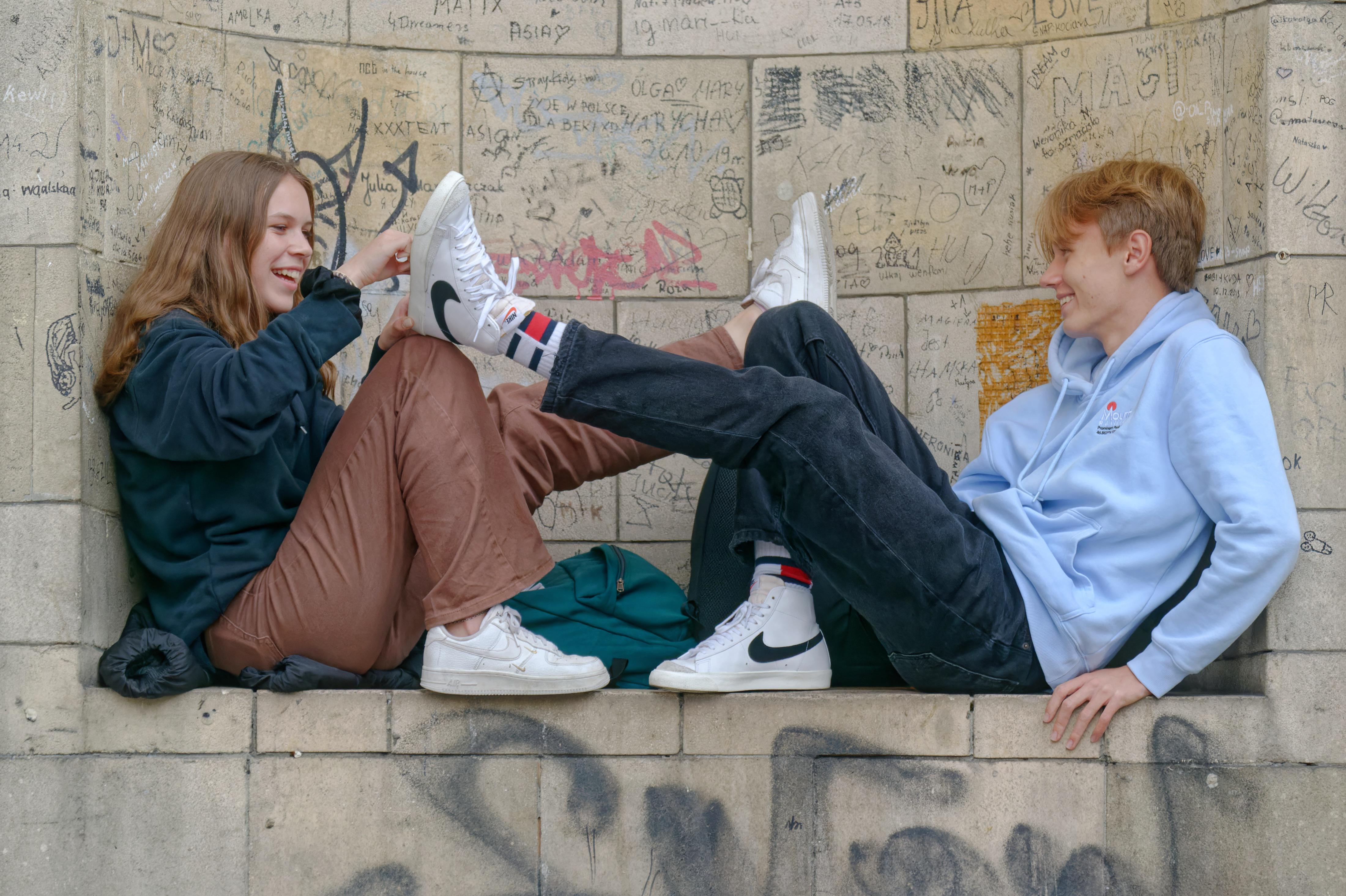
Let’s be honest: moving with a young child is a fairly straightforward experience. Throw in a warm sea, a new sandbox, plenty of ice cream, and a well-rested mom, and they are absolutely thrilled. A teenager, however, is a totally different story. Think of them as a sovereign nation. They have their own strict personal borders, a highly active internal Ministry of Foreign Affairs, and absolute veto power over your brilliant relocation plans.
Uprooting them from their familiar world—taking them away from established friendships, first crushes, and a perfectly clear social hierarchy—requires some serious adult diplomacy.
Here, we break down exactly how to organize moving to Cyprus with teenagers (broadly speaking, kids aged 12 to 18) without losing your mind. We will look at how to smooth over the inevitable daily dramas, help them integrate smoothly into a new education system, and guide your almost-adult in finding their place under the Mediterranean sun.
Choosing the Right Schools for a Teenager in Cyprus
The island offers a surprisingly diverse and high-quality educational landscape. For expats, selecting the correct institution often becomes the cornerstone of the entire relocation process. It dictates not only future academic success but also everyday psychological comfort. When looking at schools Cyprus teenagers usually fall into three main educational categories.
Public, Private and International Schools
Public education here is completely free for residents and is widely known for its incredibly warm, relaxed, and family-like atmosphere. However, teaching is strictly in the Greek language. For a teen who has never studied it, such total immersion can trigger severe stress. Because of this, many expats initially look at private schools for their children. But let’s be direct: you shouldn't fear the local public system! Teens who power through the language barrier adapt wonderfully and graduate with the Cypriot Apolytirion. This certificate is fully recognized across Europe, allowing many expat kids to easily enroll in universities in various countries—often studying completely for free, which is a massive financial relief after moving abroad.
Private international academies, meanwhile, require tuition fees, but you secure a clear international environment where every second student has personally gone through the integration process.
Speaking of certificates, there is a bureaucratic trap to be aware of. After completing the compulsory 9th grade, a Greek public institution issues an official state leaving certificate. A private British academy, however, cannot give you a formal state document at this stage—only an internal report confirming completion of Year 10, because official British certificates (IGCSE) aren't issued until Year 11.

English-Language and Bilingual Education
English is practically a second official language on the island. In most private academies, it is the primary medium of instruction. If your kid has at least a B1-B2 level, they can start studying immediately, picking up complex academic terminology naturally on the go. Many places offer intensive EAL (English as an Additional Language) courses.
You also need to keep in mind a crucial legal nuance. Officially, full-time online schooling for children under 15 is heavily restricted by local laws, which require strict physical attendance. If you want your kid to get a home-country diploma too, they will have to juggle both: physical classes in the morning and online school in the evening. However, once a student finishes the 9th grade (or turns 15), a wider choice of online education opens up. This applies to both home-country curricula and British online schools offering two-year IGCSE or A-Level courses. But there is a catch: the online academy only delivers the lessons. Parents must independently arrange and pay for the teenager to sit the actual official exams as a private candidate at an accredited local test centre (such as the British Council in Cyprus or an approved private testing centre).
And here is a fantastic local hack: if your teen plans to enroll in local English-speaking universities in Cyprus, taking those notoriously difficult A-Levels is often not required. Many local universities are perfectly happy to accept a standard home-country high school diploma (or the Apolytirion). Furthermore, admissions teams often don't even demand an IELTS certificate; a solid grade in a standard IGCSE English exam is usually enough to prove language proficiency. While public Greek schools do not teach this specific exam format, the island is packed with afternoon tutoring centers (frontistiria) where teens easily prep for the IGCSE alongside their regular studies and take it externally.
Curriculum Differences and University Pathways
The British system completely dominates here, meaning teens prepare for IGCSE exams at 15-16 and A-Levels at 16-18. Practically, this means that around age 14, a student has to pick specific core subjects and calmly drop the ones they struggle with. "When we found out he never had to study chemistry or physics again, my humanities-loving son danced with joy, but I felt genuinely uneasy about such early specialization," parents often share on expat forums.
It seems this system forces overly early self-determination. But there is a hidden nuance that perfectly calms adult nerves: Western universities view subject choices much broader than we are used to. To get into a prestigious law faculty in the UK, you absolutely do not need to take A-Level Law. Admissions committees happily accept high marks in classical literature or history. Their logic is simple: these subjects prove the applicant can analyze massive volumes of text, build solid arguments, and think critically.
Furthermore, many private international academies here hold state accreditation and also issue the local graduation certificate—the Apolytirion. The British qualifications are taken parallelly as external exams.
But here lies a financial surprise: taking these British exams is not included in the base tuition. Parents must pay for each subject separately directly to the examination boards (like Pearson Edexcel or Cambridge). In senior years, these fees easily snowball into thousands of euros.

School Admission and Documents for Children Moving to Cyprus
Bureaucracy on the island has its own special, unhurried rhythm known as "siga-siga". Moving to Cyprus requires planning long before you pack your suitcases.
Application Deadlines and Available Places
In popular British establishments in Limassol and Paphos, waiting lists can stretch for months or even years. The ideal time to apply is the winter or early spring before the academic year starts. Cyprus is experiencing an incredibly high demand in private education. If your family is relocating spontaneously mid-year, mentally prepare to choose not the most top-rated place, but simply the one where a desk miraculously freed up.
School Records, Transcripts and Certificates
For admission, you will need the student's grades from the last year. Documents must be translated into English and properly certified. Nobody on the admissions committee will nitpick a random "C" in art class, but consistent performance in mathematics and their native language is judged strictly.
Placement Tests and Language Requirements
Most prestigious international institutions conduct mandatory testing. The standard set is mathematics, English, and a cognitive logic test (like CAT4). Explain to your teenager that the goal of these exams is not to "fail" them, but to understand which proficiency group to place them in.
However, you absolutely should not skimp on the entrance exams themselves. Experienced expats strongly advise taking tests at several different schools at once. Firstly, you get an objective cross-section of the kid's knowledge. Secondly, you will see how each administration reacts: are they willing to take responsibility for proper academic preparation, or will your teenager just be warming a seat in the back row for €10,000 a year?
Language and Academic Adaptation in Cyprus
The first six months in a new place is a period when even straight-A students can see their grades slip dramatically. The parents' job right now is to be supportive.
Studying in English or Greek
Reading a biology textbook or solving physics problems in a non-native language is a colossal strain. In the first few months, teens often complain of headaches and sleep for hours after classes end. Lower your academic expectations. The primary goal early on is simply understanding what the teacher wants.
Catching Up With a New Curriculum
Syllabuses will inevitably clash. What your kid covered in math a year ago back home might only just be starting here. Furthermore, the British approach to studying is fundamentally different: minimal mindless memorization and maximum project work, presentations, essays, and independent research.
Extra Tutoring and Language Support
Very few manage without tutors initially. There is a highly developed system of afternoon educational centers called "frontistiria" where children catch up on languages and complex subjects. Do not ignore the free extra-curricular clubs offered after hours; they are vital for informal communication.

The Reality of Safety, Youth Crime, and Helplines
This destination often seems like an idyllic, quiet haven. But let's take off the rose-tinted glasses for a moment. Official statistics paint a very contrasting picture of the environment.
The good news is the thirst for knowledge: about 59% of youth here go on to higher education, which is one of the highest rates in the EU.
However, there is a disturbing reality regarding local safety. Juvenile crime jumped by 29% recently, with 774 minors involved, mostly in theft and property offenses. If you are relocating here hoping to completely shield your kid from drugs and bad company, be aware that it all exists here too. Around 7% of students have tried illicit substances other than cannabis, alongside an explosive, heavily documented surge in teen vaping.
The real problem isn't just the statistical numbers; it's the aftermath. There is practically no systemic prevention in educational facilities. Infrastructure for early youth intervention is severely lacking, and society generally prefers to turn a blind eye. If a teen falls in with a bad crowd or gets hooked on substances, the state won't step in to pull them out. Saving the teenager becomes the exclusive, challenging headache of their family.
However, you are not entirely alone. There are vital crisis helplines operating on the island that you and your teen should immediately save in your phones:
- 1466 (Hope for Children) — A 24/7 free helpline. Teens can call completely anonymously if they are facing bullying, depression, or if they are pressured into using drugs and don't know how to escape the situation.
- 1456 (Perseas) — A specialized state counseling service for teens and families dealing directly with substance abuse (drugs, alcohol, gaming) and mental health.
- 1410 — The Youth Board of Cyprus helpline providing psychosocial support.
Having these numbers on hand can serve as a crucial lifeline in the most critical moments when a child might be too afraid to confide in their parents.

Making Friends and Building a Social Life in Cyprus
Losing old social ties is the most painful point of relocation for any teenager. Island life can feel isolated if you don't help them blend into the local scene in time.
School Communities and After-School Activities
Life doesn’t stop with the final bell here. Interest clubs thrive in private institutions: from debate and robotics to eco-activism and drama studios. The Duke of Edinburgh's Award program is massively popular; teens go hiking, volunteer, and develop real survival skills.
Sports Clubs, Classes and Youth Groups
Sport is practically a cult on the island. Tennis, basketball, swimming, football, martial arts, and padel tennis — these are places where the language barrier erases itself entirely. Joining local sports clubs is one of the fastest ways to integrate.
Meeting Other International and Local Teenagers
A huge advantage is the unique international melting pot formed here. For expat teens Cyprus is a great place because locals are usually very open and friendly; they gladly switch from Greek to English. Importantly, severe bullying or harassing newcomers is extremely rare here. Cyprus is a very safe emotional space for youth, and the culture is heavily child-centric.
Teen Life in Cyprus
What does a teenager do when lessons and clubs are over? The island offers its own slightly relaxed format of growing up.
Cafes, Shopping Centres and Popular Meeting Places
Malls are the main teenage attraction on weekends. My Mall in Limassol, Nicosia Mall in the capital, and Kings Avenue in Paphos — this is where they go on dates, sit in food courts, film social media trends, and drink frappé.
Beaches, Sports and Outdoor Activities
For nearly eight months of the year, the sea and the beach replace the traditional city courtyard. Playing beach volleyball, paddleboarding, or having a sunset picnic is standard leisure.
Entertainment Options Outside the Main Cities
If your family chose a quiet mountain village, the entertainment program will be limited to home BBQ parties. You must honestly understand: there are no massive underground youth parties or vibrant urban street vibes here. Cyprus is a quiet place to grow up, which sometimes causes teens to complain about boredom.
Transport and Independence for Children in Cyprus
Logistics can become a real ordeal for families. Moving to Cyprus means adjusting to heavy car dependency.
School Buses and Public Transport
Public transport is frankly underdeveloped. Buses run rarely, and schedules are more of a polite suggestion. Most private schools organize their own buses, but this is a paid option (€80 to €150 per month), and it doesn't work if the student stays for extra clubs.
Getting Around Without a Car
Until the age of 18, your teenager’s freedom of movement will be severely restricted. Taxi apps like Bolt work well, but constantly paying for rides is incredibly expensive. Parents often turn into a free taxi service.
How Location Affects a Teenager’s Daily Routine
The transport issue makes choosing a location absolutely critical. The golden rule of experienced expats: choose housing no more than a 15-20 minute drive away. You must factor in the harsh local reality: classes in both public and private schools start unusually early — at 7:30 AM (meaning a 6:00 AM wake-up call). Morning traffic jams can turn daily commutes into a genuine survival marathon. When you are moving to Cyprus, where life and schools are suitable for children, always pay attention to the walking distance to infrastructure.

Emotional and Cultural Adaptation When Moving to Cyprus
Packing boxes is the easy part—the actual logistics of moving make up maybe 20% of the stress. The remaining 80% lies in psychology. Moving to Cyprus tests family bonds deeply. Add the chronic sleep deprivation from those brutal 6:00 AM wake-ups, and you’ve got a recipe for constant emotional meltdowns, which is why it is so important to help a child establish a healthy daily routine.
Homesickness and Leaving Friends Behind
In the first months of adaptation, be ready for slammed doors and phrases like: "You ruined my life!" Do not invalidate these emotions. For a teen, relocation is a genuine loss of their familiar world. Just be there and listen.
Adjusting to a Different School Culture
In international environments, relationships between teachers and students are horizontal. It is not customary to stand up when a teacher enters; students can openly argue. However, this freedom demands high self-discipline.
Helping Teenagers Keep Connections With Home
Do not restrict the time your kid spends online with old friends. Hours-long Discord calls and evening co-op gaming sessions are their psychological crutch.
Choosing Where to Live With Teenagers in Cyprus
Where exactly should the family settle? Each city has its unique character for children. Cyprus is diverse in its offerings.
Limassol, Nicosia, Larnaca and Paphos
Limassol is the most cosmopolitan, noisy, and expensive city. When evaluating the lifestyle of expat teens Cyprus offers, Limassol has the maximum concentration of clubs. Nicosia is the business capital but lacks a sea breeze. Paphos is traditionally considered a calmer town. Larnaca today is an excellent compromise with developing infrastructure. Cyprus is becoming a major hub for families everywhere.
Distance From School and Activities
As mentioned, early 7:30 AM wake-ups dictate their own rules. Choose housing so that morning logistics take absolute minimum time.
City Life, Suburbs and Smaller Communities
With a teenager, it is optimal to choose life within city limits or in nearby residential neighborhoods. Leave the picturesque villages to pensioners — teenagers need spontaneity.

Practical Issues for Parents Regarding Schools in Cyprus
Wrapping up the planning, it is vital to prepare a realistic budget. Moving to Cyprus requires foresight.
School Fees and Additional Education Costs
A year of study in a British private institution costs on average from €6,000 to €9,000. But keep in mind that on top of the base price, you need to budget about 10% extra for mandatory textbooks, uniforms, registration fees, and trips. If the family budget is tight, these hidden costs can blow a serious hole in it.
Speaking of price-to-infrastructure ratio, be prepared for island reality surprises. Public schools often simply lack air conditioning. "In our class, parents chipped in to buy ACs for the kids," shares one mother. But a high price tag doesn't guarantee comfort either. At the famous Pascal school in Larnaca, the air conditioning system in the high school broke down last September, and students were forced to sit in extreme heat. People learn to treat such domestic nuances philosophically here. Cyprus is full of such surprises.
Healthcare and Emergency Contacts
There is an excellent state healthcare system called GESY. Once you become a tax resident, your child gets free access to a personal pediatrician up to age 18. Before that, you will have to buy private medical insurance.
Mobile Phones, Internet and Everyday Expenses
Pocket money depends on the family: a cinema ticket is about €9, a food court snack is €10-€15. A package with decent mobile data (Epic, Cyta) costs around €15-€25 a month.
Preparing Teenagers Before the Move
The success of the entire relocation is laid out back home, during the discussion phase of moving to Cyprus with teenagers.
Involving Them in School and Location Choices
Make the teenager a full partner in the move. Show them the websites, offer to choose their new room's wall color together, or find the nearest skate park. Cyprus is an easier sell when they feel involved.
Visiting Cyprus Before Relocation
Definitely fly over for a reconnaissance trip, not as tourists, but as future residents. Check out where among the international schools Cyprus teenagers attend is best for your family. Walk the morning commute.
What to Arrange During the First Weeks
When the suitcases are unpacked, give the kid time to exhale. Buy a local SIM card with unlimited data on day one. Walk the route from home to class together. Just say, "We will handle this, it’s going to be a great experience." Cyprus is welcoming to everyone.
