Cyprus doesn't cease to amaze when it comes to its natural beauty — from rugged coastline and vibrant turquoise waters of Cape Greco to mesmerising panoramic mountain vistas of the Troodos range. In this article, we’ll explore some of the most beautiful places in Cyprus for photography. Here you will find a detailed guide for landscape photographers, drone pilots, and content creators looking to capture the island's diverse landscapes. In this guide you will get some useful technical tips, learn how to take advantage of the golden hour conditions, discover hidden mountain viewpoints, and the legalities of drone operations across the Republic's key landmarks in 2026. Let's get started!
Fast Track: The Ultimate Cyprus Scouting Sheet
This brief summary overview covers some of the most popular locations, sorted by photographic genre and optimal time of the day to help streamline your production schedule and create most beautiful shots.
Best locations by time of the day
Sunrise:
Sunset:
Blue Hour:
Overcast Days:
Venetian Bridges (Elias and Tzelefos)
Best locations by genre
Panoramic: Madari Lookout Station
Coastal/drone photography: Cape Greco, Ayia Napa Sea Caves, Peyia Sea Caves and Edro shipwreck
Fine Art: Governor's Beach
Nature/forest landscapes: Avakas Gorge, Troodos Venetian Bridges
Golden Hour vs. Blue Hour Logistics
Golden Hour (shortly after sunrise and before sunset) is considered an ideal time for coastal photography. It offers softer light with warmer tones and softer contrasts.
Blue Hour (20–40 minutes before sunrise or after sunset) The cooler light creates an atmospheric setting, perfect for long-exposure seascapes and fine art photography.
Midday Overhead sunlight creates harsh highlights on the bright limestone and casts short, flat shadows. Because of it, the images lack texture and depth and this time is best avoided when photographing Cyprus's coastal cliffs.
Golden Rules for Drone Photography in 2026
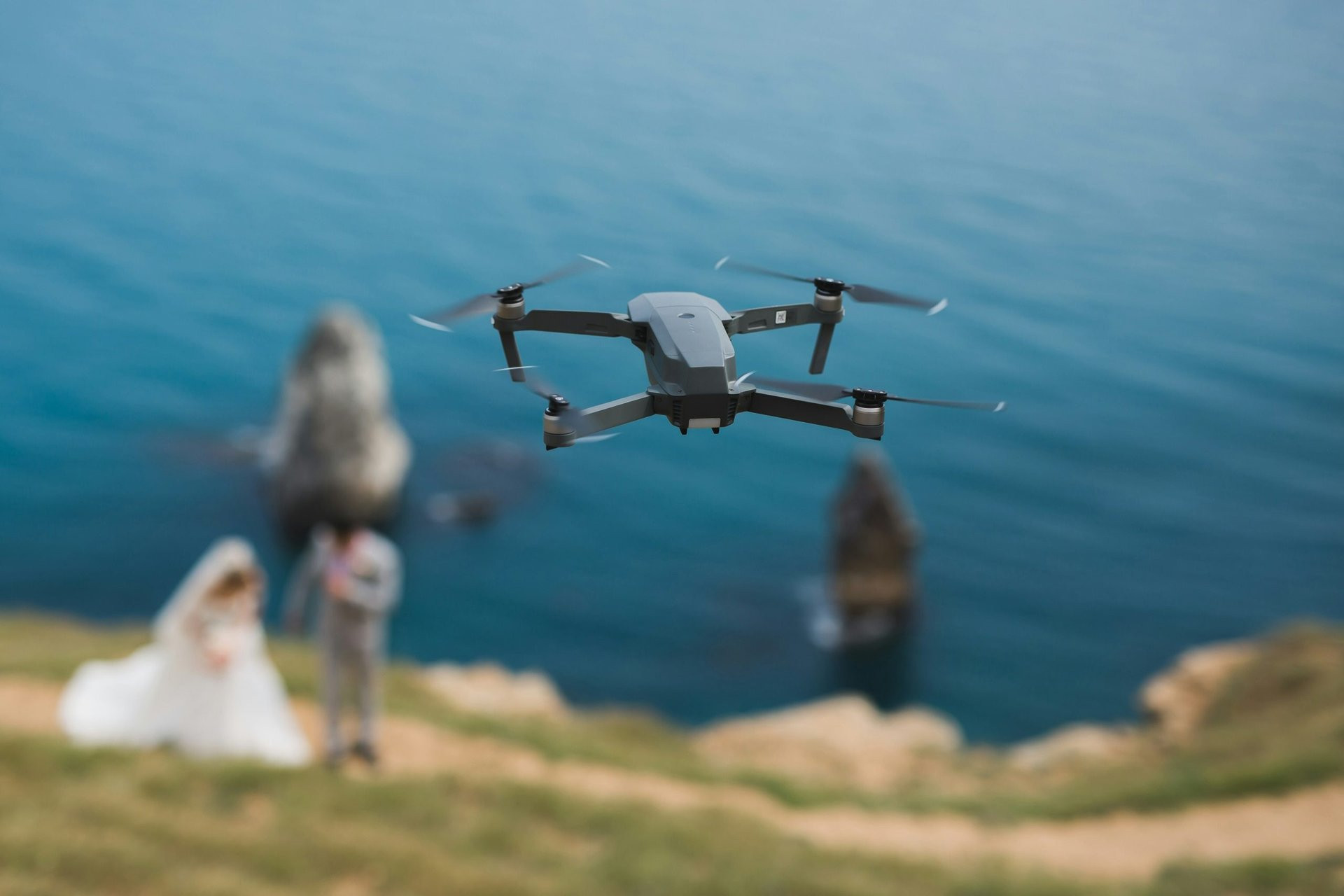
In Cyprus, the Department of Civil Aviation (DCA) is the official government body, responsible for regulating drone flights. Some zones, such as archeological and historical sites might have restrictions, therefore, you should always check the official DCA Geo-Zone Map before flying and obtain any required approvals in advance.
In order to legally operate drones in Cyprus, the following certifications are required:
- Operator Registration ( if your drone weighs more than 250 g or has a camera, even if it weighs less than 250 g). Registration fee is 15 euro. It is valid for 3 years.
- A1/A3 Remote Pilot Certificate. Required for most Open Category drone operations. It involves online training and an online exam. The fee is 15 euro and it is valid for 5 years.
- A2 Certificate. Required for flying C2-class drones closer to people under the Open Category.
Dramatic Coastal Formations and Marine Landscapes
Cyprus has some of the world’s most beautiful and striking coastlines with diverse terrain: from limestone cliffs and sea caves to dark sand beaches. The local sea waters offer a rich palette of all shades of blue.
From vivid turquoise hues of Nissi beach and crystal clear waters of the Blue Lagoon to stark contrasts of Governor's Beach — every photographer will find something to get inspired by.
Cape Greco and the Ayia Napa Sea Caves
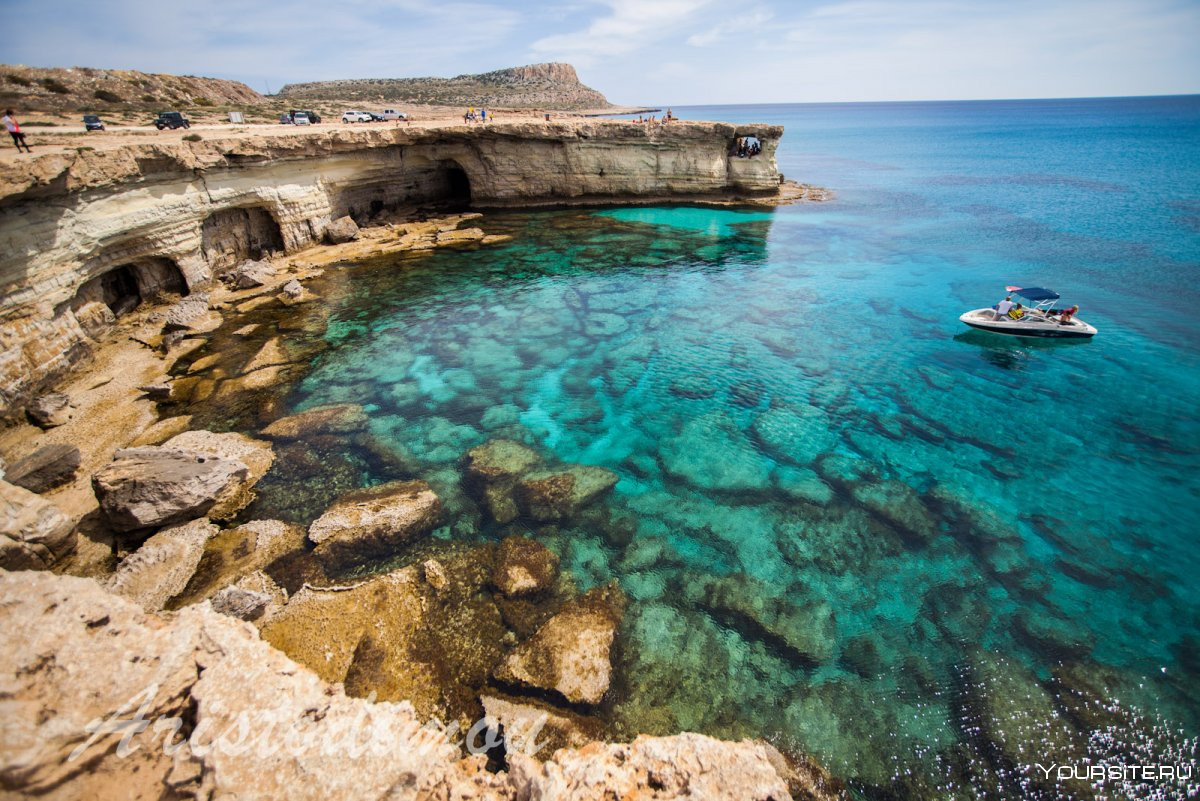
Cape Greco and Ayia Napa Sea Caves are probably the best places in Cyprus that allow you to capture vivid turquoise gradients from elevated cliff edges and shooting from inside the natural sea cave windows.
The Love Bridge: Sunrise Architecture
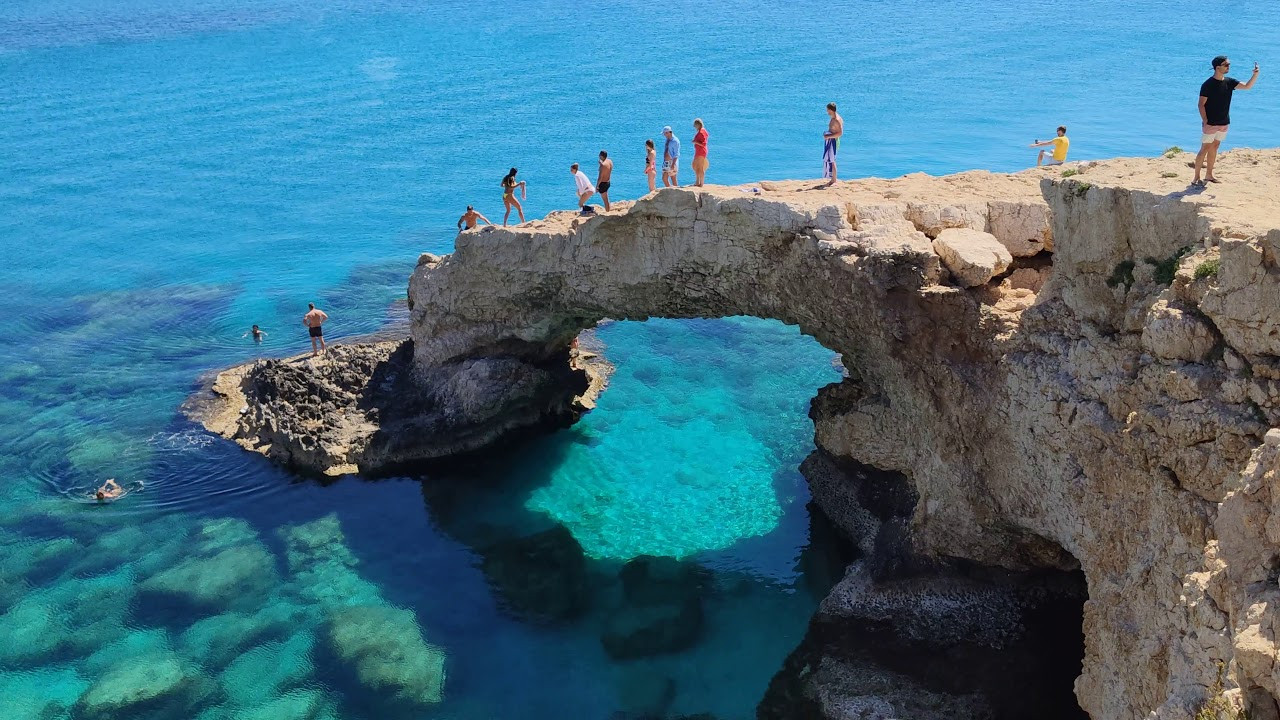
Just 2—3 km east of Ayia Napa Harbour, you can find the Love Bridge — an arched natural rock formation, extending well into the sea. As its name suggests, this spot is popular not only with tourists, but also with newlyweds as it offers a romantic setting for wedding and engagement photoshoots.
Facing east, it is best admired at dawn — when the first sunrays touch the bridge illuminating it with golden glow. The ideal time to arrive would actually be around 30—45 minutes before sunrise — that's when you can avoid the crowds and get the best position before sunrise.
The Deep Caves: Framing and Exposure Control
Some of Ayia Napa's most beautiful shots are captured not from the outside, but from within the sea caves, looking outwards.
This way, the rugged edges of a cave create a dramatic frame for the sea and the dim internal lighting of the cave contrasts with the brightly lit exterior.
One of the challenges of such shots, however, is the massive dynamic range between dark cave interiors and the bright sea outside. That's when bracket exposures come to the rescue.
Usually bracket exposure is done using several shots:
- One image at the camera's recommended exposure.
- One underexposed by 2 stops in order to preserve highlights outside the cave.
- One overexposed by 2 stops to reveal detail inside the cave.
These images are later blended in editing software in order to create a balanced image with detail in both the shadows and the highlights.
Useful tips for successful bracketing:
- Use a sturdy tripod
- Shoot in RAW format for maximum editing flexibility.
- To avoid camera shake, use a remote shutter release or self-timer.
- Use the Auto Exposure Bracketing (AEB) feature, if your camera supports one.
Peyia Sea Caves and the Edro III Shipwreck
Between Coral Bay and Peyia you can find the picturesque area of sea caves, consisting of limestone rock formations — arches and caves stretching along the dark blue sea.
Not far from the sea caves you can find the famous Edro III Shipwreck with the rusting hull of an 80-metre cargo ship.
The vessel rests close to the shore and its tilted silhouette has a somewhat eerie, yet captivating presence, reminding us of the ship's former glory.
Today, it is one of the area's postcard images and one of the most recognisable places in Cyprus.
Because the shipwreck site is west-facing, the best shots can be taken at dusk — when the sun starts to set, casting orange, pink and purple highlights on the ship and the surroundings.
Useful tips for the best shots:
- Use exposure for the bright sky so the ship becomes a bold dark silhouette.
- A longer focal length can make the shot more dramatic.
- Use graduated neutral density (GND) filter to balance a bright sky with a darker foreground.
- Use a polarizing filter in order to reduce reflections on the sea.
Governor’s Beach and the White Rocks
Between Larnaca’s and Limassol's coastlines lies Governor's beach — a popular destination amongst beachgoers and photographers. Thanks to its unique, alien-like landscape, it is undoubtedly one of Cyprus's natural treasures.
The dark grainy volcanic sand is offset by the white and smooth rock formations. This stark contrast helps to create unique imagery — from minimalist and monochrome shots to find art photography.
Besides, Governor's beach is photogenic at any hour.
At sunrise, the beach is illuminated by softer light, while at dusk the white rocks get a warmer tint. Strong midday sun adds crispness to the chalk formations. At the same time, the Blue hour allows you to achieve cooler tones.
Useful tips:
- Use a limited colour palette: white, black, and blue as it helps to create stylish, and, sometimes dramatic compositions.
- Long exposures can help smooth out the movement of the sea while preserving the sharp texture of the rocks.
The Mountain Highs: Troodos and the Akamas Peninsula
The magnificent Troodos range and inland areas of Akamas present a completely different version of Cyprus — lush, green terrain, covered with dense forests, beautiful gorges and water streams.
Avakas Gorge: Mastering Low-Light Canyoneering
Nestled in the western edge of Akamas National Park, Avakas Gorge is truly one of the island's natural treasures. The gorge has very narrow passages, surrounded by very steep, smooth wavering walls. In the winter season, you can also find a trickling water stream here as well as some endemic botanicals and mountain goats, if you are lucky.
However, this environment also poses some challenges, such as very low light levels in some areas, reflective rock surfaces and very strong contrast between shaded areas and the bright sky above.
Here are some useful tips to overcome them:
- Use a wide-angle lens (16–35 mm full-frame equivalent) for the narrow canyon.
- Photograph on bright overcast days for soft, even illumination.
- It's best to visit in the morning or evening to avoid harsh lighting.
The Venetian Bridges of the Troodos Forest
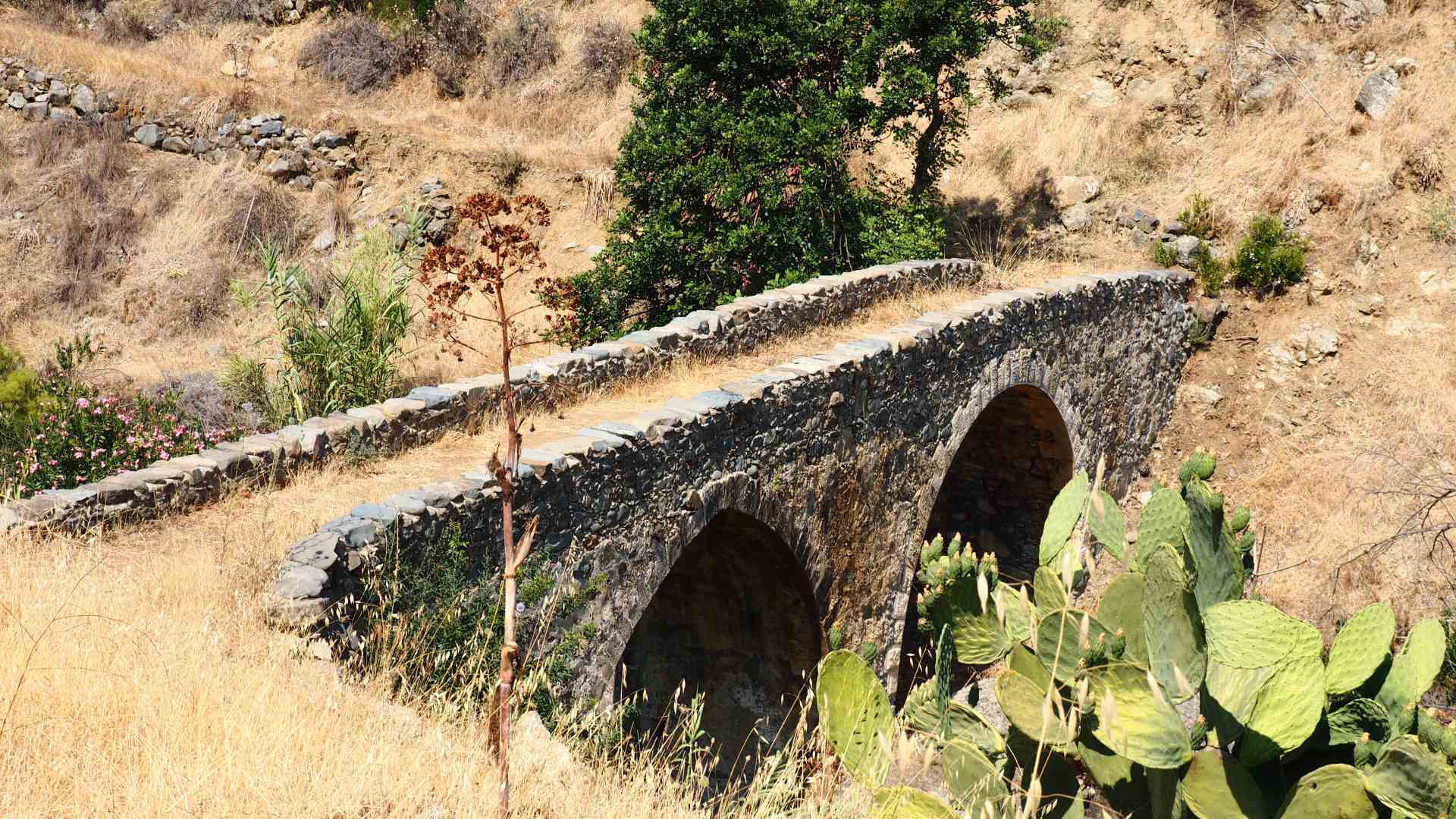
Hidden in the depth of the Troodos forest are magnificent Venetian bridges — tribute to Medieval ingenuity and Cyprus’s copper past. Some of the most famous bridges are Tzelefos and Elias.
Tzelefos is located in the Paphos forest near the villages of Kampos and Tsakistra, while Elias bridge is on the other side — not far from Troodos Square. Both bridges are set against a lush backdrop of forest vegetation, with a stream and riverbed rocks underneath. Such setting helps to create whimsical, almost fairy-tale style images.
Here are some tips on creating effective frames:
- Shoot the bridge with overhanging branches to create a natural border.
- Photograph from downstream, allowing the flowing water to lead towards the arch.
- Include foreground rocks or ferns to add more depth and texture.
Madari Fire Lookout Station: 360-Degree Panoramas
Madari Fire Lookout Station is located in the Troodos range at approximately 1,613 meters above sea level.
From here you get to enjoy the 360° sweeping birds eye view of the whole island. It is also one of the few places in Cyprus, from where you can catch a glimpse of both the northern and southern coastlines.
The beauty of mountain photography is that you can get completely different shots depending on the time of the day. In the morning the distant silhouettes of the mountains could be covered in most, while at dusk the setting sun paints everything in warm orange and magenta hues.
Lovers of astrophotography should come here on clear nights in order to capture the stunning star-studded skies.
These are some tips for excellent panoramic shots:
- Capture overlapping mountain ridges with a telephoto lens to emphasise atmospheric perspective.
- Include foreground rocks or pine trees to give the panorama depth.
- Position the horizon in either the upper or lower third of the frame depending on whether the landscape or sky is more dramatic.
Architectural Heritage and Surreal Landscapes
Cyprus is truly a cradle of civilizations and to this day you can still find remnants of magnificent architecture set against dreamy, almost surreal landscapes.
Let's discover where human history and strange natural phenomena create highly distinct, concept-driven visual assets.
Larnaca Salt Lake and the Pink Flamingos
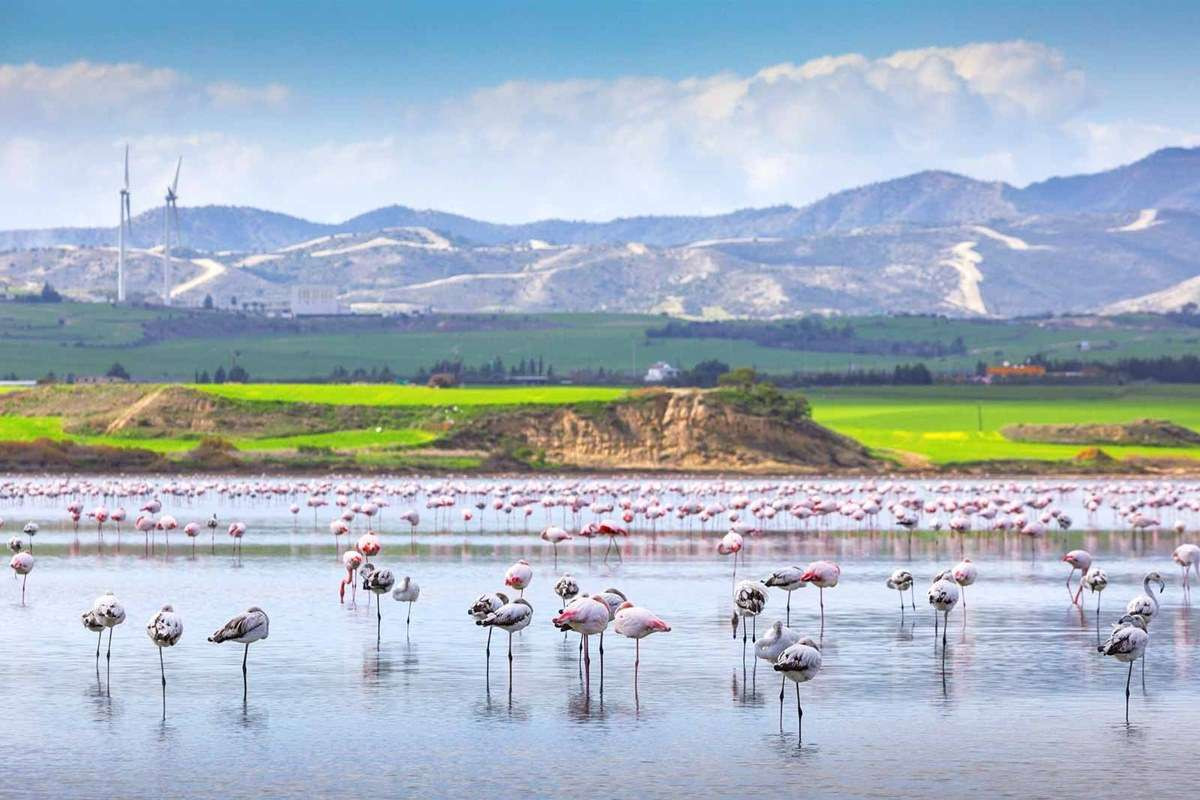
The Larnaca Salt Lake is a true oasis of beauty and tranquility, just minutes away from Larnaca’s centre. Many people come here just to relax and slow down.
Thanks to the gorgeous Hala Sultan Tekken Mosque in the background, this location becomes even more idyllic and perfect for atmospheric photoshoots that combine nature and architecture.
The most spectacular time to enjoy and photograph the lake is in winter — usually around January—February, when the flamingos arrive. That's when the lake turns into the vivid tapestry of magenta and soft pink hues. Sunrise and Golden Hour are a great opportunity for stunning shots, featuring the mirror-like reflections of flamingoes in the lake.
Here are some tips for perfect shots:
- Position yourself so the mosque and flamingos align with the reflected image.
- Expose carefully to preserve detail in both the bright sky and darker foreground.
- For best reflections, shoot during calm weather with little or no wind.
- Be respectful to the birds — avoid approaching flamingoes too closely.
Kato Paphos Archaeological Park and the Tombs of the Kings
The Archeological Parkand the Tombs of the Kings are both a stone's throw away from Paphos Harbour. Being UNESCO heritage sites, they are magnificent examples of Greco-Roman architecture.
The Archeological Park feels like a trip back in time. Here you will find towering columns, ancient amphitheatre beautiful mosaics — all surrounded by the stunning coastal views.
While Archeological Park presents the houses of the living, The Tombs of the Kings are dedicated to the quarters of the dead. This location’s morbid mood is accentuated by underground chambers, columns and courtyards. It's a great spot for atmospheric photography and if you want to capture the play of light and shadows, regardless of time of the day.
For best images:
- Photograph from a low angle to make the pillars appear more imposing.
- Use contrasting areas of sunlight and deep shade to emphasise the site's three-dimensional form.
- Shoot through arches or between columns to create layered compositions.
Gear Guide and Field Logistics for Cyprus
Photography in Cyprus can be a very rewarding experience, but it also comes with its unique set of challenges.
That's why it's important to be prepared and learn how to protect your gear while shooting some of the island's most beautiful locations.
Managing Heat, Dust, and Sea Spray
Cyprus offers some of the most spectacular views, but at the same time, it also challenges photographers with extreme environmental and weather conditions. Heat and dust can easily damage sensitive equipment,if no precautions are taken.
Let's explore how to protect your camera sensors and lenses during coastal shoots or off-road trail blazing.
Heat protection
Summer temperatures in Cyprus can rise well above +35—40°C, particularly inland. This can put significant strain on the sensitive photo equipment.
To minimise heat-related issues:
- Hide your camera and lenses from direct sun and keep them in a camera bag when you are not using them.
- Avoid leaving your equipment in a parked car even for a short time.
- Always carry spare batteries with you as prolonged heat can reduce battery life.
- If your camera becomes overheated, wait until it cools down naturally to avoid overheating.
Dust on Akamas dirt tracks
Dustis an inevitable part of Cyprus life, and even more so, on the untrodden paths of the Akamas peninsula.
Embarking on a journey along dirt roads in search of the best shooting locations might feel adventurous but it can pose a risk to camera lenses.
To protect your equipment:
- Avoid changing your lenses in dusty conditions.
- Always keep your camera in a zipped bag while travelling between locations.
- Use a UV or clear filter to protect the front element.
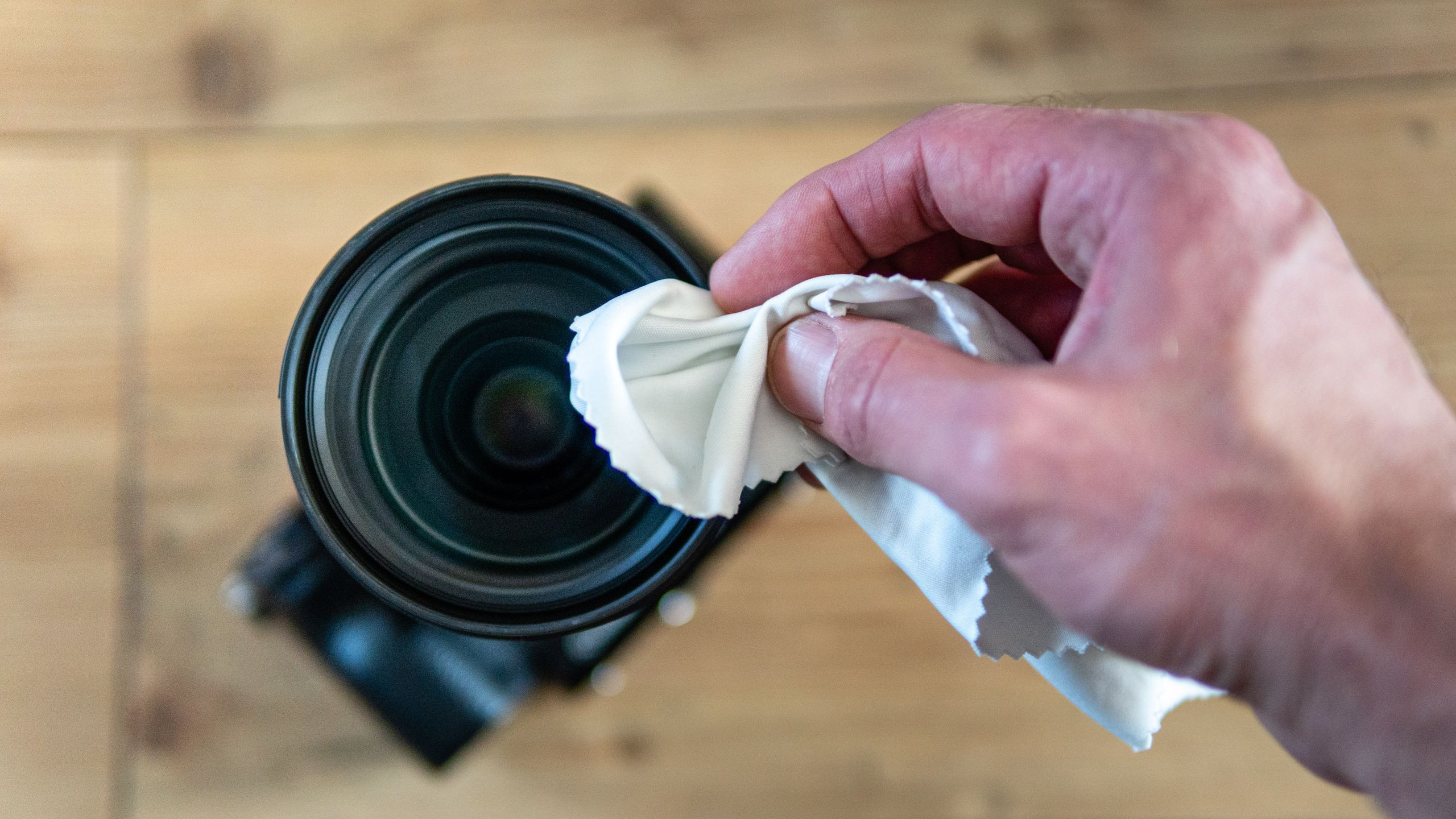
- Use a soft microfibre cloth for cleaning loose dust after the shoot.
Sea spray
It is impossible to avoid getting splashes of seawater on the camera whilst shooting in coastal locations, especially if you're positioned too close to the waves. But, unlike fresh water, salt water could be more damaging for your equipment. For example, salt residue can leave marks on lenses and filters and even corrode metal parts and affect moving components.
After photographing near breaking waves, it is recommended to:
- Carefully wipe the camera and tripod with a damp cloth, then dry them thoroughly.
- Clean the front filter or lens with a special lens-cleaning solution and a clean microfibre cloth.
- Extend and rinse tripod legs with fresh water if they have been exposed to saltwater.
Filter Selection: ND and Circular Polarizers
Neutral Density (ND) and Circular Polarizing (CPL) filters are amongst some of the most popular choices for Cyprus photoshoots. They are particularly useful when dealing with breaking waves or strong glare from midday sun.
Let's take a look at how they work.
Neutral Density (ND) filters
An ND filter allows you to use much slower shutter speeds, even in bright daylight.
This can be especially useful when shooting in coastal locations. Fast shutter speeds tend to accentuate the texture of the water, while a slower one transforms it into a much smoother surface.
Circular Polarizing (CPL) filters
A CPL filter reduces reflections from non-metallic surfaces and increases colour saturation. It can be especially helpful when shooting under the strong Cyprus sun, as it can cut glare from the sea surface, help reveal underwater rocks and seabed, increase contrast and enhance colours of the image.
In Cyprus, many photographers tend to use both filters at the same time, allowing them to combine reduced glare and enhanced colours with long exposures.This combination is ideal for photographing rocky coastlines with flowing water.
Frequently Asked Questions (FAQ)
Is a special permit required to shoot commercial video at UNESCO sites in Paphos?
Yes. Commercial filming and photography at UNESCO-listed archaeological sites are regulated and require prior authorisation from the Department of Antiquities or the relevant site management. Additional permissions may also be needed for drone operations.
When do the flamingos arrive at the Larnaca Salt Lake for photography?
Usually flamingos start arriving in Cyprus around November. However, the best time to photograph them would be between December and February — that's when their numbers usually peak.
Can I legally fly a drone at Cape Greco National Park?
Yes, but only if the area is not within a restricted geo-zone. It is important to always check the official DCA Geo-Zone Map to find restricted areas and other requirements you might need to adhere to.
What is the best month for capturing green landscapes and wildflowers in the Troodos Mountains?
Generally, springtime is the greenest season in Cyprus. You can find plenty of wildflowers in March and April, and sometimes, in May in higher altitudes.
How do I access the interior of the Kritou Terra (Kremiotis) waterfall for a shot?
Unfortunately, it is not safe to access the interior of the waterfall. So, the best way is to use the official path and photograph the cascade from the public viewing area.
Cyprus’s landscapes are an endless source of inspiration for artists and photographers alike. Thanks to the island's diverse terrain and unique light, it is possible to create captivating images in any style — from fine art photography to stunning seascapes and panoramic mountain views. So, grab your camera and explore some of the island's hidden corners and take advantage of our tips for a perfect shot!