Over recent years, Cyprus and Dubai have become key business and logistics hubs, attracting entrepreneurs thanks to their favorable tax systems and developed business infrastructure. Despite their similarities, these two destinations differ significantly in business culture, lifestyle, and level of risk.
Recent geopolitical events have brought new challenges to both markets. While Cyprus has generally maintained its reputation as a “Mediterranean safe haven,” Dubai, more closely tied to regional geopolitical dynamics, has experienced stronger short-term effects. Nevertheless, given the resilience of its economy, experts expect Dubai to recover as the situation stabilizes. In this article, we will compare these two destinations and examine what it is like to live and work in Cyprus and Dubai in 2026.
Brief overview: pros and cons
Why choose Cyprus?
- Access to EU markets
- Opportunity to obtain an EU passport
- Favorable tax regime (Non-Dom)
- Beautiful nature and landscapes
- Mild Mediterranean climate
- Relatively affordable cost of living
- Ideal work-life balance
Disadvantages of Cyprus
- Smaller market compared to Dubai
- Slower pace of life
- Limited opportunities for entertainment and shopping
- Dependence on air connections
- Rising fuel and utility prices
Why choose Dubai?
- Access to global markets
- Ease of starting and running a business
- Very advantageous zero-tax regime
- Wide choice of entertainment, restaurants, and shopping
- Large expat community
Disadvantages of Dubai
- Expensive housing
- Higher everyday expenses
- Fast pace of life
- Stricter dress and social behavior norms
- Very hot and dry summer

Cost of living: a detailed breakdown
Housing (rent and purchase)
Cyprus
Rent:
- 1-bedroom apartment — from 800–1,300 euros per month.
- 2-bedroom apartment — from 1,200–2,400 euros per month.
- 2–3 bedroom house — from 1,800–3,500 euros per month.
Purchase:
- Apartments — from 150,000 to 350,000 euros
- House or villa — from 300,000 to 800,000 euros.
Dubai
Rent:
- 1-bedroom apartment — from 1,300–2,800 euros per month.
- 2-bedroom apartment — from 2,000–4,500 euros per month.
- 2–3 bedroom house — from 3,000–7,000 euros per month.
Purchase:
- Apartments — from 200,000 to 500,000 euros
- House or villa — from 500,000 to 2 million euros.
Everyday expenses
Cyprus
- Groceries (for 1 person): from 200–350 euros/month.
- Public transport: 40–60 euros/month.
- Fuel: 1.40–1.50 euros/liter.
- Utilities: 120–250 euros/month.
- Internet: 30–50 euros/month.
Total (on average):
- Expenses for one person: 600–1,000 euros/month.
- For a family: 1,500–2,500 euros/month.
Dubai
- Groceries (per person): 300–500 euros/month.
- Public transport: 70–120 euros/month.
- Fuel: 0.70–0.90 euros/liter.
- Utilities: 150–300 euros/month.
- Internet: 70–100 euros/month.
Total (on average):
- Expenses for one person: 900–1,500 euros/month.
- For a family: 2,500–4,000 euros/month.
Lifestyle and entertainment
Cyprus
Compared to Dubai, Cyprus offers more affordable leisure options. The island compensates for the lack of major international events with a wide range of local cultural events, many of which are free.
Main expenses:
- Restaurants: 15–25 euros per person, 40–70 euros for a couple.
- Concerts/events: about 70–80 euros.
- Gym membership: 40–70 euros/month.
- Yoga/fitness: 8–15 euros per class.
Dubai
Known for its luxury and developed infrastructure, Dubai offers a premium level of entertainment with a wide selection of restaurants, shopping, and leisure options. However, this comes with significantly higher expenses:
- Mid-range restaurant: 18–45 euros per person.
- Shows/events: 40–120 euros.
- Gym: 60–120 euros/month.

Taxes and finance: the key factor
Personal taxation: Cyprus Non-Dom and the “Zero Tax” regime in Dubai
Although both countries offer attractive tax regimes for expats, each has its own specifics. In Cyprus, Non-Dom status does not exempt a person from progressive income tax. However, expats gain access to the social insurance system, including GESY (health insurance), as well as the possibility of receiving a state pension. In Dubai, there is no income tax, but expats are required to pay for private medical insurance themselves.
Cyprus Non-Dom
Main advantages:
- 0% tax on dividends, interest, capital gains, wealth, and inheritance.
- Exemption from SDC tax.
At the same time, the GESY contribution is about 2.65% of income (capped at about 4,770 euros per year).
Income tax rates:
- 0–19,500: 0%
- 19,501–28,000: 20%
- 28,001–36,300: 25%
- 36,301–60,000: 30%
- 60,000+: 35%
Important: the Non-Dom regime applies only during the first 17 years of residence in Cyprus.
Main requirements:
- Not be a citizen of Cyprus by birth.
- Be a Cyprus tax resident for fewer than 17 years out of the last 20 years.
- Live in Cyprus for at least 183 days a year or at least 60 days + have an economic connection to Cyprus.
Dubai: zero tax (Zero Tax)
Under the “Zero Tax” regime, in Dubai there is no tax on:
- salaries;
- freelance income;
- dividends;
- capital gains;
- rental income;
- interest.
However:
- There are no pension contributions.
- There is no social insurance.
At the same time, private health insurance is mandatory and paid for independently or by the employer. To obtain tax residency, it is necessary to stay in the UAE for about 183 days a year.
Corporate taxes and incentives
Cyprus
From January 1, 2026, corporate tax on the island is 15%. Advantages of doing business in Cyprus:
- 0% tax on dividends
- IP Box regime
- Access to EU markets
- Double taxation treaties with more than 65 countries.
- Special tax rate of 2.5% for some IT and SaaS companies.
Dubai
- 0% tax on income up to 375,000 AED.
- 9% above this threshold.
Also, in the UAE there are so-called “Free Zones,” within which the following applies:
- 0% profit tax (subject to compliance with conditions).
- No currency restrictions.
- Businesses can be 100% foreign-owned.
Other taxes (VAT, capital gains)
Cyprus
- VAT: 19%
- Registration threshold: starting from 15,600 euros
- Also in Cyprus, capital gains tax (20%) applies only to real estate.
Dubai
VAT is 5% from the profit threshold of 375,000 AED (95,000 euros).
Capital gains tax is 0% up to 95,000 euros and 9% on amounts above this threshold.

Business and career opportunities: access to the European market or an international business hub
Cyprus: Forex, IT, shipping, tourism
Over recent years, Cyprus has turned into an important European innovation hub with a rapidly developing startup ecosystem. Among the most popular sectors are FinTech, SaaS, GameDev, and the IT industry. Forex traditionally remains a strong sector, while cryptocurrencies and cybersecurity are rapidly gaining popularity. In these fields, there is high demand for IT specialists, as well as experts in marketing and analytics.
Located between Europe and the Middle East, Cyprus is an important logistics hub and one of the largest shipping centers in the world, offering many career opportunities in logistics, marine engineering, and fleet management.
Attracting a large number of foreign companies, Cyprus has also developed an advanced ecosystem of corporate services with career opportunities in immigration and legal consulting, accounting, and compliance. At the same time, tourism remains one of the key sectors of the island’s economy, offering many vacancies — from service roles to management and administrative positions.
Dubai: finance, logistics, real estate, technology, tourism
Dubai is the financial center of the Middle East, where most headquarters of international banks, hedge funds, and venture funds are concentrated. Such infrastructure creates broad career opportunities in finance, including investment banking, asset management, analytics, and compliance.
Like Cyprus, Dubai has also turned into a global innovation center with a fast-growing startup ecosystem in Fintech, AI, blockchain, and SaaS. In addition, Dubai is considered one of the largest logistics centers in the world, connecting Asia, Europe, and Africa. International shipping companies, global trading corporations, and supply chain management companies are located here. In recent years, Dubai has also become a major center for real estate and development. Tourism, hospitality, and the luxury segment are also actively developing.
Important: under the conditions of recent geopolitical risk factors, these sectors may experience temporary volatility. However, the long-term effect will depend on the scale and duration of regional tensions.
Starting a business: simplicity and accessibility
In Cyprus, company registration usually takes about 1–2 weeks, with an average initial budget of 1,500 to 3,000 euros. Approximate cost structure:
- Company registration: 1,000–2,500 euros.
- Government fees: 200–500 euros.
- Registered address: 200–500 euros per year.
Main requirements:
- One shareholder
- One director
- Registered address in Cyprus
- Foreigners may own 100% of the company.
Advantages:
- Direct access to the EU market
- Favorable tax system
- Developed legal and accounting infrastructure
- Transparent rules and regulation
- Broad network of double taxation treaties.
In the UAE, expats have access to company registration in “Free Economic Zones” — Free Zones. These zones are especially popular among international entrepreneurs because they offer:
- 100% foreign ownership
- Simplified licensing procedures
- Access to obtaining a residence permit
Company registration in Dubai can take from several days to several weeks, depending on the economic zone. Typical costs:
- Company registration: from 4,000 to 12,000 euros.
- Visas and licenses: 1,000—3,000 euros.
- Annual renewal: 3,000—8,000 euros.
Advantages:
- One of the lowest corporate tax rates in the world.
- Global market
- Access to international investors
- Modern infrastructure
While Cyprus offers access to the European market at relatively low cost, starting a business in Dubai opens doors to international markets but requires higher initial investment.
Lifestyle and quality: pace, culture, and environment
Pace of life
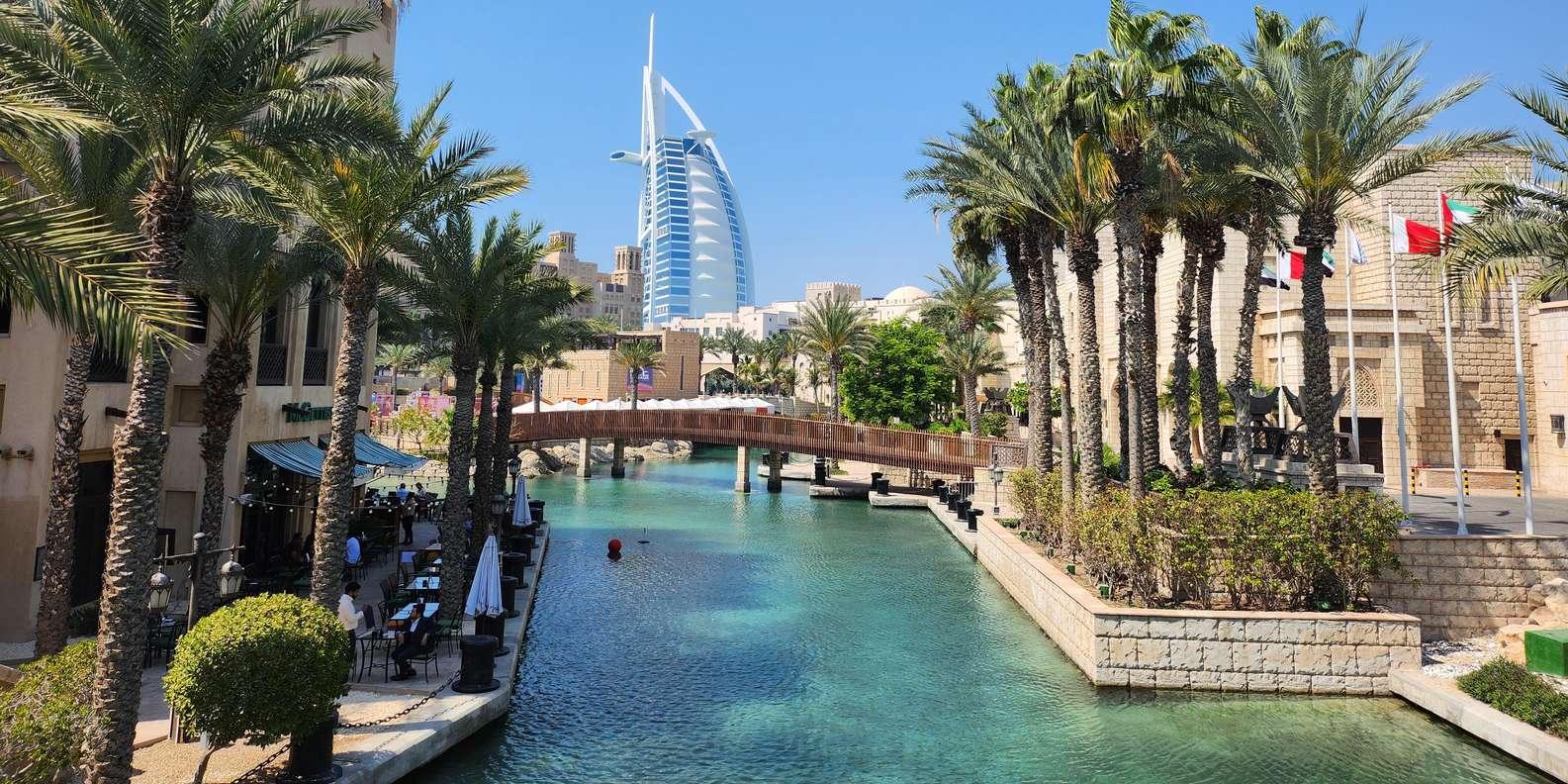
Both destinations are safe and suitable for families, but their atmosphere differs significantly. Cyprus is more relaxed and follows the Mediterranean lifestyle known as “σιγά-σιγά” (slowly, without haste). In contrast, Dubai is a dynamic metropolis with a fast pace of life.
Culture, local environment, and rules
Cyprus combines traditional culture with European laws and legal norms, which means minimal restrictions on clothing, behavior, and social norms. In Dubai, compared to Cyprus, stricter rules apply — a more conservative dress code (especially in some areas), stricter standards of behavior in public places, and strictly regulated alcohol consumption.
Climate and active leisure
Despite its small size, Cyprus has a diverse landscape — here you will find not only beaches, but also forests and mountains. The island has a mild Mediterranean climate with hot dry summers (+30—35°C) and relatively mild winters (+10—18°C). Cyprus offers many options for active outdoor leisure: swimming, water sports, mountain hiking, and even skiing in winter. The island also has many picturesque villages with a colorful atmosphere.
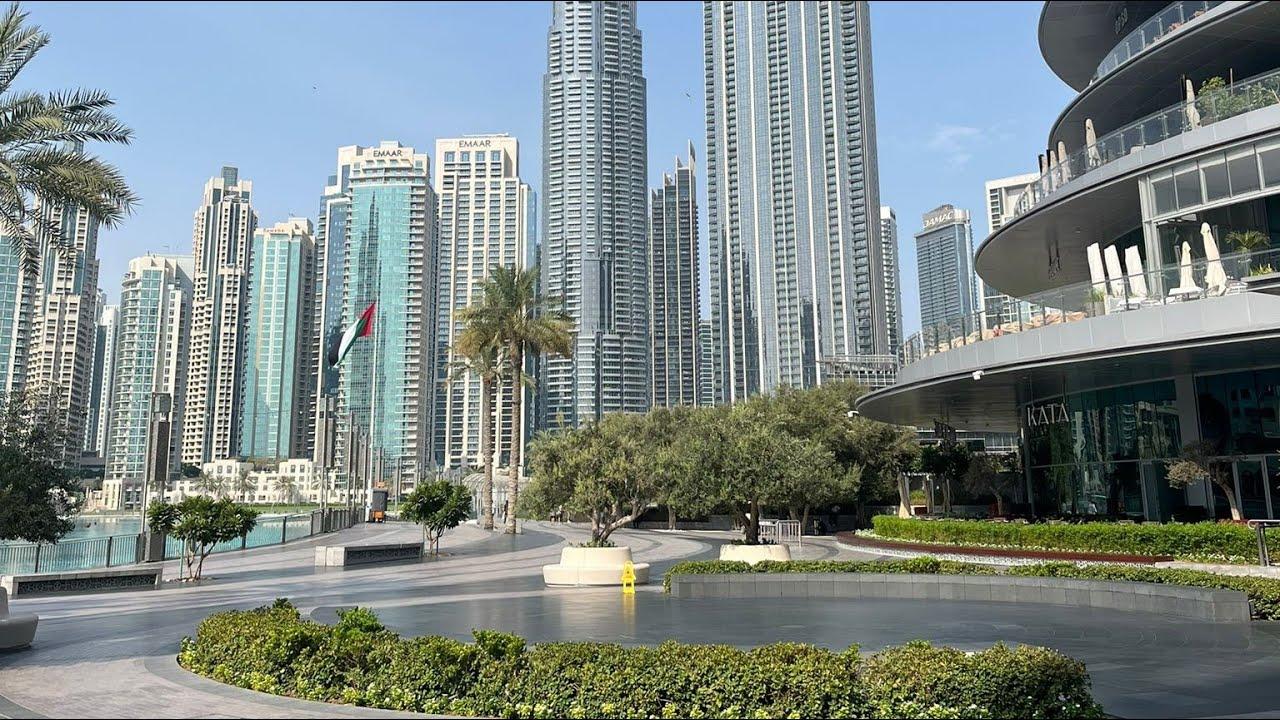
Dubai, by contrast, is predominantly a desert region with access to the sea. Summer in the UAE is extremely hot, with temperatures ranging from +40—50°C, while winter is also quite warm, with average temperatures of +20—30°C. During the hot period, outdoor activities are fairly limited, but modern parks and indoor sports complexes are available. Dubai also offers unique desert entertainment: safaris, camping, camel rides, and much more. To cool off during the hot summer, Dubai has public beaches and indoor swimming pools.
For families: education, healthcare, and safety
Education
Cyprus offers a good selection of international schools, which mainly operate under the British system, but IB programs are also available in some institutions.
Average tuition cost:
- Primary school: 6,000—10,000 euros per year.
- Secondary school: 8,000—14,000 euros per year.
In Dubai, the choice of private school programs is much wider — there are British, IB, Indian, French, German systems, and others. However, tuition costs are also significantly higher:
- Primary school: 10,000—18,000 euros per year.
- Secondary school: 15,000—25,000 euros per year.
Healthcare
Cyprus has the public GESY system, available to all residents. The contribution is about 2.65% of income for employees and 2.9% for employers. The GESY system covers:
- doctor consultations;
- hospitalization;
- childbirth;
- prescription medicines;
- diagnostics.
Private health insurance is also available on the island:
- For adults: 500—960 euros per year.
- For children: 200–300 euros per year.
In Dubai, there is no public alternative to health insurance — private health insurance is mandatory:
- Basic package: from 1,400 euros per year.
- Family package: from 4,600 euros per year.
Safety
Overall, both destinations are very safe and suitable for families with children. Dubai regularly ranks among the safest cities in the world. However, from a geopolitical point of view, at the moment Dubai is more vulnerable because of its location, whereas Cyprus, thanks to EU membership and its small size, remains the more stable and safer option.

Residency and citizenship: your path to relocation
Visas and residency options
Cyprus
Work visa. In Cyprus, the employer is responsible for obtaining a work permit for the applicant. At the same time, the minimum salary level must be about 2,500 euros per month (gross). The permit is usually issued for 1—2 years with the possibility of renewal.
Digital nomad visa. This relatively new category allows foreign specialists and freelancers to temporarily reside in Cyprus while working for a foreign company or clients. The minimum income for obtaining the visa is 3,500 euros per month. The visa is issued for 1 year, with the possibility of renewal for another 2 years.
Important condition: the applicant must not work for a company registered in Cyprus.
Investor visa. This visa allows residence in Cyprus without the right to work. To obtain it, it is necessary to purchase real estate worth at least 300 thousand euros and confirm the existence of income from abroad.
Dubai
Employment visa. As a rule, such a visa is arranged by the employer. To obtain it, it is necessary to provide a signed employment contract and confirm qualifications and work experience. Initially, the visa is issued for 2—3 years, with the possibility of renewal.
Freelancer visa. Intended for remote specialists with confirmed income from 3,200 euros per month. The visa is issued for 1 year with the possibility of renewal.
Investor visa. This visa is intended for entrepreneurs and business owners. In many Free Economic Zones (free zones) there is no fixed minimum investment threshold, but opening a company usually costs from 4 thousand to 10 thousand euros. The visa is issued for 2—3 years with the possibility of renewal.
Golden Visa (long-term residency). This visa is intended for several categories of expats:
- Real estate investors (from 500,000 euros).
- Highly qualified specialists
- Entrepreneurs — owners of a government-approved business
The visa is issued for a period of 5 to 10 years, with the possibility of renewal.
Path to long-term residence and citizenship
Cyprus offers a clear and transparent path to obtaining citizenship. One of the most common ways is naturalization. For this, usually, at least 7 years of legal residence in Cyprus during the last 10 years is required. In addition, an accelerated procedure was recently introduced for highly qualified specialists working in international companies, requiring residence on the island for 4—5 years.
Unlike Cyprus, Dubai does not have a standard path to citizenship. This means that expats cannot obtain citizenship solely on the basis of their residence in the UAE. In rare cases, citizenship may be granted to foreigners who have made a significant contribution to the development of the UAE — for example, major investors, scientists, or highly qualified specialists.
Conclusion: who is Cyprus for, and who is Dubai for?
Choose Cyprus if you:
- Want to be part of the EU legal and economic system.
- Aspire to obtain a European passport.
- Want to benefit from one of the best tax regimes in Europe.
- Are planning family life and long-term stability.
- Value a balance between work and leisure.
Choose Dubai if you:
- Want access to global markets.
- Aspire to take advantage of zero taxation.
- Feel comfortable in a dynamic international environment.
- Want to live surrounded by luxury.
- Are focused on short-term financial growth rather than long-term residence.
Frequently asked questions
Is Cyprus significantly cheaper than Dubai?
Yes, Cyprus is noticeably more affordable — both in terms of real estate costs and everyday expenses. For example, rent in Cyprus can on average be twice as cheap as in Dubai.
What is better for a tech startup — Cyprus or Dubai?
If your goal is entering the EU market, Cyprus offers strong advantages: a developed startup ecosystem, tax incentives, and lower costs. Dubai, in turn, provides access to global markets and a broad network of investors, but with higher costs.
The biggest cultural shock for Western expats in Dubai?
One of the main differences is stricter legal and social norms than may appear at first, especially compared to Western countries.
How easy is it to get residency in Cyprus for third-country nationals?
Cyprus offers several options: work visa (through an employer), digital nomad visa, investor visa.
Can you use the Non-Dom regime in Cyprus indefinitely?
No, this status is valid only during the first 17 years of residence.
Relocation is not just logistics, but a deeply personal choice depending on your priorities, lifestyle, and long-term goals. Although Cyprus and Dubai offer many advantages, the right choice always depends on what matters specifically to you. In a time of growing global uncertainty, today more than ever it is important to carefully assess risks, opportunities, and prospects.
Read also:
- Traditional Cypriot jewelry: history, Lefkara silver, and filigree technique
- TOP 10 new buildings in Limassol that will be completed in 2026
- Kindergartens in Cyprus. How they work, how much they cost, and what parents need to know
- Childbirth in Cyprus. Cost and citizenship registration 2026
- Does Amazon deliver goods to Cyprus? A detailed guide for 2026