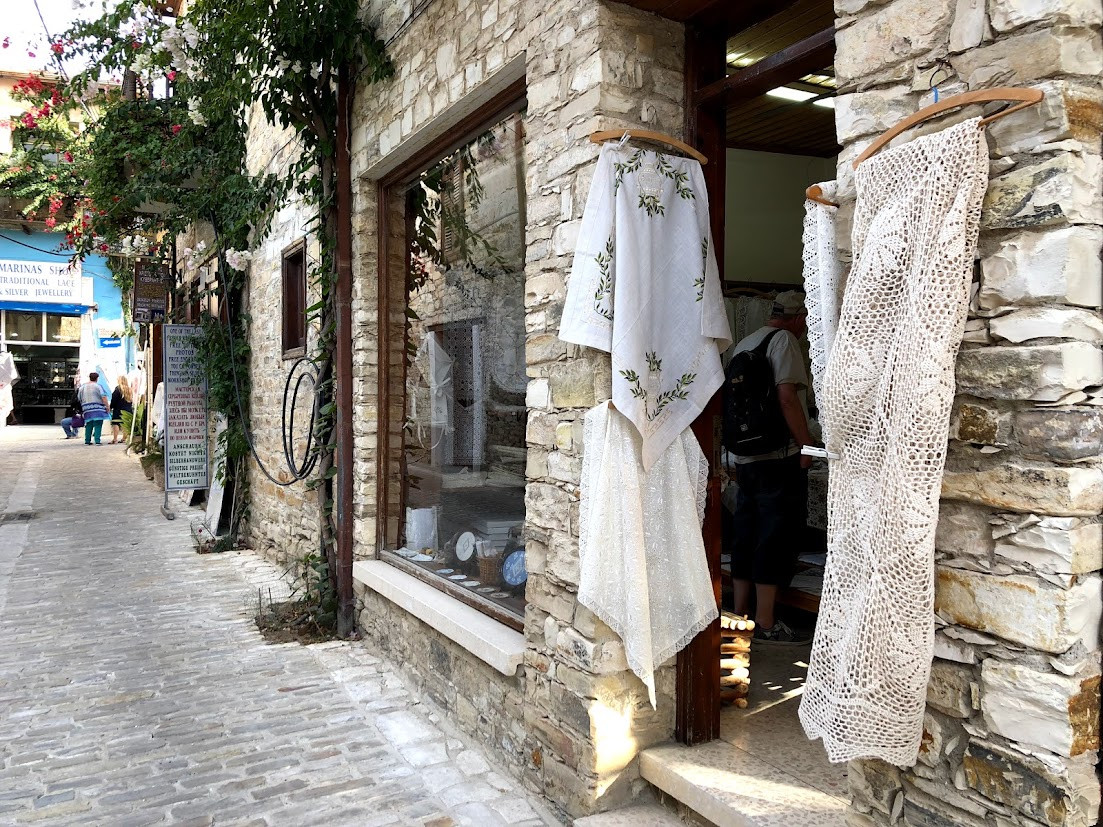
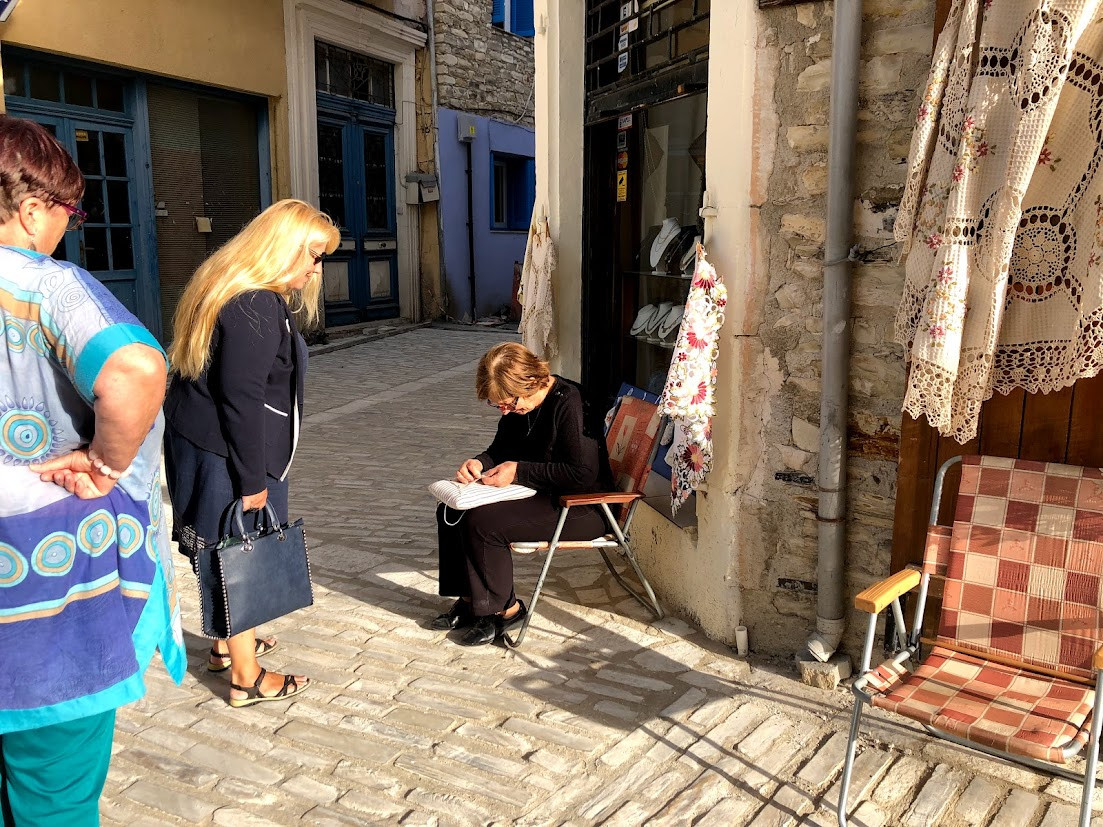
In the shade of sprawling bougainvillea, along the narrow cobbled streets of the Cypriot village of Lefkara, one can see a remarkable scene that has remained unchanged for centuries. Elderly women, armed with needles and linen cloth, patiently create lace masterpieces known around the world as lefkaritika. This is more than just a craft. It is an art in which every loop, measured down to the millimetre, tells the story of an entire island. In 2009, lefkaritika was inscribed on UNESCO’s Representative List of the Intangible Cultural Heritage of Humanity, confirming its exceptional value to world culture. Today, this art is going through difficult times, but the thread stretching back through the centuries has not yet been broken.
From Venetian influence to “white embroidery”
The history of lefkaritika stretches far back into the past, at least to the 14th century, when weaving and embroidery flourished in Cyprus during the periods of Frankish and Venetian rule. The island stood at the crossroads of important trade routes. Fabrics, patterns and techniques travelled from East to West, mixing and enriching one another. Lefkaritika is believed to have emerged from a kind of cultural romance between two traditions: the local Cypriot technique of Asproploumia (ασπροπλούμια), known since ancient times, and refined Italian lace.
Venetian noblewomen, escaping the summer heat of the plains, often travelled up to the mountain village of Lefkara. According to tradition, it was here that they shared the secrets of their craftsmanship with local women. Although this story is not supported by conclusive historical evidence, the resemblance between lefkaritika and old Italian embroidery is striking.
However, Cypriot craftswomen did not simply copy foreign patterns. They reinterpreted Venetian techniques, adapted them to their own traditions and created a completely independent art form with its own distinctive language and strict geometric principles. The basic foundation is white, beige or natural linen cloth, on which a play of light and shadow is created through thread and empty space.
The topography of the pattern: rivers, arches and endless geometry
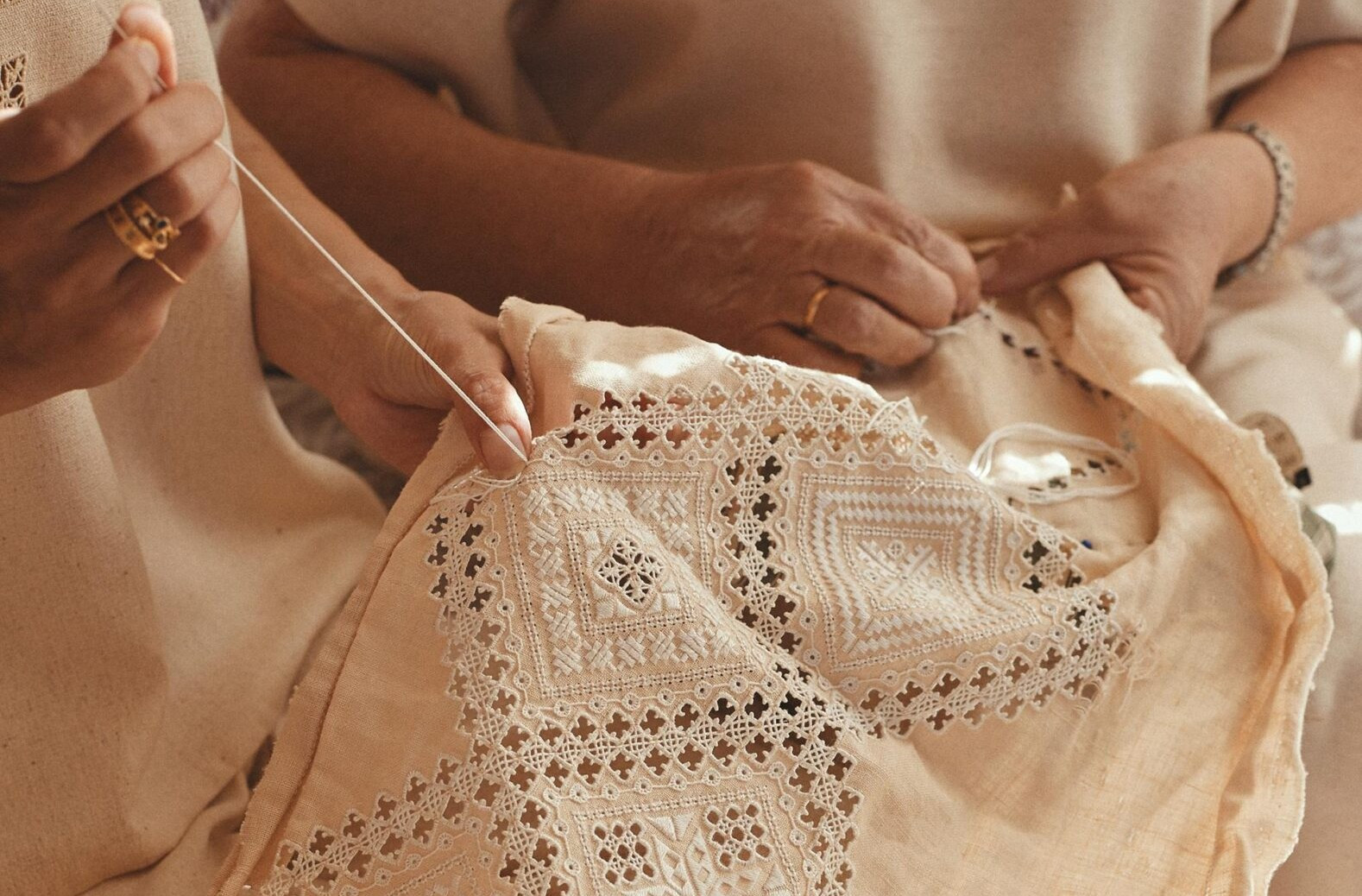
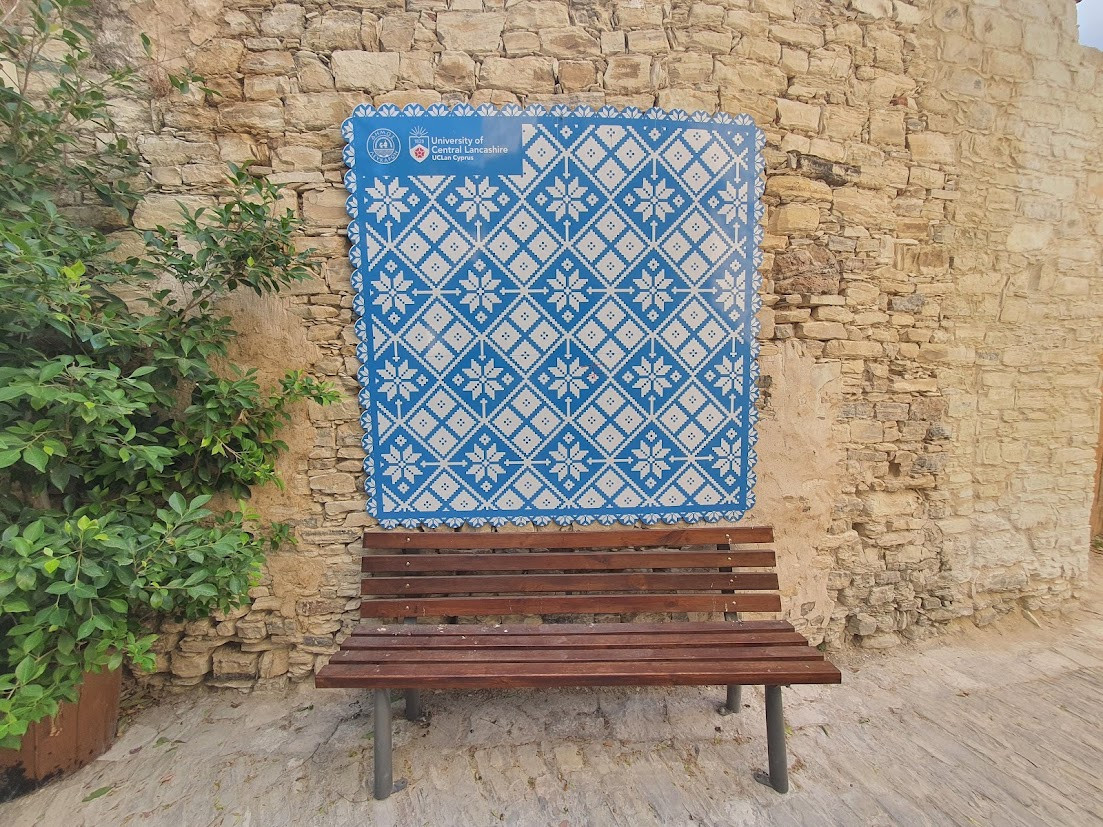
Lefkaritika is a form of embroidery in which empty space is just as important as the filled areas. At the heart of this art lies the meticulous counting of threads in the fabric. The craftswoman does not draw a design on the cloth; she follows its structure, pulling out some threads and tightening others into intricate geometric compositions. A mistake of a single thread can disrupt the symmetry of the entire piece, while complex patterns may consist of hundreds of thousands of carefully calculated stitches.
One of the foundations of many compositions is the “potamos” motif (ποταμός, meaning “river” in Greek). It is a decorative zigzag band that appears to cross the fabric, creating a dynamic rhythm. The triangular projections along this “river” are called “kamares” (καμάρες, meaning “arches” in Greek). When two “arches” are joined, they form a more complex pattern known as “milo” (μήλο, meaning “apple” in Greek).
A rich ornamental vocabulary is built around these main motifs. Lefkaritika may feature “margarites” (Μαργαρίτες, meaning daisies or floral rosettes in Greek) and “foinikota” (φοινικωτά, meaning stylised palm branches in Greek). There are also more intriguing names, such as “karouli” (καρούλι, meaning spool in Greek) or “arvalotos” (αρβαλωτός, meaning spider in Greek). According to records of the Cyprus Handicraft Service, there are more than 650 different motifs and ways of combining them. The true skill of a “ploumarissa”, as lefkaritika craftswomen are known, lies not in producing a single pattern but in harmoniously weaving many of them into one complex composition.
The legend of Leonardo da Vinci and masterpieces for queens
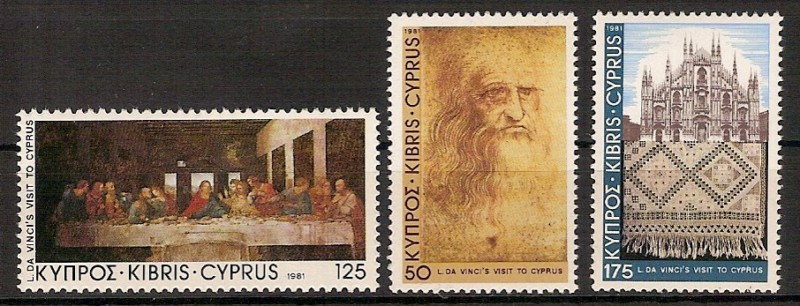
The most romantic chapter in the history of lefkaritika is associated with Leonardo da Vinci. According to legend, the great artist and inventor visited Cyprus in 1481. While passing through Lefkara, he was so impressed by the beauty of the local lace that he purchased a large embroidered cloth, which he later presented to Milan Cathedral to decorate its altar. Some even suggest that this very fabric can be seen as the tablecloth in his famous painting “The Last Supper”.
Although there is no indisputable documentary evidence for this story, and some researchers even question whether da Vinci ever visited Cyprus at all, the legend remains enormously powerful. One of the most complex and recognisable lefkaritika patterns is still known as the “Leonardo pattern”. In 1981, Cyprus Post issued a series of stamps dedicated to the legend, and in 1986, marking the 600th anniversary of Milan Cathedral, Lefkara Municipality presented the cathedral with a new altar cloth made in the finest traditions of lefkaritika. The village’s most experienced craftswomen worked on it for seven months.
There were other, less triumphant episodes as well. In 1952, to mark the accession of Queen Elizabeth II to the throne, a group of Lefkara craftswomen created a magnificent lace piece depicting a crown. However, the gift was returned to the senders. The reply stated that the Queen could not accept a gift from private individuals and that it would have to come from all her subjects in Cyprus. Today, this royal lace, rejected by the monarch, is kept in the local museum in Lefkara.
Two sides of one success
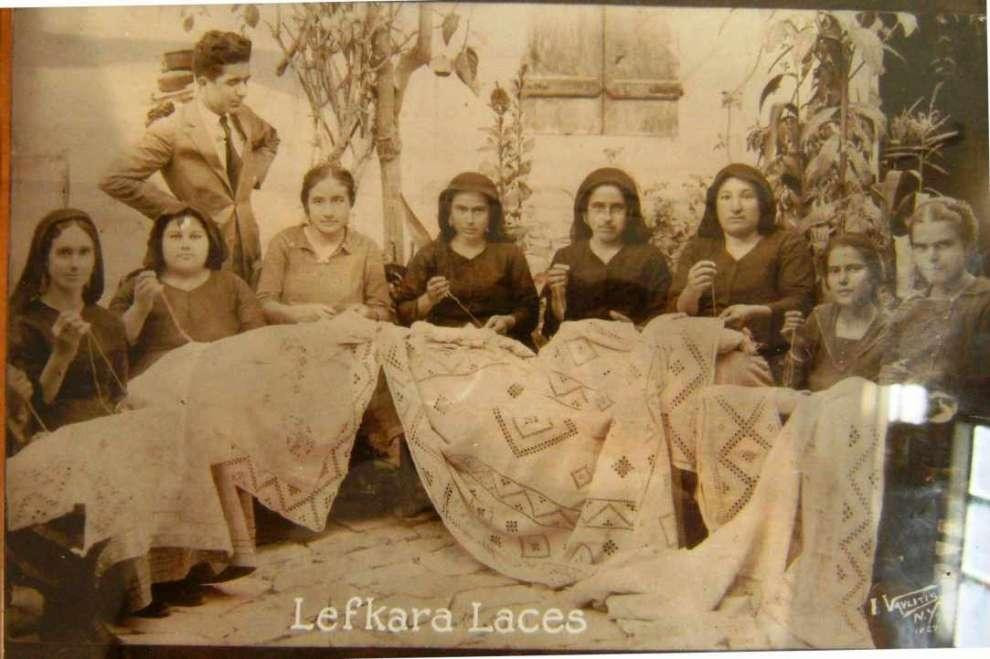
For centuries, the art of lefkaritika was inseparably linked with the lives of Lefkara’s women. The craftswomen, known as “ploumarisses” (from the Greek word “ploumizo”, meaning “to decorate”), passed their knowledge from mother to daughter, beginning to teach girls the simplest stitches from the age of six or seven. Lace formed a central part of a bride’s dowry. It was believed that the richer and more elaborate a bride’s collection of embroidered works, the higher her social status and value as a future wife. On the wedding day, all these creations were displayed publicly as evidence of the girl’s diligence and skill.
But while women made the lace, its sale was handled almost exclusively by men. Merchants from Lefkara embarked on long and dangerous journeys to introduce the creations of local craftswomen to the world. Their routes took them to major Mediterranean ports such as Alexandria, and then farther afield — to Greece, Britain, France and even Scandinavia. They did not open shops, but instead visited the homes of the aristocracy, stayed in expensive hotels, and attended fairs and exhibitions, offering lefkaritika as an exclusive and expensive handmade product. It was largely thanks to their entrepreneurial spirit that Cypriot lace gained worldwide fame and achieved success in European markets.
Between past and future: the struggle for survival
Today, lefkaritika stands at a crossroads. Although its inscription on the UNESCO list in 2009 recognised its enormous cultural value, this did not guarantee the survival of the craft itself. In the 1980s, around 500 women in Lefkara practised embroidery. Today, only about 50 remain, all of them elderly. The main problem is the lack of continuity. Young women are reluctant to devote themselves to this labour-intensive and poorly paid craft, which demands enormous patience and many years of training to achieve mastery.
Creating one complex piece, such as a tablecloth with the “foinikiota” pattern, can take more than a year. An authentic work may cost up to €10,000, but even this does not always compensate for the amount of labour involved. In addition, the market is widely filled with cheap industrial imitations that undermine the value of unique handmade work.
The Cypriot authorities are trying to address the problem: courses are organised to teach young women the basics of the craft, production is subsidised, and craft centres and museums are being opened. But the secret to preserving lefkaritika lies neither in money nor in museum showcases. It lies in living hands that know how to count threads, remove them and bind them together again, transforming a piece of cloth into exquisite lace. As long as such hands exist, this remarkable art form — a source of pride and part of the soul of Cyprus — will remain alive.
Read also: