High in the Troodos Mountains, above the picturesque village of Pelendri, the road begins to wind through dense pine forests. It feels as though time flows differently here, far from bustling resorts and the noise of the cities. More slowly. More peacefully. Surrounded by lush greenery and breathtaking natural landscapes. But drive a little farther, and the forest suddenly gives way to a sight that is impossible to forget.
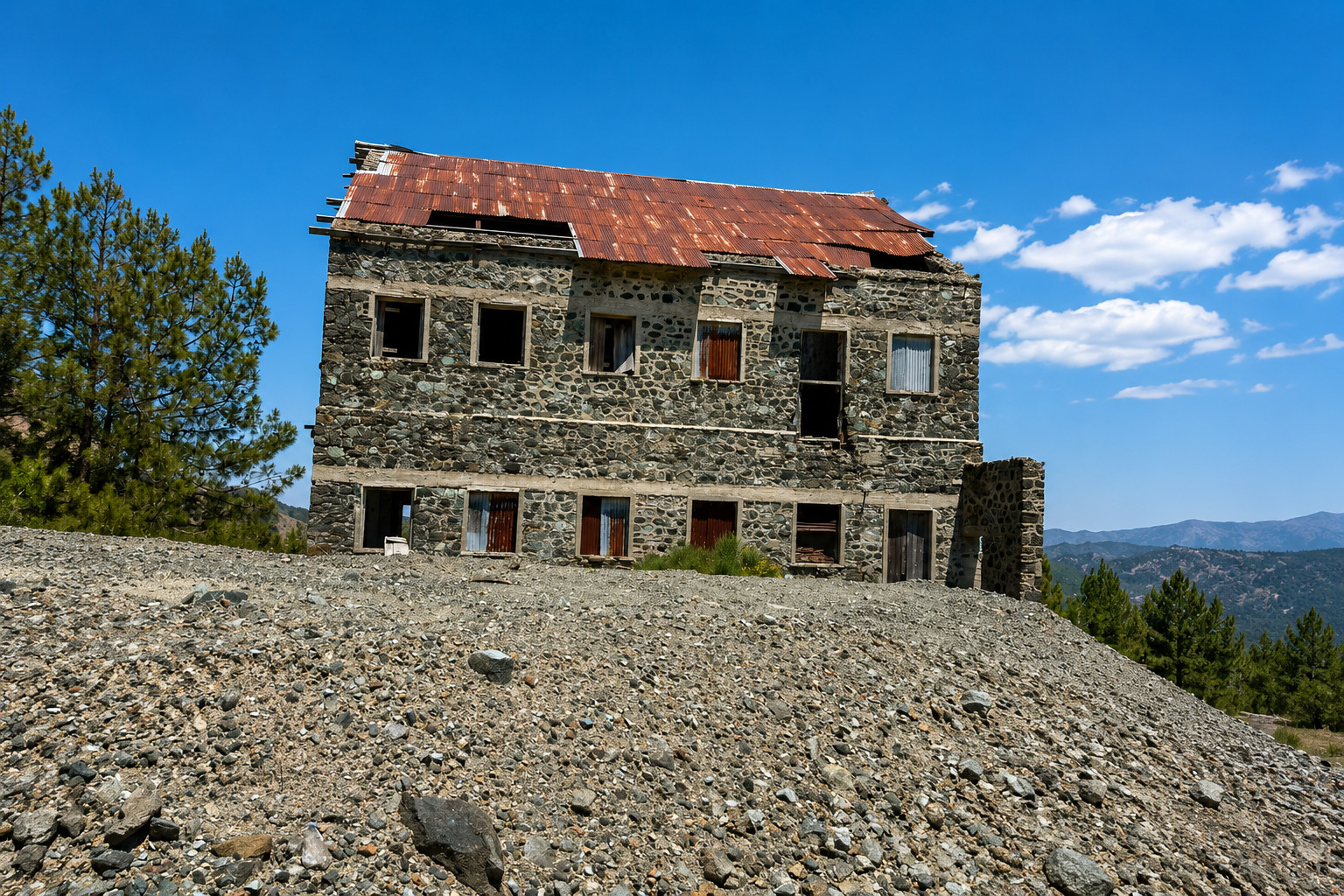
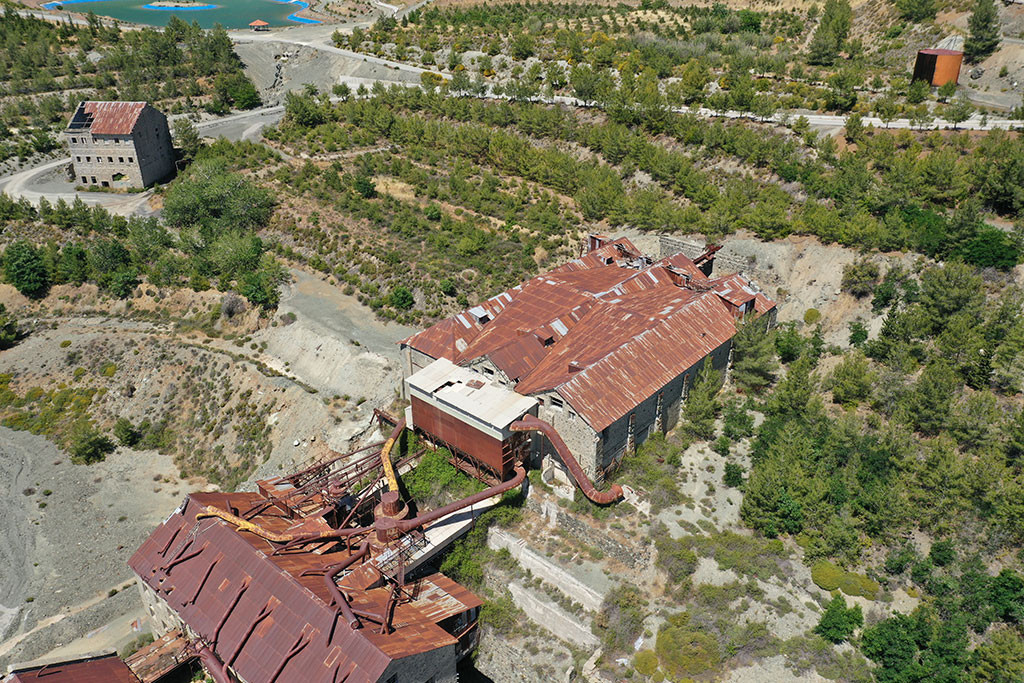
A vast, gaping crater. Grey, lifeless rock replacing once-green hillsides. All around stand the ruins of buildings with collapsed roofs, empty windows, and streets overgrown with weeds. This is Pano Amiantos—a place that just half a century ago was the heart of one of Cyprus' wealthiest and most remarkable communities, yet today looks like the setting of a post-apocalyptic film.
How a Mountain Became a Factory
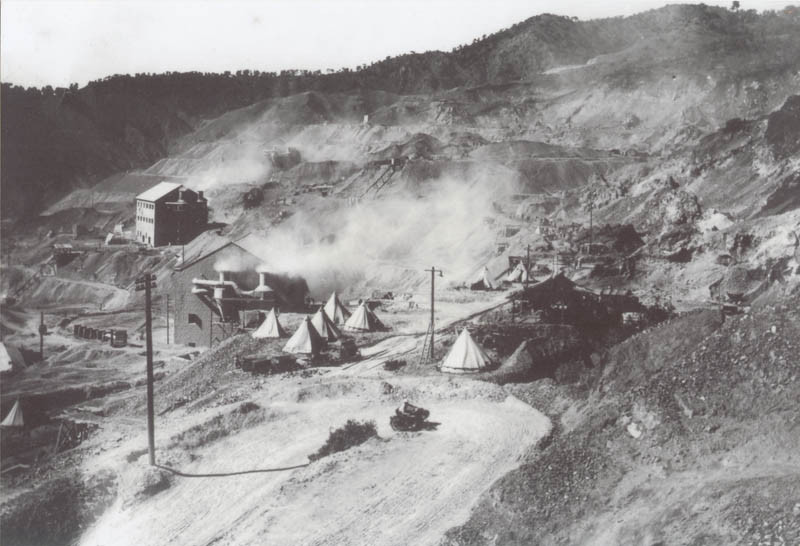
The story of industrial mining in Amiantos began long before the first homes appeared here. In 1904, the British administration of Cyprus, then still formally under Ottoman sovereignty (until 1914), granted a concession to the Cyprus Asbestos Company to develop a chrysotile asbestos deposit. Chrysotile, also known as "white asbestos," was highly valued for its fire resistance and durability. The deposit in the Troodos Mountains proved to be the largest in Europe, covering an area of approximately 13 km².
The mining rights changed hands several times. In 1905, they were transferred to the Italian company Compagnia Mineraria di Cipro, marking one of the first major examples of non-British capital flowing into the island. In 1919, the concession changed ownership once again, until in 1934 it was awarded to Cyprus Asbestos Mines Ltd (CAM) under a 99-year lease. It was CAM that built the massive industrial complex still remembered by older generations.
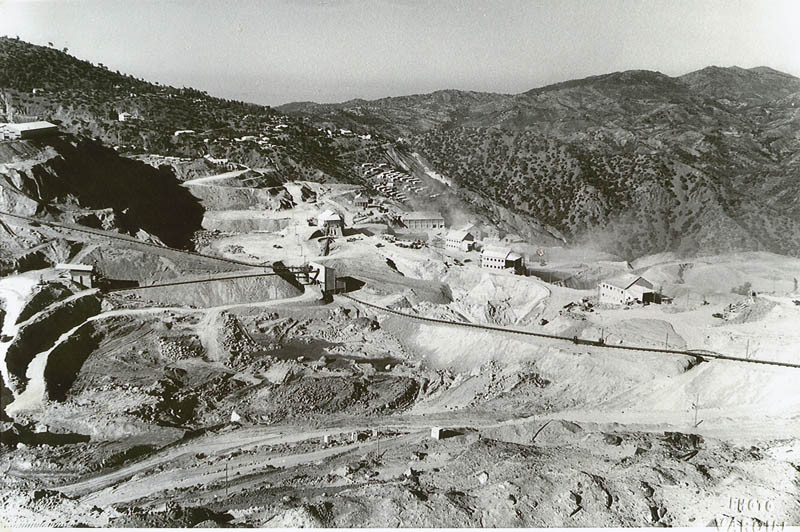
The scale of mining was astonishing. During the first decades, most of the work was carried out manually, requiring an enormous workforce. The real breakthrough came with mechanization. At its peak, particularly after the Second World War, more than 5 million tonnes of rock were processed here every year. Producing just one tonne of commercial asbestos required crushing and separating as much as 150 tonnes of waste rock. Throughout the mine's entire history—from 1904 to 1988—around 1 million tonnes of asbestos fiber were extracted from a total of 130 million tonnes of processed rock.
The enormous crater that now dominates the mountainside is not an exaggeration but the inevitable result of these figures. In 1963, a nine-storey processing plant opened beside the open-pit mine—a monumental structure where rock was crushed, screened, and separated using pneumatic technology. The mine became far more than a production site; it evolved into a major center of investment, technology, and industrial development.
What Is Asbestos?
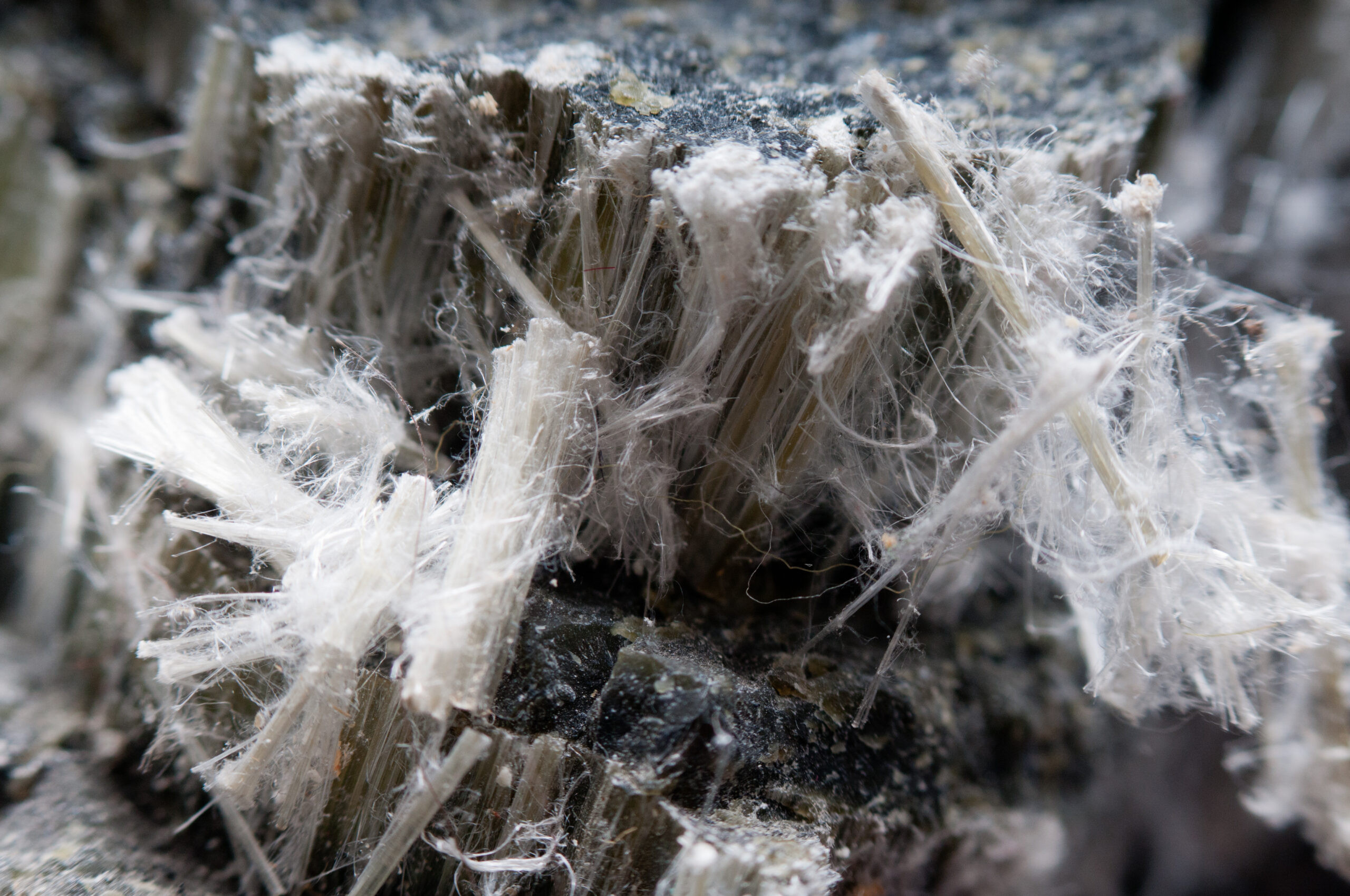
Asbestos is not just a single mineral but an entire group of fibrous materials with a unique property: they can be separated into extremely fine, flexible, and remarkably strong fibers. These fibers do not burn, melt, conduct heat or electricity, and are resistant to acids and alkalis. For 20th-century industry, asbestos was a true gift—it was used to manufacture fireproof fabrics, insulation for ships and factories, brake pads, roofing materials, pipes, and hundreds of other products.
However, not all types of asbestos are the same. Geologists and industrial experts divide them into two main groups. The first is chrysotile, or white asbestos. It belongs to the serpentine group and resembles tangled masses of whitish-green cotton. Its fibers are soft, flexible, and silky in appearance. It was this type of asbestos that was mined in Cyprus' Amiantos, and it accounted for around 95% of all the asbestos ever used by humanity.
The second group consists of amphibole asbestos minerals, including tremolite, actinolite, anthophyllite, and the infamous crocidolite, or blue asbestos. Their fibers are stiffer, needle-like, and, as decades of research have shown, far more hazardous to human health. But when the Cypriot mine first began operating, almost no one was aware of these dangers.
"Monte Carlo" in the Heart of Pitsilia
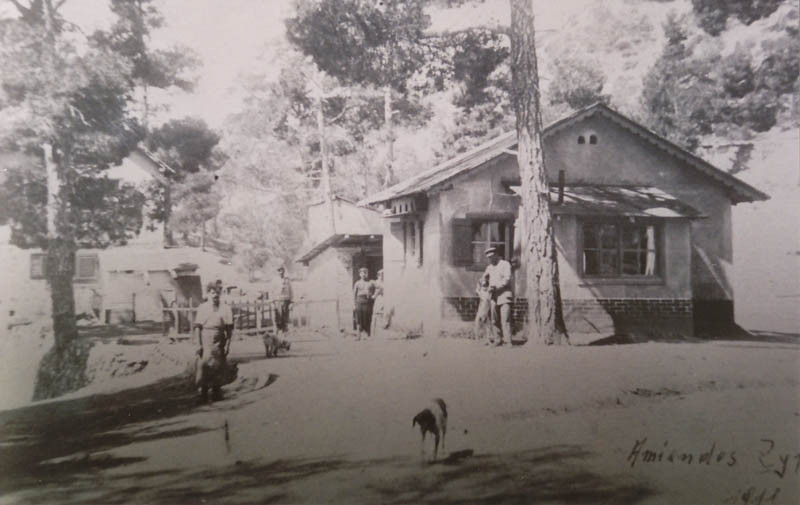
Where there is work, people follow. Around the mine, an entire town emerged almost from nothing. At its peak, the population of Pano Amiantos reached 10,000 people—an astonishing figure for a mountain settlement. By comparison, residents of neighboring villages relied largely on subsistence farming, while here, at an altitude of 1,500 metres, industrial life was thriving.
This was far more than a workers' settlement. It had its own power station supplying electricity to both the mine and the residential quarters. There were schools, a hospital, a hotel, churches, and shops. Former residents recall that the presence of foreign managers and engineers created an atmosphere of international exchange, where both children and workers were exposed to different languages and cultures. There was even a kind of social mobility: workers were selected based on their skills and endurance, giving them the opportunity to earn a stable income.
That is why Pano Amiantos became informally known as "Monte Carlo." There was no casino here, of course. But compared with the impoverished rural communities surrounding it, where livelihoods depended on olive and grape harvests, Amiantos represented stability and prosperity. Wages were paid on time every month, shops were well stocked, and jobs were plentiful. In short, Amiantos seemed to lack nothing. Yet this exceptional prosperity in the heart of the mountains rested on an extremely fragile foundation.
With prosperity came social tensions as well. In 1948, a 29-day strike took place, during which more than 60 workers were arrested while demanding higher wages and better working conditions. It was a reminder that Amiantos was far from a utopia—it was also a center of labor struggles, much like other major industrial communities of its time.
The Price of Prosperity: Poison in the Air
Life in prosperous Amiantos had a darker side. Working in the open-pit mine and processing plant was physically demanding and hazardous. Every day, thousands of workers inhaled microscopic asbestos fibers. The dust settled in their lungs, causing asbestosis—a chronic lung disease—as well as pleural and lung cancer.
For decades, medical reports were suppressed or ignored. But by the 1980s, the international scientific community had finally succeeded in drawing attention to the issue. The World Health Organization and the governments of developed countries began introducing comprehensive bans on the use of asbestos. Demand for Cypriot chrysotile collapsed. Prices fell so sharply that mining was no longer economically viable.
The mine closed in 1988. There was no farewell ceremony, no carefully planned transition. The conveyor belts simply stopped, the machinery fell silent, and thousands of people lost their jobs overnight. The economic shock was devastating. Yet that was only part of the story. The mountainside was left scarred by a massive crater, surrounded by towering waste-rock dumps. It became one of the largest environmental disasters in Cyprus: the soil was contaminated, vegetation destroyed, and asbestos dust carried by the wind for miles.
The Birth of a New Community
The closure of the mine marked the end of Pano Amiantos as a major settlement. People left in large numbers. Those who could moved to the cities or emigrated abroad. Only a handful remained. Kato Amiantos, located lower down the mountain and less dependent on the mine, managed to survive, although it became significantly poorer. In 2005, the two communities—Upper and Lower Amiantos—were officially merged into a single municipality under the name Amiantos. According to the 2021 census, the unified community is now home to just 287 residents (up from 261 in 2011).
The old town—the very "Monte Carlo" of the Troodos Mountains—has all but disappeared. The forest is slowly but steadily reclaiming the ruins of the hospital, the factory, and the residential buildings. Where life once flourished, pine trees now grow. Only old foundations remain, reminding visitors that this was once one of Cyprus' most dynamic industrial centers.
The Legacy of Amiantos
Today, the former mine and open-pit quarry are officially part of the Troodos National Forest Park and are protected under the European Natura 2000 environmental program. This means that a place once known for extracting a deadly mineral is now preserved as a unique natural site. This remarkable transformation is no accident but the result of an extensive restoration effort that began in 2009.
That year marked the launch of an ambitious project with the lengthy but fitting title: "Conservation of Biodiversity During the Restoration and Subsequent Management of the Amiantos Asbestos Mine in the Troodos National Forest Park." The project's budget amounted to €1.35 million—a figure that might seem modest for a site of this scale, yet careful planning and investment produced impressive results. A total of 84.3% of the funding came from three European donor countries—Iceland, Norway, and Liechtenstein—demonstrating genuine international solidarity. The remaining 15.7% was provided by the Republic of Cyprus. Europe did not leave Cyprus to deal with its environmental legacy alone.
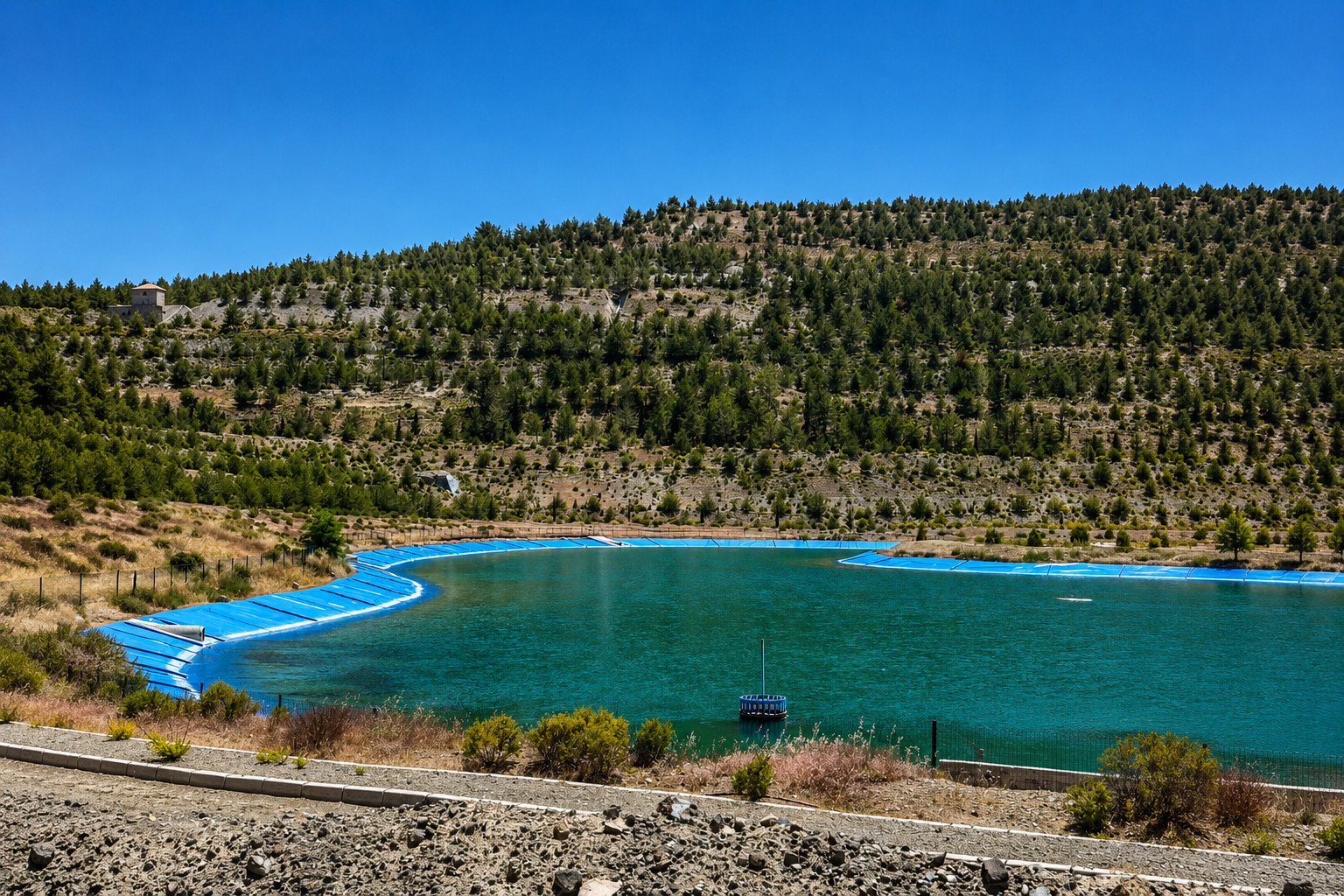
The program's objective was both simple and ambitious: to restore the ecosystem that had existed before mining operations began. At the bottom of the abandoned quarry—the same vast crater that is still visible from afar—an artificial lake was created. With the arrival of the rainy season, it filled with water and now has a capacity of approximately 40,000 m³.
The environmental restoration went even further. An artificial island was built in the middle of the lake to provide a safe haven for migratory birds. Species that once avoided the area now return here. Engineers stabilized the mountain slopes to prevent landslides and erosion, after which the most important stage began—reforestation. Pine saplings, shrubs, and native grasses were planted, allowing nature to reclaim a landscape that had once been devastated.
Yet the restoration of Amiantos is about more than the environment—it is also about memory. One of the surviving buildings of the former mine has been transformed into the Troodos Geopark Information Centre. Today, it is a place where the past meets the future. Inside are exhibitions devoted to the geology and flora of Cyprus, but above all to the lives of the miners. Helmets, tools, photographs, and historical documents remind visitors of the price paid for Amiantos' prosperity. Outside, in front of the main entrance, visitors can examine specimens of the various minerals found in the Troodos Mountains—an open-air geology classroom. Among them is chrysotile itself, the very "white asbestos" that brought both prosperity and tragedy to the town.
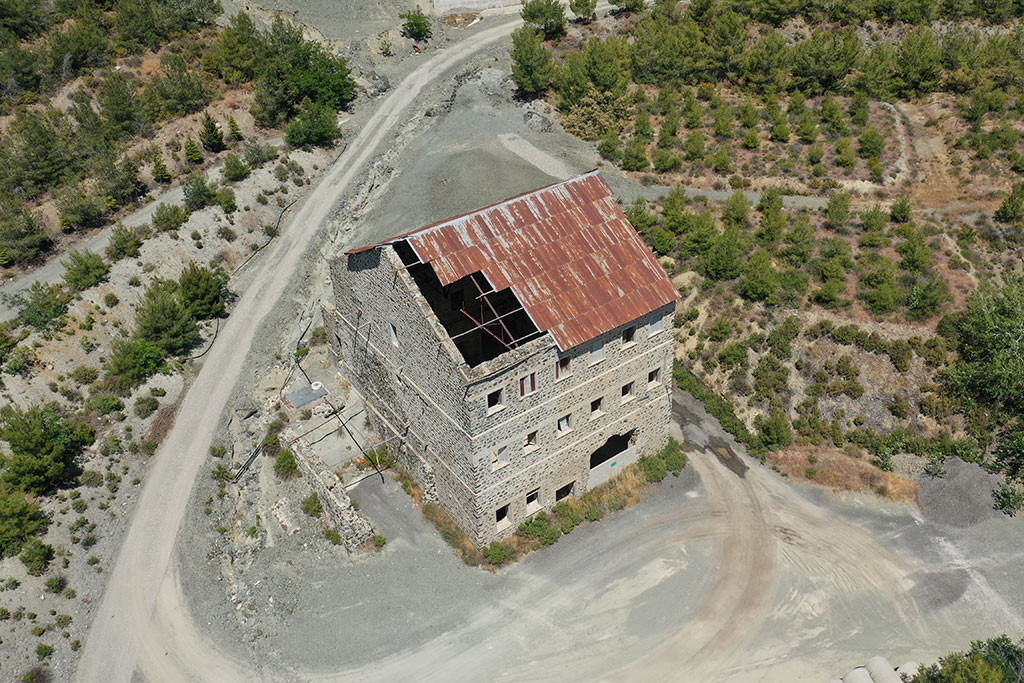
Not everything, however, has been restored. Standing beside the new information center is the former miners' hospital. Empty. Abandoned. Its windows overlook the new life emerging around it, yet inside there is only silence and dust. Over the years, no new purpose has been found for the building. It remains a silent witness—a reminder of the hundreds of workers who were treated here for asbestos-related illnesses. It stands as a symbol that while landscapes can be restored, human lives cannot always be.
Modern-day Amiantos is a place of striking contrasts. On one hand, it is an example of how international cooperation and investment can transform an environmental disaster into a protected natural area. On the other, it remains a monument to human overconfidence. The artificial lake, green hillsides, bird sanctuary, and information center stand alongside the ruins of homes and the abandoned hospital. Nature is returning, but it can never erase the memory of what happened here. And perhaps that is Amiantos' greatest lesson: almost everything can be restored—except the lives that were lost.
Read also:
- The Cost of Living in Cyprus in 2026
- The Papadopoulos Family Mansion in Limassol: An Architectural Gem on the Seafront
- Enduro and Motocross in Cyprus: A Guide to the Island's Mountain Trails in 2026
- Where to Watch English-Language Films in Cyprus: The Best Cinemas in 2026
- How to Make Money from Real Estate in Cyprus? The 2026 Property Flipping Guide