Located in the foothills of the Troodos Mountains, 42 km from Limassol, Omodos remains one of the most authentic villages on the island. Its cobbled streets remember the Crusaders, the air is filled with the scent of vineyards, and at its heart stands a monastery housing a sacred relic that has been venerated for 17 centuries. If you are wondering whether it is worth spending a weekend here, the answer is simple: absolutely. And here is why.
1. See a sacred relic at the Monastery of the Holy Cross
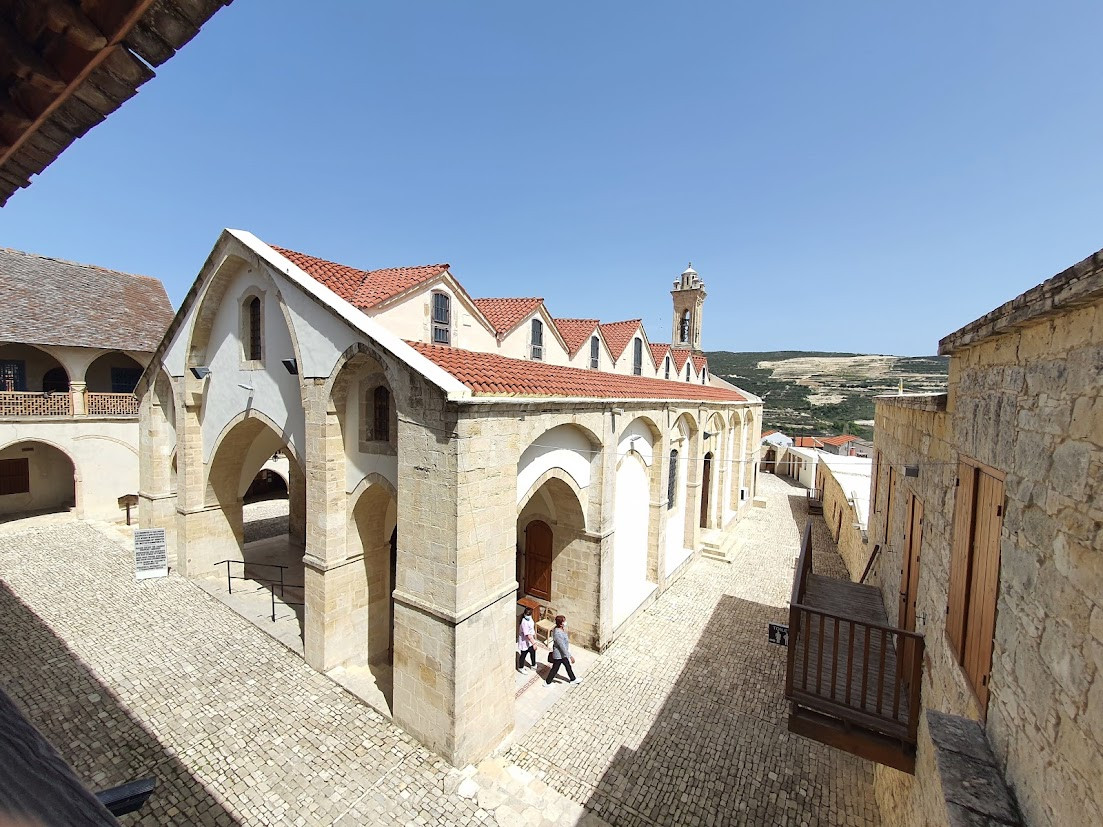
The main reason thousands of pilgrims from across Cyprus come to Omodos is the Timios Stavros Monastery, or Monastery of the Holy Cross. It stands right in the centre of the village and is impossible to miss. According to tradition, the monastery was founded by Saint Helena, mother of Emperor Constantine the Great, during her pilgrimage to Cyprus in 327. She is said to have left here a fragment of the True Cross and part of the rope with which Christ was bound during the Crucifixion. These relics are still kept in the monastery and are considered miraculous.
The monastery as it appears today dates mainly from the 18th–19th centuries, although its history stretches back more than 16 centuries. Inside are impressive 16th-century frescoes, a carved wooden iconostasis and an atmosphere that almost compels visitors to speak in whispers. Photography inside is prohibited, but this only strengthens the sense of being close to something deeply sacred.
2. Experience the Feast of the Exaltation of the Cross
If you are wondering when the best time to explore Omodos is, choose September. On 14 September, the village celebrates its main religious festival — the Exaltation of the Holy and Life-Giving Cross.
Thousands of pilgrims gather in Omodos on this day. A procession carrying the sacred relics moves around the monastery, clergy in richly decorated vestments visit homes, and choirs sing ancient Byzantine hymns. The celebration lasts for more than one day: festivities begin several days before 14 September and continue for several days afterwards, turning the village into one of the centres of religious life on the island. Even if you are not religious, the atmosphere is worth experiencing. The entire village lives through this celebration, and visitors become part of something larger.
3. Walk along cobbled streets that are centuries old
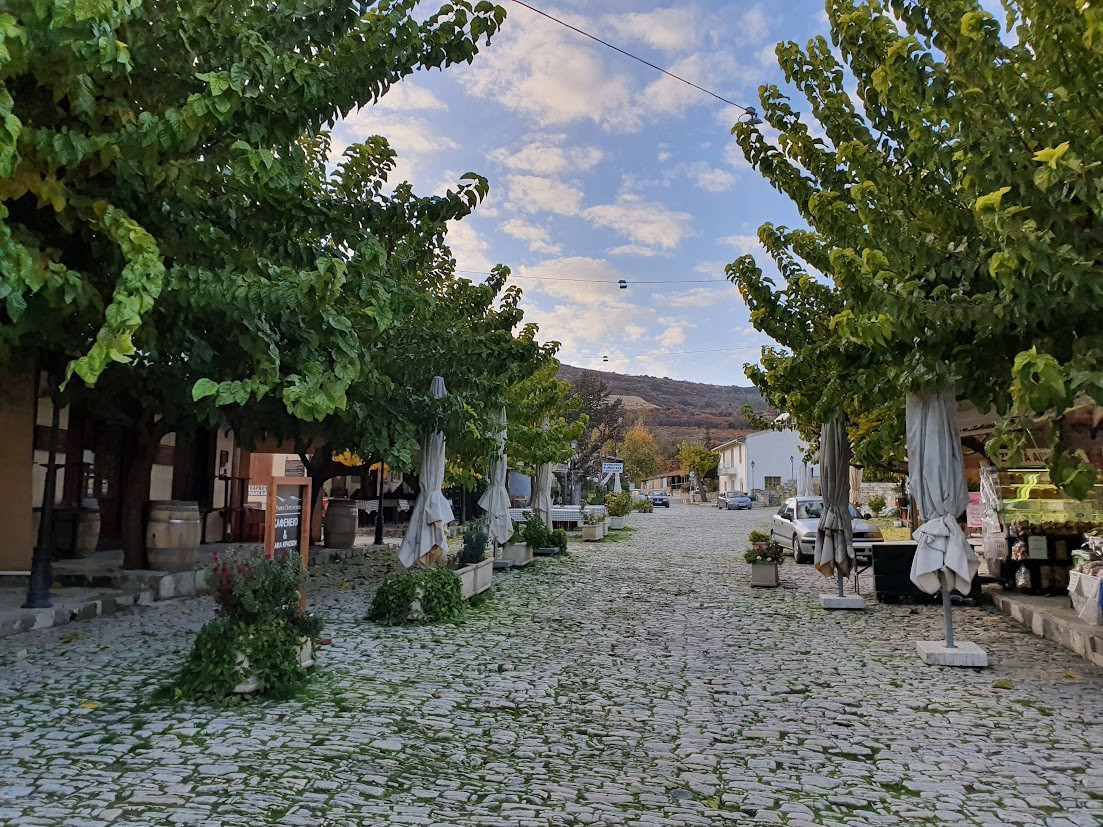
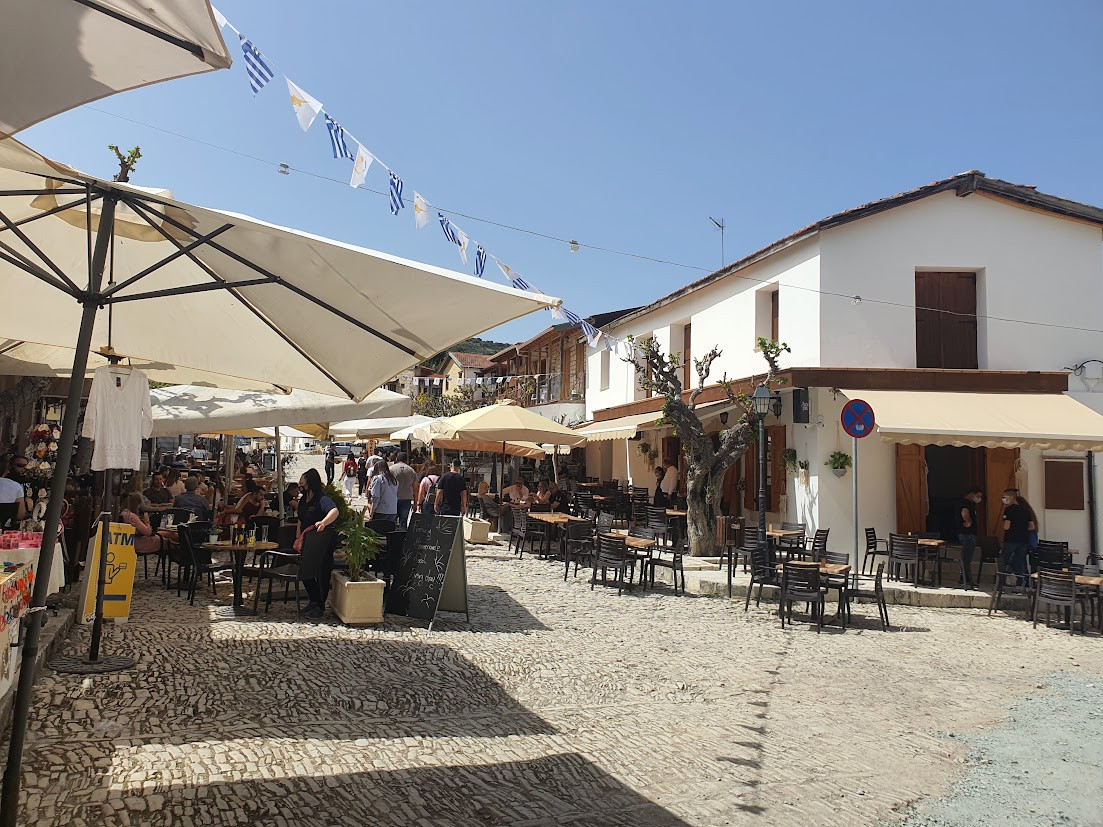
Omodos is an open-air museum, only without tickets or glass display cases. Its narrow streets are paved with stone, houses are built from local limestone, and balconies are covered with grapevines.
Simply walking around the village is an experience in itself. You will constantly find yourself turning into side streets, discovering small squares and looking into courtyards where herbs are drying or laundry is hanging. There is no rush here. People simply live — slowly, in the Cypriot way.
4. Visit museums few people know about
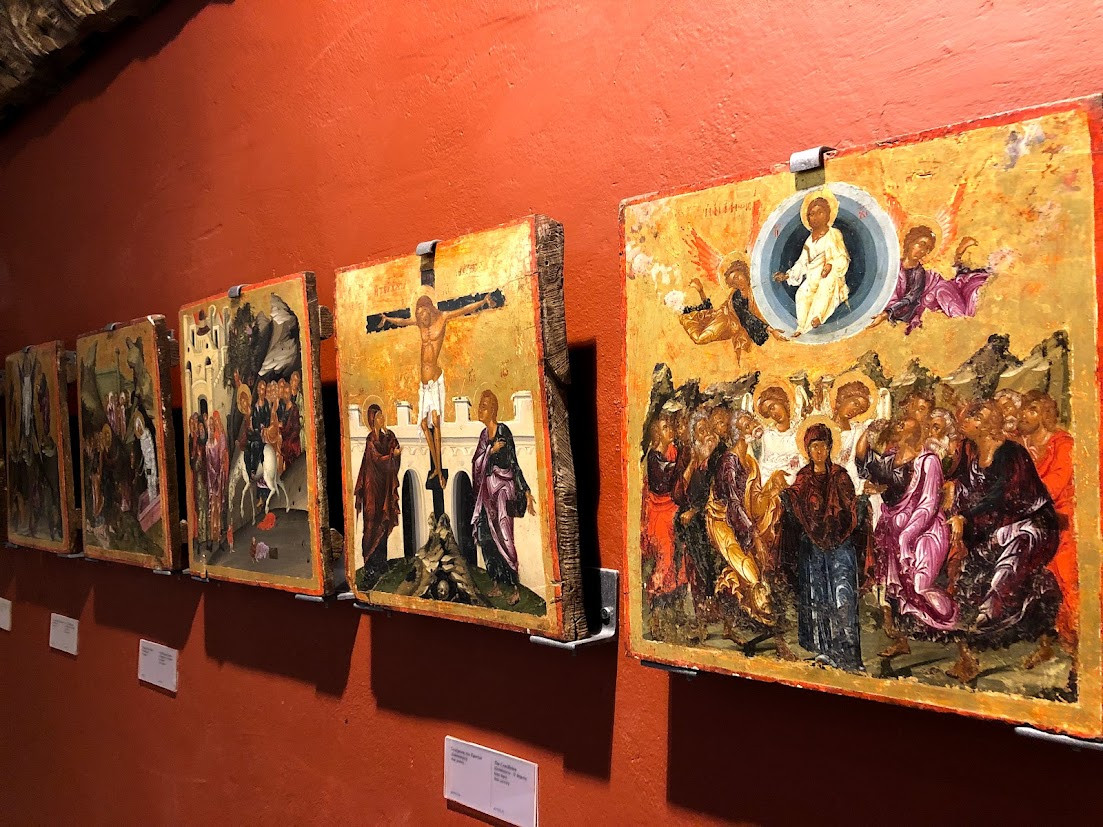
The monastery is home to an entire complex of museums that are often overshadowed by the church itself — undeservedly so. They include:
- The Museum of Byzantine Icons, which houses a unique collection of ancient religious images.
- The Folklore Museum, displaying household objects, traditional clothing and tools.
- The Lace Museum, where visitors can learn about the history of Omodos lace.
- The EOKA Museum, with an exhibition related to the history of the monastery and village.
You should also visit the Chapel of Saints Constantine and Helena and the Chapel of Agia Paraskevi. They are located nearby and are often empty, making them perfect places to enjoy peace and quiet.
5. Buy authentic Omodos lace and embroidery
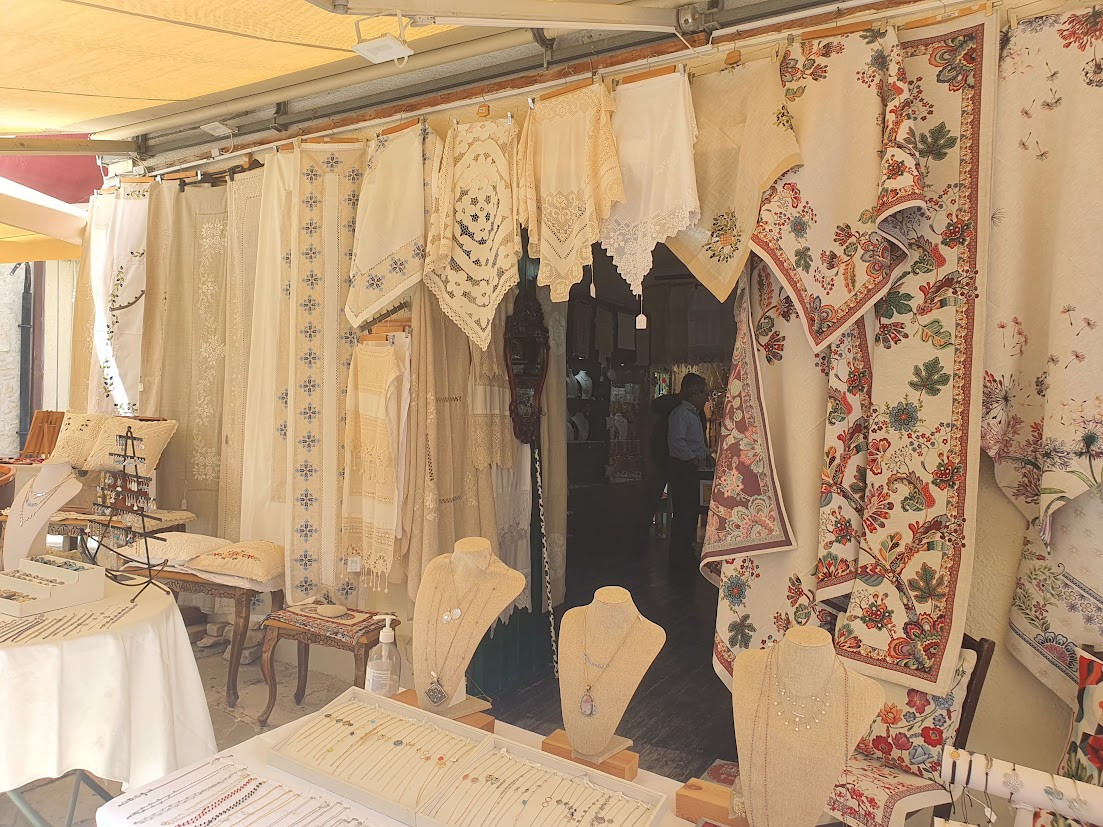
Omodos is famous for its handmade lace. Local women — both elderly and young — have passed the craft down from generation to generation for centuries. In winter, they gather in sunny courtyards; in summer, in the shade of narrow streets, always with a needle and thread in hand.
You can buy lace directly from them — not mass-produced tourist souvenirs, but pieces with a real history. In addition to lace, local shops sell embroidery, ceramics, glassware and handmade Byzantine icons.
6. Taste wine from a region with 5,000 years of winemaking history
Omodos is part of a wine-producing region where grapes have been cultivated for more than five millennia. The wineries here are small and family-run, and wine is made using traditions passed down through generations. Wineries worth visiting include:
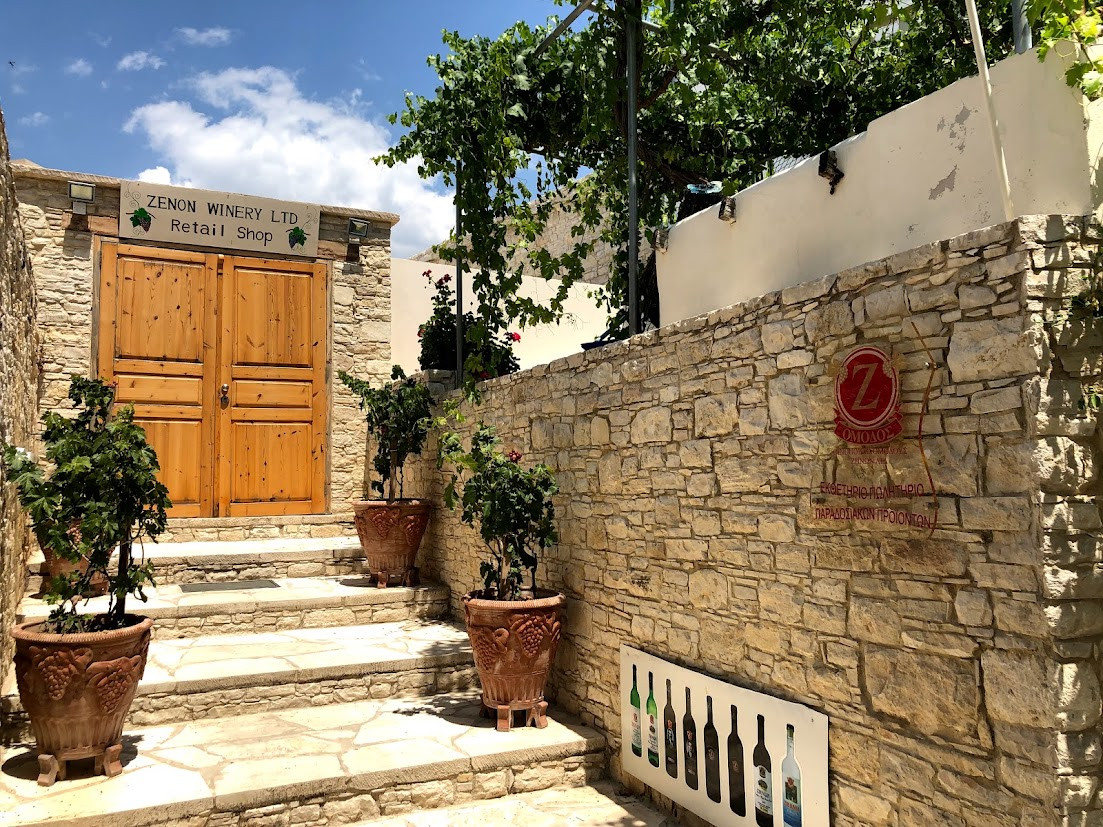
- Zenon Winery — one of the best-known wineries in the village.
- Olympus Winery — with impressive views of the Troodos Mountains.
- Linos Winery — a classic example of Omodos winemaking.
- Ktima Gerolemo — a family winery with a long history.
- Oenou Yi Winery — a modern approach to traditional grape varieties.
Wine tastings at most wineries are free or cost only a symbolic amount. Be sure to buy a bottle to take home — you are unlikely to find the same wine in an ordinary supermarket.
7. Eat at tavernas where they cook as if you were family
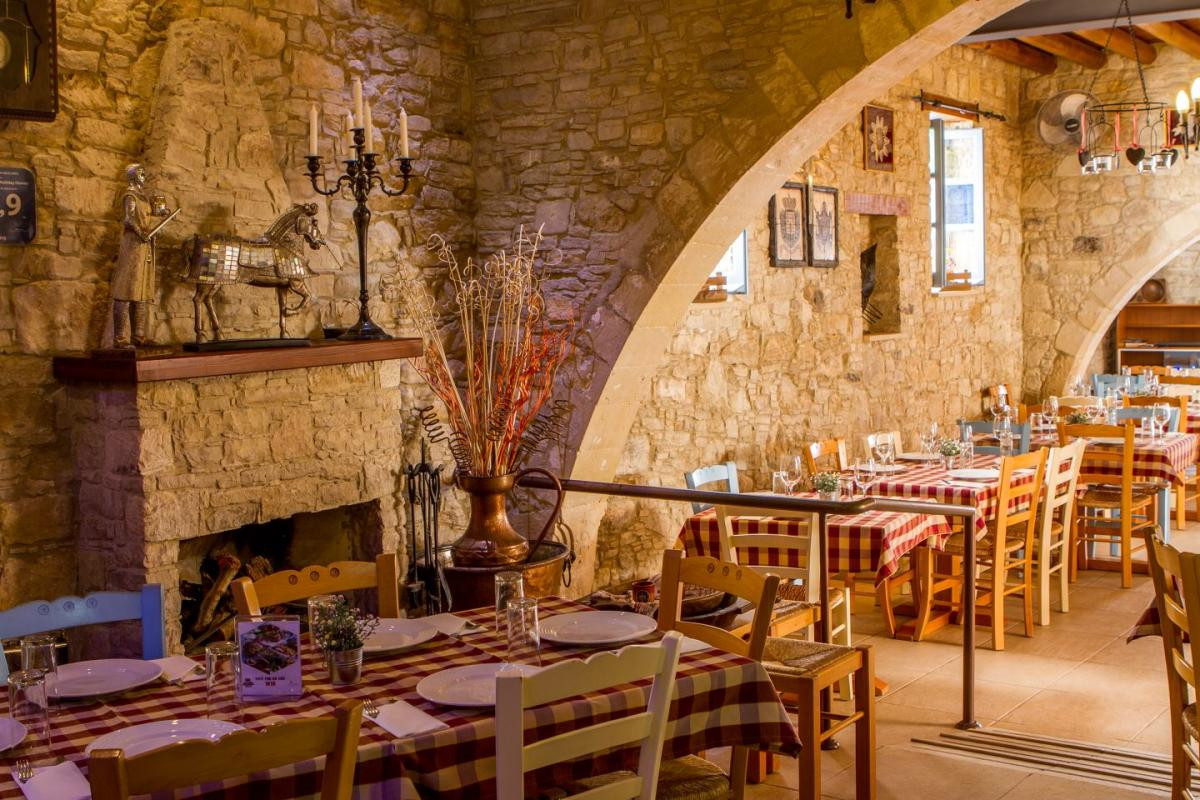
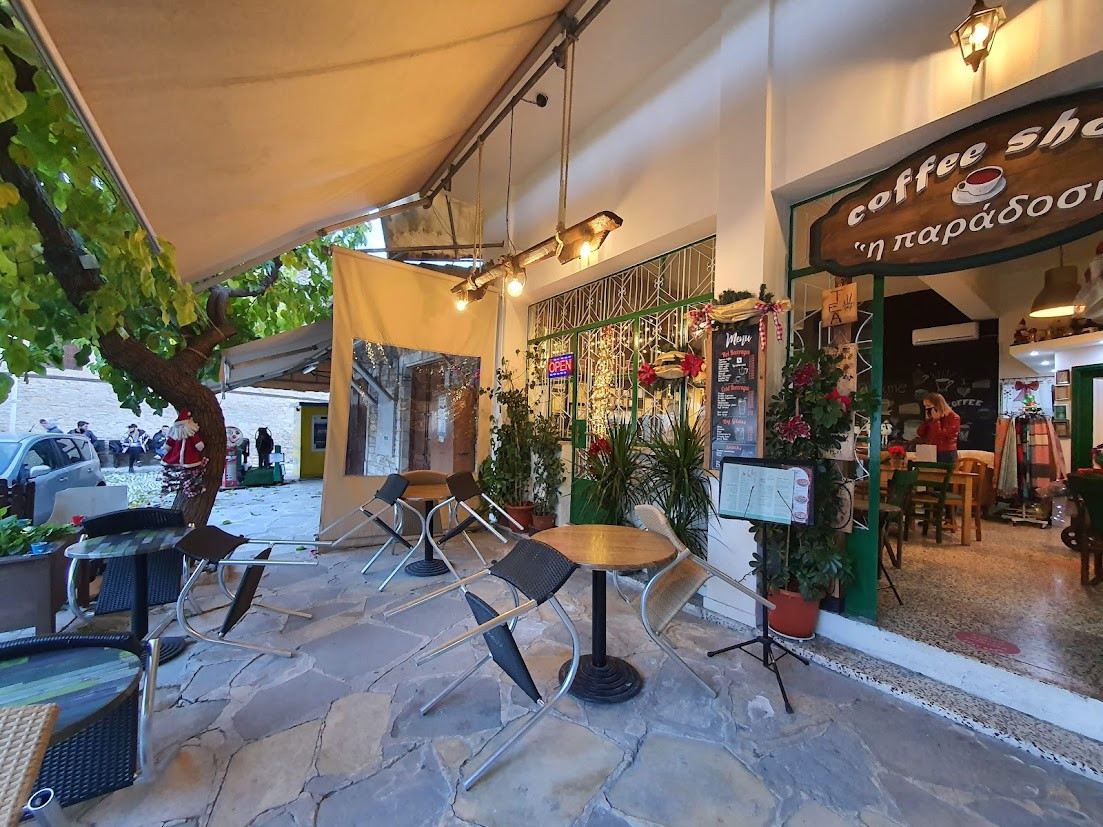
Omodos is not only about wine, but also food. The central square and surrounding streets are home to tavernas serving authentic Cypriot dishes without adapting them for tourists. Taverns worth visiting include:
- Kyr Yiannis — a legendary taverna with signature dishes, located right in the village.
- Makrinari — a place with live music where people often dance late into the night.
- H Taverna Tou Themistokli — a time-tested classic.
- The Black Geese — a good choice for dinner with live music.
- Ampelothea — just outside the village, serving Cypriot and international cuisine.
If you want something quick and tasty, you can find excellent souvlaki on the square at Kamara and Themelio.
8. Enjoy loukoumades with Cypriot coffee on the square
A classic Cypriot habit is to sit on the square after lunch with a cup of strong coffee and a plate of hot loukoumades (honey-soaked doughnuts). In Omodos, the perfect place for this is Platia Cafeteria directly opposite the monastery. This is more than just a snack. It is a ritual. Sit down, order a coffee, watch the people, the monastery and the mountains in the distance. Time really does slow down here.
9. Try arkateno — the bread baked in Omodos
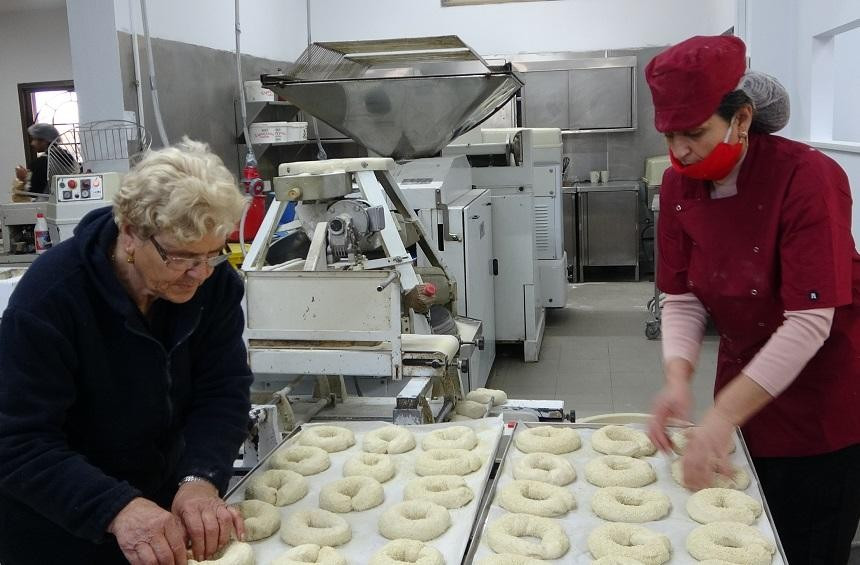
A bread roll known as “arkatena”, made using a chickpea-based starter, is one of Omodos’s signature treats. The recipe for this type of bread has been recognised as intangible cultural heritage and placed under UNESCO protection.
The guardian of the original recipe and family know-how is grandmother Fotini from the Hadjistasou family, who has been baking for more than 70 years. She remembers how her mother baked large batches of arkatena rolls while her father took them to Platres and Nicosia. Fotini’s working day began at 3–4 in the morning; afterwards she went to school, and after lessons she also helped her mother at home. Although her parents began producing arkatena in Omodos in 1935, the flourishing of the business is closely associated with Fotini herself, after whom the bakery selling the famous baked goods is named.
10. Spend the night in a restored traditional house
Omodos is not just a place for a day trip. To really experience the village, you should stay overnight. Once the tourist buses leave, Omodos changes: it becomes quiet, warm and intimate. Accommodation options include:
- Stou Kir Yianni Guest Houses — traditional houses in the village centre.
- Omodos Katoi Holiday Homes — apartments in an authentic traditional style.
- Omodos Village Houses — private houses for families and couples.
In the morning, you will wake to the sound of church bells and the smell of freshly baked bread — possibly the best alarm clock you will ever have.
11. Get away from the tourist crowds
Omodos is popular, but not so much that it has lost its identity. Unlike Paphos or Ayia Napa, there are no overwhelming crowds, no endless souvenir stalls selling magnets, and no feeling of being on a tourist conveyor belt. It is a village that continues to live its own life and simply lets you look inside — gently and without pressure. You can spend two days here without ever feeling that you are being “served”. You are simply here. And that is enough.
Practical information
How to get there: The easiest option is to rent a car and drive from Limassol — around 45 minutes along the B8 towards Platres, then follow the signs to Omodos. Free parking is available at the entrance to the village, with space for around 80 cars. Public transport is limited: EMEL buses from Limassol (routes 40 or 64) travel to Platres, where you need to change to a local bus. There are only 2–3 services per day, with the first usually departing at around 9:00.
When to go: September is the best month because of the Feast of the Exaltation. Spring (April–May) is also a good time to visit: the vineyards turn green and the weather is mild. Summer is hot, although temperatures in the mountains are cooler than on the coast.
How much time you need:Half a day is enough to see the main sights. But the real Omodos reveals itself to those who stay overnight. If possible, plan for two days.
Here, time is measured not in hours, but in bunches of grapes, the sound of church bells and the smell of fresh bread. Slow down, drink some wine, listen to the silence, look into a past that is still alive here — and Omodos will stay in your heart forever.
Read also:
- Lefkaritika: Cypriot Lace That Conquered the World and Became UNESCO Heritage
- Taxis in Cyprus: Apps, Prices and How to Book
- Winter in Cyprus: Does It Snow and How Cold Does It Get?
- Top 10 New Developments in the Government-Controlled Areas of Famagusta Due for Completion in 2026
- Top 10 New Developments in Paphos Due for Completion in 2026