
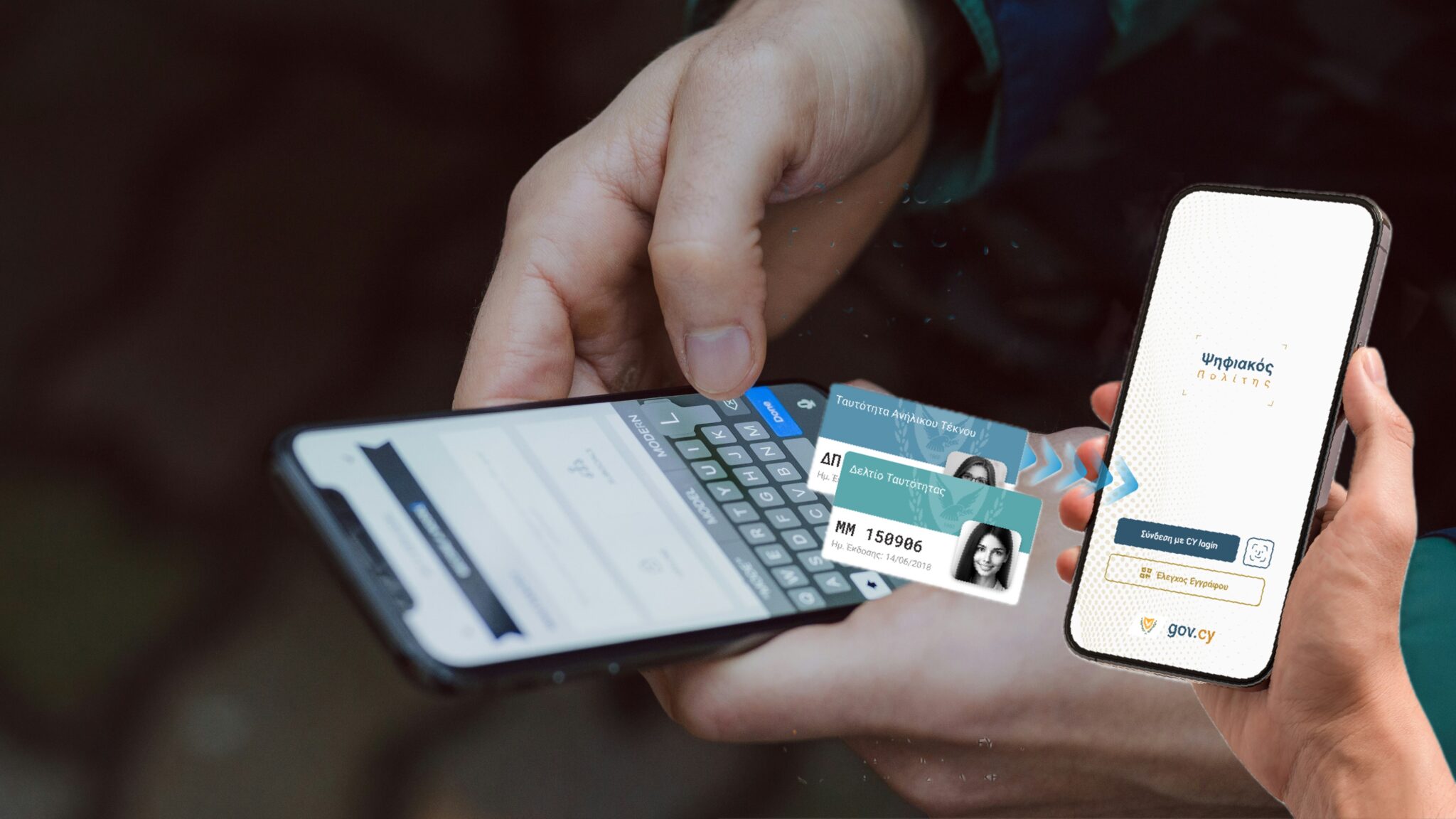
Not everyone knows that foreign nationals living in Cyprus can use the government’s Digital Citizen app just like Cypriot citizens. Here is how to gain access to the digital service, which documents can be added to the app, and what new features are expected after its upcoming upgrade.
What is Digital Citizen and who can use the app in Cyprus?
Digital Citizen is the official mobile application of the Government of the Republic of Cyprus designed for storing and presenting digital versions of government-issued documents. Its purpose is to simplify the everyday use of documents and gradually move more government services into digital form. The app is not limited to Cypriot citizens. Foreign nationals who legally reside on the island can also create an account and access the functions available to them. The main requirement is to register through the government CY Login system and verify your identity in accordance with the established requirements.
For foreign nationals, the registration procedure differs from that used by holders of a Cypriot ID card. Instead of a national ID number, foreigners use an ARC — an identification number assigned to foreign nationals within Cyprus’s registration system. A relevant residence document or residence permit may also be required to verify identity. However, it is important to understand that gaining access to the app does not mean that foreign residents will immediately have access to every digital document available to Cypriot citizens. Available functions depend on the user category and on which documents are already supported by the system.
What is an ARC and why do foreign residents need it for registration?
An ARC is a number linked to the registration of a foreign national in Cyprus. It is used in administrative procedures and helps identify a person within government systems. In the context of Digital Citizen, this number is used instead of a Cypriot ID number. Foreign residents should not confuse an ARC with a passport number, visa number, or residence permit card number. These are different identifiers that may be used for different purposes. If registration requires an ARC, the relevant identification number should be entered rather than substituted with information from a passport or residence permit.
The supporting document is also important. When creating a CY Login profile, foreign nationals must follow the identification procedure intended for them, using their ARC and the relevant residence document. Specific requirements may depend on the type of document issued to the user and the verification methods available in the system at the time of registration. If someone has recently moved to Cyprus, received a new document, or renewed a residence permit, it is worth checking that the details match those held in government systems before registering. An error in the number, first name, last name, or other identifying information may prevent profile verification or access to certain functions.
It is especially important to enter information accurately if a person’s first and last names are transliterated differently across various documents. Users should not alter the spelling themselves or enter alternative details in an attempt to pass verification. If the information does not match, it is better to check the requirements with the support service of the relevant government system. Having an ARC by itself does not automatically provide access to all Digital Citizen features. A verified CY Login profile is required to use the app, and the documents available depend on current rules and service functionality. Registration should therefore be viewed as a two-step process: first, creating and verifying an account, and then connecting supported digital documents.

How to register for CY Login and access Digital Citizen
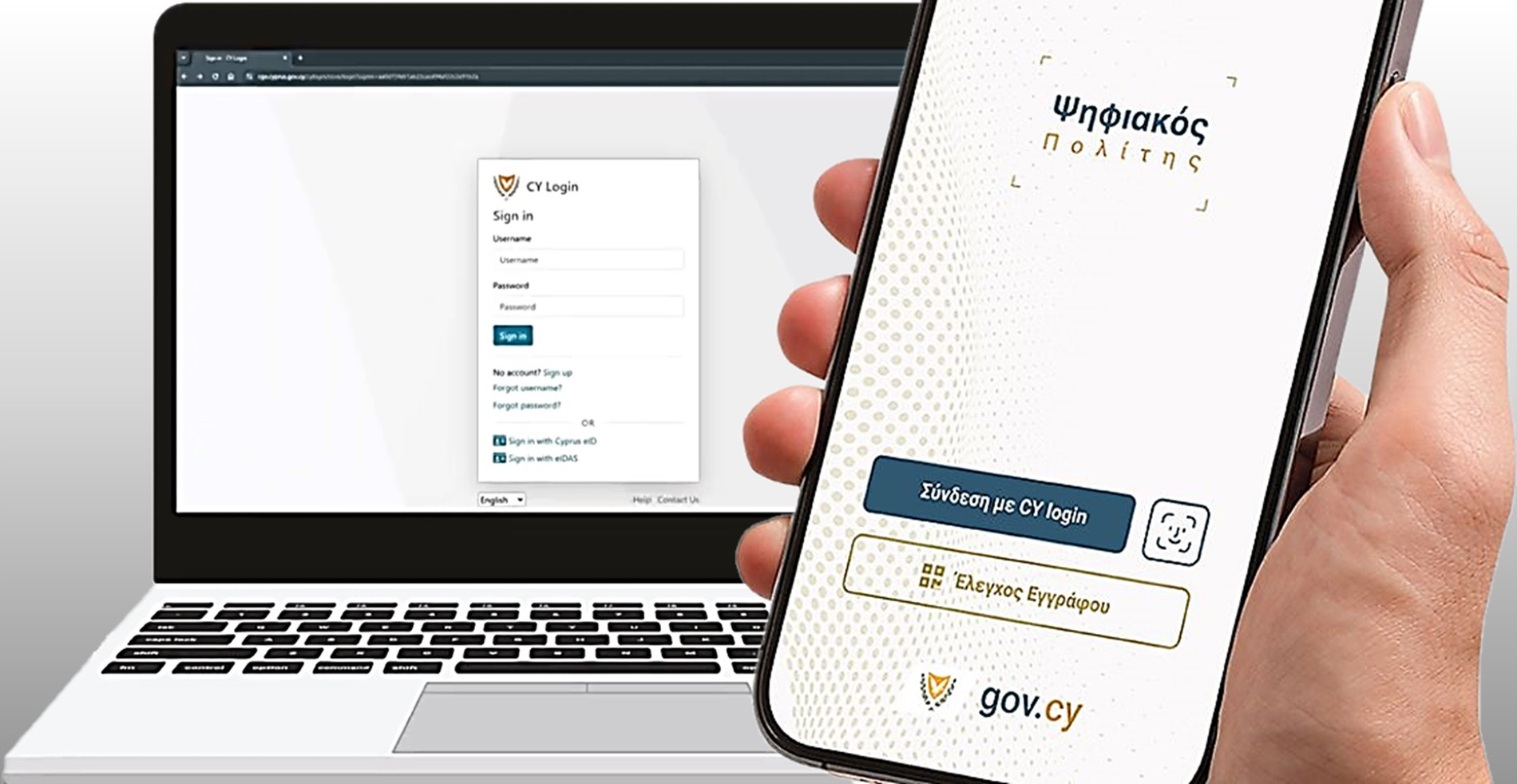
CY Login is the government account system through which users access various electronic services in Cyprus. A verified CY Login profile is required to use Digital Citizen. In addition, the app requires two-factor authentication, also known as 2FA.
The first step is to check whether you already have an active CY Login account. If you already use Cyprus government e-services, a profile may have been created previously. In that case, there is no need to create a second account unnecessarily. First, make sure the existing profile is verified and meets the requirements for Digital Citizen. If you do not have an account, you need to register through the official CY Login service. Foreign nationals should select the option intended for them and use their ARC together with a residence document or residence permit. During registration, carefully follow the on-screen instructions and enter information exactly as shown in your documents.
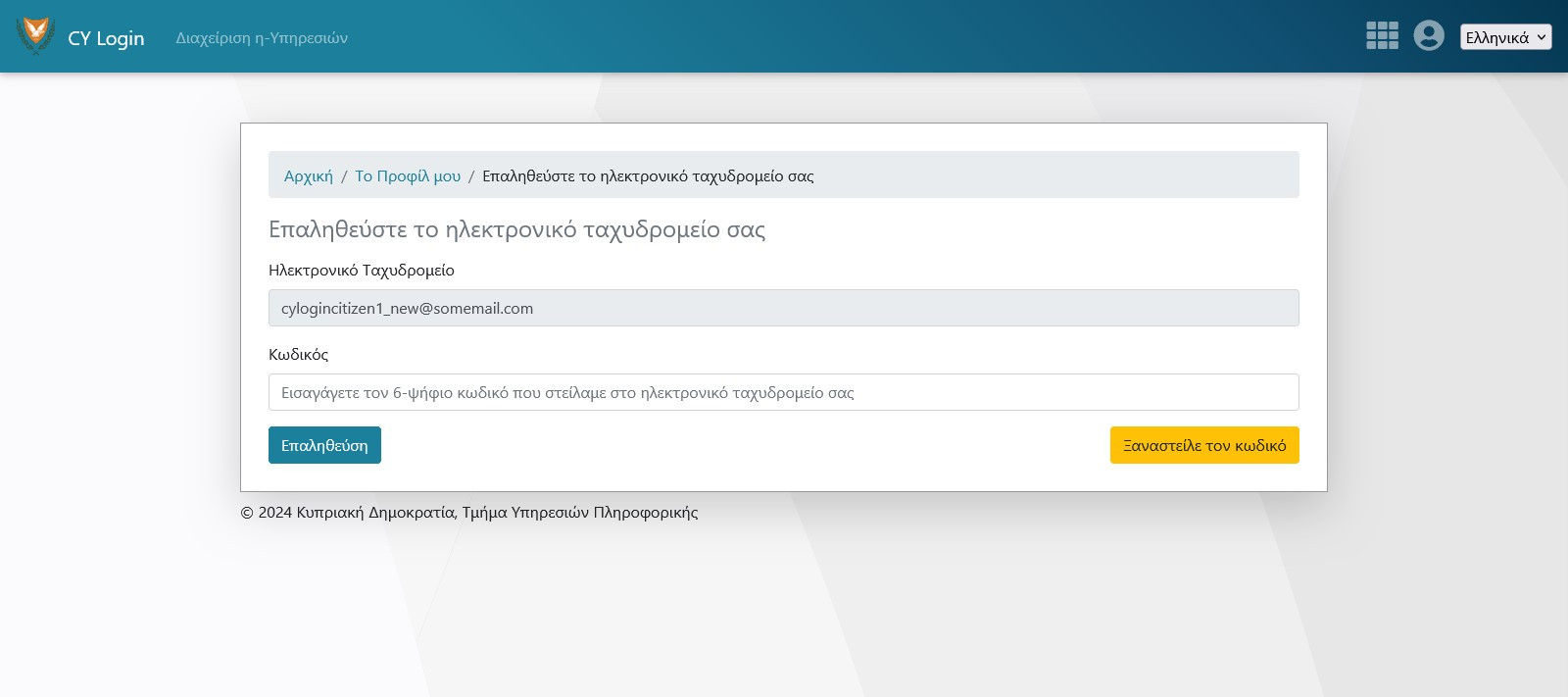
After creating a profile, you must complete identity verification. Simply filling in the registration form may not be enough: Digital Citizen requires a verified profile. If the system offers an additional verification method, this step should be completed before proceeding to the app.
The next step is to enable two-factor authentication. This feature improves account security by requiring an additional verification method beyond the standard login credentials when signing in or confirming certain actions. If 2FA has not yet been activated, it must be set up according to CY Login instructions. The official Digital Citizen website also states that two-factor authentication can be enabled through the app itself after completing the required initial steps.
Once the CY Login profile has been verified and two-factor authentication is active, you can install Digital Citizen on your smartphone. The app should only be downloaded from an official source to avoid fake applications and prevent personal data from being shared with third parties. After installation, open Digital Citizen and sign in using your CY Login account. If login is successful, follow the instructions in the app. Available functions and documents will depend on your user status and the current capabilities of the service.
If you cannot log in, do not immediately create a new profile. First check that your information is correct, that identity verification has been completed, and that two-factor authentication is properly configured. If the problem is related to the ARC or identity verification, you may need to update or clarify your information in CY Login or contact the relevant support service.
Which documents can foreign residents add to Digital Citizen?
Digital Citizen functionality is gradually expanding, but the options currently available to foreign residents differ from those available to Cypriot citizens. At this stage, foreign residents can access a digital MOT vehicle inspection certificate and a Fan Card. Adding a residence document or residence permit has been announced as the next expansion of the app.
MOT is the vehicle roadworthiness inspection certificate. If the relevant document is available to a user in the app, it can be stored digitally on a smartphone. This can be convenient for everyday use because it provides quicker access to the information without having to locate the paper document each time. However, the ability to add an MOT certificate depends on whether the vehicle and the relevant information are linked to the user’s data in a supported government system.
The second document available to foreign residents is the Fan Card. It is used for attending sporting events in Cyprus and is connected to the rules governing entry to stadiums. The application procedure for foreign nationals differs from that for adult Cypriot citizens.
A foreign national must first obtain a Fan Card through the official fancard.cy website. Once the card has been issued, it can be added to Digital Citizen if the app’s requirements are met and the document is available for linking. In other words, registering with Digital Citizen does not replace the process of obtaining the Fan Card itself: the card must first be issued through the established procedure and can then be added to the app.
The Fan Card is particularly useful for people who regularly attend soccer matches and other sporting events. Depending on the current rules, it may be required to purchase tickets or enter a stadium. Age requirements and application procedures should be checked against the latest rules of the Cyprus Sports Organisation and the official Fan Card information.
A separate issue is the digital residence document. Authorities previously announced plans to allow foreign nationals to add the relevant document to Digital Citizen by the end of October or beginning of November 2026. As of October 15, this should be treated as an announced plan rather than confirmation that the feature is already available to every user. The actual launch date and the list of supported documents should be checked on the app’s official website.
The list of documents may expand further in the future. However, users should not assume that every document issued in Cyprus can already be uploaded to Digital Citizen. The app works with specific categories of data and documents that must be technically supported and available for verification through government systems.

What will change after the Digital Citizen upgrade and the introduction of the European digital wallet?
Cyprus plans to significantly expand Digital Citizen’s capabilities. In September 2026, the government published a tender for the upgrade, maintenance, and support of the app, as well as the integration of the European Digital Identity Wallet, or EUDI Wallet. The estimated value of the project is €9.778 million excluding VAT. This is the estimated tender value, not the final amount of a signed contract. The previous stage of the app’s development cost the government approximately €1.5 million. The higher estimate for the new project reflects its broader scope: the work includes not only an interface upgrade but also new functions, additional documents, infrastructure, cybersecurity, and long-term technical support.
According to the published terms, the project will run for five years and includes further app development, implementation of the European digital wallet, migration of the system to the government’s G-Cloud infrastructure, development and support of new functions, cybersecurity measures, recovery from major outages, a user support platform, and staff training. One goal of the upgrade is to make Digital Citizen a more universal tool for interacting with government agencies and private organizations. Users are expected to be able to access more digital documents, provide verified information, and complete certain administrative procedures directly through the app.
Planned features include the creation of certified PDF copies of digital documents with QR codes for authenticity verification. Such files could be provided to organizations that need to verify a document, such as banks. The system is also expected to support electronic consent for sharing certain personal information with authorized third parties.
The planned expansion of available documents may affect different categories of users. Project materials mention refugee IDs, parking permits for people with disabilities, the European Disability Card, birth certificates, driver’s license penalty point information, and property information. These features should not be treated as already available: they are part of the planned development of the app and are expected to be introduced gradually.
In the future, users may also be able to update certain personal and contact details through the app, receive notifications when documents are about to expire, and track the progress of applications submitted to government agencies. If these functions are implemented as planned, Digital Citizen could become a much more convenient tool for everyday administrative tasks.
An important part of the project is the integration of the EUDI Wallet — the European Digital Identity Wallet. Its purpose is to provide secure identity verification and the exchange of verified digital data in line with European requirements. According to published information, Cyprus plans to prepare its national solution during 2027. This will require completion of technical integrations, security and compatibility testing, as well as the necessary assessment and certification procedures.
The implementation timeline depends on the results of the technical work and completion of mandatory checks. Therefore, 2027 should be viewed as a planned target rather than a guarantee that all functions will launch on a specific date. For users, this means that Digital Citizen’s capabilities will expand gradually and that the list of available documents may change as the project progresses.

Security, legal validity of digital documents, and common problems
When using Digital Citizen, it is important to consider not only convenience but also the rules governing digital documents. The app’s official website states that digital documents created through the service may have the same legal validity as their corresponding physical documents for lawful use within the Republic of Cyprus. However, this applies to supported documents and under the established conditions of use.
Digital Citizen documents are not international travel documents. Having a document in the app does not mean it can be used instead of a passport when crossing a border or traveling outside Cyprus. For international travel, users must follow the requirements of the destination country, airline, and border authorities. The authenticity of digital documents can be verified using a QR code. This mechanism allows the recipient to confirm that the document was actually created through the official system. At the same time, users should be careful when sharing copies and personal data and should provide them only to organizations that genuinely need the information.
As part of the Digital Citizen upgrade, particular attention is being paid to personal data protection and cybersecurity. The project includes vulnerability checks, risk assessments, penetration testing, incident-response procedures, and infrastructure for recovery after outages. The European digital wallet will also have to undergo the assessment and certification required under European rules before full deployment. Nevertheless, security also depends on the user. CY Login passwords, two-factor authentication codes, and other information that could provide access to an account should never be shared with others. Users should also avoid installing the app through links in suspicious messages or providing documents to unknown intermediaries promising to speed up registration.
If a foreign national cannot register, the first step is to check that the ARC has been entered correctly and that CY Login identity verification has been completed. Next, make sure two-factor authentication is enabled and that the official version of the app is being used. If the problem occurs when adding a particular document, the reason may be that the document is not yet supported for that category of users or that its details are not available for automatic verification.
If the Fan Card does not appear in Digital Citizen, check whether it was issued through fancard.cy and whether the information used during the application matches the data held in government systems. Official guidance also recommends contacting the Cyprus Sports Organisation regarding restrictions or problems connected with the Fan Card.
For technical issues, users should rely on the official Digital Citizen and CY Login support channels. Attempts to bypass identity verification or create multiple accounts with different information may make the problem more difficult to resolve.

In summary, foreign nationals living in Cyprus can already use Digital Citizen if they have a verified CY Login profile, an ARC number, and activated two-factor authentication. At the initial stage, selected features are available, including MOT and the Fan Card, while expansion of the document list — including the ability to add a residence document — has been announced as the next stage of the service’s development. Over the coming years, the app is expected to become a more comprehensive digital tool for interacting with government services and private organizations.
Read also:
- Rules for Residential Complexes in Cyprus — What You Need to Know
- Taxis in Cyprus: Apps, Prices, and How to Book
- Buying Used Furniture and Appliances in Cyprus — Marketplace Checks, Delivery, and Red Flags
- Curium Palace in Limassol: The Story of an Iconic Hotel Demolished for a New Project
- UV Index and Wind in Cyprus — How to Read the Weather Forecast