
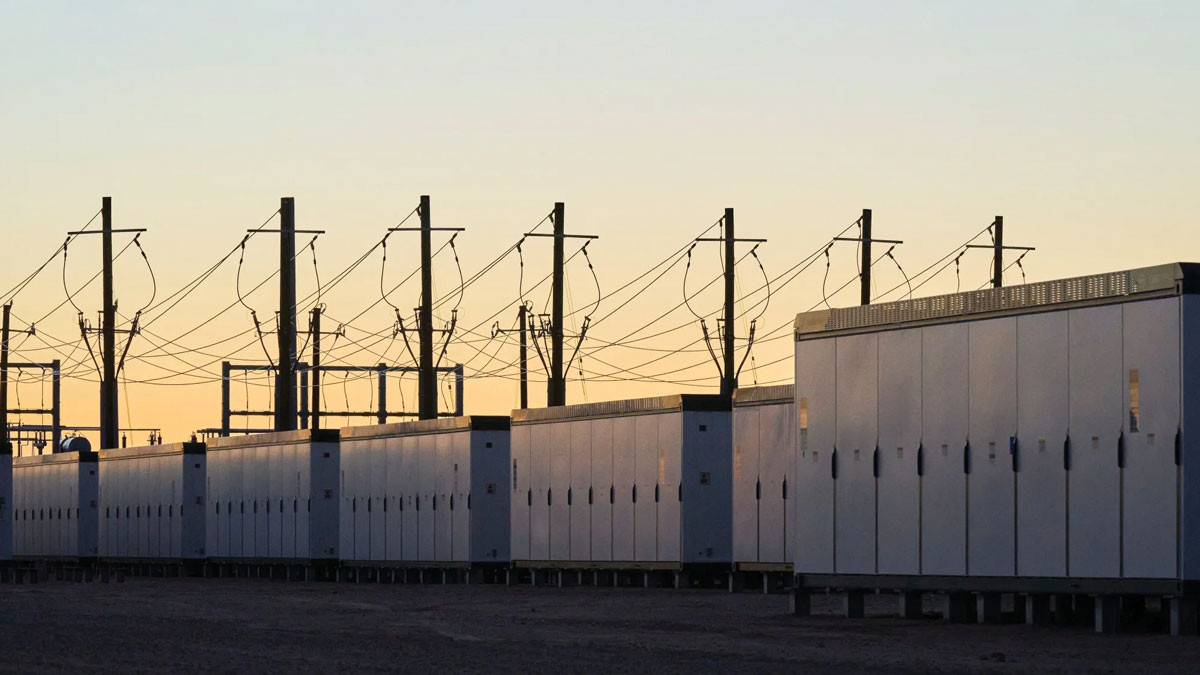
The Electricity Authority of Cyprus (EAC) plans to build large-scale energy storage systems at the Dhekelia and Moni power stations. Their main purpose is to reduce the amount of electricity that has to be curtailed or lost during periods of peak solar power generation. According to EAC representative Christina Papadopoulou, the system in Dhekelia will have a capacity of 80 MW and a storage capacity of 160 MWh. The contract is valued at €33,733,640. The project is expected to become operational in September 2027.
The contract for the construction of the system was signed with telecommunications company Cyta in February 2026. In practice, the storage facility will charge during periods when solar power production exceeds current demand and then feed the stored electricity back into the grid when it is needed.
An even larger system will be built in Moni
The project at the Moni power station will be larger. Its parameters will be:
- capacity — 100 MW;
- storage capacity — 200 MWh;
- estimated cost — around €50 million;
- construction period — around 1 year.
According to Papadopoulou, work is expected to begin around the start of 2027. The Cyprus Energy Regulatory Authority (CERA) has already issued a construction permit. EAC has also submitted an application to the electricity transmission system operator for connection terms. At the same time, the Cyprus Department of Environment is expected to publish an environmental impact assessment report for the project. The Limassol District Administration, for its part, is still completing the review of the planning application.
Why Cyprus needs energy storage
The issue of energy storage is becoming particularly important against the backdrop of the rapid growth of solar power in Cyprus. During periods of peak solar generation, electricity production can exceed both grid capacity and current demand. As a result, some renewable energy production has to be curtailed. This is why Cyprus needs to expand its storage capacity: electricity generated during the day can be stored and then used in the evening, when solar generation drops sharply.
The need to accelerate the development of storage infrastructure has also previously been highlighted by the Cyprus Chamber of Commerce and Industry (KEVE). The organisation called for more active construction of storage facilities in order to maximise the use of renewable energy and reduce the curtailment of solar power generation. In addition, KEVE proposes accelerating the use of natural gas for electricity generation, upgrading transmission and distribution networks, increasing investment in the energy efficiency of homes and businesses, and simplifying licensing procedures for energy and renewable energy projects.
Authorities promise further reductions in electricity bills
The Cyprus government also links the development of energy storage and renewable energy with a gradual reduction in electricity costs. Government spokesman Constantinos Letymbiotis previously stated that electricity prices are already falling. According to Eurostat data, the cost of electricity in Cyprus is now 15% lower than in 2024.
At the same time, the government has reduced VAT on electricity from 19% to 9% until March 2027. Support for electricity bills covers more than 429,000 households and 106,000 businesses.
In addition, the state provides subsidies for the installation of solar panels, thermal insulation and improvements in residential energy efficiency. For Cyprus, the development of storage facilities is becoming one of the key elements of the energy transition: the more solar-generated electricity that can be stored and used, the lower the power system’s dependence on conventional generation will be, and the more efficiently the island will be able to use its own renewable energy potential.