
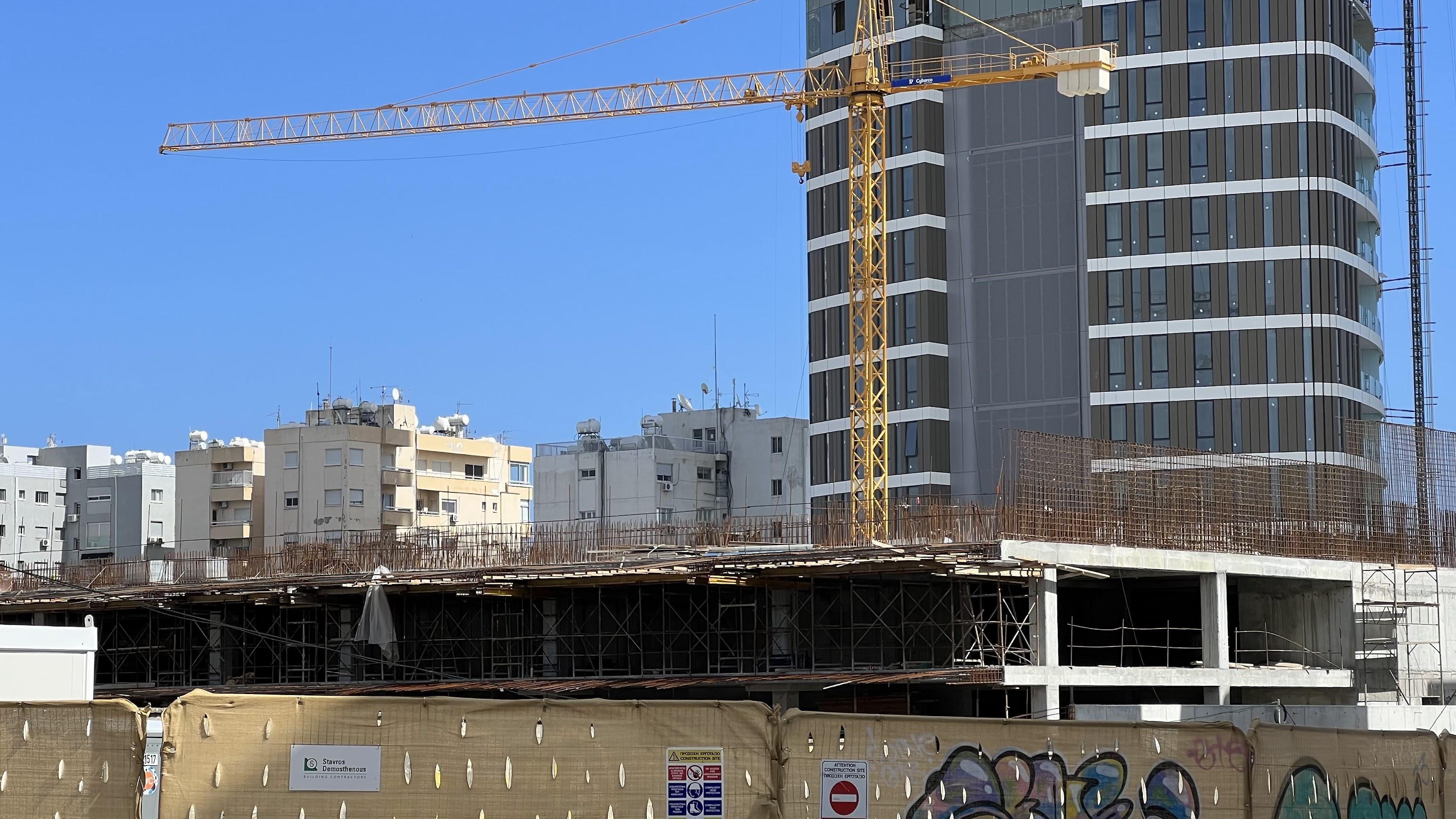
The Statistical Service of Cyprus (Cystat) has reported a decline in the number of construction permits issued between January and August 2025. These figures point to a slowdown in the approval process; however, despite the reduction in permits, the total value and scale of construction activity are increasing. This trend reflects a shift in market structure, with a growing focus on larger and more capital-intensive projects.
August 2025 Figures
According to Cystat, 647 construction permits were issued in August 2025. These permits cover projects with a total value of €252.8 million and a combined construction area of 213.2 thousand square meters. They provide for the development of 1,147 residential units, confirming that demand for residential property remains resilient despite the decline in the number of approved applications.
Comparison with 2024
During the first eight months of 2025, a total of 4,842 construction permits were issued in Cyprus. By comparison, 5,062 permits were issued over the same period in 2024, representing a decrease of 4.3%. At the same time, total investment in construction projects increased by 12.3% year-on-year, while the total floor area of approved projects grew by 16.1%. The number of residential units authorized for construction also rose, increasing by 14.6% compared with the first eight months of 2024.
Reform of the Permitting System
Cystat also highlighted important institutional changes affecting the licensing process. From 1 July 2024, responsibility for issuing construction permits was transferred from municipalities and district administrations to the newly established Local Government Organizations. Permits are now processed through the integrated information system Ippodamos, which is designed to speed up procedures and improve transparency in decision-making.
What This Means for the Cypriot Real Estate Market
Real estate market experts note that the transition to digital procedures and the shift toward larger-scale projects have temporarily reduced the number of formally issued permits, while simultaneously increasing their average value and scale. This trend is particularly evident in the residential and investment property segments, where developers are prioritizing comprehensive projects with larger areas and modern infrastructure. In the long term, local government reform and digitalization through the Ippodamos system may lead to a more stable and predictable development of Cyprus’s construction sector.