
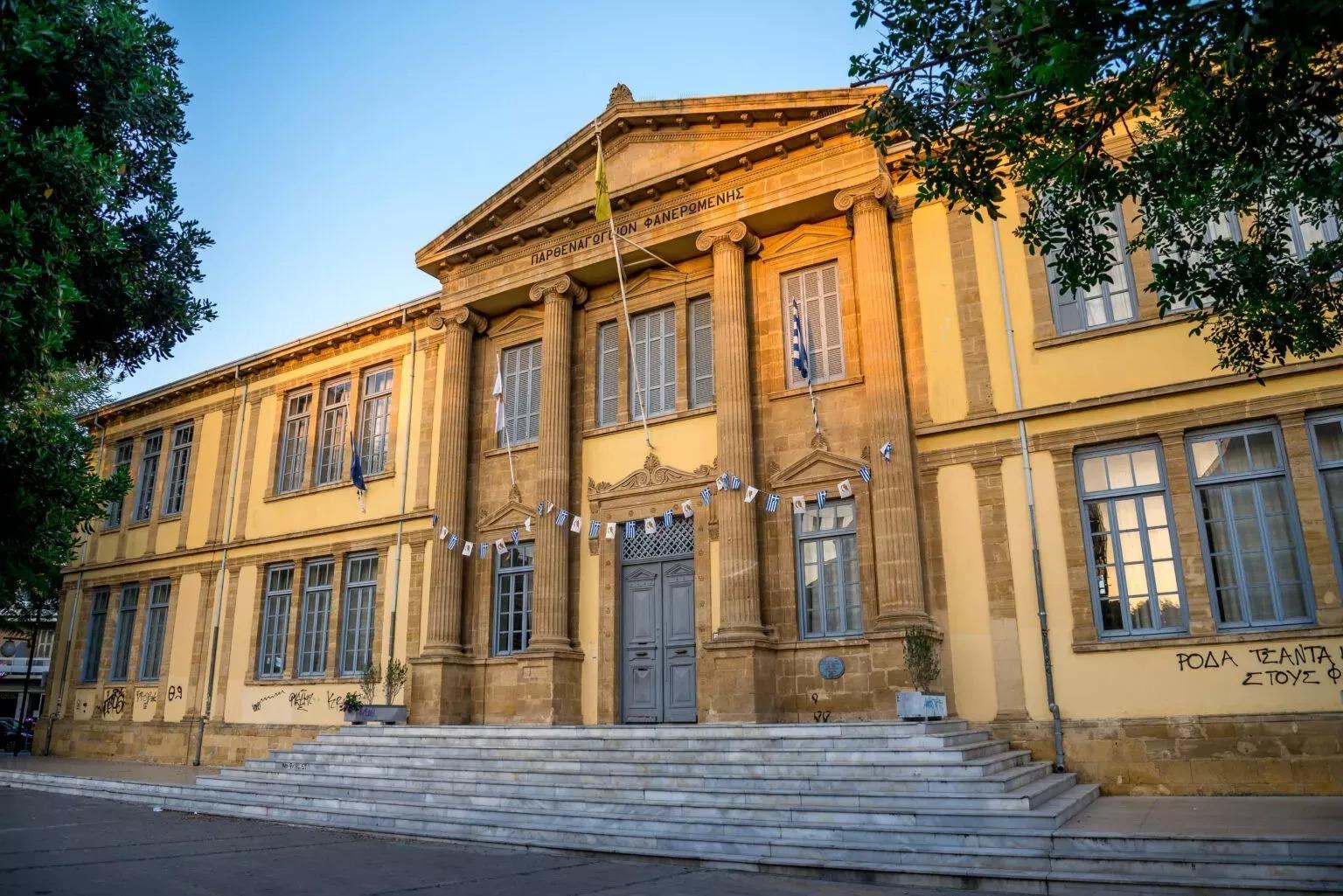
Five years have passed since the agreement was signed for the large-scale reconstruction of the historic Faneromeni School in the center of Nicosia. Yet the ambitious project has never begun. The plan was to modernize the building for use by the Architecture School of the University of Cyprus, and to construct additional facilities and student housing nearby. The state had agreed to lease the property from the Archdiocese for 33 years and to finance the construction of a new building behind the school. Around €5 million had been allocated for the initial restoration phase.
According to the Cyprus Architects Association, despite the formal long-term lease, the building has stood idle for all these years and is gradually falling into disrepair. Lack of coordination and prolonged disagreements between the parties have led to a complete impasse.
Why the Disagreement Arose
The key reason was the Ministry of Finance’s decision to withdraw funding for the new building, which was intended to expand the functional capacity of the future architecture school. Archbishop Georgios stated that without this additional facility, the university would be unable to operate a proper architecture program — the old building is too small for such purposes.
At the same time, according to the Archbishop, the university altered its original plans and now wishes to use the building not for the architecture faculty, but as a space for administrative and research activities. This contradicts the terms of the agreement. The Archbishop noted that if the university intended to host a different academic program, the project could be adapted — but its current intentions fall outside the scope of the contract.
A Possible Alternative Solution from the Church
Given the situation, the Archdiocese is considering an alternative: opening its own school in the building. This could be a primary or secondary institution with a strengthened curriculum in Greek language and history. According to the Church’s plan, such a school would provide a foundation for students who may later pursue theology or philology. This scenario would allow the building to serve an educational purpose again, albeit not the one envisioned five years ago.
The Significance of the Building for Nicosia and Architects’ Appeal
The Faneromeni School is one of the symbols of historic Nicosia. Architects emphasize that its restoration and return to educational use could become a powerful catalyst for revitalizing the Old City. It would attract more young people, student initiatives, and new businesses, which would positively influence the urban environment.
Conversely, abandoning the project may slow the development of the historic center, where several initiatives have been underway in recent years to attract universities and research institutes. Architects are urging all parties to return to the negotiating table, resolve the disagreements, and preserve the original vision for transforming the building.
Current Situation
As of today, the Faneromeni School remains empty. Negotiations between the parties continue, but so far without concrete results. Meanwhile, new educational clusters are opening in Nicosia, making the question of this building’s future increasingly important both culturally and socially.