
The dispute over tourist development of the coastline between Sotira and Liopetri has officially reached Parliament. After a tense discussion, the Parliamentary Committee on Trade decided to summon the Ministers of Agriculture and the Interior, demanding clear answers, specific decisions, and a concrete timeline. MPs emphasized that the uncertainty surrounding coastal projects is already negatively affecting the region’s economy and the investment climate.
Ecology versus investment
The key cause of the conflict remains environmental restrictions linked to the protection of a rare coastal bird — the Kentish plover. Because the area has protected status, permits for tourist projects have not been issued for many years, despite investments already made and infrastructure being in place. This factor has become a serious barrier to the development of the eastern coastline, where tourism is one of the main pillars of the economy.
The committee demands specifics and deadlines
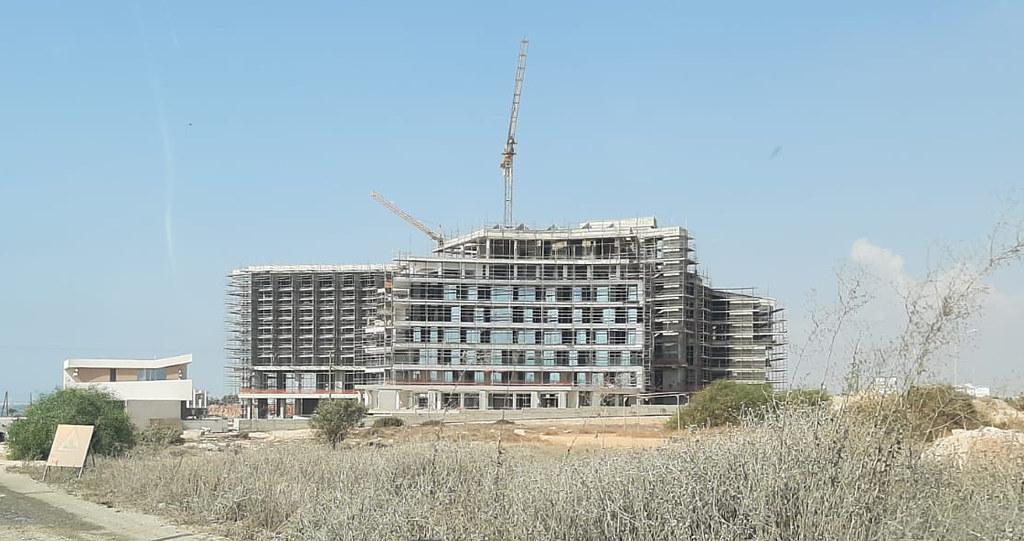
The chair of the Trade Committee, Kyriakos Hadjiyiannis, openly stated that state bodies are dragging out the process and avoiding responsibility. According to him, this leads to direct losses, since some tourist facilities stand idle without being put into operation. He noted that there are hotels in the region that have remained empty for years and are effectively used as warehouses. The committee instructed the Department of Environment to present a detailed plan of further actions within a week, including deadlines.
The position of the ministries and awaiting conclusions
The Ministry of Agriculture reported that the preparation of environmental assessments is at the final stage. Eleni Stylianopoulou, Deputy Director of the Department of Environment, explained that updated data on the projects’ impact on the protected area is currently being analyzed, including the latest field observations of the bird population. The Ministry of the Interior confirmed that permits cannot be issued without the final environmental assessment, but emphasized that the ministry generally supports regional development and tourism initiatives.
Dissatisfaction of local authorities
Municipalities and professional organizations in the free Famagusta area are increasingly criticizing the prolonged situation. Ayia Napa Mayor Christos Zannettou recalled that discussion of the local development plan has been ongoing since 2004. He noted that a significant part of the territory remains occupied, and projects on available land have been blocked for years, while construction continues actively in other parts of Cyprus.
Sotira Vice Mayor Antonis Koumis stated that state services have effectively frozen development in the Ayia Thekla area for 9 years. His colleague from Liopetri, Markos Koumis, emphasized that the region, which makes a significant contribution to the national economy, has ended up in stagnation, and the results of relevant studies have still not been implemented in practice.
Ayia Napa as a symbol of contradictions
Special attention was paid to the contrasts in Ayia Napa’s development. Vice Mayor Antonis Christou pointed to the paradoxical situation where a modern marina stands next to abandoned facilities such as the Sun City complex. He proposed revising height restrictions and allowing taller development, which would reduce building density and free up space.
Alternative approaches and doubts about equal enforcement of rules
Eleni Michaelidou, head of the Famagusta Chamber of Commerce and Industry, called what is happening unacceptable and stressed that the region has been left out of major development programs for many years. ETEK representative Alkis Dikeos drew attention to practical problems — the lack of pedestrian and cycling infrastructure and the presence of abandoned hotels.
MP Averof Neofytou proposed a compromise option whereby taller buildings would be allowed with gaps between them to enable birds to fly through, following the example of projects already implemented in Ayia Napa. At the same time, MP Kostas Costa expressed doubts that environmental standards are applied equally to all regions, hinting at a possible selective approach.
Amid growing pressure from local authorities and businesses, parliamentary intervention could become a turning point. The future of one of Cyprus’s key resort areas depends on how quickly balanced solutions are found between nature protection and tourism development.