In recent years, Cyprus has set an ambitious goal: to make the country more attractive to international companies and skilled professionals. To achieve this, the government introduced tax incentives, simplified administrative procedures and improved the overall business environment. At the same time, additional opportunities were created for Cypriots living abroad to return to the island and work here.
The strategy has produced results. More international companies and jobs have appeared in Cyprus, while the economy has become more diversified. But economic growth has also created a new problem: all these people need somewhere to live.
This is especially noticeable in Limassol. The city has become one of the main centers of international business in Cyprus, attracting professionals, entrepreneurs and entire families at the same time. When the number of jobs and residents grows faster than the housing supply, the rental problem stops being purely social and begins to affect the economy directly.
In its housing annex to the 2026 report, the European Commission notes that rents in Cyprus are rising faster than property prices. The main reasons are strong demand and a limited supply of homes available for long-term rent. At the same time, the situation is not the same across the island. Most of the pressure is concentrated in several cities. Housing prices in Limassol, Paphos and Larnaca are around 39% higher than the Cyprus average.
The pressure on renters’ incomes is particularly noticeable in Limassol. In 2025, Cypriot households renting in the city spent an average of around 22% of their income on rent. This is roughly in line with the European average. Cyprus as a whole therefore does not face the same level of rental affordability problems in every region. The main difficulty is concentrated in specific cities and in a specific segment — primarily long-term rental housing.
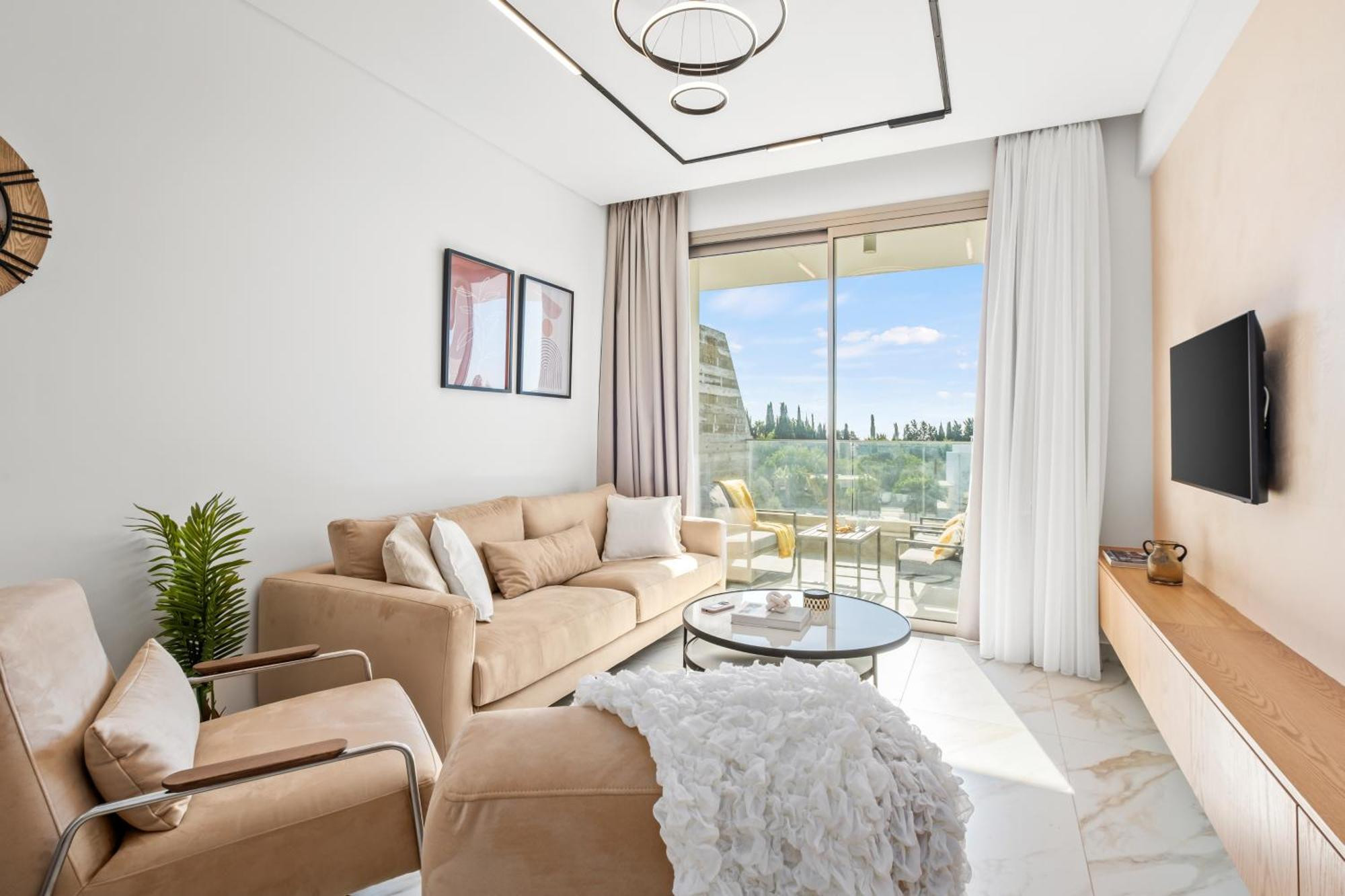
Cyprus needs not just more homes, but the right kind of housing
The housing supply shortage in Cyprus is estimated at around 39,000 units. However, the problem is not only the number of apartments and houses. The type of housing also matters.
Today, the long-term rental market in Cyprus depends heavily on private landlords who usually own one or two apartments. There is almost no organized supply of housing specifically built for long-term rental. The European Commission also points to the extremely small share of housing owned by the state or nonprofit organizations and rented out below market rates. Across Europe, this sector accounts for roughly 1 in 12 homes on average, while in Cyprus it is virtually nonexistent.
For a rapidly growing city, this becomes a serious problem. Imagine a company opening an office in Limassol and bringing 50 employees to Cyprus. If the company does not have its own housing stock, every employee has to search for an apartment independently. If families are involved, the situation becomes even more difficult. Dozens of new residents enter the same rental market at the same time, where local residents and other foreign professionals are already searching for housing. This is why increasing the supply of long-term rental apartments is becoming part of economic policy.
The situation in Limassol is particularly illustrative. In July 2026, the average rent for a 1-bedroom apartment was estimated at around €1,000–€1,100 per month, while a 2-bedroom apartment cost around €1,400–€1,500. For comparison, in Nicosia the figures were €600–€650 and €800–€900, in Larnaca €500–€600 and €700–€800, and in Paphos €500–€550 and €700–€800, respectively.
At the same time, the Limassol rental market is showing signs of stabilization in 2026. According to the Council for Registration of Real Estate Agents, rental rates did not increase during the year. One factor was the growth in the supply of long-term rental properties, including homes that owners moved from short-term to long-term rental. However, high rental costs remain a problem for companies, workers and families planning to relocate to the city.
Build-to-Rent could connect the housing market with the economy
One possible solution is the Build-to-Rent model — the construction of residential developments specifically for long-term rental. Unlike standard projects, where apartments are primarily built for sale to individual owners, Build-to-Rent involves centralized management of an entire building and a long-term rental strategy. This model has several important advantages:
- First, location. Such projects can be planned near business districts, offices and transportation hubs, making it easier for employees of international companies to commute to work.
- Second, a variety of apartment types. A single project can include smaller apartments for professionals relocating on their own and larger units for families with children.
- Third, stability. Employees can rent a home for the long term without constantly having to search for another property.
Cyprus is already trying to develop this approach. The government’s Build-to-Rent scheme, introduced as part of housing policy, provides incentives for the construction of additional rental apartments on privately owned land. Under the original model, projects could receive an increase of up to 45% in the permitted building area, while part of the newly created housing had to be offered at affordable rental rates.
Housing and investment can no longer be treated separately
Attracting international companies and professionals is an important advantage for Cyprus. More companies mean more jobs, new opportunities for young professionals and a more diversified economy. But economic strategy cannot be limited to attracting businesses. If a company comes to Cyprus, it needs employees. Employees need apartments. And if the housing supply does not increase along with demand, economic success begins to create additional pressure on the property market.
Housing policy and investment policy are therefore effectively two sides of the same process. Cyprus has succeeded in creating conditions that encourage companies to operate on the island. The next step is to create enough suitable housing for the people these companies bring in. This issue is particularly important in Limassol, where the concentration of international business and strong rental demand have already led to a noticeable increase in housing costs. At the same time, this does not necessarily require a complete overhaul of the entire housing system. The problem is largely concentrated in specific cities and market segments, which means targeted solutions may be more effective.
Build-to-Rent could be one of those solutions. Otherwise, economic growth will continue to outpace the capacity of the housing market. This means that solving the rental housing shortage is no longer simply an additional social policy measure, but a necessary condition for Cyprus’s continued economic development.