

On Thursday, October 29, the European Central Bank (ECB) decided to keep all three key interest rates unchanged:
2.5%—the rate on banks’ deposits with the ECB;
2.65%—the rate on main refinancing operations;
2.90% — the rate on short-term loans the ECB provides to banks.
These rates affect the cost of borrowing for banks and, through them, the terms of loans to businesses and individuals. For residents of Cyprus, the ECB’s decision is particularly relevant when applying for mortgages and consumer loans. However, rates on specific banking products also depend on the bank’s own terms and the type of loan.
The ECB’s main goal is to ensure that inflation in the eurozone stabilizes at 2% over the medium term.
That said, the regulator does not promise in advance to keep rates at a specific level. Decisions will be made at each meeting, taking into account new economic data and changes in financial markets.
Rising energy prices threaten Europe’s economy
The ECB notes that the effects of the energy crisis continue to be felt. The main risk stems from further increases in energy prices.
If energy prices rise faster and for longer than expected, this could lead to higher costs for businesses and households. Companies may pass on these additional costs to consumers, which would put further upward pressure on prices.
At the same time, core inflation—which measures price trends excluding the most volatile components—remains broadly stable. There has also been no significant reaction in wages to the energy crisis at this stage.
According to the ECB’s assessment, further developments could lead to two outcomes:
Inflation will accelerate. Rising energy prices and their impact on the cost of other goods and services could slow the decline in prices.
Economic growth will slow. Higher costs and tighter financing conditions may hold back consumption and investment.
Since the previous meeting, financing conditions have tightened. This may further affect economic activity and inflation trends.
The ECB will continue to assess the situation at each meeting. When making decisions, the central bank will take into account inflation forecasts, the state of the economy, financial indicators, and the effectiveness of its decisions in influencing borrowing costs and other economic processes.
The ECB continues to reduce its asset holdings
The European Central Bank continues to gradually reduce its portfolios of assets acquired under two programs: the Asset Purchase Program (APP) and the Pandemic Emergency Purchase Program (PEPP). The reduction is proceeding systematically. The ECB is no longer using the proceeds from bond redemptions to purchase new securities.
At the same time, the regulator retains the ability to use additional tools should a threat to price stability or the normal transmission of monetary policy in eurozone countries arise.
One such tool is the Transmission Protection Instrument (TPI). It is designed to counteract sharp and unwarranted fluctuations in financial markets that could hinder the transmission of the ECB’s decisions to individual eurozone countries.
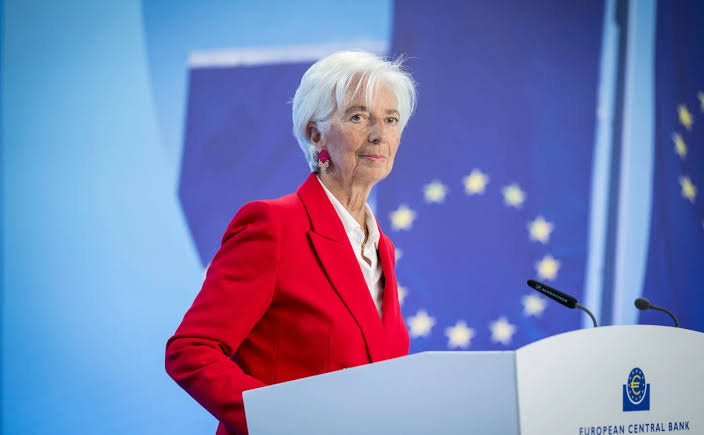
It is worth noting that ECB President Christine Lagarde informed the Governing Council and European Council President António Costa that she will step down on February 7, 2027.
Her successor will be appointed by the European Council in accordance with the procedure set forth in Article 283 of the Treaty on the Functioning of the European Union.
Thus, the ECB remains committed to stabilizing inflation at 2%, but further decisions on interest rates will depend on the evolution of the energy crisis, price trends, and the state of the eurozone economy.