
The Municipality of Agios Athanasios in Limassol has completed the demolition of two apartment buildings that had been classified as unsafe for more than 12 years and posed a serious risk to residents. Resolving the issue proved far from straightforward, as the buildings remained partially occupied for years while commercial premises on the ground floors continued to operate.
According to Deputy Mayor Marinos Kyriakou, the process was repeatedly delayed due to legal procedures and the refusal of some residents to vacate their apartments. Once all the necessary legal formalities had been completed, the dangerous buildings were finally demolished.
Why the process took more than a decade
In Cyprus, the demolition of unsafe buildings is regulated by the Streets and Buildings Regulation Law (Cap. 96). Under the legislation, local authorities must officially notify property owners when a building is declared dangerous. If the property is still occupied, eviction can only proceed after obtaining the necessary court order.
This legal process is often the main reason why demolitions are delayed for many years. Even when a building poses a serious safety risk, the authorities cannot begin demolition until all legal procedures have been completed. According to municipal officials, abandoned buildings have increasingly become hotspots for illegal activity in recent years. Cases involving drug use and trafficking, as well as homeless individuals occupying the premises, have been recorded, further increasing the risks to the surrounding community. At present, the Municipality of Agios Athanasios has no other buildings requiring immediate demolition.
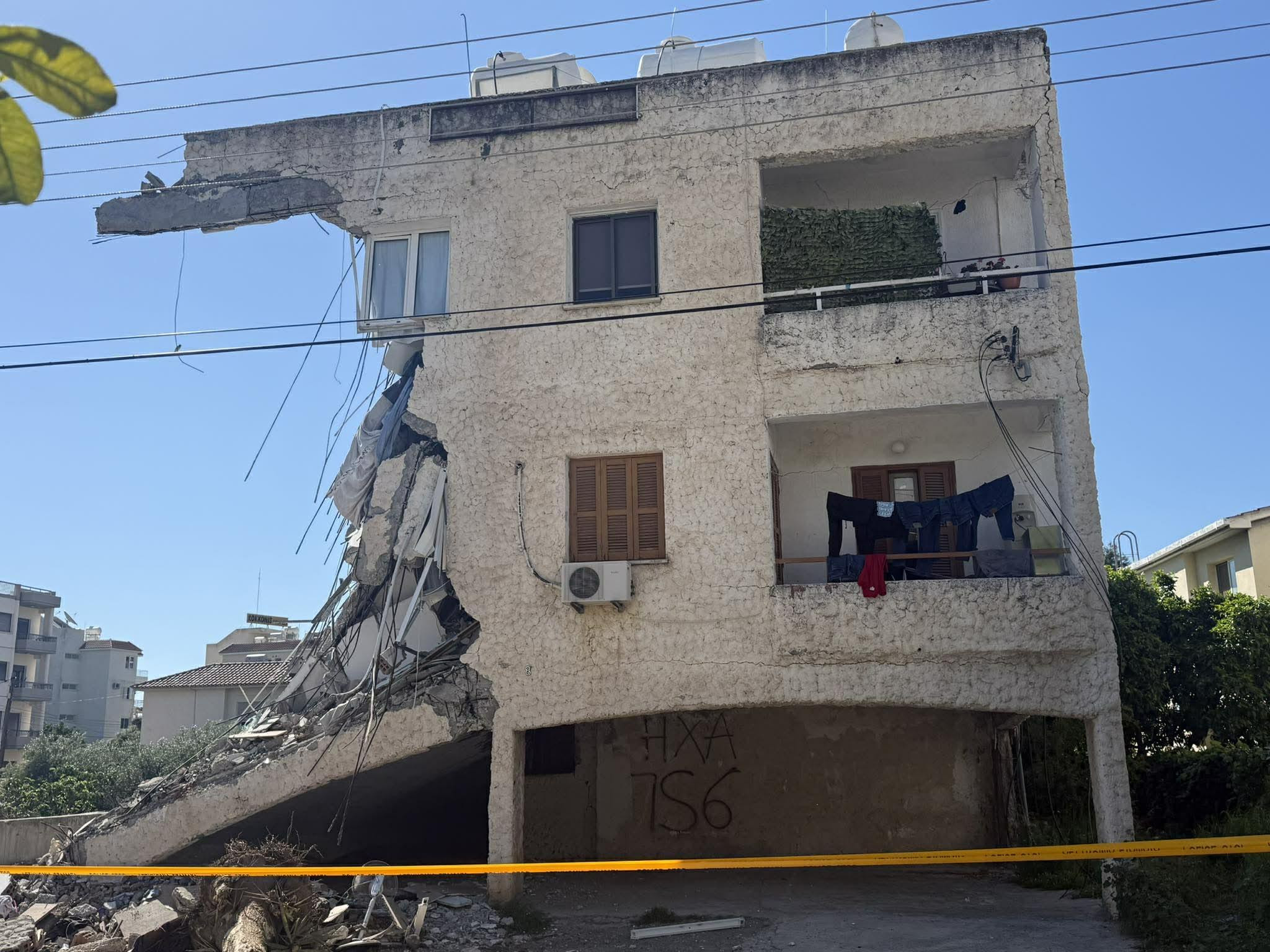
Inspections intensified across the island after the tragedy
The demolition coincided with a large-scale inspection campaign targeting unsafe residential buildings following the fatal building collapse in Limassol. On April 11, a residential building on Aeschylus Street in the Germasogeia area collapsed, killing two people. The property had previously been officially classified as unsafe by the Limassol District Local Government Organisation (EOA).
Following the tragedy, the authorities significantly strengthened inspections of older residential buildings. Inspectors are carrying out new structural assessments, evaluating the level of risk, and, where necessary, restricting access to dangerous properties and sealing them until further decisions are made.
How many unsafe buildings remain in Cyprus?
According to official figures, Cyprus currently has 1,287 buildings classified as unsafe. The largest concentration of these properties is found in Nicosia and Limassol, where much of the country's older urban housing stock is located.
However, local authorities acknowledge that the actual number of dangerous buildings could be significantly higher. Many properties are still undergoing technical assessments, while others have yet to be officially added to the register of unsafe buildings.
Real estate experts believe that Cyprus will continue implementing a large-scale programme to inspect and renovate its ageing housing stock over the coming years. The strengthened oversight is intended not only to improve public safety but also to support urban regeneration, particularly in the historic districts of the island's major cities, where many buildings have been in use for several decades.