
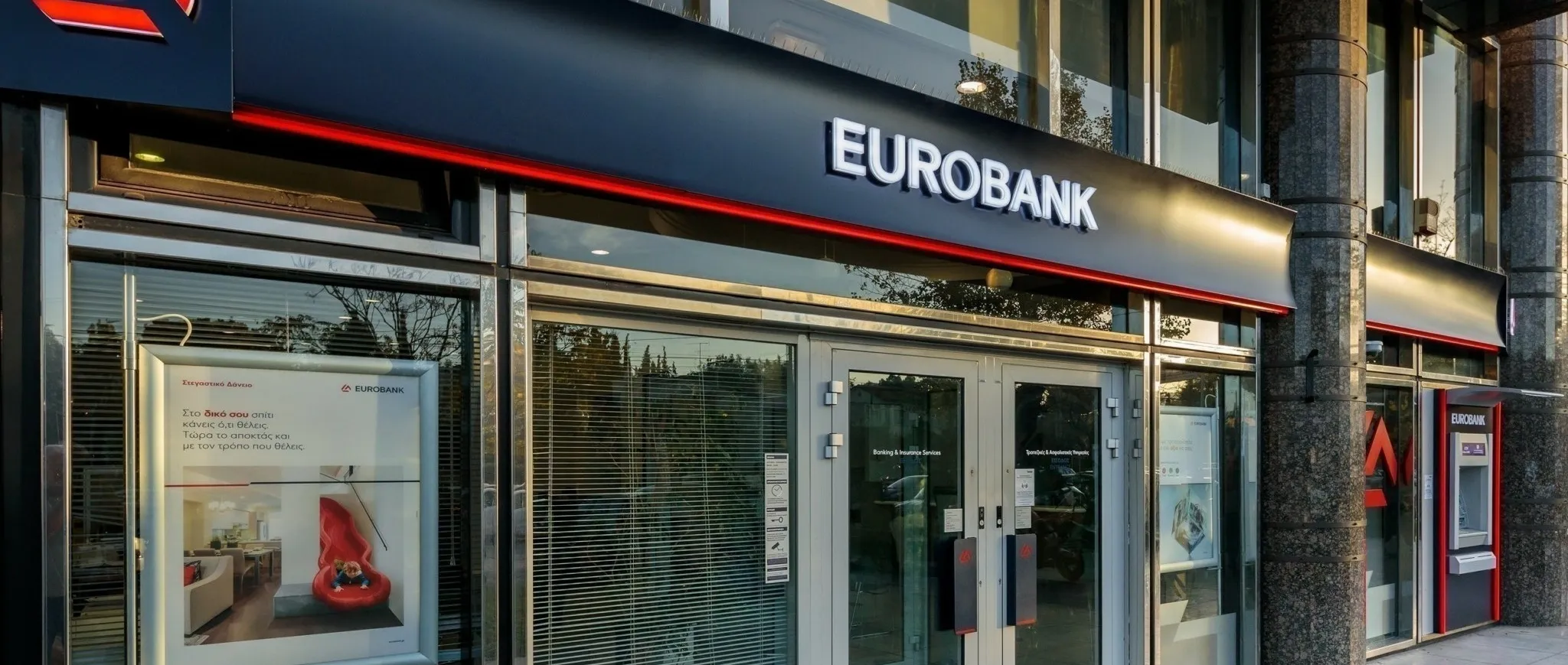
For January–September 2026, the Eurobank Group’s net income rose by 12.4% compared with the same period last year, totaling 1.161 billion euros. Adjusted net income increased by 14.3% to €1.209 billion.
Overseas operations accounted for 45.9% of the group’s adjusted profit—555 billion euros. Meanwhile, adjusted net profit from the Cyprus business totaled 356 billion euros, down 3.9% from a year earlier. Cyprus accounted for approximately 29% of the group’s adjusted profit.
In the third quarter of 2026, Eurobank’s total net profit reached 423.1 million euros. This is 4% higher than in the second quarter. Adjusted net profit for this period rose by 1.7% to 432.6 million euros.
In Cyprus, adjusted profit for the third quarter totaled €125.2 million. By comparison, the figure was approximately €127 million in the second quarter and €120 million in the third quarter of 2025.
Over the first nine months, the bank’s Cypriot divisions generated €579 million in net interest income and €147 million in fee income. Organic profit before provisions reached €475 million. The ratio of operating expenses to organic revenue was 34.7%.
As of September 30, 2026, the assets of Eurobank’s Cypriot business were valued at 29.4 billion euros. This represents approximately 26% of the group’s total assets.
The volume of loans before provisions in Cyprus reached 9.3 billion euros, compared to 8.8 billion euros at the end of 2025. This amount included:
€5.7 billion in business loans;
€2.8 billion in mortgage loans;
€0.8 billion in consumer loans.
The volume of deposits in Cyprus totaled 24.3 billion euros, compared to 23.9 billion euros at the end of the previous year. For every euro of loans issued, there were approximately 2.6 euros in deposits. The loan-to-deposit ratio stood at 37.6%, and the liquidity coverage ratio at 318%.
The share of non-performing loans decreased from 1.9% at the end of 2025 to 1.6%. At the same time, the coverage of non-performing loans by reserves increased from 71% to 92%. The CET1 capital adequacy ratio in Cyprus stood at 33.3%. These figures include Eurobank Limited and other local subsidiaries of the group.
Revenues, Loans, and Deposits: Key Group Metrics
Eurobank’s profit growth was driven by interest and fee income, as well as expanded lending.
Over the first nine months, the group’s net interest income increased by 8.7% year-over-year, reaching €2.068 billion. In the third quarter, it rose by 5% compared to the second quarter, reaching €719 million. The bank attributes this to an increase in interest-earning assets and changes in the European Central Bank’s interest rates.
The ECB’s average deposit facility rate in the third quarter was 229 basis points, compared with 204 basis points in the second quarter of 2026.
The group’s net interest margin for the first nine months was 2.49%, remaining at the same level as the same period last year. In the third quarter, the figure reached 2.53%, compared to 2.48% in the second quarter.
Revenue from commissions and fees rose by 13% to 630 million euros. The main contributors were lending, asset management, and insurance. Commission income represented 76 basis points of total assets.
Organic revenue increased by 9.7% to €2.698 billion, while total revenue rose by 10.8% to €2.776 billion. Operating expenses for the first nine months increased by 6.9% to €995 million. At the same time, the cost-to-income ratio improved from 37.1% in the same period of 2025 to 35.8%. The cost-to-organic-revenue ratio stood at 36.9%.
Organic profit before provisions rose by 11.4% to €1.703 billion, while total profit before provisions increased by 13.1% to €1.781 billion.
Provision expenses for non-performing loans decreased by 5.5% to 224 million euros. This figure corresponded to 53 basis points of the average loan portfolio. Organic operating profit before taxes increased by 14.4% to €1.478 billion. Earnings per share amounted to €0.31, and return on tangible equity reached 16.9%, compared with 16.2% a year earlier. Adjusted net income from overseas operations remained virtually unchanged at 555 million euros.
In the first nine months of 2026, the group’s organic loan growth totaled 3.8 billion euros. Of this amount, 2 billion euros came from Greece and 1.8 billion euros from divisions outside the country. On an annualized basis, organic lending growth reached 10.5%.
As of September 30, the total volume of loans before provisions amounted to 59.1 billion euros. Of this amount:
€38.6 billion in Greece;
€9.3 billion in Cyprus;
€10.1 billion in Bulgaria.
By loan type within the group, the figures were distributed as follows: €37.1 billion in business loans, €13.1 billion in mortgages, and €5.3 billion in consumer loans.
Customer deposits have grown by 4.7 billion euros since the beginning of the year, reaching 87.2 billion euros. The year-over-year increase was 10.6%. Of the total, €48.5 billion was held in Greece, €24.3 billion in Cyprus, and €11.7 billion in Bulgaria. The Group’s loan-to-deposit ratio stood at 66.4%, and the liquidity coverage ratio at 174.4%.
Client assets under management grew by 22.3% over the year to €11.4 billion. Assets and liabilities of private banking clients increased by 13.2% to €15.9 billion. The Group’s non-performing loan ratio was 2.4%, and the coverage ratio for these loans from accumulated provisions was 81.9%.
The Group’s total capital adequacy ratio was 20.4%, and its CET1 ratio was 15.5%.

Eurobank Dividends and Forecast for the End of 2026
Eurobank announced an interim dividend payment of 5.99 cents per share. The total payout will amount to 214 million euros. The funds are scheduled to be distributed to shareholders on November 26, 2026. The dividend amount is 27% higher than the payout for the same period last year.
Group CEO Fokion Karavias stated that the results for the first nine months confirm the bank’s ability to steadily grow its business and give reason to expect that financial targets for the full year 2026 will be met or exceeded.
At the same time, he noted that the European economy is facing serious challenges related to the energy crisis and inflation. According to Karavias, Greece and Cyprus stand out against this backdrop with significant primary budget surpluses. In Greece, it stands at 3.3% of GDP, and in Cyprus, at 4%. Meanwhile, Cyprus’s public debt has fallen to 50% of GDP.
Thus, the results for the first nine months of 2026 show growth in Eurobank’s profits and an expansion in lending. Cyprus remains one of the group’s key markets: local subsidiaries accounted for about 29% of its adjusted profit, and the volume of deposits on the island reached 24.3 billion euros.