
The year 2026 will become key for the continuation of large-scale transformations within the framework of the Cohesion Policy Programme THALEIA 2021–2027. The main task is to complete projects that are at an advanced stage of implementation and to maintain the sustainable dynamics of economic and social growth achieved in recent years. It should be recalled that funding is carried out with the support of European Union funds, which strengthens Cyprus’s role in the pan-European development strategy.
Incidentally, EU co-financed projects are already significantly transforming the country’s urban landscape, infrastructure, and social sphere. The year 2026 should become a period of intensive preparation for the new program phase for 2028–2034. This was stated by Antti Philippidou, Director for Cohesion Policy and Multiannual Financial Planning.
This year gains particular strategic importance due to the fact that in its first half Cyprus will hold the presidency of the Council of the European Union. The Council of the European Union will become a platform for discussing the new EU multiannual budget and the updated regulatory framework of cohesion policy, which directly affects the volume of funding for the island.
Which projects will be completed in 2026
During 2026, the completion of a number of major urban and social infrastructure projects is planned. In Larnaca, work on the creation of a multifunctional park in the Tsiakkilero area and the improvement of Pattichio Park will be completed. In Nicosia, the reconstruction of the outer perimeter of the city moat will be finalized, and in Paphos the renewal of the historic part of Kato Paphos will continue. In Sotira, a modern space for sports and wellness activities will be created.
The commissioning of a new nursing home in Larnaca is also expected, which will strengthen the system of social support for elderly citizens. In the field of climate resilience, the construction of breakwaters in Pervolia and Oroklini for coastal erosion protection is being completed. Large-scale flood protection projects in Larnaca and Limassol are also currently being implemented.
At the same time, work continues on strategic long-term projects, including the construction of the Nicosia ring road, modernization of power grids, and development of the technical and vocational education system. In Larnaca, a technical school of “green” professions is being created, focused on training specialists for the ecological economy. Projects related to water resilience and digital transformation of public services are advancing, which is especially important against the backdrop of climate and energy challenges.
Funding and efficiency of EU funds absorption
The total volume of state funding for the programme THALEIA for 2021–2027 amounts to about 1.5 billion euros. Of this amount, 968 million euros come from EU cohesion policy funds, and 519 million euros come from the state budget of Cyprus. This is the largest volume of European funding ever received by the country within the framework of this policy.
To date, approximately 700 million euros have already been spent, while the entire programme budget has been activated through approved projects. According to the European Commission, Cyprus ranks fourth among the 27 EU countries in terms of the rate of fund absorption within the programme THALEIA, which confirms the effectiveness of managing European resources.
2025 as a turning point
The previous year became a transitional stage from planning to full implementation. In 2025, dozens of significant projects across the country were completed. Among them: new buildings of the Polytechnic School of the University of Cyprus, which strengthened the country’s research and innovation base, as well as the Salina municipal park in Larnaca, which received recognition within national environmental awards.
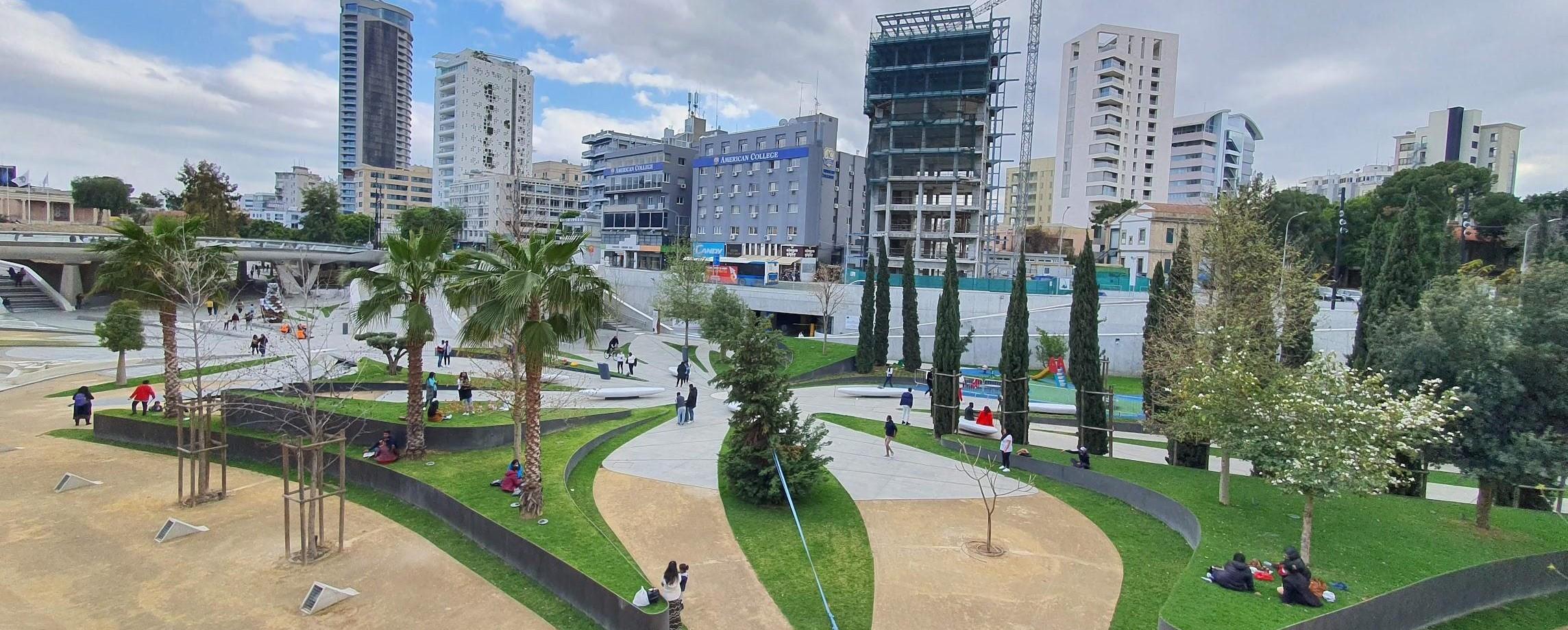
In Nicosia, the former GSP stadium was transformed into a modern green recreation area, becoming an example of successful urban renovation. In the field of “green” energy, the construction of the photovoltaic park of the Aradippou municipality was completed, as well as projects for energy-efficient modernization of residential and public buildings and the creation of zero-energy schools were implemented.
The social component of the programme has also demonstrated tangible results. Support for families with children under four years old, development of care and employment centers, home service programs, initiatives supporting people with disabilities, and assistance centers for families with children with autism contribute to the formation of an inclusive society.
By the end of 2025, more than 150 projects were in the implementation stage or had already been completed, confirming the programme’s transition to the stage of real and measurable results.
Prospects and challenges of the future period
In the context of the changing European agenda, Cyprus aims to maintain growth rates, strengthen the social focus of cohesion policy, and accelerate the “green” and digital transformation. However, the country faces serious challenges, including energy instability, the consequences of climate change, the need to strengthen water security, and demographic changes.
To successfully respond to these challenges, a mechanism of continuous monitoring, institutional flexibility, and timely adjustment of the programme is applied. This makes it possible to maintain alignment with European strategic priorities while simultaneously taking into account the real needs of Cypriot society.
The programme THALEIA is gradually becoming not just an infrastructure funding instrument, but a full-fledged driver of Cyprus’s sustainable development, ensuring economic modernization, business support, job creation, and improvement of citizens’ quality of life.