

Construction companies in Cyprus are finding it increasingly difficult to recruit workers. Cypriots rarely choose this profession; some foreign workers have left, and those who remain are demanding higher wages. As a result, construction costs are rising, and housing completion dates may be delayed.
Why Is There a Shortage of Construction Workers in Cyprus?
Cyprus’s construction industry relies heavily on foreign workers. Local residents are reluctant to take construction jobs, so companies have to recruit workers from abroad. Recently, the situation has become more complicated for several reasons.
Syrian workers are returning home. Following the change in government in Syria, some workers decided to leave Cyprus.
Turkish Cypriots are moving to work in the north of the island. New housing is being built there at a rapid pace, and daily wages may be higher.
Attracting workers from other countries is not easy. In 2024, Cyprus signed an agreement with Egypt on the employment of Egyptian citizens. However, putting this mechanism into practice has proven more difficult than expected.
On October 29, 2026, Cyprus’s Minister of Labor, Marinos Mousiouttas, confirmed that not a single worker had yet arrived on the island under the agreement with Egypt.
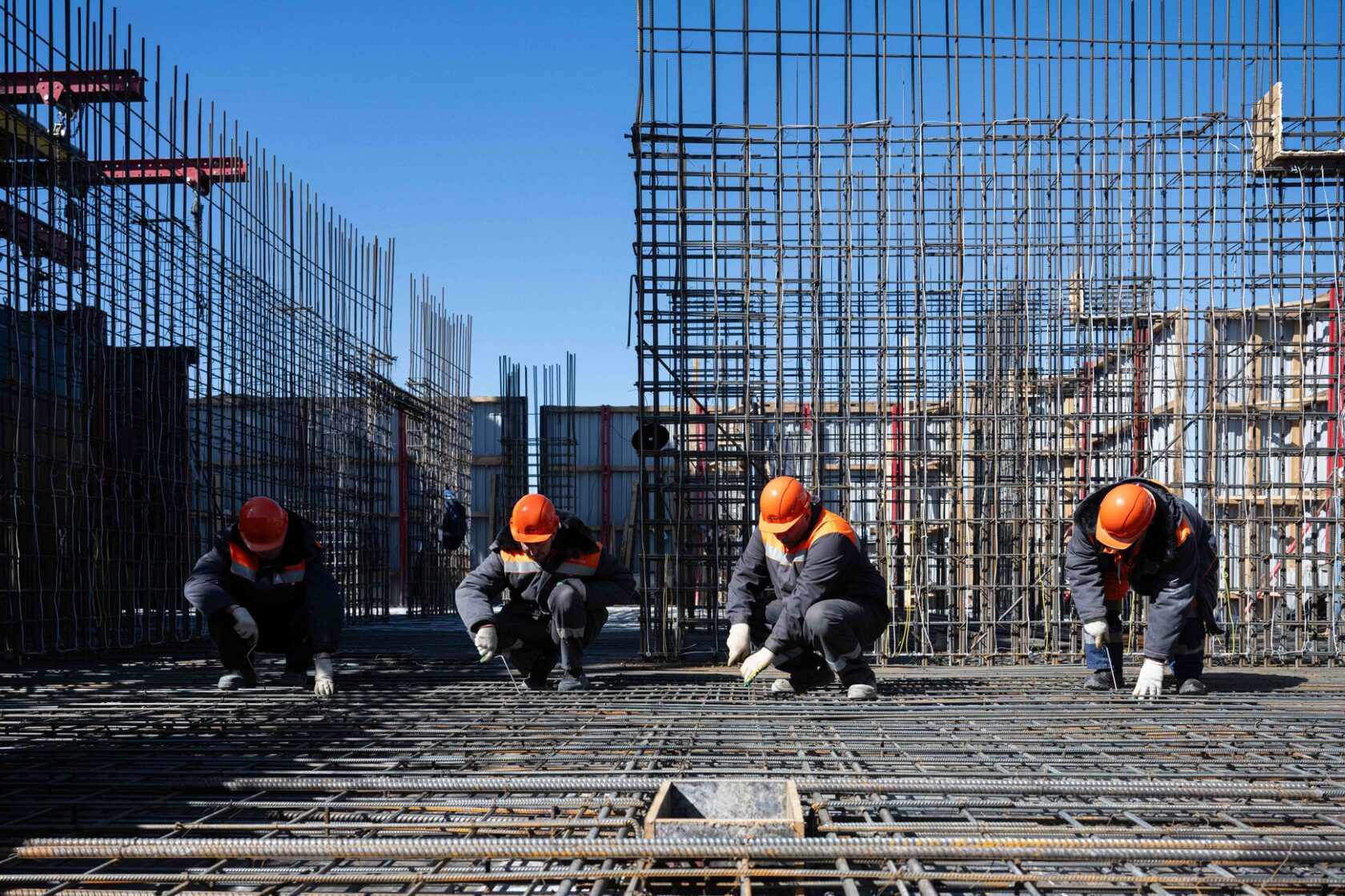
According to estimates by the Cyprus Federation of Construction Contractors (OSEOK), the industry needs about 5,000 additional workers. There is a particular shortage of skilled workers, including rebar installers and carpenters who set up formwork.
Why It’s Difficult for Foreigners to Find Work on Construction Sites
Even if a construction company has found a suitable worker, the worker still needs to complete the necessary paperwork. The procedure involves several steps.
First, the employer applies to the Department of Labor. The agency checks whether there are suitable candidates for the position in Cyprus. If the company cannot find an employee on the local market, it can obtain preliminary authorization to hire a foreigner.
The documents are then forwarded to the Department of Migration, which issues a residence and work permit. However, obtaining these documents does not always mean that there will be no further issues.
If it turns out that the employee has circumstances that prevent the issuance of a permit—such as certain criminal convictions or a prior deportation—the employee may be denied a permit or have an already issued permit revoked.
In addition, the Ministry of Labor and the police conduct inspections at construction sites. Working for the wrong employer or failing to comply with the terms of the issued permit may be considered a violation.
Due to the large number of requirements, companies have to spend time preparing documents and verifying their compliance with regulations. This is particularly challenging for small contractors.
How the Labor Shortage Affects Housing Costs
When there is a shortage of construction workers, companies are forced to compete for available crews. This leads to higher rates and increased construction costs.
In recent years, some of the Syrian specialists who have remained in Cyprus have transitioned from working as employees to organizing their own crews. They now work as subcontractors: they receive an order from a construction company and independently find workers to carry it out.
Since demand for workers is high, the cost of their services is rising. In addition, builders are increasingly agreeing to pay for a specific amount of work rather than for a single workday.
For contractors, this means additional expenses. It is also becoming more difficult for them to estimate the budget and project completion dates in advance.
The problem also affects the real estate market. The Cyprus Developers Association notes that the shortage of workers is hindering efforts to increase the housing supply. Even if a company has obtained all the necessary permits, it still needs to find people who can complete the work on time.
If construction is delayed, new apartments and houses come on the market later. And rising costs can increase the price of new projects.
Therefore, to solve Cyprus’s housing problem, it is important not only to issue building permits but also to ensure that the industry has a sufficient number of workers.