
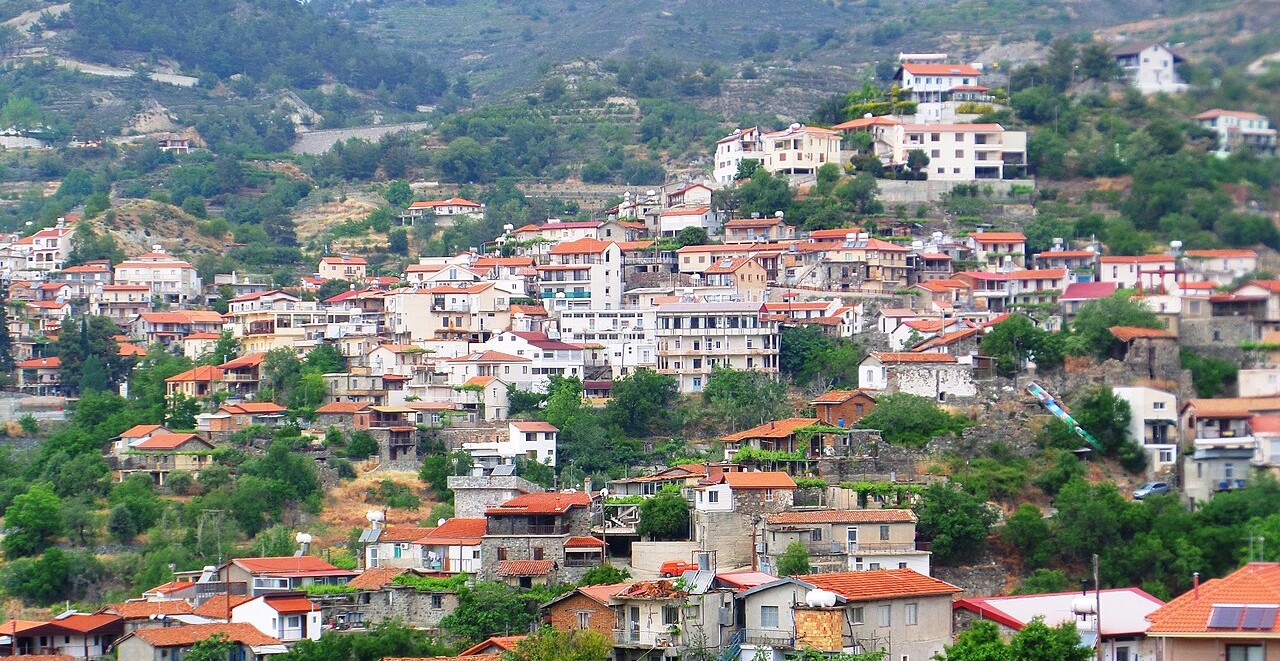
According to Eurostat data for 2025, Cyprus stands out significantly among other EU countries in terms of the share of housing considered under-occupied. This refers to houses and apartments where the number of rooms is significantly greater than what is needed for the number of people living there.
The share of such housing is particularly high in rural areas of Cyprus — 71.1–72.8%. By this measure, the island is among the countries with the highest proportion of under-occupied housing. For comparison, across the EU as a whole in 2025, such housing accounted for 33.4%. In rural areas, the figure was even higher at 41.3%, while in cities it stood at 26.2%.
In Cyprus, the situation can be explained by the characteristics of the housing stock. Spacious detached houses are common in rural areas and are often designed for several generations of a family. However, after children or other relatives move out, some of the rooms may remain largely unused.
Overcrowded housing is not a major problem in Cyprus
At the same time, the opposite problem — a lack of sufficient living space — appears to be far less serious in Cyprus. In 2025, an average of 16.8% of the EU population lived in overcrowded housing. In Cyprus, the figure was much lower — around 2.3%. The island also differs from most EU countries in how this rate is distributed by type of settlement. In 2025, overcrowded housing affected around 2.3% of city residents, 3.4% of people living in towns and suburbs, and only 0.7% of rural residents. This means that in Cyprus the opposite situation is much more common: homes may be too spacious for a household rather than too small.

What this says about the Cyprus housing market
Eurostat statistics highlight an important feature of the Cyprus property market. The island’s problem is not so much a shortage of residential space as the uneven distribution of the existing housing stock among the population. This is particularly noticeable in rural areas, where many homes were designed for larger families and remain spacious even after household composition changes.
At the same time, the overall share of Cyprus residents at risk of poverty or social exclusion stood at 17.1% in 2025, below the EU average of 20.9%. For the property market, this means that different needs exist at the same time: some households require more affordable and compact apartments, while a significant share of the housing stock, especially outside major cities, remains too large for the current number of occupants.